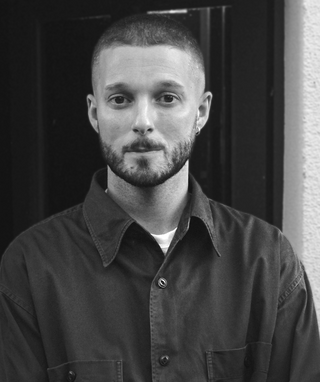
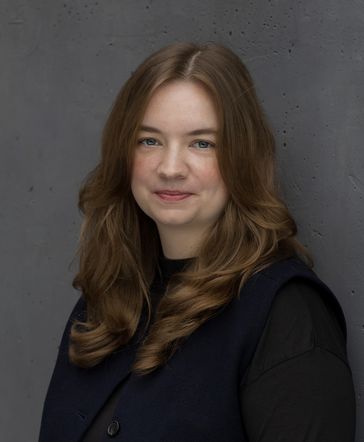
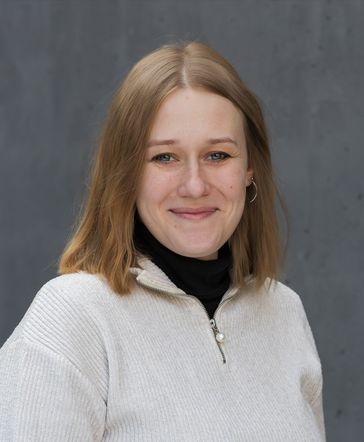
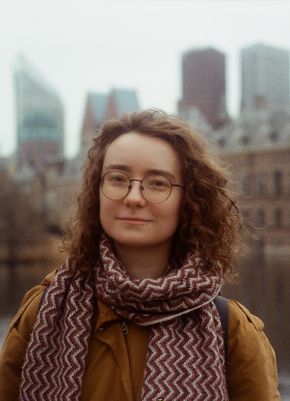
POST brings together researchers working on the socio-spatial dynamics of societies commonly referred to as ‘postsocialist‘ or part of the ‘Global East‘. We are an interdisciplinary group of urban studies scholars, exploring how post-socialist urban and spatial transformations sediment materially and institutionally: in housing and maintenance, in labour landscapes, in urban planning and spatial development practices, in contested fields of heritage, and many more. The contexts in which we conduct research include Albania, (Eastern) Germany, Hungary, Kazakhstan, Poland, Romania, Russia, and Serbia.
A key aim of our work is knowledge production from sites that are often sidelined in urban studies. We therefore aim to develop theoretical reflections rooted in the diverse contexts of post-socialism, rather than treating Eastern Europe as a homogeneous or merely peripheral space. Instead, we look for connections, parallels and shared experiences while staying attentive to local specificities: especially language, history and lived experience. We do this from Weimar, a place that is itself shaped by postsocialist transformation.
Postsocialist is, for us, an indispensable yet contested analytic. Many of the contexts we work on share histories of state socialism and its collapse, rapid marketisation, peripheral integration into global capitalism, and current authoritarian, neoliberal or nationalist transformations. These trajectories have produced comparable mechanisms in housing policy, welfare–housing–debt regimes, labour markets, and in the management and demolition of ‘socialist heritage’, which makes it meaningful to study them together. At the same time, the experiences gathered under this label are diverse and non-consistent: post-socialism can easily flatten different colonial entanglements, welfare legacies, racial formations and political projects. POST is a space to hold these tensions open, asking when comparison clarifies and when it obscures, and to experiment with alternative framings such as “Global East”, peripheries, or second-hand urbanism.
Many of us work from positions shaped by postsocialist trajectories, migration and long-term engagement with the region. This positionality makes us attentive to uneven power relations in knowledge production and to the dominance of Western theoretical frameworks in urban studies.
POST seeks to strengthen engagement with and research on postsocialist societies at the Institute for European Urban Studies (IfEU) and to contribute to a more inclusive understanding of Europe and European cities. Our working group provides a platform for exchange, mutual learning and joint initiatives. In regular meetings, we present and discuss ongoing empirical work, read and debate publications related to our questions, and explore both shared and divergent mechanisms across our cases. In doing so, POST creates a platform within IfEU for scholars to initiate transnational collaboration and experimental theoretical work on postsocialist and post-transformation societies.