
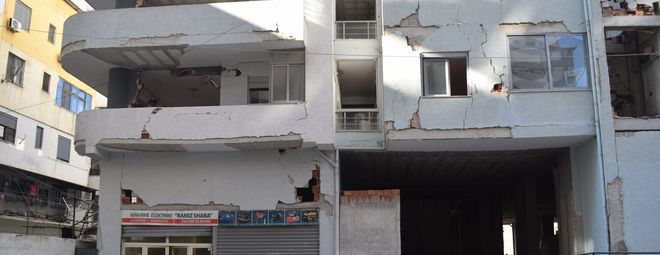
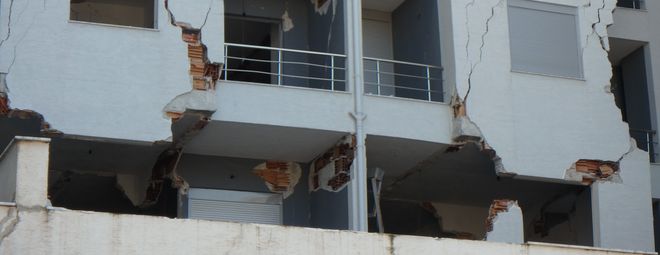
Forensic Structural Engineering database for HEI and pilot course with innovative and interactive learning methods

Im Zuge der Verlagerung von traditionellen didaktischen Unterrichtsmodellen hin zu stärker lernerorientierten aktiven Ansätzen gewinnen Gamification und insbesondere Escape Rooms als alternative Lern- und Bewertungsumgebungen an Popularität. Insbesondere zur Förderung des Lernens und der Fähigkeiten von Schülern in der Grund-, Sekundar- und Hochschulbildung sowie in der beruflichen Weiterbildung. Ein Escape Room im Bildungsbereich kann als Lehrmethode definiert werden, bei der die Lernenden an kooperativen, spielerischen Aktivitäten teilnehmen, die explizit auf den Erwerb von Fachwissen, die Entwicklung von Fähigkeiten oder die Änderung von Verhaltensweisen ausgerichtet sind, so dass sie ein bestimmtes Ziel erreichen können, indem sie Rätsel lösen, die mit eindeutigen Lernzielen verbunden sind (in einer begrenzten Zeit). Die Forschung zeigt, dass Lernräume aufgrund ihres spielerischen Charakters, der positives Verhalten begünstigt, die Motivation, das Engagement und das Zeitmanagement der Lernenden verbessern, das Vertrauen in kritisches Denken und Entscheidungsfindung stärken, den Wissenserwerb und die akademischen Leistungen verbessern können.
Die Partner bringen unterschiedliche Fachkenntnisse und Fallstudien ein, die geeignet sind, Lernbeispiele abzuleiten, sodass das Projektkonsortium ein breites Spektrum an forensischen Fällen abdecken wird, die letztlich durch Wind, Feuer, Erdbeben und andere zu Beginn unbekannte Ereignisse ausgelöst wurden. Die Partner planen, die Vielfalt der Gruppen zu nutzen, um mithilfe eines AGILE-Ansatzes, der sich auf die Ableitung von Lernbeispielen konzentriert, die beste Strategie für das jeweilige Problem zu finden. Im Rahmen des geplanten Pilotkurses wird jedes Partnerland eine Reihe von „Lessons Learned“ und „Best Practices“ vorstellen, die aus ihrer Forschung und Beratungsarbeit gesammelt wurden. Zentrale Lehrmaterialien und die Escape Rooms werden in den Landessprachen der Projektpartner angeboten, um am Ende des Projekts eine breite regionale, nationale und europäische Verbreitung sicherzustellen. Das Projekt generiert somit einen Mehrwert für alle Partner und Europa.
Ziele
- Die Anwendung von pädagogischen Escape Rooms im Bauingenieurwesen, insbesondere für die Ausbildung/Weiterbildung in hochspezialisierten Kursen zum Thema rekursive Schadensidentifikation, um die Lücke in der Ausbildung von Bauingenieuren im Bereich der forensischen Ingenieurwissenschaften zu schließen.
- Eine neue Lehrmethode anzubieten und neue Inhalte für Masterprogramme einzuführen, die ihre Aktualität und Allgemeingültigkeit beibehalten, aber zusätzlich eine Ausbildung in einem hochspezialisierten und gefragten Bildungsbereich anbieten. Hierfür werden Beispiele aus realen und untersuchten Schadensereignisse abgeleitet, die die intersektorale (akademische/nicht-akademische Sektoren) Akzeptanz unterstützen soll.
- Verbesserung der Vertrauenswürdigkeit forensischer Untersuchungen und der Zuverlässigkeit/Gültigkeit der Ergebnisse durch einen innovativen/integrierten internationalen kollaborativen Bildungsrahmen für den Erfahrungsaustausch zwischen Partnern (Literatur und bewährte Verfahren), Interessengruppen und jungen Forschern/Fachleuten.
- Schaffung neuer, innovative und gemeinsamer Kurse / Förderung der internationalen Beziehungen und Zusammenarbeit / Entwicklung bzw. Einführung neuer Lern- und Lehrmethoden und -ansätze: Die Entwicklung und Implementierung eines Pilotkurses in forensischem Bauingenieurwesen wird die Studierenden in verschiedenen realen Fällen von Schadensereignissen mit Hilfe eines evidenzbasierten und problemorientierten Ansatzes herausfordern. Ziel ist es, ein Netzwerk zur Zusammenarbeit zu schaffen und Kurse/Curricula in einem internationalen Umfeld mit verschiedenen ingenieurtechnischen/ausbildungstechnischen Hintergründen der Teilnehmenden in einem spezifischen fallorientierten Kontext aufzubauen.
Partner
Bauhaus-Universität Weimar (BUW)
Standort: Weimar, Deutschland
Website: www.uni-weimar.de
Expertise: Strukturanalyse, digitale Lernwerkzeuge, Erdbebenschadensbewertung
Ansprechpartner: Jun.-Prof. Dr.-Ing. L. Abrahamczyk (Professur Komplexe Tragwerke)
Ruhr-Universität Bochum (RUB)
Standort: Bochum, Deutschland
Website: www.ruhr-uni-bochum.de
Expertise: Windinduzierte Schäden, Strukturüberwachung (Structural Health Monitoring), Escape-Room-basiertes Lernen
Ansprechpartner: Prof. Dr.-Ing. Rüdiger Höffer (Windingenieurwesen und Strömungsmechanik)
Universität Aveiro (UA)
Standort: Aveiro, Portugal
Website: www.ua.pt
Expertise: Feuerwiderstand von Tragwerken, Ausbildung im Bereich Forensische Ingenieurwissenschaften
Ansprechpartner: Prof. Dr. rer. nat. Uwe Kähler (Fachbereich Mathematik), Dr. Nuno Lopes (Fachbereich Bauingenieurwesen)
Universität der Heiligen Kyrill und Method in Skopje (UKIM)
Standort: Skopje, Nordmazedonien
Website: www.ukim.edu.mk
Expertise: Seismische Vulnerabilität, Erdbebeningenieurwesen, forensische Untersuchungen
Ansprechpartnerin: Prof. Dr. Roberta Apostolska (Institut für Erdbebeningenieurwesen und Ingenieurseismologie – IZIIS)
Josip-Juraj-Strossmayer-Universität Osijek (UNIOS)
Standort: Osijek, Kroatien
Website: www.unios.hr
Expertise: Bewertung von Tragwerksversagen, Vulnerabilität historischer Gebäude
Ansprechpartner: Prof. Dr. Davorin Penava (Fakultät für Bauingenieurwesen Osijek)
Istituto Universitario di Studi Superiori di Pavia (IUSS)
Standort: Pavia, Italien
Website: www.iusspavia.it
Expertise: Untersuchungen von Brückenversagen, Bewertung von Katastrophenrisiken
Ansprechpartner: Asst. Prof. Ricardo Monteiro (Koordinator des Promotionsprogramms „Understanding and Managing Extremes"), Asst. Prof. Nicola Scattarreggia (Fachbereich für Struktur- und Geotechnikingenieurwesen)
English
Dear Ladies and Gentlemen,
Thank you for agreeing to participate in our survey. The purpose of this survey is to gather input for developing the framework of an international elective course syllabus in Forensic Structural Engineering.
All information will be consolidated and anonymized in accordance with European GDPR regulations (Regulation (EU) 2016/679).
The time required to complete the survey is approximately 10 minutes.
We would like to thank you in advance for your support!
The RECONSTRUCT European Team
Deutsch - German
Sehr geehrte Damen und Herren,
Vielen Dank für Ihre Mitwirkung an unserer Umfrage. Ziel dieser Umfrage ist es, Anregungen für die Entwicklung eines internationalen Lehrplans für das Wahlfach „Bauforensik“ (Forensic Engineering) zu erhalten.
Alle Informationen werden konsolidiert und anonymisiert in Übereinstimmung mit den europäischen GDPR-Vorschriften (Verordnung (EU) 2016/679).
Das Ausfüllen der Umfrage dauert etwa 10 Minuten.
Wir möchten Ihnen im Voraus für Ihre Unterstützung danken.
Das europäische Projekt-Team RECONSTRUCT
македонски - Macedonian
Почитувани Дами и Господа,
Ви благодариме на Вашето учество во оваа анкета. Целта на оваа анкета е да се соберат повратни информации за креирање и развој на наставниот план и програмата на меѓународен изборен предмет по форензичко инженерство на конструкции.
Сите информации ќе бидат синтетизирани и анонимни во склад со Европските GDPR регулативи (Регулатива (EU) 2016/679).
Времето потребно за пополнување на анкетата е приближно 10 минути.
Ви благодариме однапред за Вашата поддршка!
Од името на RECONSTRUCT проектниот тим.
Hrvatski - Croatian
Poštovane dame i gospodo,
zahvaljujemo što ste pristali sudjelovati u našem istraživanju. Svrha ovog upitnika je prikupiti povratne informacije za oblikovanje i razvoj nastavnog plana i programa međunarodnog izbornog predmeta Forenzičko inženjerstvo u građevinarstvu.
Svi podaci bit će objedinjeni i anonimizirani u skladu s europskim GDPR propisima (Uredba (EU) 2016/679).
Za ispunjavanje upitnika potrebno je otprilike 10 minuta.
Unaprijed zahvaljujemo na vašoj podršci!
Europski tim RECONSTRUCT
Italiano - Italian
Gentili signore e signori,
Grazie per aver accettato di partecipare al nostro sondaggio. Lo scopo di questo questionario è quello di raccogliere contributi per lo sviluppo della struttura di riferimento per un programma didattico internazionale per un corso elettivo in Ingegneria Strutturale Forense.
Tutte le informazioni saranno raccolte e rese anonime in conformità con la normativa europea GDPR (Regolamento (UE) 2016/679).
Il tempo necessario per completare il sondaggio è di circa 10 minuti.
Grazie in anticipo per il vostro supporto!
Il team europeo RECONSTRUCT
Português - Portuguese
Caros Senhoras e Senhores,
Obrigado por concordar em participar neste questionário. O objetivo deste inquérito é recolher contributos para o desenvolvimento do programa de um curso internacional em Engenharia Estrutural Forense.
Todas as informações serão consolidadas e anonimizadas de acordo com as regulamentações do RGPD europeu (Regulamento (UE) 2016/679).
O tempo necessário para completar o inquérito é de aproximadamente 10 minutos.
O nosso agradecimento pelo seu apoio.
A Equipa do projeto Europeu RECONSTRUCT
Modulbeschreibung
WP1 – Project Management
Work Package 1 provides the organisational backbone of RECONSTRUCT, ensuring effective cooperation among the six partner universities and steady progress in line with the approved work plan. A structured and transparent management framework guides the project across all key dimensions: coordination, time management, financial oversight, reporting, and quality assurance. The workpackage ensures:
Overall coordination of the international consortium
Monitoring of milestones and key performance indicators (KPIs)
Transparent financial management under the lump-sum model
Clear reporting procedures and documentation
Internal quality assurance and risk management
Progress:
Transnational kick-off meeting to established governance structures and responsibilities
Regular virtual coordination meetings
2 x in-person workshops
Shared digital platforms support documentation and collaboration
WP2 – Course Design & Development
Work Package 2 establishes the academic foundation including the development of a 6 ECTS Pilot Course in Forensic Structural Engineering at Master’s level. The course is designed around evidence-based, problem-based, and case-based learning principles. It introduces students to the professional role of the forensic engineer and connects structural engineering expertise with legal, ethical, and societal responsibility in damage investigations. To define the curriculum, a structured stakeholder survey was conducted. The Competency & Syllabus Survey was jointly developed, translated into all partner languages, and deployed internationally to structural engineers and court expert witnesses. The results provided a strong empirical foundation for the course design and were complemented by a SWOT analysis.
Progress:
Definition of learning objectives and competency framework
Derivation of the module description/syllabus
Integration of stakeholder feedback into course structure and assessment principles
Establishment of the technical learning environment supporting future delivery
All activities were implemented according to plan, without deviations. WP2 now provides a validated and professionally aligned curriculum framework, ready for implementation in the pilot phase.
WP3 – Case Studies & Gamified Learning
Work Package 3 forms the technical and pedagogical core by transforming real forensic structural damage cases into interactive, escape-room-based learning environments that allow students to investigate failure mechanisms step by step. Each partner contributes one case involving extreme actions such as earthquakes, storms, fire, or structural collapse:
RUB: Storm damage of a high-bay warehouse roof
UniOS: Stability assessment of historic unreinforced masonry
BUW: Seismic behaviour of unreinforced masonry (URM) buildings
IUSS: Collapse of a reinforced concrete arch bridge
IZIIS: Seismic damage of a reinforced concrete student dormitory
UA: Fire damage in an industrial steel hall
These six cases form the foundation of a digital learning environment. A shared Moodle platform has been established to host and structure the materials, ensuring coordinated development across the consortium. Using gamification tools (ThingLink and Moodle), the cases are implemented as interactive escape rooms. Students analyse evidence, identify failure mechanisms, and reconstruct damage processes within a structured investigative framework. During Workshop II, the first implementations were internally presented, tested, and reviewed. Expert feedback, including input from a professional game developer and forensic practitioners, supported refinement of narrative structure, question design, and technical functionality. Case study development is well advanced, and the gamified learning environment is continuously being refined toward full implementation.
WP4 – Pilot Course in Forensic Structural Engineering
Work Package 4 delivers the 6 ECTS international Pilot Course in Forensic Structural Engineering. The course combines structured lectures, guided self-study and collaborative case investigations to train students in evidence-based forensic reasoning. The course will:
- Integrate the escape-room-based case studies developed in WP3
- Encourage interdisciplinary and international teamwork
- Apply analytical, technical and legal reasoning in real forensic scenarios
- Strengthen critical thinking and decision-making under uncertainty
Although formal course delivery begins in the next project phase, preparatory coordination has already been addressed during project meetings. Responsibilities, course structure, and integration of WP2 and WP3 results have been aligned to ensure smooth implementation. WP4 represents the practical validation phase of RECONSTRUCT, bringing together curriculum design, gamified case studies, and international collaboration into a fully operational teaching format.
WP5 – Best Practice & Didactical Handbook
Work Package 5 consolidates the educational innovation developed in RECONSTRUCT into a transferable framework. Its main outcome will be a Best Practice Report and Didactical Handbook supporting long-term sustainability and replication. The handbook will:
- Document the pedagogical foundations of the course (evidence-based, problem-based and case-based learning)
- Provide structured guidance for implementing escape-room-based learning environments
- Include evaluation tools and feedback instruments for measuring learning success
- Offer recommendations for replication and adaptation at other higher education institutions
WP5 will also analyse data and feedback collected during the pilot course phase to refine teaching strategies and optimise the learning design. Although this work package formally begins later in the project timeline, its foundations are already embedded in WP2 and WP3 through continuous reflection on learning objectives, assessment principles, and gamification design. This ensures that the final handbook will be grounded in practical implementation experience.
WP6 – Overcoming Language Barriers
Work Package 6 strengthens the European dimension of RECONSTRUCT by ensuring that the project results are accessible across linguistic contexts. All educational escape rooms and supporting materials will be translated into the partner languages:
- Portuguese
- Croatian
- Macedonian
- Italian
- German
This multilingual approach enhances accessibility, inclusivity, and European dissemination, enabling broader adoption of the forensic engineering curriculum. Although the formal translation phase of the escape rooms will begin once their development is finalized, important groundwork has already been completed. The Competency & Syllabus Survey was translated into all partner languages and deployed internationally, and the course module description has been made available within the respective national contexts. This early multilingual alignment ensured inclusive stakeholder participation and broad professional input during curriculum development. WP6 will ensure that the final learning tools are fully accessible, culturally adaptable, and suitable for long-term European implementation.
Berichte
- Course Development & Design: Abrahamczyk, L., Uzair, A., Penava, D., Kahler, U., Monteiro, R., Höffer, R., & Apostolska, R. (2026). Course development & design: RECONSTRUCT pilot course in forensic structural engineering. RECONSTRUCT Project (Erasmus+ Cooperation Partnerships in Higher Education).
- SWOT Analysis & Survey Results: Abrahamczyk, L., Hasan, P. L., Penava, D., Kahler, U., Monteiro, R., Höffer, R., & Apostolska, R. (2026). Analysis of the requirements for forensic structural engineering for the design of the RECONSTRUCT pilot course. RECONSTRUCT Project (Erasmus+ Cooperation Partnerships in Higher Education).
- Periodic Report: RECONSTRUCT Project Consortium. (2026). RECONSTRUCT Project – Periodic progress report (Reporting period 2024–2025). Erasmus+ KA220-HED Cooperation Partnerships in Higher Education.
Publikationen
- Abrahamczyk, L., Uzair, A., Apostolska, R., Höffer, R., Salzinger, J., Penava, D., Minazek, K., Lopes, N., Kähler, U., Monteiro, R., Scattareggia, N., & Delova, E. (2025). Forensic structural engineering database for HEI and innovative pilot course – RECONSTRUCT project. In Proceedings of the 21st International Symposium of the Macedonian Association of Structural Engineers (MASE 21), Skopje, North Macedonia.
- Penava, D., & Lozančić, S. (2025). Razvoj obrazovnih sadržaja za sudska vještačenja u građevinarstvu: Erasmus+ projekt RECONSTRUCT. Građevinar, 77(8), 815–820.
- Abrahamczyk, L., Höffer, R., Kalender, C., Apostolska, R., Lopes, N., Kähler, U., Monteiro, R., Calvi, G. M., Scattareggia, N., Penava, D., & Lozančić, S. (2024). Forensic structural engineering database for HEI and pilot course with innovative and interactive learning methods (RECONSTRUCT). Paper presented at the 8th Congress of Croatian Court Expert Witnesses and Valuers, Zagreb, Croatia, October 18–19.
- Monteiro, R., Scattareggia, N. (2024). IUSS protagonista nel progetto ERASMUS+ ''RECONSTRUCT'': innovazione nell'ingegneria strutturale forense. Newsletter IUSS Pavia.
Achtung
Haftungsausschluss
Von der Europäischen Union finanziert. Die geäußerten Ansichten und Meinungen entsprechen jedoch ausschließlich denen des Autors bzw. der Autoren und spiegeln nicht zwingend die der Europäischen Union oder des Deutschen Akademischen Austauschdiensts e.V. wider. Weder die Europäische Union noch die Bewilligungsbehörde können dafür verantwortlich gemacht werden.