
summaery2026 at the Faculty of Art and Design: Prompting Without an Input Field
What is prompt when there's no input field in sight? For »summaery2026«, students at the Faculty of Art and Design are showing how porcelain reacts to forms and how digital spaces respond to hands, bodies, and movement. We visited two projects that could not be more different.
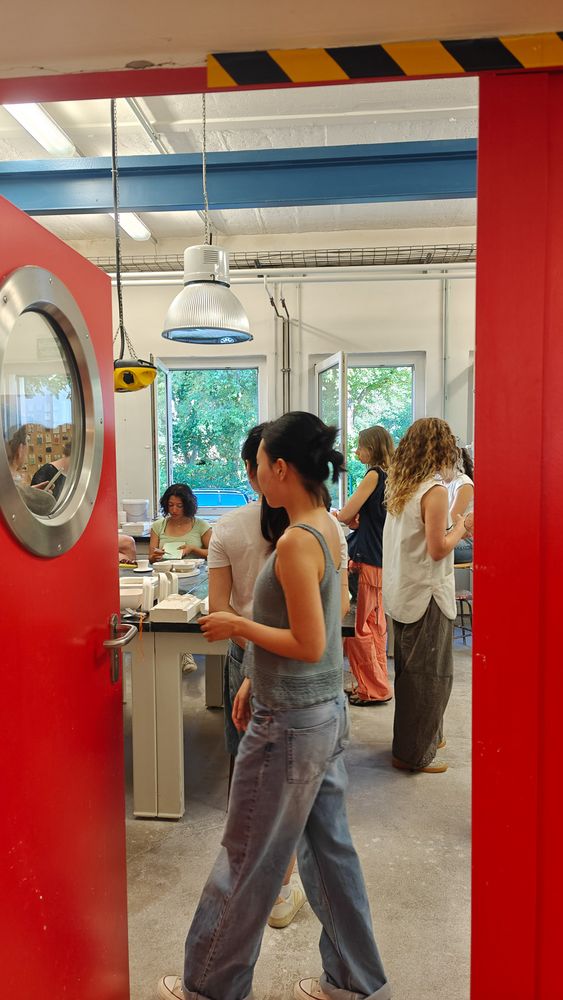
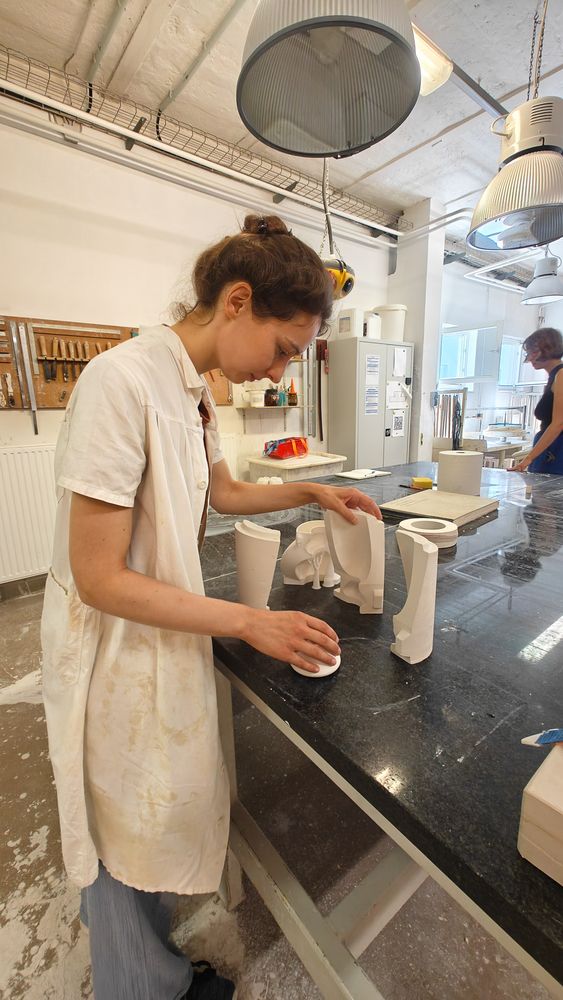
Anyone is immediately associates the word »prompt« with an input field will discover a whole new dimension of prompting in the specialist course taught by porcelain designer Isa Schreiber. In this course, input begins with an idea, a gesture, a form. And the material responds: Plaster and porcelain reveal what’s possible, where something tips over, cracks, shrinks, or suddenly turns out perfectly. »The first prompt in the course is definitely my input, my assignment, and my expertise«, explains Schreiber. »As soon as the students start working with their hands, they begin a constant game of ping-pong with the material. Plaster and porcelain speak to you and clearly show you what’s possible and what the limits are. The limits are our creative space, much like in the digital world.«
Students are meant to learn how to design in a way that is appropriate for the material. They are continually feeding ideas and information into the process through mould-making. Porcelain responds with its quality after shaping and firing. An interplay that doesn’t succeed without mistakes.
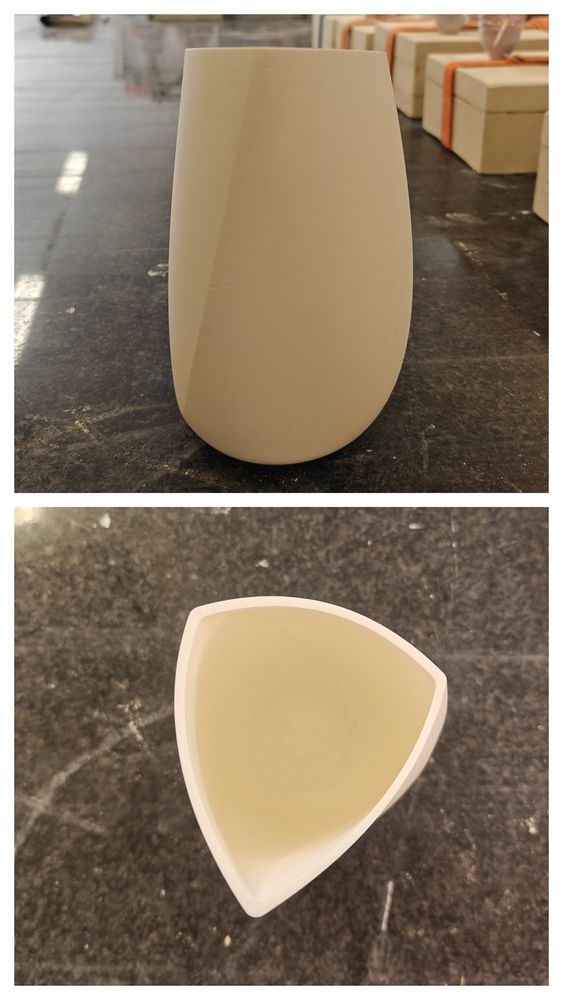
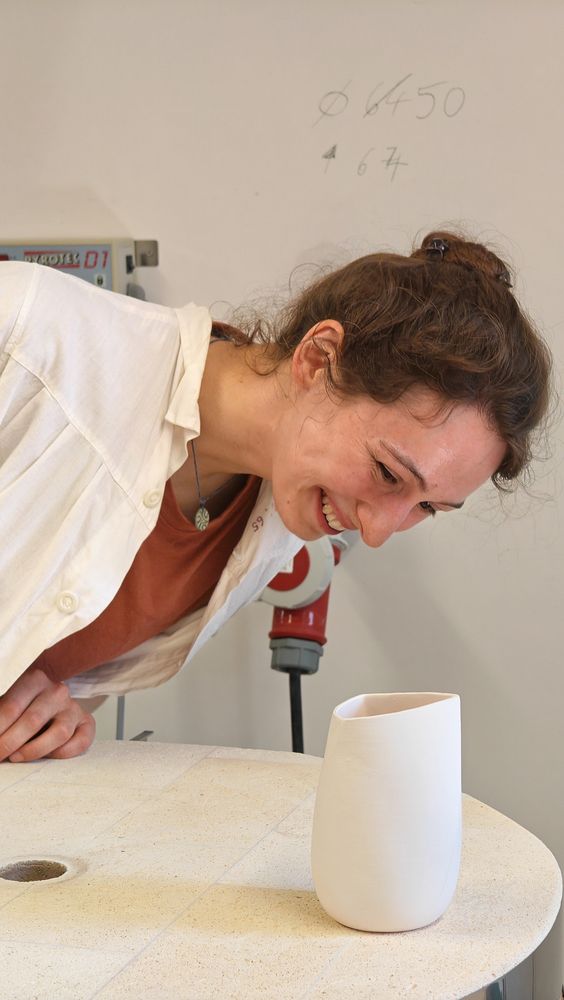
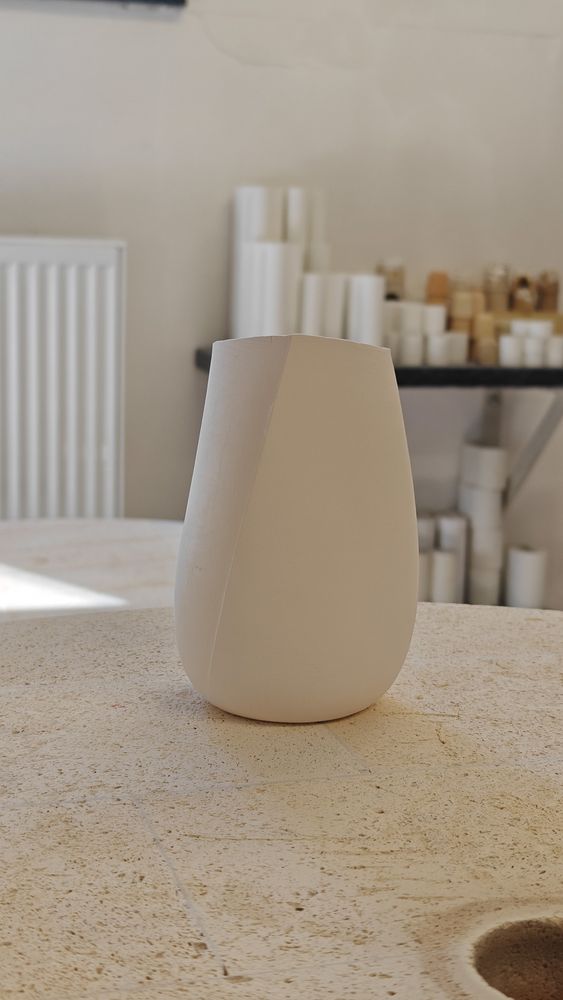
Charlotte, a Produktdesign (Product Design) student, didn’t make any »mistakes«, but she did have to solve a problem: Her pitcher design is made up of three open spaces, which she merged into a three-dimensional form using the 3D programme »Rhino«. The vessel places high demands on the plaster mould required for casting. »I like to make things more complicated than they need to be«, she says of her approach with a smile. The issue? The pitcher cannot be removed from a single-piece mould.
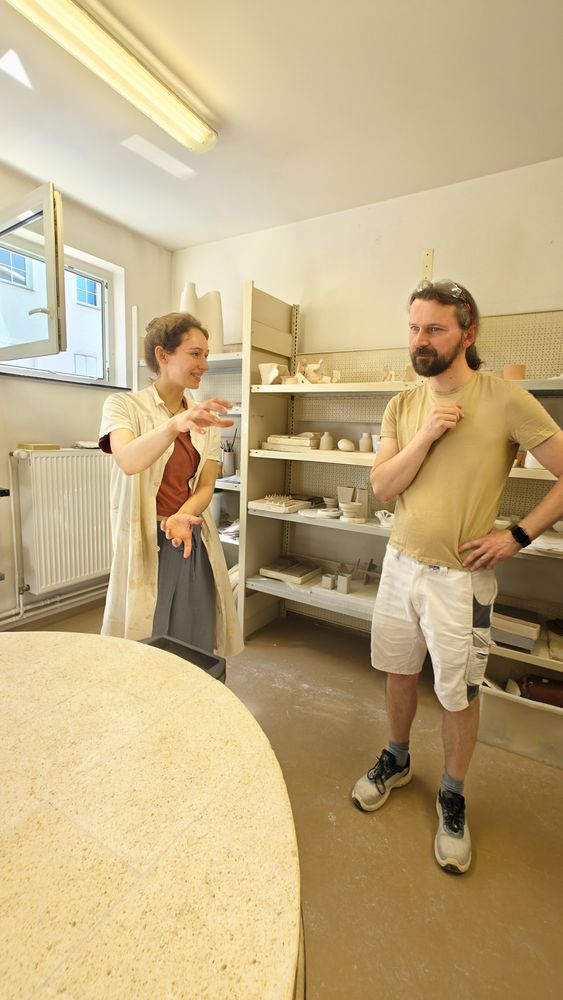
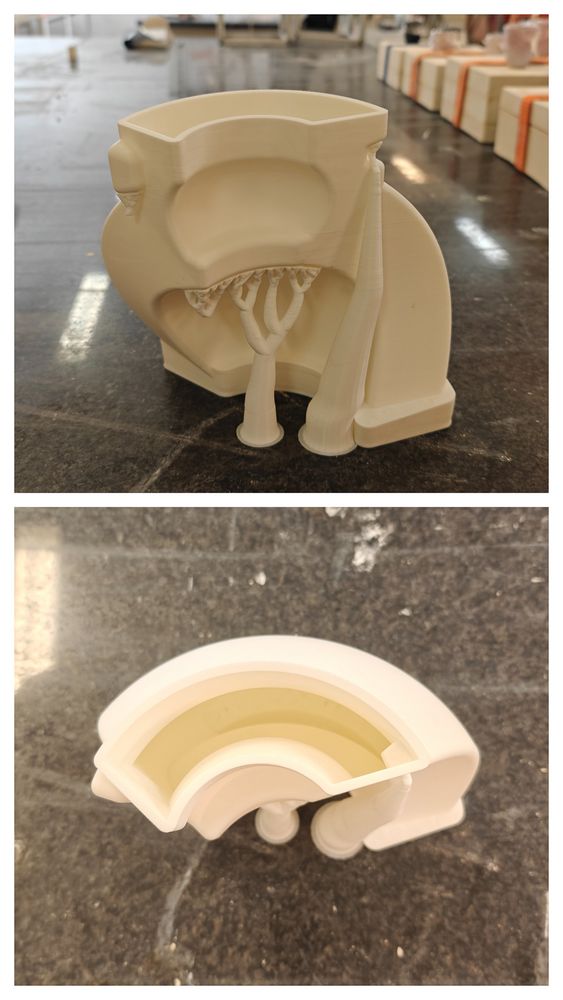
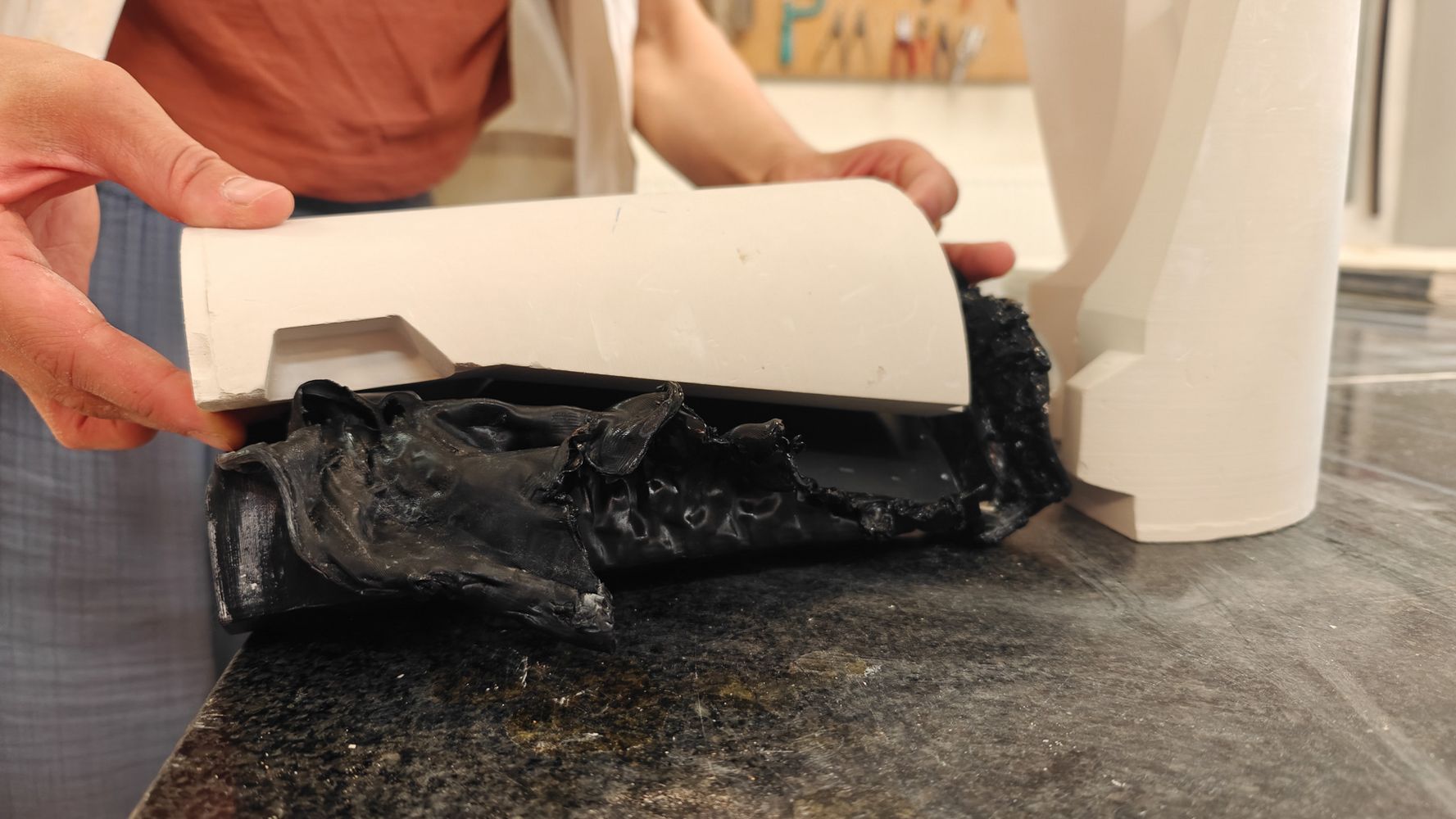
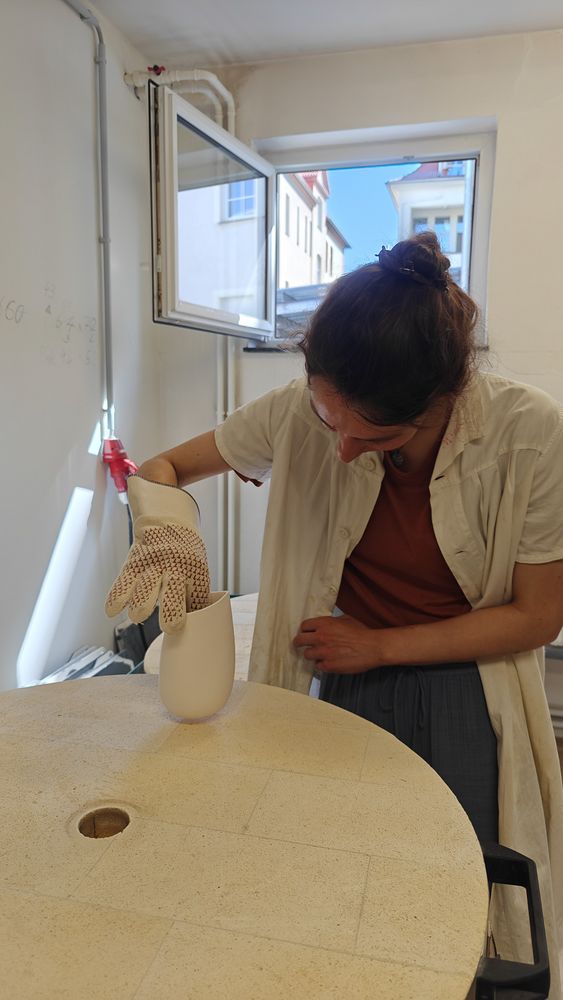
So Charlotte decided to print out a prototype made out of PLA, an organically-based plastic made of renewable resources. With this »dummy«, she worked with workshop employee Robert Elias Wachholz to create a five-part plaster mould that allows the pitcher to be removed. Her next step was to print a negative mould for the future plaster mould, making it so that each individual part could be cast separately. Because PLA can be softened by heat, the plaster mould could late be removed fro the printed form.
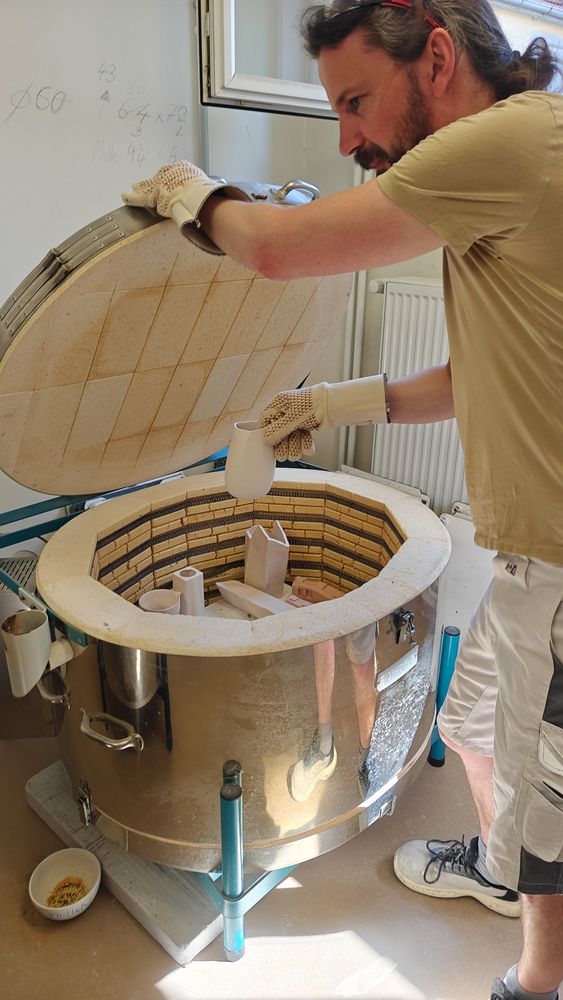
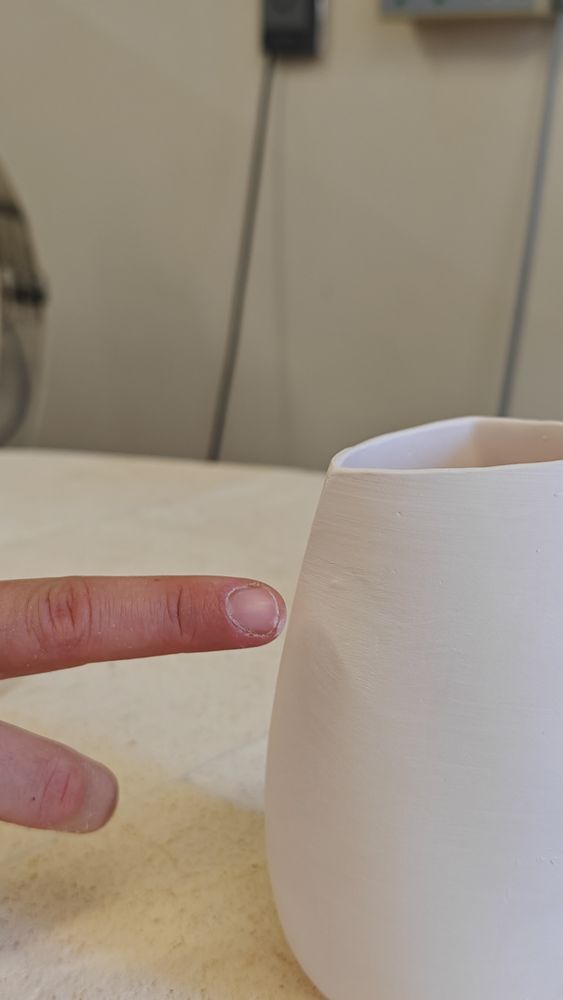
When Robert Elias Wachholz takes the first version of the pitcher, which is still over 200°C, out of the kiln Charlotte is breathes a sigh of relief. The pitcher is nearly perfect. Only a small dent is visible: an imprint of Charlotte’s finger. Her own accidental »prompt«, left on the surface.
From Porcelain Ping-Pong to a Dialogue with Digital Data
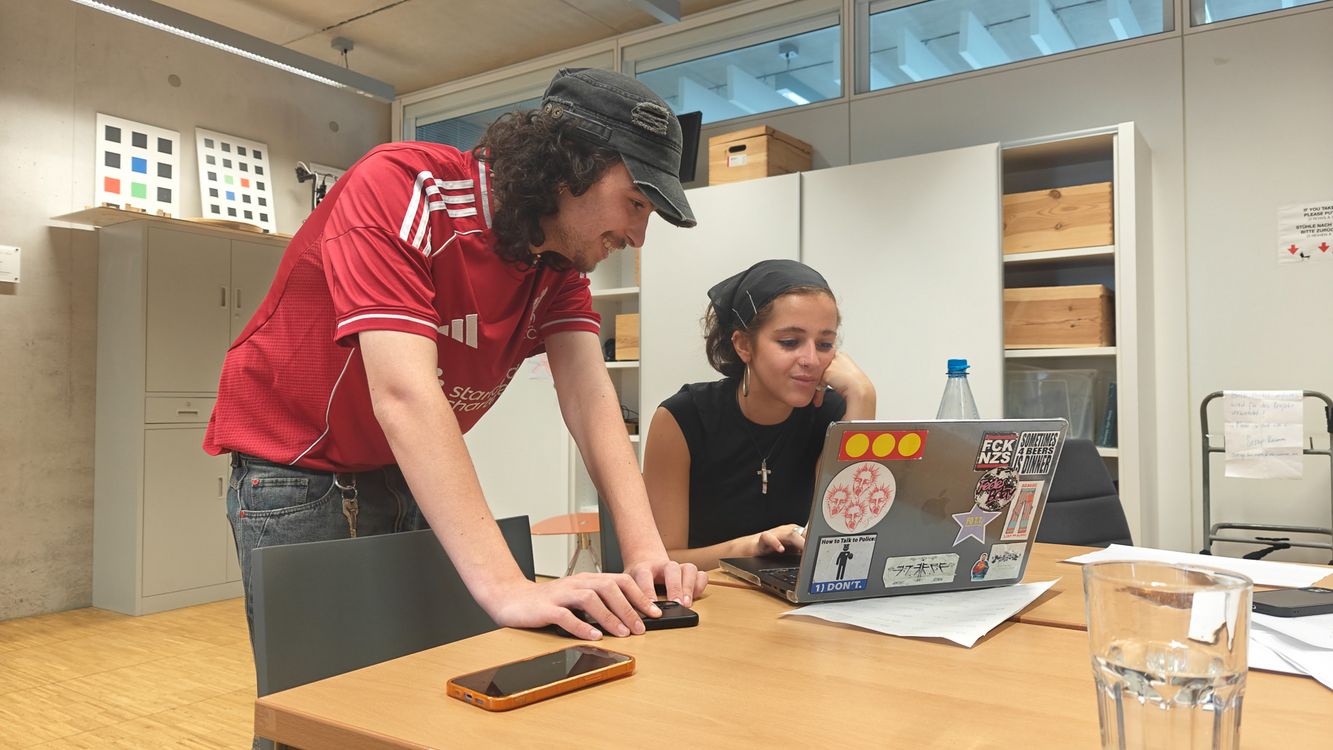
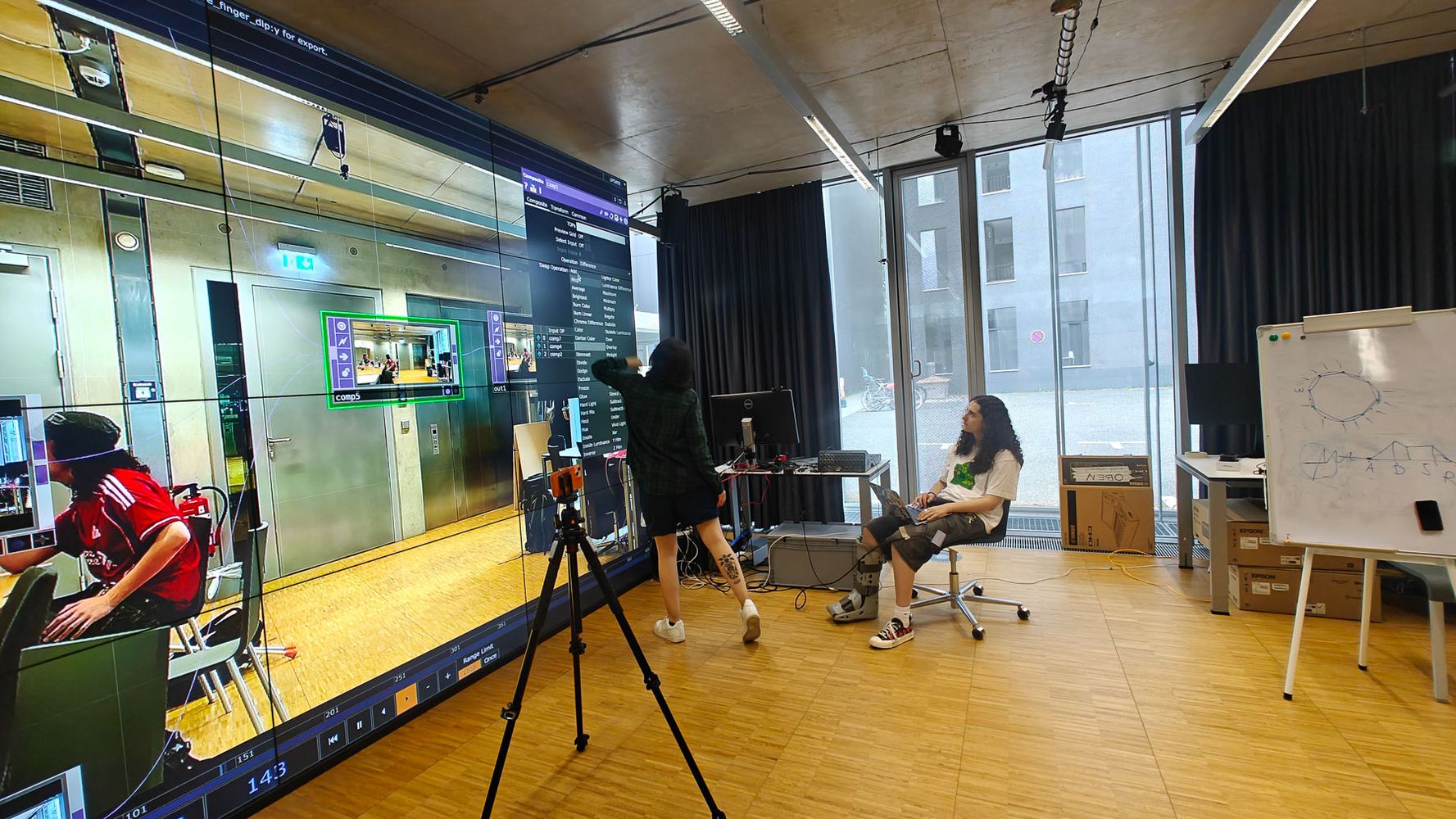
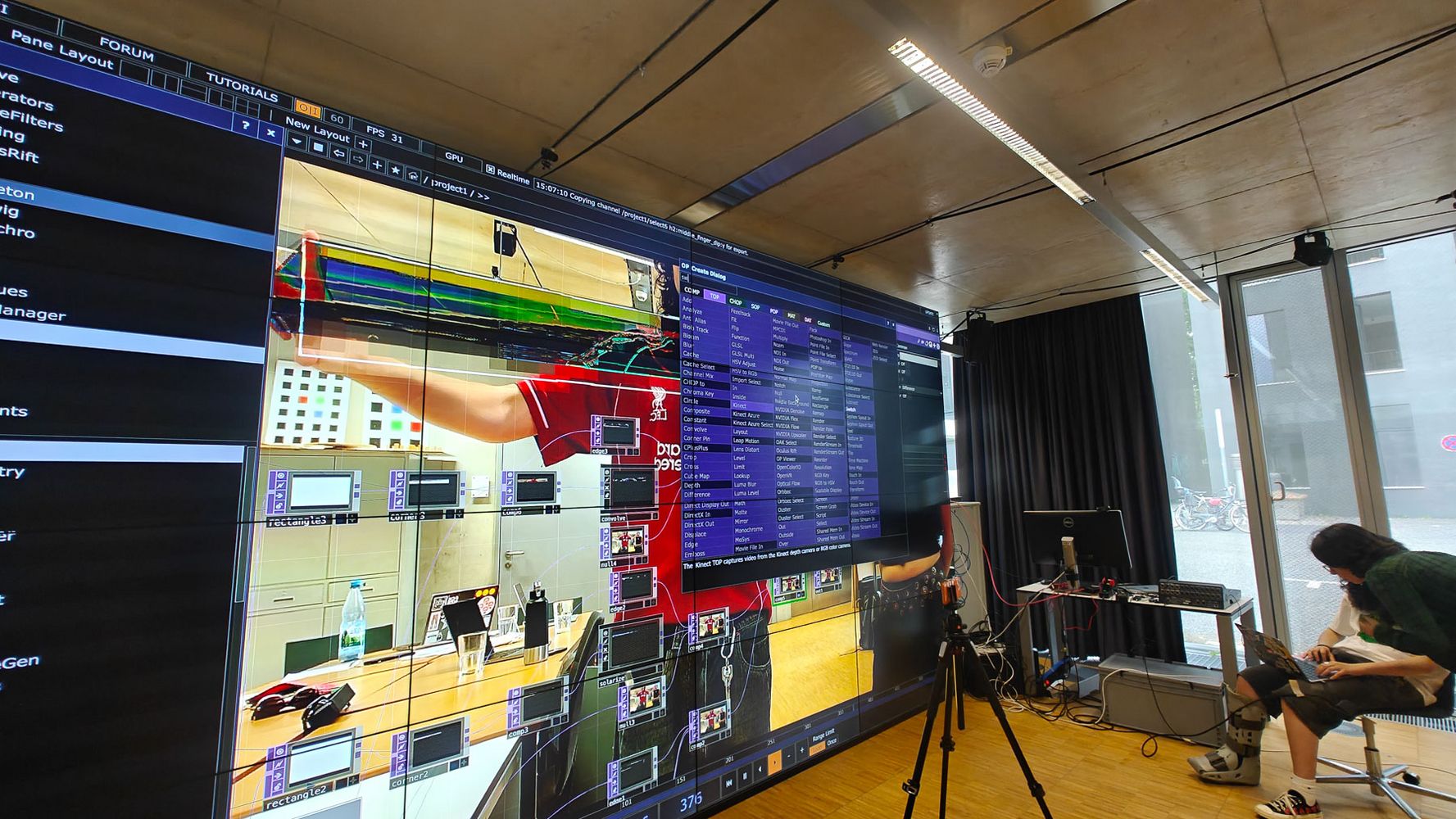
The »Immersive Spaces« course with artistic staff member Isabella Lee Arturo focusses on digital immersive spaces. A visit to the Performance Platform at the Digital Bauhaus Lab: Four students sit at their computers. The tool they are using is called TouchDesigner, a software programme for interactive audiovisual projects. Anyone who believes they can just »vibe-code« their way through this software with a prompt in an AI platform is mistaken; »ChatGPT doesn't help me at all with visual programming«, says Afonso, an exchange student from Portugal.
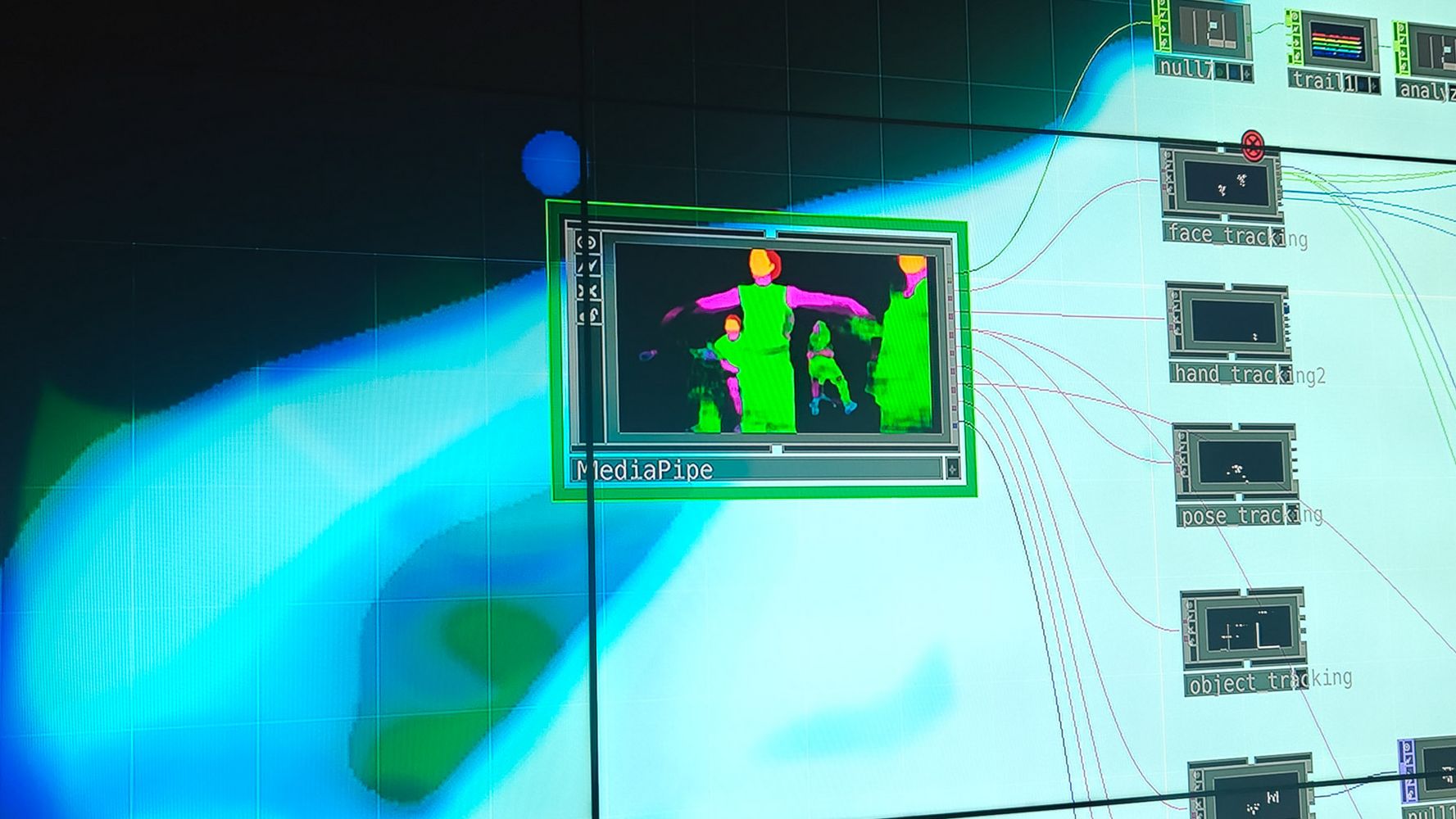
TouchDesigner uses a node-based programming language. Its logic is not expressed as text but built as a network in space: Operators, functional building blocks, as well as parameters and connections. Large language models like ChatGPT, on the other hand, are more helpful with text-based code. They cannot simply interpret the branching structures, settings, and constantly changing values that make up this kind of operator network. When something goes sideways, the students trace the paths of the operators until they find the point where the problem originated.
»Students learn by doing in my course«, says Isabella Lee Arturo. »We start by working with the software, experimenting, repeating, and sometimes failing.« The aspiring media designers »prompt« the creative process at the interface between input and output: the processing stage. Incoming data is processed, normalised, manipulated, and combined through interactions that the students have designed themselves. Lee Arturo compares data to clay: It can be shaped, pressed, and stretched. The result is an installation – interactive and immersive.
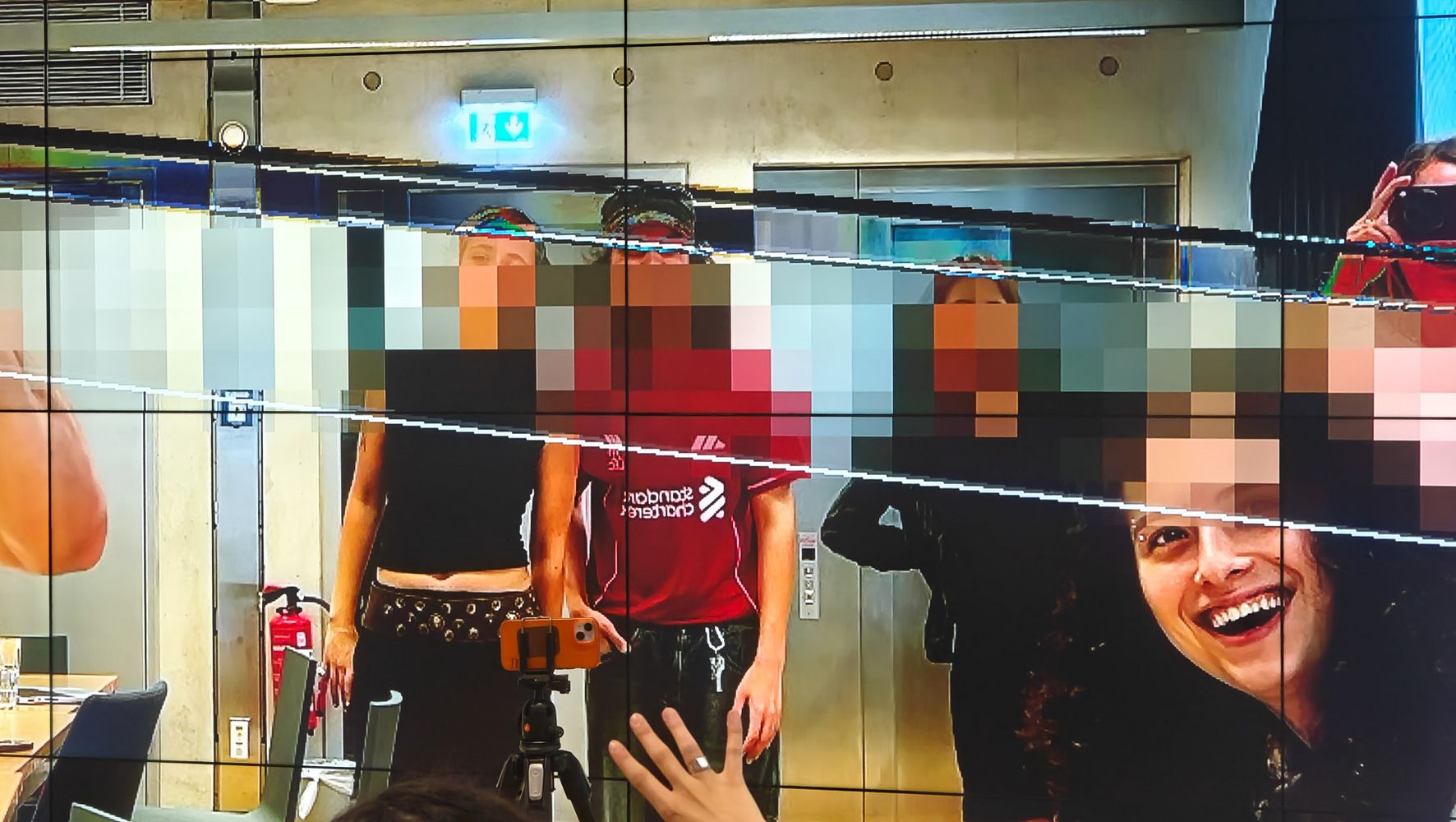
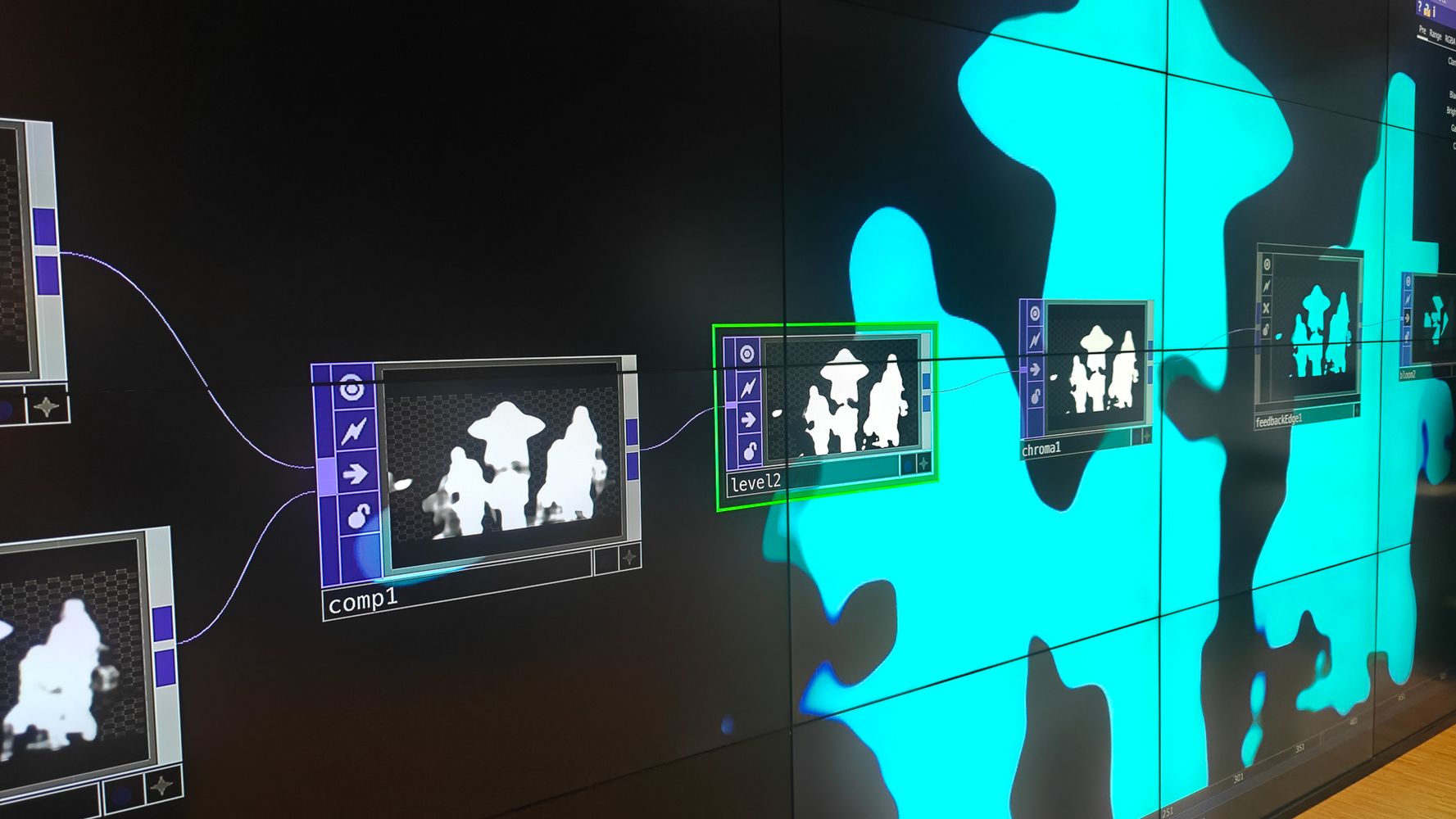
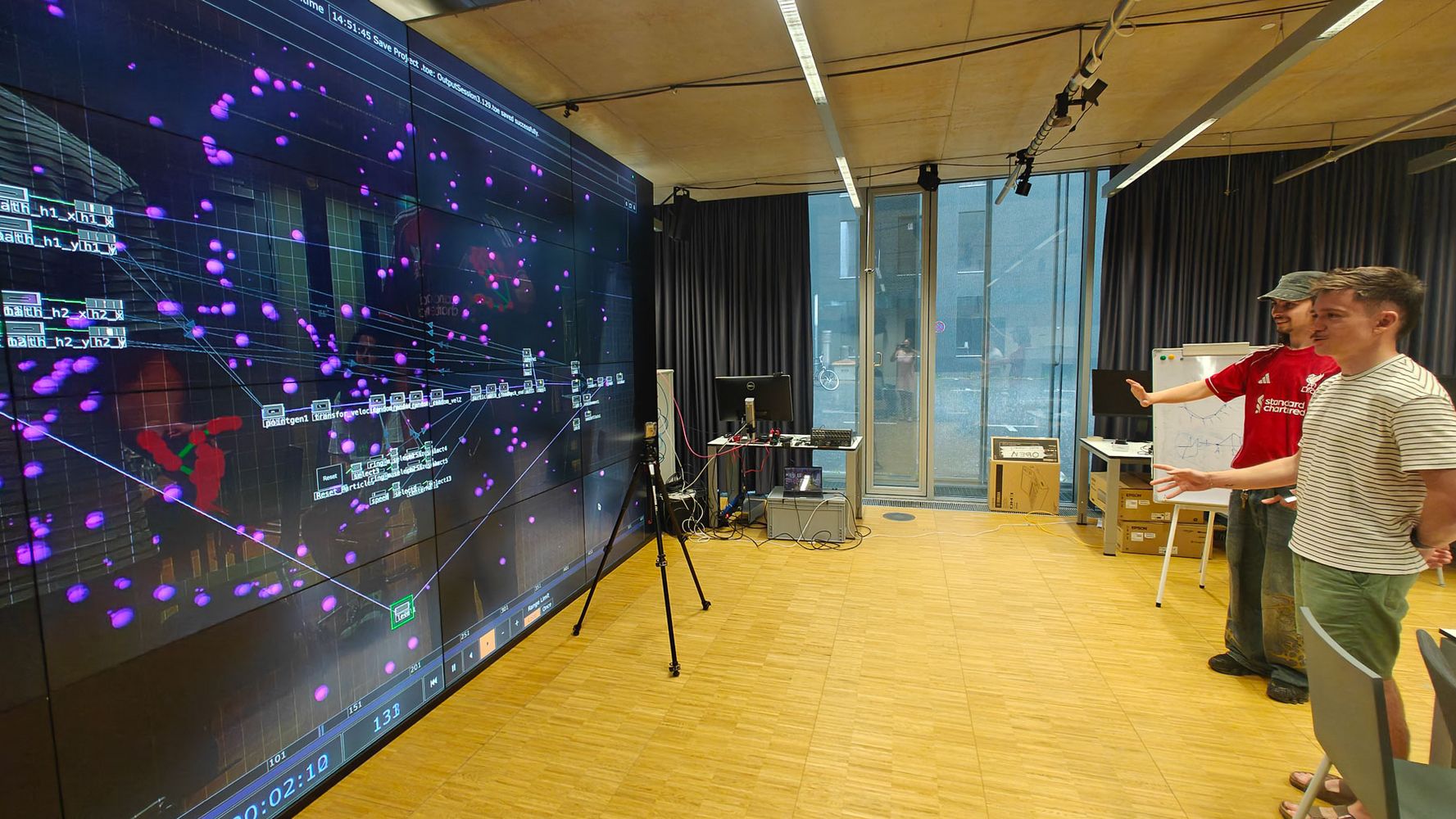
Ines developed an installation that tracks visitors’ hands. Pull them apart, rotate them – and three filters appear on the large video wall that can be controlled through hand movements. Luisa’s work transforms entire bodies into swirling, glowing turquoise shadows. Julian makes pink bubbles stream from his viewer's fingertips: One hand acts like a magnetic field, pulling all the particles towards it and sending them swirling through the air.
Anyone wanting to experience what it feels like to prompt not with words but with hands, gestures, and movement is encouraged to visit »summaery2026« and test out the installations for themselves.
summaery2026 | Fakultät Kunst & Gestaltung
Click the Play button to load and view external content from Vimeo.com.
Automatically load and view external content from Vimeo.com (You can change this setting at any time via our »Data protection policy«.)
Video: Angye Diener
Exhibitions of both projects during summaery2026
Grundlagen keramischer Gestaltung
Specialist Course with Isa Schreiber
Geschwister-Scholl-Straße 13, Room 012
99423 Weimar
Immersive Spaces: Art Installations with TouchDesigner
Specialist Course with Isabella Lee Artuto
Sendehalle Weimar
Humboldtstraße 36A
99425 Weimar
Kontakt
Bauhaus-Universität Weimar
Dana Höftmann
Pressesprecherin
Tel.: +49(0)3643/58 11 73
Luise Ziegler
Mitarbeiterin Medienarbeit
Tel.: +49(0)3643/58 11 80
Fax: +49(0)3643/58 11 72
E-Mail: presse[at]uni-weimar.de
Web: www.uni-weimar.de/medienservice