


Archive

Buchvorstellung »Städtebau im Nationalsozialismus«

Wie wurde Städtebau im Nationalsozialismus zum Instrument von Macht, Ausgrenzung und Krieg? Welche Rolle spielte er im Vergleich zu anderen autoritären Regimen in Europa zwischen 1933 und 1945? Antworten auf diese Fragen gibt eine neue, umfangreiche Publikation, die am 16. Mai, 18 Uhr, im Bauhaus-Museum Weimar der Öffentlichkeit vorgestellt wird.

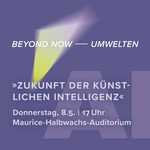
»The Future of Artificial Intelligence« – Invitation to the Third Event of the »BEYOND NOW ⸺ Questions on the Future of Society« Series on 8 May

The third edition of the event series centres around artificial intelligence (AI). The possibilities offered by artificial intelligence AI seem incredible, even magical. Digitalised aspects of life are developing at lightning speed – AI seems omnipresent and omnipotent. This brings up questions that refer to the fundamental relationship between technology and society and can only be answered from an interdisciplinary perspective, a task that guests will attempt during the event.

Scientists from the Computer Science of Media Department at the Bauhaus-Universität Weimar are researching digital watermarks in AI as part of the Lantmark research project. Image: Fraunhofer IDMT, generated with DALL-E 3 (OpenAI) by Patrick Aichroth

Digital Watermarks Help Identify AI-Generated Texts

Whether it’s a chatbot, language assistant, or automatic text generation – artificial intelligence is being used in many areas. But how can we prove whether a text was written by a human or generated through a computer programme? Are invisible watermarks the solution to identifying authorship? The new »Lantmark« research project, which began at the Bauhaus-Universität Weimar in early April 2025 and is being funded through the BMBF with nearly 1 million euros, is hoping to answer these questions.

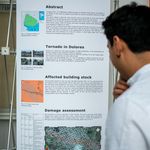
Earthquakes, floods, storms - extreme weather conditions and natural disasters pose major challenges for civil engineers. Students present their latest research findings at various events, including summaery. Bauhaus-Universität Weimar, Photo: Thomas Müller

Progress Through Education: DAAD Supports International Experts from Weimar

The German Academic Exchange Service (DAAD) is funding the English-taught »Natural Hazards and Risks in Structural Engineering« (NHRE) Master's degree programme at the Bauhaus-Universität Weimar with nearly 850,000 euros. This funding will go towards full scholarships for students from developing and industrialising countries and annual grants for tutorials until 2032. Scholarship recipients acquire the technical skills required for planning, construction, and redeveloping in high-risk areas. Once students have successfully completed the programme, they are expected to bring their knowledge back to their home countries as international experts and contribute to sustainable development.

»The Future of Democracy« – Invitation to the Second Event of the »BEYOND NOW ⸺ Questions on the Future of Society« Series on 24 April

The second part of the event series will focus on a variety of questions about the future of our democracy. Democracy did not simply appear out of nowhere and it is not a guaranteed success. For the Bauhaus-Universität Weimar, the experiences of National Socialist, the GDR, reunification, and the post-reunification period all shaped and influenced the understanding of democracy, as was demonstrated in the last elections. How should universities deal with this? How should the Bauhaus-Universität Weimar deal with this?

Many buildings in the Syria city of Aleppo were destroyed in the war. They are to be sustainably re-built in the future. Adobe Stock image, Photo: Torsten Pursche.

Reconstruction After the War – Prospectives for a Sustainable Syria

At least two million buildings have been destroyed in Syria as a result of the war. The majority of these buildings were concrete or steel structures. An international workshop scheduled to take place in Weimar on 24 and 25 April 2024 will focus on the rubble from these buildings can be recycled into valuable raw material. Nearly 100 partners from science, the industry, and politics, including the United Nations (UN), are expected to attend the event.

Logo of the theme year 2025 »BEYOND NOW ⸺ Environments«. Graphic: University Communication

»Beyond Now«: Bauhaus-Universität Weimar Funds Ten Projects as Part of Its Annual Theme

On Thursday, 3 April 2025, the Bauhaus-Universität Weimar presented its six-semester annual theme programme to kick off the summer semester. The current annual theme, »Beyond Now ⸺ Environment«, focussed on projects and partners that explore the interaction between living beings and their material and immaterial environments through research, teaching, science, and art.

»Einhundertvier« Documentary Film by Design Student Jonathan Schörnig Wins »Grimme-Preis«

The film documents the rescue of 104 individuals in the Mediterranean Sea. How a sea rescue takes place is hard to imagine. Jonathan Schörnig, a Media Art and Design student at the Bauhaus-Universität Weimar, portrays this dramatic situation from the perspective of the rescuers in his documentary film »Einhundertvier«. The film has been awarded the prestigious 2025 »Grimme-Preis« in the »Information & Kultur« (information & culture) category.

A historical measurement model of the Denmark’s New Little Belt Bridge is housed at the Professorship of Modelling and Simulation of Structures. Bauhaus-Universität Weimar, Photo: Dana Höftmann

Learning from the Model: From the Historical Bridge Model to the Digital Twin

On 28 and 29 April 2025, the Bauhaus-Universität Weimar will be hosting an interdisciplinary workshop on »Messmodelle« (measurement models) in engineering. As part of the event, scientists from the fields of structural engineering history, civil engineering, design theory, heritage conservation, and restoration science will be exploring the historical context of model statics and discussing strategies for their preservation. All those interested are cordially invited to the event.

Logo of the theme year 2025 »BEYOND NOW ⸺ Environments«. Graphic: University Communication

»Beyond Now – Questions on the Future of Society«: Discussion Series Dedicated to Future and Current Social Development Questions

The Bauhaus-Universität Weimar will begin its first annual theme series, »BEYOND NOW⸺ Environment ⸺ Technology ⸺ Human« in the 2025 summer semester. The »Beyond Now – Questions on the Future of Society« event series is an essential part of the annual programme. It is intended to highlight current social issues and combine regional, national, and international perspectives. Leading guests from the Bauhaus-Universität Weimar and other institutions will join students and the audience to discuss developments that are bringing about profound changes, providing mutual support, and shaping our society in the long term from an interdisciplinary perspective.

Safety auditors are trained at the Professorship of Transport System Planning. Bauhaus-Universität Weimar, Photo: Raphael Obertreis

Network Meeting and Training for Improved Road Safety in Weimar

On 31 March and 1 April, the »Forschungsgesellschaft für Straßen- und Verkehrswesen e. V. (FGSV)« and the Professorship of Transport System Planning at the Bauhaus-Universität Weimar have organised the »Symposium Verkehrssicherheit von Straßen« at the Congress Centrum Weimarhalle. The 2025 topics include looking at serious cycling accidents on rural roads, improving road markings, and safe school routes. The goal is to qualify decision-makers in politics, transport planning, and research in order to identify and eliminate road traffic risks.

Mortar boards with a new form of geopolymer-based coating. Photo: Bauhaus-Universität Weimar/ Professorship of Construction Chemistry and Polymer Materials

Hannover Messe 2025: The Bauhaus-Universität Weimar Presents Building Materials of the Future

From masonry made out of »Mikrowellenstroh« (microwave straw) and snail slime, to self-healing intelligent concrete – the Bauhaus-Universität Weimar will be represented at this year's industrial trade fair in Hanover with four world premières from the Faculty of Architecture and Urbanism and the Faculty of Civil and Environmental Engineering. The exhibits will be on display from 31 March to 4 April 2025 at the joint »Forschung für die Zukunft« stand, which brings together pioneering research projects from the states of Thuringia and Saxony-Anhalt.

The team could be seen drilling and painting the exhibition stand right up until the last moment. Photo: Jacob Heine

Don’t Mind the Gap: Leipzig Book Fair Stand Invites Visitors to Linger and Dream at the Imaginary Underground Station

The Bauhaus-Universität Weimar is continuing its long-standing tradition of participating at the Leipzig Book Fair with its own stand from 27 to 30 March 2025. This year’s concept is especially surprising: It teases visitors with a suggested entrance to an underground station. It invites visitors to take an imaginary journey from Hall 5 in Leipzig directly to Weimar.

Logo of the theme year 2025 »BEYOND NOW ⸺ Environments«. Graphic: University Communication

BEYOND NOW – Bauhaus-Universität Weimar Begins with Its Annual Themes in April

The Bauhaus-Universität Weimar will begin its first six-semester annual theme series, »BEYOND NOW⸺ Environment ⸺ Technology ⸺ Human« in the 2025 summer semester. The Presidential Board hopes to increase the visibility and effectiveness of research, teaching, and transfer activities in society by the end of the 2027/2028 winter semester.

International Students Present Multifaceted Exhibition on the Holocaust and Second World War in the DNT's Redoute

Students from the Visuelle Kommunikation (Visual Communication) and Media Art and Design degree programmes artistically explored the individual and collective memories of the Holocaust and the Second World War. Films, video collages, set designs, and screenplay projects were created in several projects and courses. The students are presenting their work under the title »Morgen ist heute gestern« as part of the Deutsche Nationaltheater and Staatskapelle Weimar’s »Ressource Erinnerung« in the Redoute.

From initial drafts to material to construction process - innovative 3D printing processes have opened up new possibilities for architecture and construction. Bauhaus-Universität Weimar, Photo: Thomas Müller

What Potential Does 3D Printing Contribute Hold for the Construction Industry?

3D printing opens up completely new possibilities for architecture and construction. Nearly 100 scientists from the fields of civil engineering, architecture, and materials science will share their expertise on the extent to which 3D printing can be used to improve construction during a symposium held at the Bauhaus-Universität Weimar on 31 March and 2 April 2025.

Early-career researchers Maria Hartmann (left) and Gloria Maria Kohlhepp (right) are working on developing the system’s technology through long-term trials under real conditions. Bauhaus-Universität Weimar, photo: Thomas Müller

Grey Water for a Green City: Innovative Reallabor in Weimar

Rising temperatures and poor air quality make the effects of climate change noticeable in urban living spaces. Façade greening could revitalise urban spaces while also improving microclimates. But how can modern urban greenery be watered in a resource-friendly way? Using grey water is one approach being researched in Weimar. In order to scientifically test the long-term effects, the Thüringer Aufbaubank is granting the joint »Reallabor GrayToGreen« project, led by the Bauhaus-Universität, Weimar, nearly 770,000 euros in funding.

Illustration of the posters

Success for Design Students at the »100 Beste Plakate« Competition

Two Visuelle Kommunikation (Visual Communication) students from the Bauhaus-Universität Weimar are being recognised for their submissions to the renowned »100 Beste Plakate« competition for the 100 best posters in Germany, Austria, and Switzerland. Helene Dennewitz and Ossian Osborne were each awarded one of the coveted prizes. Competition was fierce again this year: A total of 2509 posters from 711 entrants were submitted to the competition.

Logo of the conference

Jahrestagung der Sprecher*innen der Kunst- und Musikhochschulen an der Bauhaus-Universität Weimar

Kunst- und Musikhochschulen stehen in der Hochschulkommunikation besonderen Herausforderungen gegenüber. Diese resultieren aus ihrer Struktur, ihren Zielgruppen und ihrem Selbstverständnis. Sie verkörpern eine freie, kreative und nicht-kommerzielle Denkweise, müssen sich jedoch im Wettbewerb um Studierende, Fördermittel und Sichtbarkeit behaupten. Vom 12. bis 14. März 2025 treffen sich die Sprecher*innen der deutschen Kunst- und Musikhochschulen an der Fakultät Kunst und Gestaltung der Bauhaus-Universität Weimar. In diesem Jahr steht die Krisen- und Haltungskommunikation im Mittelpunkt des Treffens.