
There are several important questions to consider when publishing a dissertation: How can I efficiently manage my literature? What are the legal considerations for using images? What are the formal requirements for submitting my thesis?
Publication Day 2026 will offer doctoral candidates essential information about all facets of academic publishing. In mini-workshops, our experts will cover key publishing topics.
The event is free of charge and takes place online.
Programme 2026
| 09:00-09:30 | »Writing to be read« with Dr. Franziska Matthes This kick-off impulse connects text planning with writing and publishing. We explore the questions: What does publication-oriented writing actually involve? Which communication strategies can I apply while writing to make my texts more reader-oriented? Hich methods and tool can be helpful? This session offers specific prompts you can apply directly to your own writing. |
| 09:30-10:00 | »Introduction to Zotero: Efficient Management and Citation of Literature« with Dr. Moritz Lampe Zotero is a free, user-friendly reference management program compatible with Mac, Windows, and Linux. It provides reliable support for your academic work by helping you collect and organize references, eBooks, PDFs, and sources. Additionally, Zotero can automatically create citations and reference lists in word processing software such as Microsoft Word or LibreOffice. In this concise introductory course, you will become familiar with the essential functions of Zotero, receive practical tips for everyday doctoral work, and have the opportunity to ask questions. |
| 10:00-10:30 | »Publication of Research data on REFODAT« with Kevin Lang The Research Data Repository in Thuringia (REFODAT for short) has been publicly available since 2024 and can be used by researchers in Thuringia to publish or store their research data. This talk will explore the system’s use cases and how its use can ensure compliance with the FAIR principles (Findable, Accessible, Interoperable, Reusable). |
| 10:30-11:00 | »The correct way to state affiliations in publications« with Kevin Lang The affiliation guidelines for research-related publications at the Bauhaus-Universität Weimar were published in April 2025 and serve as a basis for how researchers should state their affiliation in publications. This talk will explore the historical background to the guidelines and explain why the individual aspects of the guidelines are important for doctoral candidates. |
| 11:00-12:30 | »Images and Image Rights in Scientific Practice« with Thomas Witzgall This lecture offers a concise overview of the legal challenges associated with the use of images. It will address questions such as when and how images may be cited or reused. Additionally, the lecture will explain how you can legally protect your own images and what rights you have regarding your likeness. Practical tips will be provided to help you recognize potential risks when using images and to ensure that your usage is legally compliant. |
| 12:00-13:00 | Break |
| 13:00-14:00 | »Submitting the legal deposit copies – the final stage of your doctorate« with Heidi Körner The defence was successful and there is just one thing left to do before you receive your degree certificate – submitting the legal deposit copies to the library. What do I need to do? What should I keep in mind, and what are the requirements for the legal deposit copies? What role does the Thuringia Digital Library (DBT) play in the publication process? This workshop provides answers to formal and organisational questions. |
| 14:00-15:00 | »Publishing scientific papers in Open Access« with Dana Horch Researchers can publish their articles freely available through open access transformative agreements or with genuine gold open access publishers. This talk will outline current funding and grant opportunities. We will discuss topics such institutional affiliation, licences, choosing a suitable journal and other aspects of quality-assured publishing. |
| 15:00-16:00 | »ORCID and its interfaces at the Bauhaus-Universität Weimar« with Kevin Lang For several years now, the ORCID iD has become the standard for researchers to identify themselves using a persistent identifier. This lecture will explore the benefits of the ID and how best to maintain your ORCID profile. It will then look at the university’s interfaces with the ID and how they help to import and export data relating to your works. |
| 16:00-16:30 | »Stay tuned: Additional offers on publishing during and after your doctorate« with Dr. Franziska Matthes |
Speakers
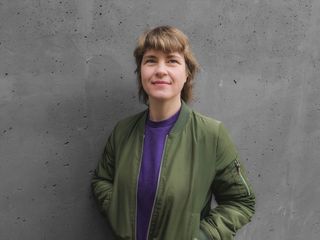
Dana Horch is a Specialist Librarian for Economics, Computer Science, Law, Politics, and History at Weimar University Library. In her role as Open Access Officer, she provides guidance on Open Access publishing and funding options through the Open Access Publication Fund, transformation contracts, and other Open Access initiatives. She assists academics throughout the publication process, promoting open scholarly communication and helping them choose reputable publication venues.
Heidi Körner is a qualified librarian (FH) working in the Media Processing Department of the University Library. In addition to cataloguing printed materials, she manages the publication portal ‘Digitale Bibliothek Thüringen’ (DBT), which serves as the repository for the Bauhaus-Universität Weimar's electronic full texts. She is also the main contact for doctoral candidates. She serves as the contact person for submitting and publishing deposit copies for doctoral candidates at the university.

Dr. Moritz Lampe is an art historian and a subject specialist in art, design, and photography at the University Library of the Bauhaus-Universität Weimar. He earned his doctorate in Renaissance art theory from the University of Florence and has conducted research at the Institute of Art History in Florence (Max Planck Institute), the Warburg Institute in London, and the University of Leipzig. His research interests include tomb art, the history of photography, artists' biographies, and bibliographic studies of art books.
Kevin Lang works in the Research Data Management (RDM) department at Bauhaus-Universität Weimar. He is a trained media designer and holds a Master of Science in Media Informatics from Bauhaus-Universität Weimar, as well as a Master of Arts from Humboldt-Universität zu Berlin. Since 2018, he has been a member of the Thuringian Competence Network for Research Data Management. In his role in RDM, he focuses on various aspects of digitization, including the Thuringian Repository for Research Data (REFODAT), the National Research Data Infrastructure (NFDI), and ORCID.
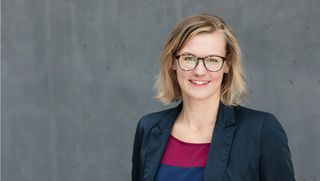
Dr. Franziska Matthes is a communication scientist and works as an scientific advisor at the Bauhaus Research School. In her lectures on academic working, in workshops for doctoral candidates and teaching staff, as well as in university-wide events, her focus is on fostering writing skills and on a nuanced engagement with the use of AI in academic work processes.
Thomas Witzgall is a subject librarian for law at the Thuringian University and State Library (ThULB) in Jena. As a fully qualified lawyer, he also focuses on library-specific legal issues, copyright law, open access and AI. In terms of professional policy, he has been active for many years in the Commission for Legal Issues of the Association of German Librarians.