
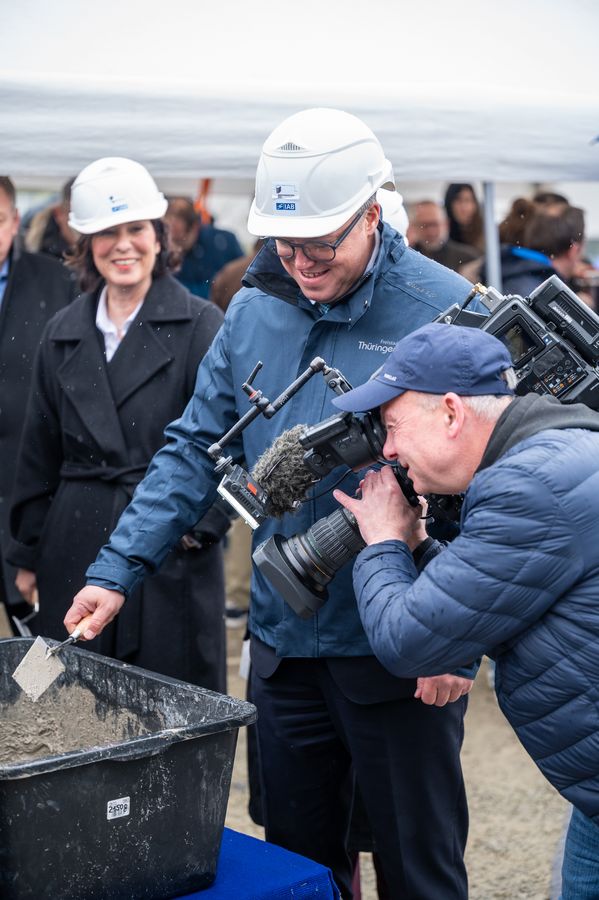
Ground-Breaking Ceremony for New Innovation Centre: The Future of Construction is Underway in Weimar
Joint media release from the Thüringer Staatskanzlei (Thuringian State Chancellery), Thüringen Ministry of »Wirtschaft, Landwirtschaft und Ländlichen Raum«, and the »Thüringer Innovationszentrum für die Zukunft des Bauens« (ThIZ-BAU)) on 20 April 2026: New building for the ThIZ-BAU in Weimar boosts innovation, generates value and technology transfer in the construction industry – and receives over 10.6 million euros in funding
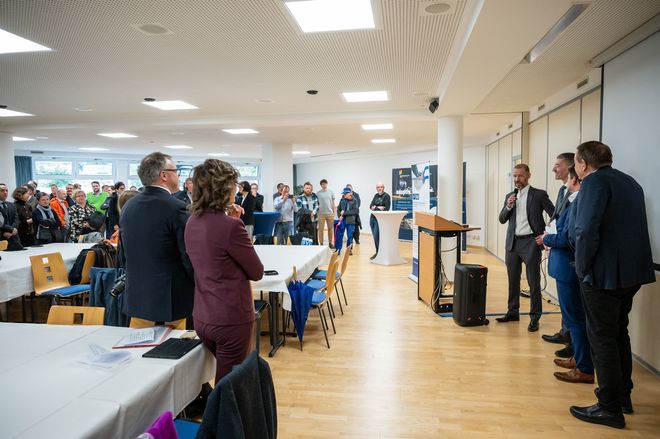
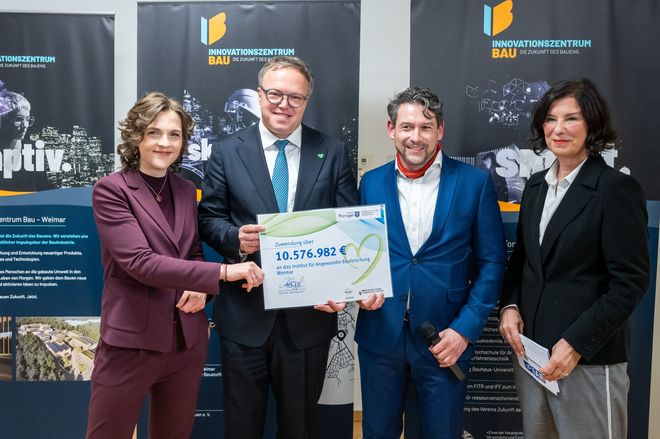
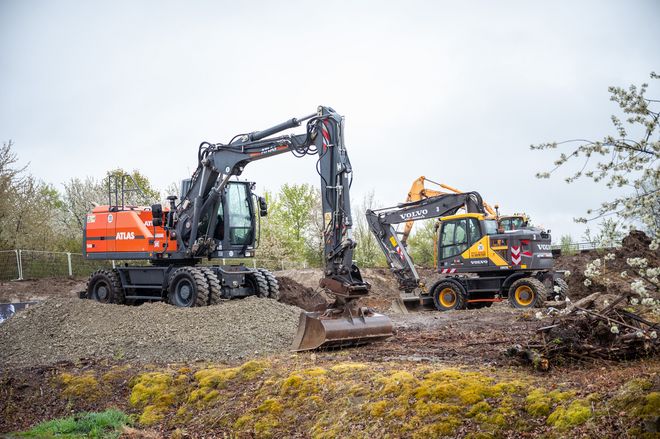
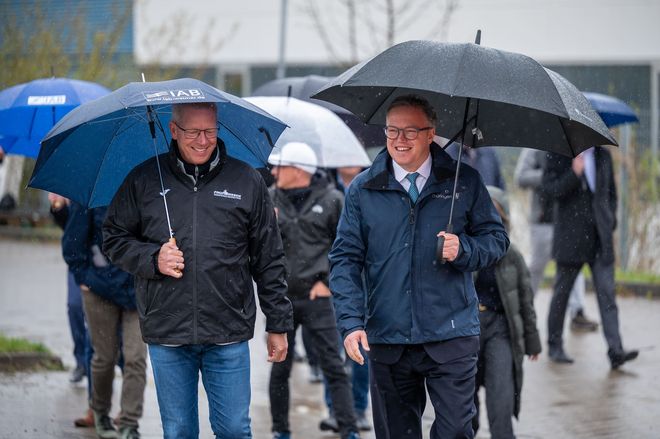
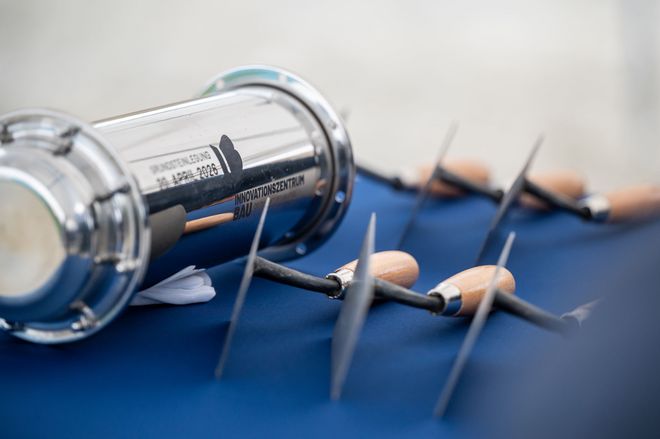
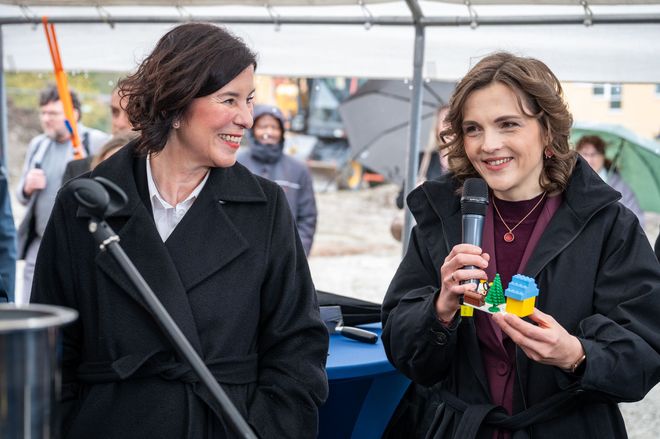
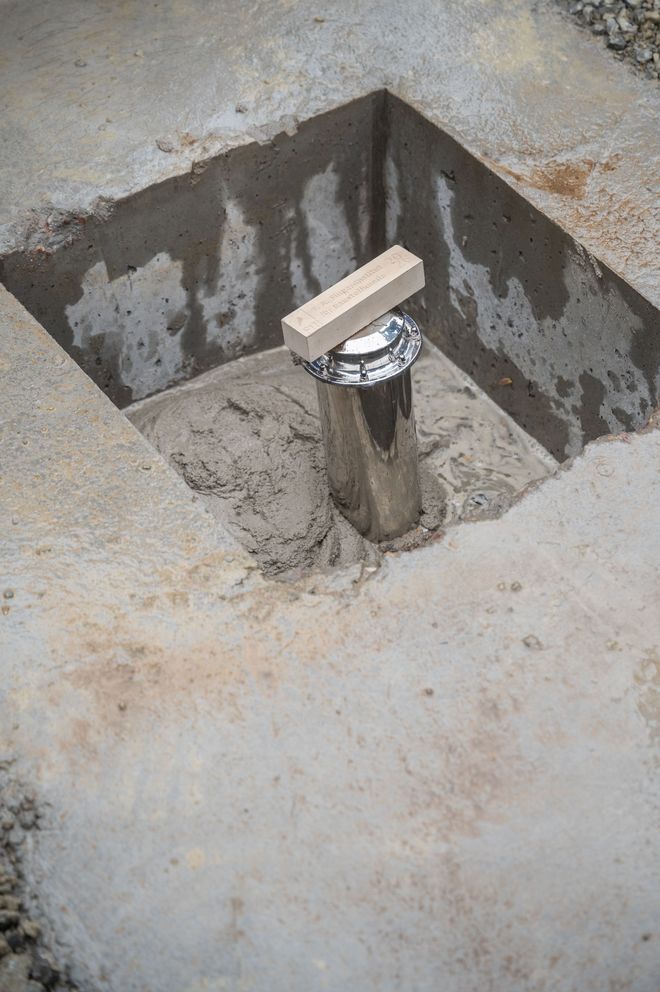
With today’s official ground-breaking ceremony, Minister President Mario Voigt and Minister of Economic Affairs Colette Boos-John, together with the Federal Minister of State for East Germany, Elisabeth Kaiser, launched the construction of a new technical centre for the »Thüringer Innovationszentrum für die Zukunft des Bauens« (ThIZ-BAU) in Weimar. The Minister of Economic Affairs presented a grant for just under 10.6 million euros in grant funding to the »Institut für Angewandte Bauforschung« (IAB Weimar). The funding from the »Verbesserung der regionalen Wirtschaftsstruktur« (GRW) joint task force is divided equally between the federal and state governments. The total cost for the new building will amount to just over 15 million euros.
The ThIZ-BAU is designed to be a high-performance research and transfer centre in Weimar dedicated to sustainable, resource-friendly, climate-friendly construction. The goal is to develop innovative construction materials and processes and to speed up the transfer of research findings into industrial practice. The facility covers about 4,300 square metres and offers space for new industry-oriented projects, demonstrations, testing, and research – all of which can be done on a large scale. The new technical centre is part of a »Bundesforschungszentrums für klimaschonendes und ressourceneffizientes Bauen« (BFZ) and specifically strengthens eastern Germany’s role as a knowledge and economic hub for sustainable construction.
Photo Gallery, Photos: Thomas Müller
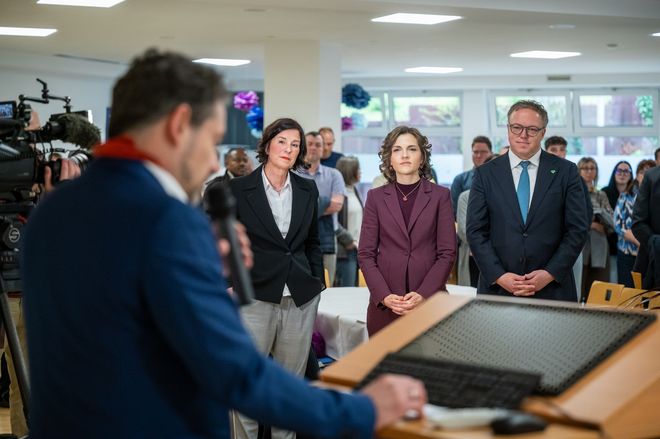
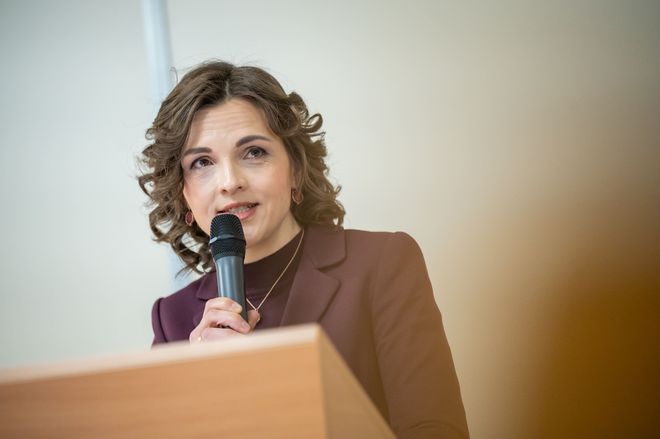
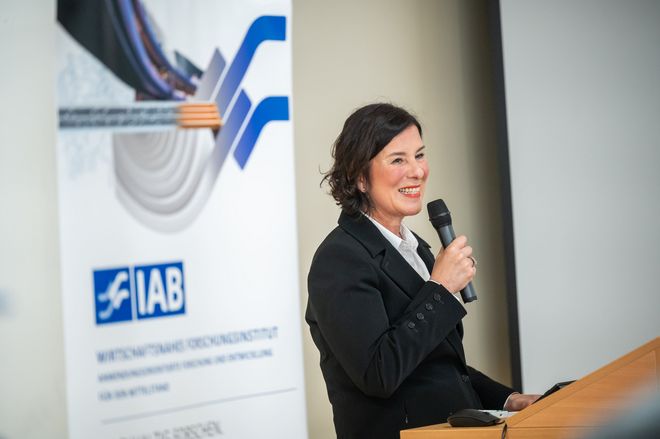

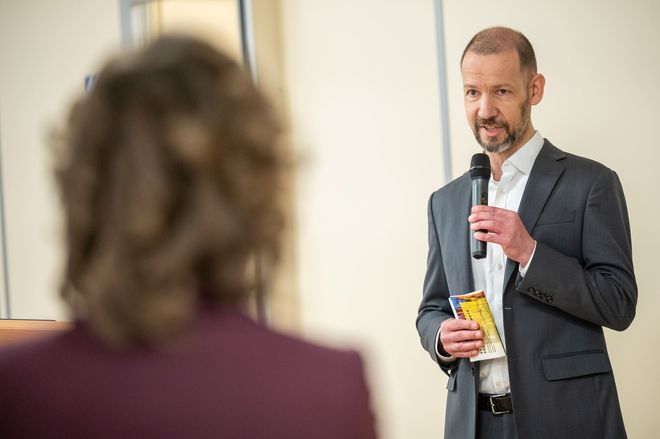

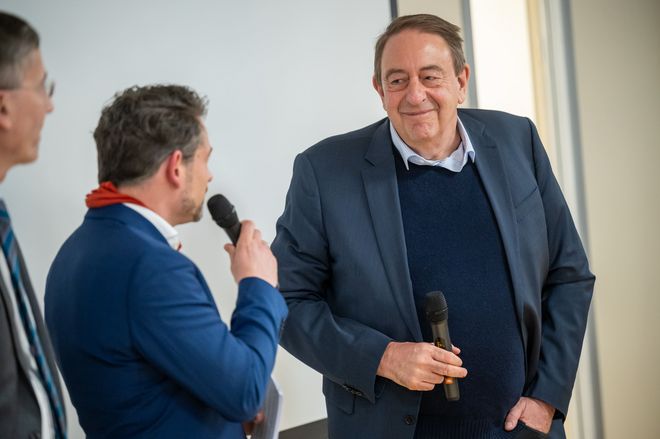
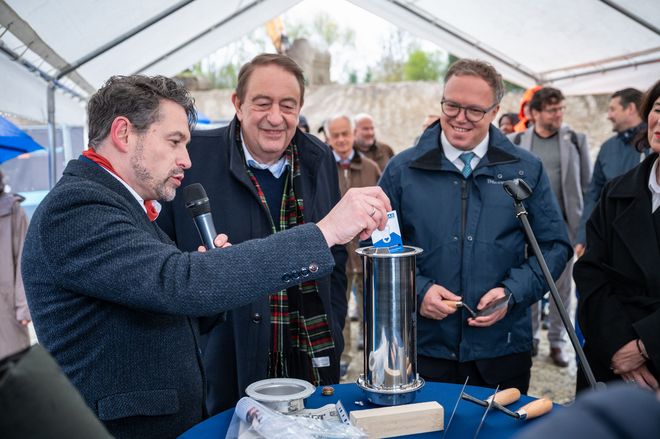
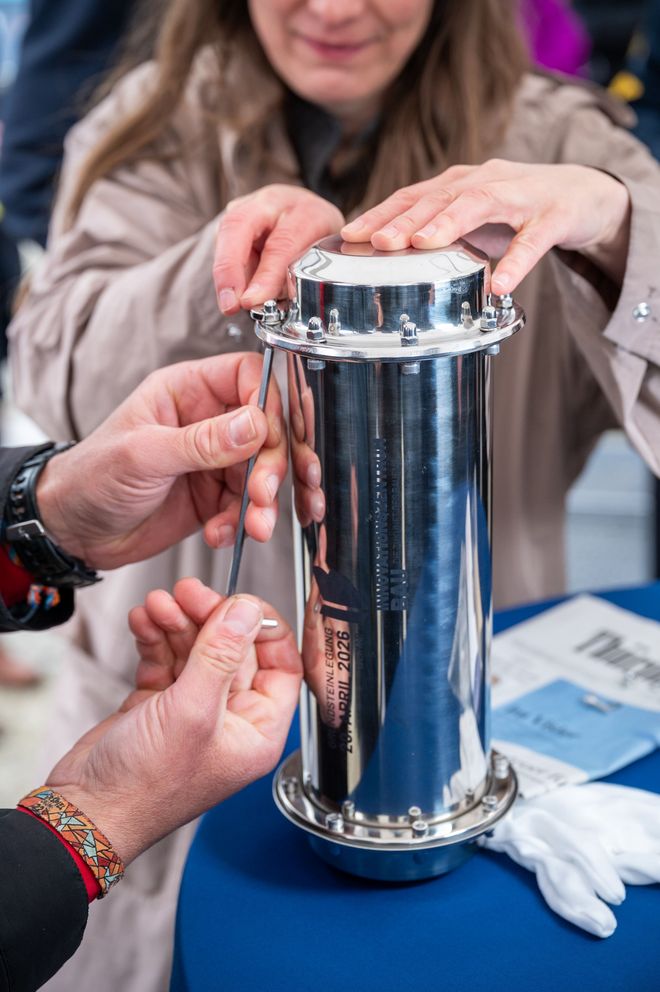
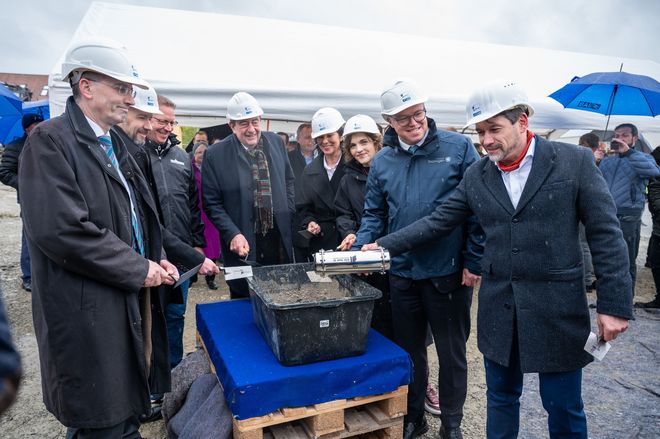
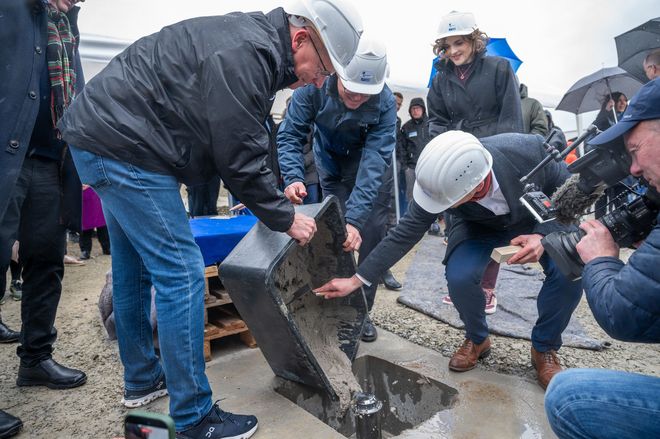
Minister President Mario Voigt stressed the strategic importance of the project: »The construction sector in particular is faced with decisions on how we will live, work, and do business in the future – and whether we will achieve our climate targets. The ThIZ-BAU will strengthen Thuringia’s reputation as a centre for sustainable construction innovation. A centre is being established in Weimar that consistently brings together research and application – from the labs straight to the construction site. Solutions are being developed here that will modernise our construction industry and make it more efficient and climate-friendly. Thuringia is actively influencing this transformation through innovation that makes a difference in everyday life. This is beneficial for our businesses and employees, and generates value across the state.«
Minister of Economic Affairs Colette Boos-John highlighted the economic policy objective: »The ThIZ-BAU is a central project and part of a transformation-focussed industrial and innovation policy. We are investing not just in research, but also in application-oriented infrastructure that the business community can put to use. Small and mid-sized businesses in particular will benefit from access to modern research infrastructure here in the future, allowing them to test out new materials and processes and bring innovations to the market more quickly.«
Federal Minister of State for East Germany Elisabeth Kaiser emphasised the supra-regional significance of the project: »I’m so pleased to break ground here today. This is significant not just for the Innovationszentrum-Bau, but also for the Federal Construction Research Centre in Weimar. The new research centre will strengthen Weimar’s current research network. Today and in the future, science, practice, and politics are coming together here to make the construction and building sector climate-neutral. The new research building and the Federal Construction Research Centre represent climate neutrality and resource efficiency in construction. Weimar embodies the symbiosis of tradition and future-focussed expertise and is a beacon for climate-neutral construction and illustrating how regions can grow through smart investment and collaboration. Today’s ground-breaking ceremony clearly demonstrates the increase in innovation in eastern Germany. Thank you to everyone who has made this forward-thinking project possible!«
The ThIZ-BAU combines the expertise of three outstanding partners in Weimar: the Bauhaus-Universität Weimar, the Materials Research and Testing Laboratory (MFPA), and the IAB Weimar. Together, they cover the entire innovation chain from basic research to application-focussed development. Over 500 employees are already currently working on projects within this network.
Thuringia as a Lab for Sustainable Construction
The centre focuses on topics related to the future of construction. These include alternative raw materials, innovative binder systems, recycling processes, digitalisation, and energy-efficient and increasing the use of electricity for processes that previously relied on fossil fuels. New construction methods, like modular concepts and 3D printing, as well as circular economies play a significant role. The aim is to speed up the translation of scientific findings into marketable solutions and to make innovation cycles more efficient.
A major focus is on transferring research into the business sector. The new research centre is designed to function as a demonstration and transfer facility where technologies can be developed and tested with businesses under realistic conditions. The project is closely connected to the creation of a federal research centre for climate-neutral and resource-efficient construction in Weimar.
The construction sector is a key industry in Thuringia and Germany: Across the nation, the sector generates nearly 200 billion euros a year. In Thuringia, 6.7% of gross value added can be attributed to the construction industry, which is made up of around 2,600 typically small and mid-sized businesses and employs some 24,500 people. At the same time, the sector is one of the most resource- and energy-intensive branches of the economy. When it comes to rising energy and material costs, dwindling raw materials, a shortage of skilled workers, and ambitious climate targets, the sector is facing a profound transformation process.
More information on the »Innovationszentrum-Bau« can be found at:
www.die-zukunft-des-bauens.de