
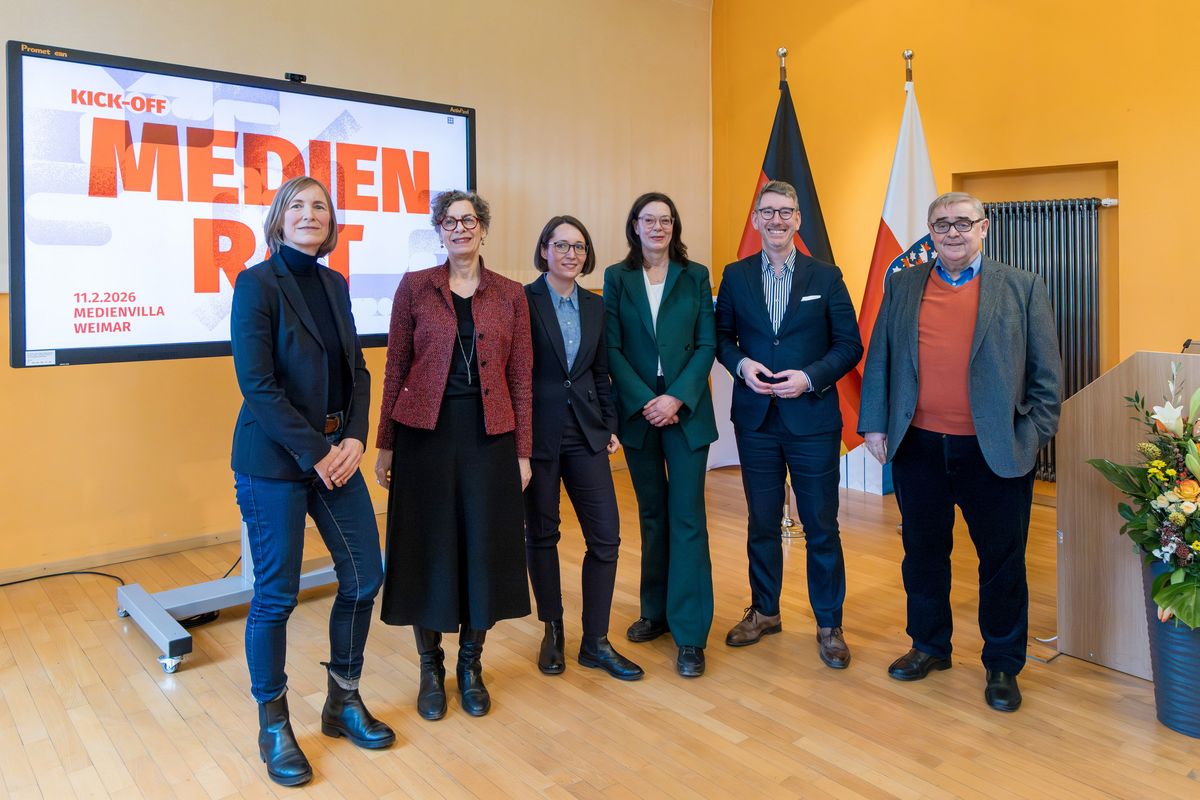

Media Council Begins Work – Experts and Council Members Introduced at the Bauhaus-Universität Weimar
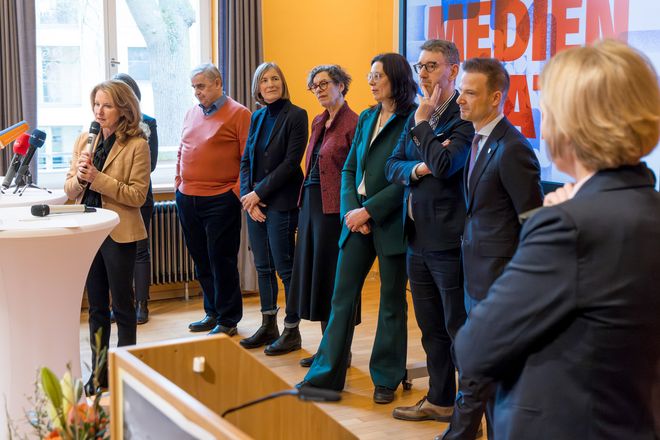
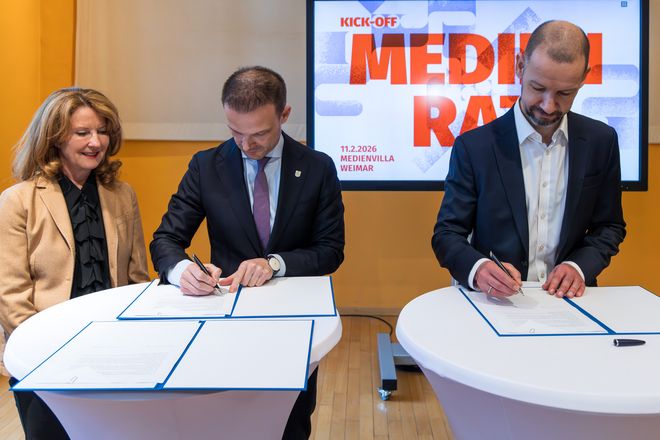
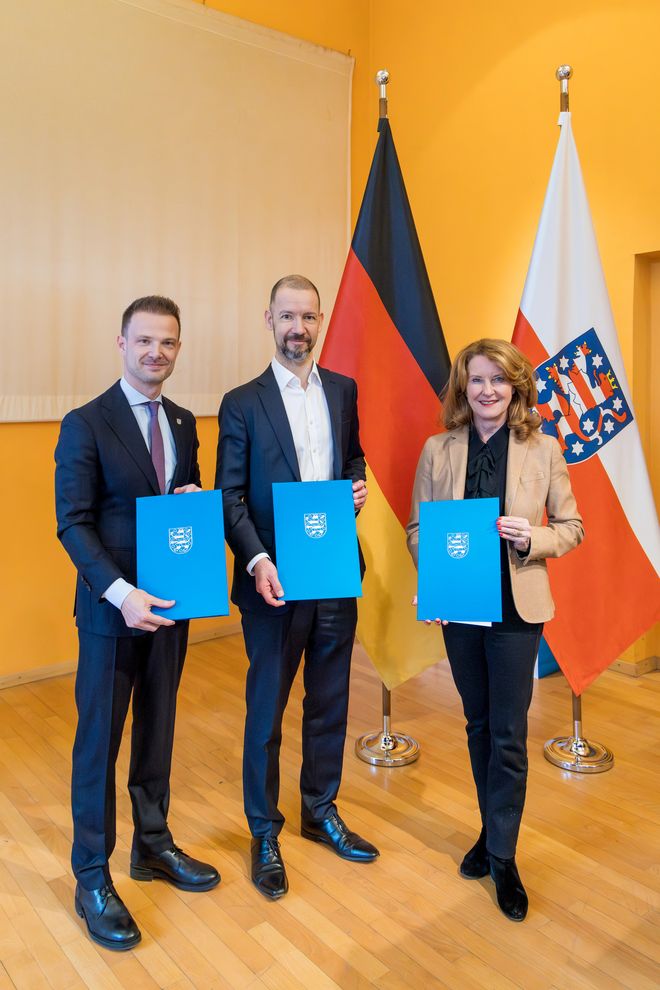
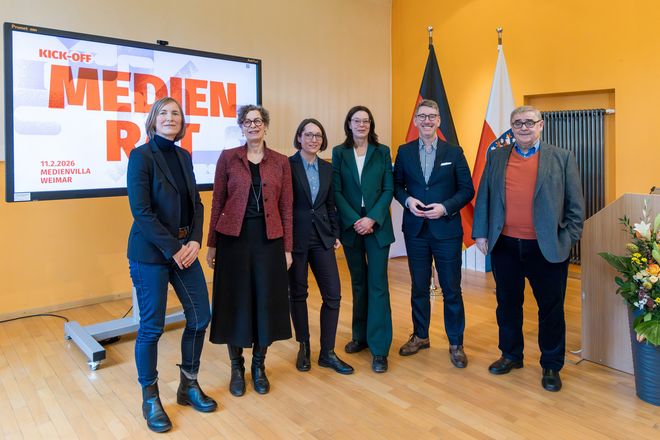
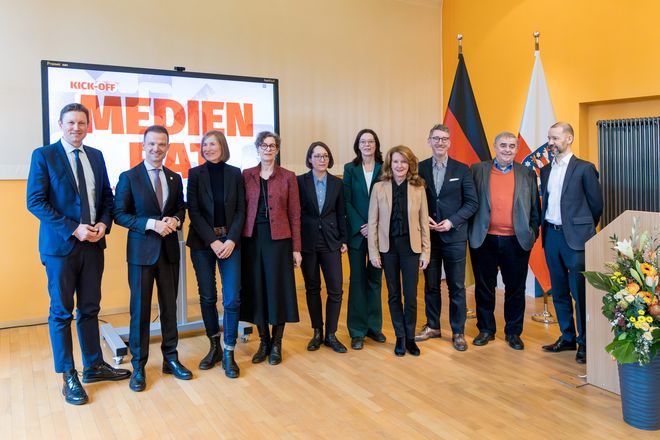
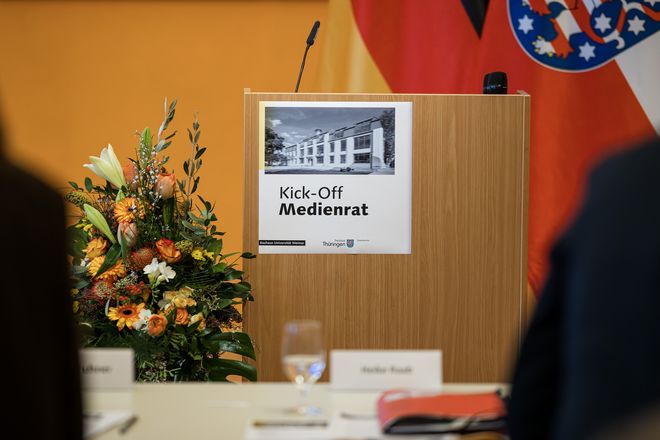
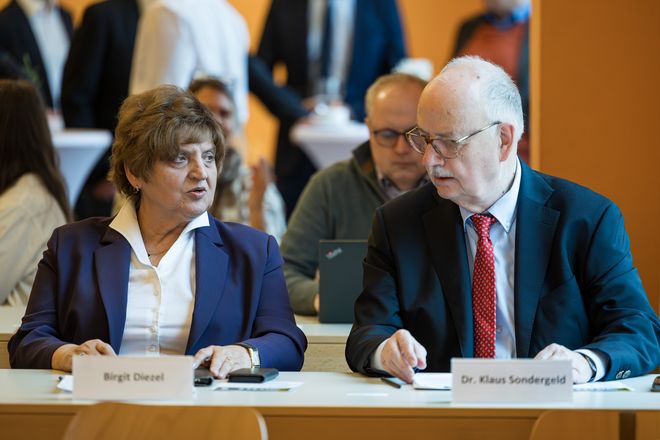
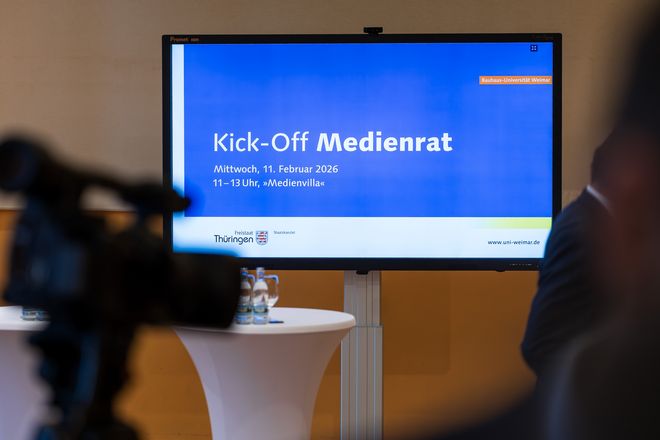
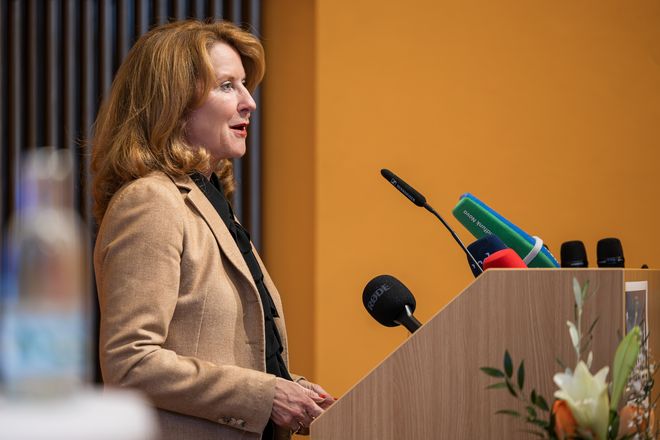
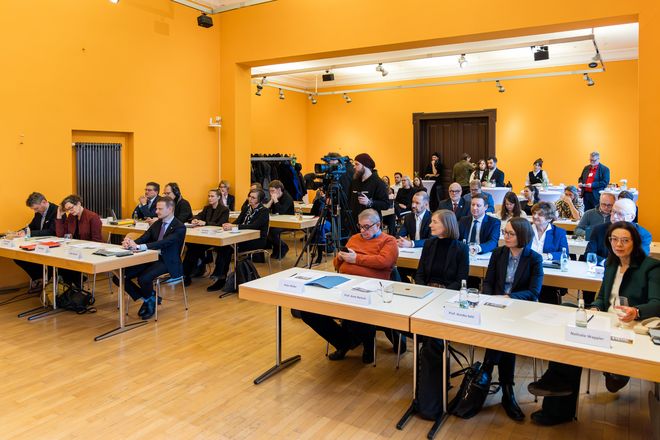
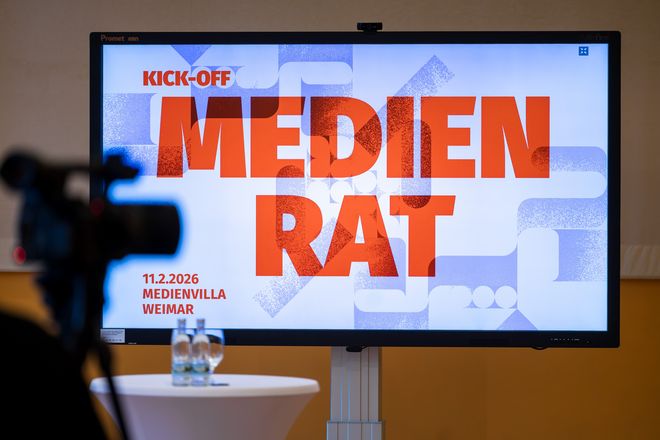
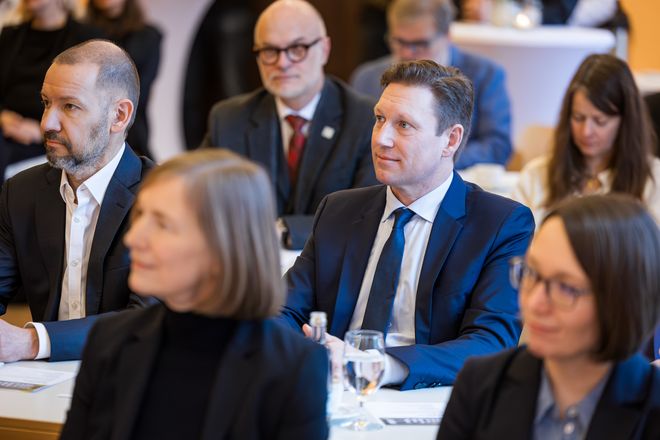
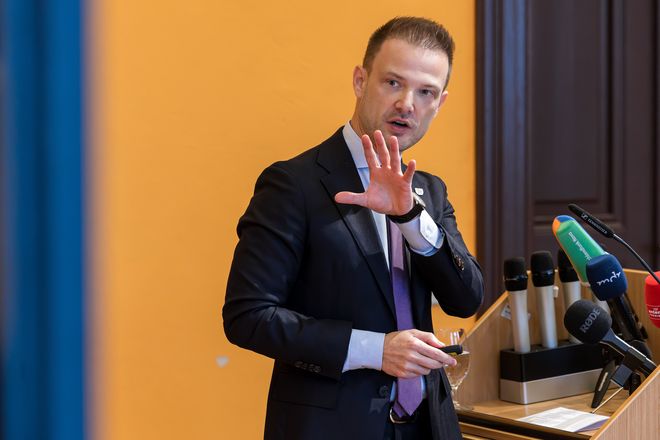
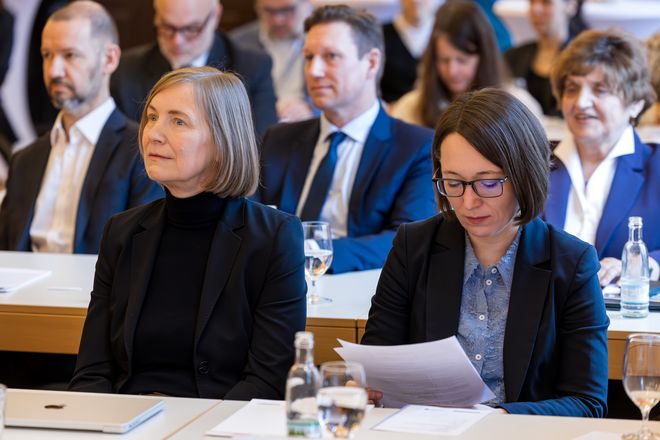
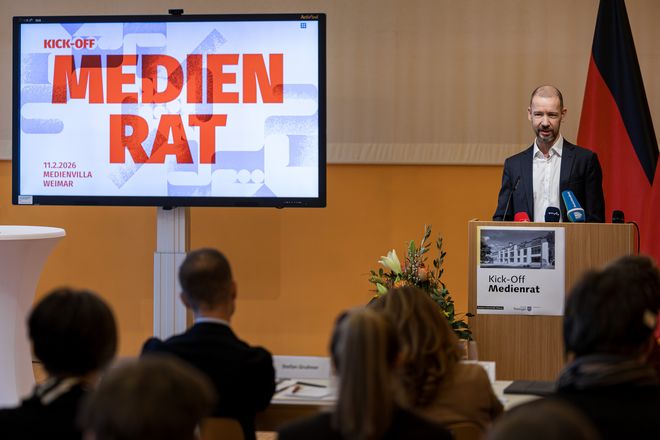
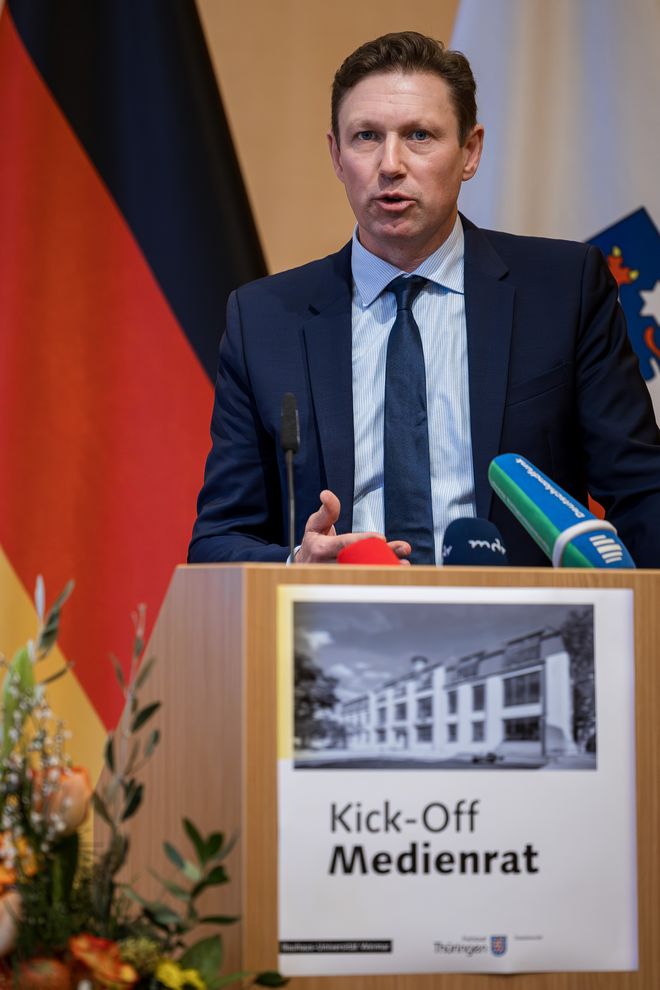
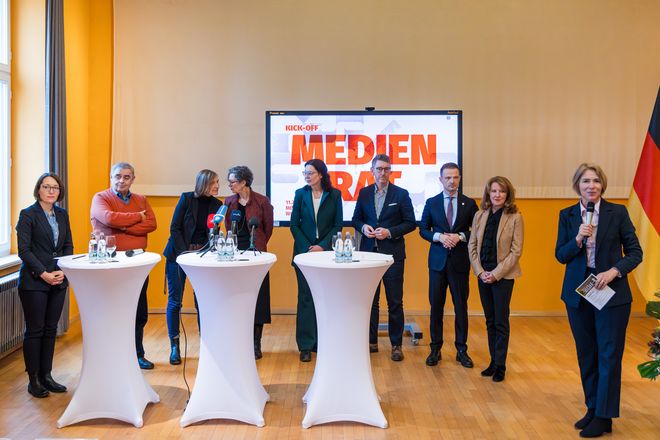
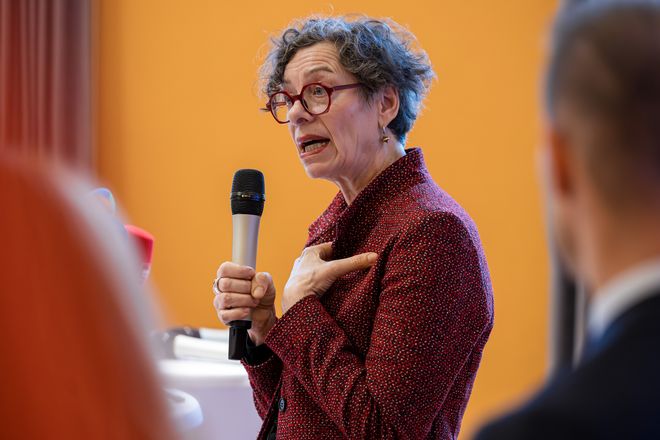
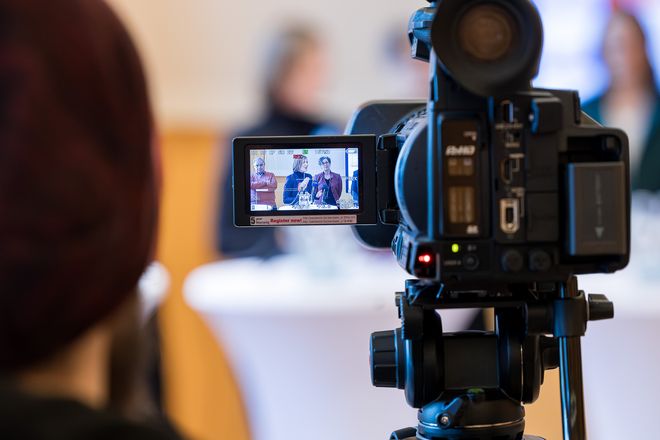
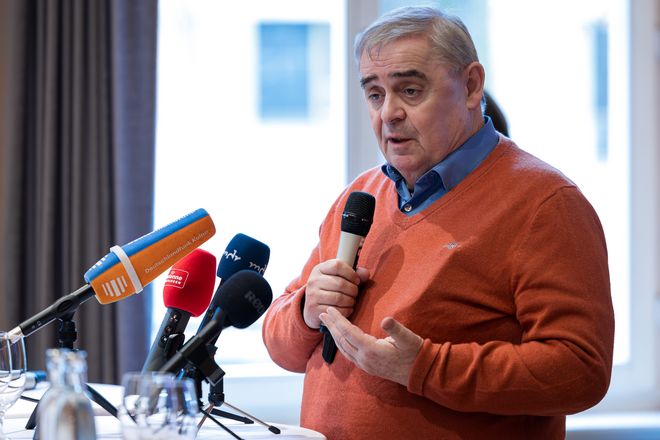
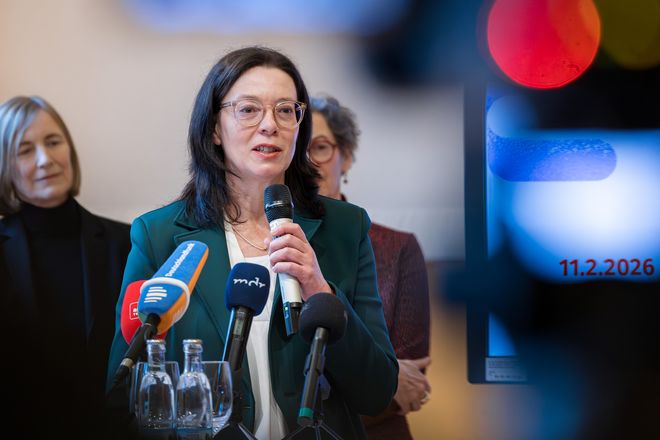
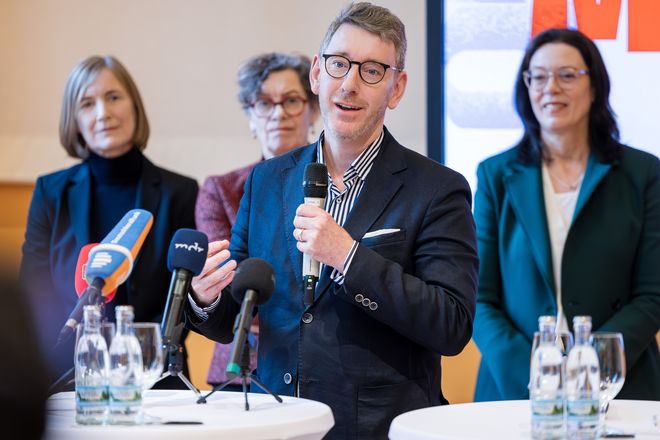
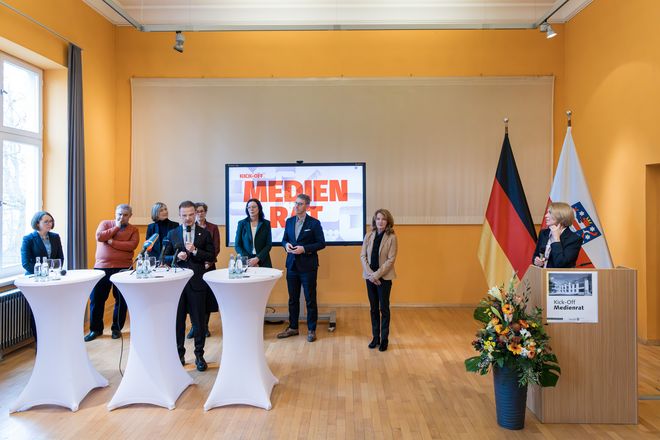
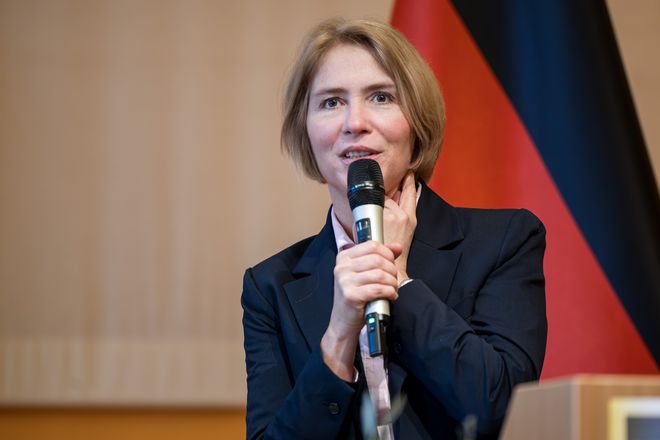
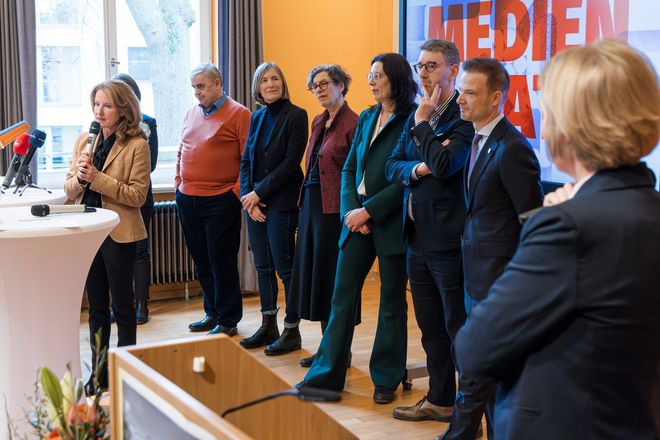
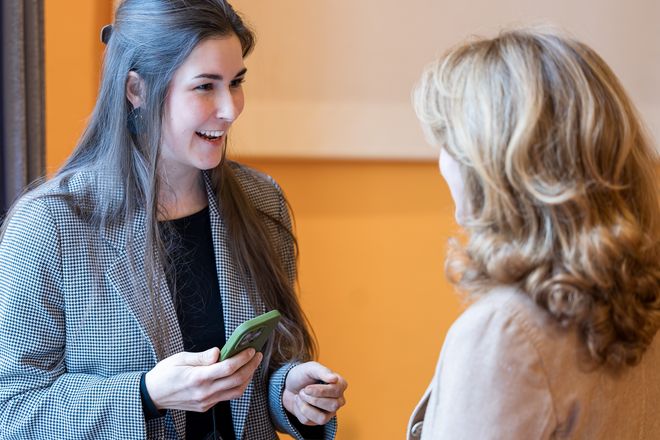
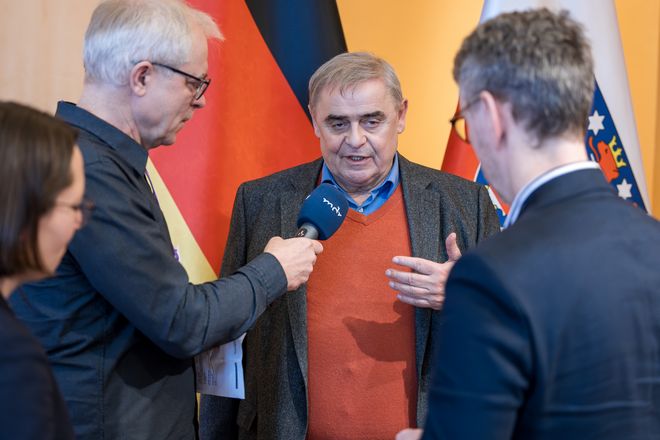
On 11 February 2026, the newly establishes Media Council met for the first time. The six-member expert committee and the Media Council members were introduced at the Bauhaus-Universität Weimar’s Medienvilla by State Secretary Heike Raab, Representative of the State of Rhineland-Palatinate to the Federal Government and for Europe and Media, Rundfunkkommission Coordinator, and the Head of the Thüringer Staatskanzlei and Minister of Media Stefan Gruhner. The required cooperation agreement between the Free State of Thuringia and the Bauhaus-Universität Weimar was also signed at the event.
The Media Council was established as a supervisory body under the »Reformstaatsvertrag zum öffentlich-rechtlichen Rundfunk«. The independent council will, in the future, regularly assess how well ARD, ZDF, and Deutschlandradio comply with the public service mandate and provide input for further developing and improving the quality of their programming.
Establishing this office at the Bauhaus-Universität Weimar highlights Thuringia’s importance as a centre for media and children’s media. At the same time, it also sets out concrete tasks for the Media Council in terms of assessing and evaluating public service broadcasting. The Minister President Conference came to this decision on 4 December 2025, deliberately choosing a university with renowned media expertise.
By beginning their work, the Media Council is implementing an important aspect of broadcasting reform and increasing the transparency, quality, and sustainability of public service broadcasting.
»I am so pleased that, through the Media Council, we are implementing a wise proposal made by the Zukunftsrat, which we have anchored in the recently enacted Reformstaatsvertrags. This new Council, made up of experts, will be reviewing hot the public service broadcasters are fulfilling their mission. The goal is to determine the quality and balance of information, culture, education, and advisory content provided. How are each of the target groups, both young and old, being reached? How is the Kodex der Künstlichen Intelligenz being implemented, and how is the distribution of content on third-party platforms and social media being evaluated?«, says State Secretary Heike Raab.
»The Media Council signifies that the federal states are implementing a key aspect of broadcasting reform. It will increase the transparency, quality, and sustainability of public service broadcasting. Locating the office at the Bauhaus-Universität Weimar is a deliberate political message: Thuringia is claiming responsibility for media policy and strengthening its reputation as a media and children’s media location. The Media Council will, in the future, act as a key reference point for reforms, alongside the KEF Report. The latest ruling by the Federal Constitutional Court highlights just how closely mission, acceptance, and contribution financing are connected. The scientific expertise in Weimar lays a solid foundation for an independent, well-informed, and future-oriented evaluation of public service broadcasting«, says Minister of Media Stefan Gruhner.
»Establishing the Media Council’s office at the Bauhaus-Universität Weimar is a strong sign of confidence in the media science expertise at our institution. It also emphasises the University’s commitment to combining scientific excellence with social responsibility and public discourse. We welcome this decision and see it as an important step in strengthening Weimar as a location for media«, says Prof. Peter Benz, President of the Bauhaus-Universität Weimar, underscoring the significance of establishing the Media Council’s headquarters in Weimar.
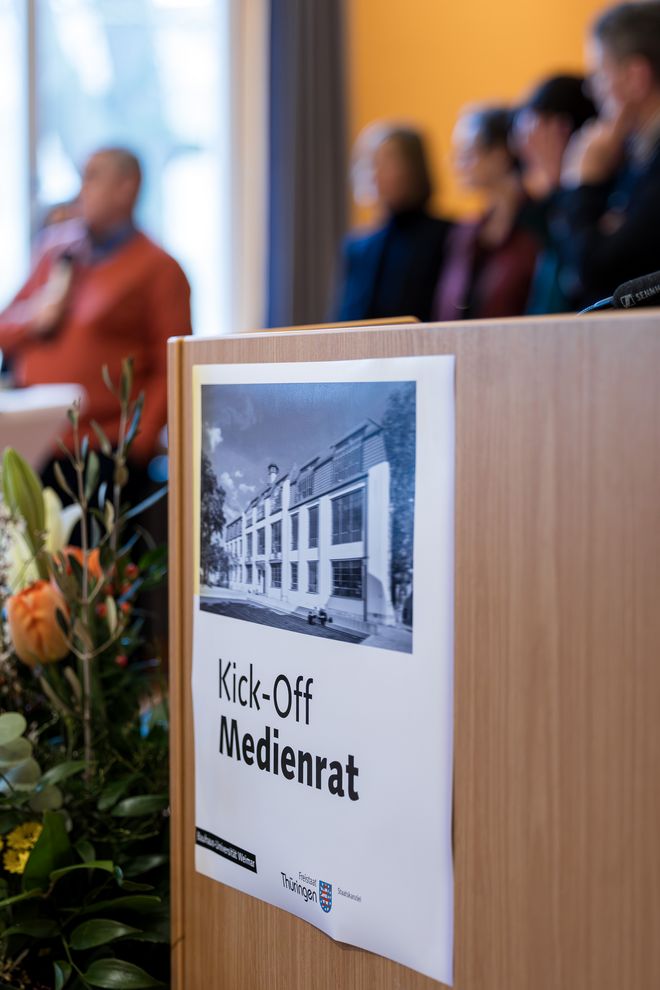
At the kick-off event for the new office in Weimar's Medienvilla, Prof. Guido Morgenthal, Vice President for Projects and Research, and Prof. Reinhard Kunz, Vice Dean for Research at the Faculty of Media, presented the University with its interdisciplinary and internationally focussed media programme and diverse research projects.
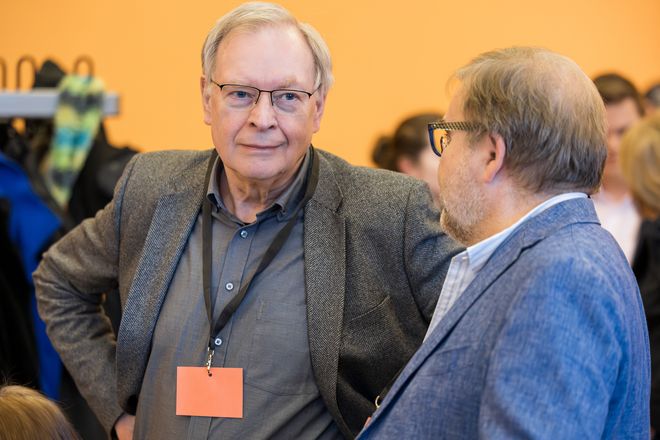
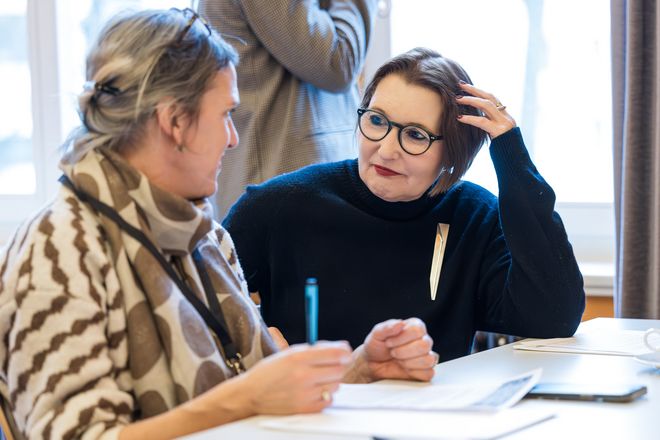
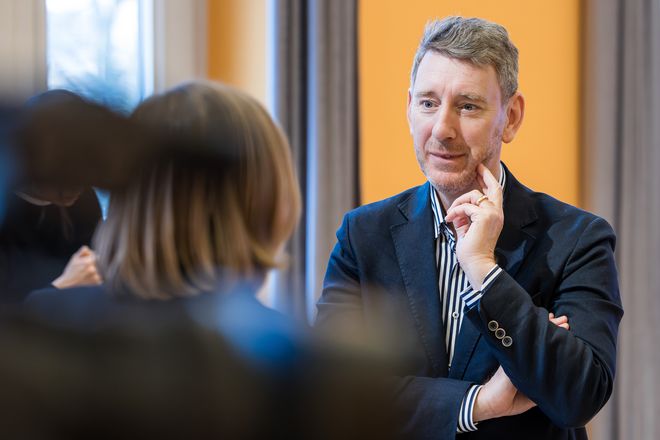
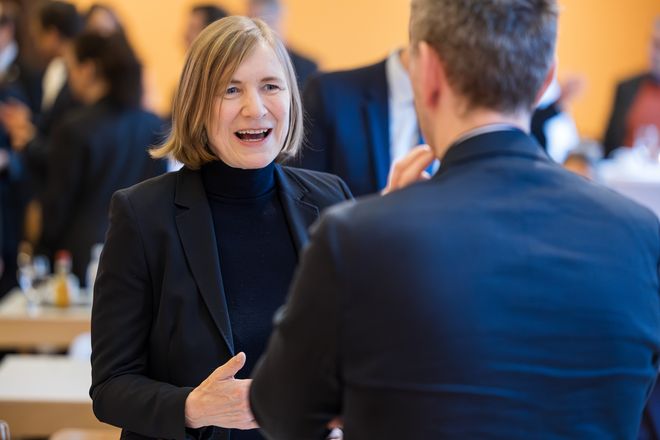
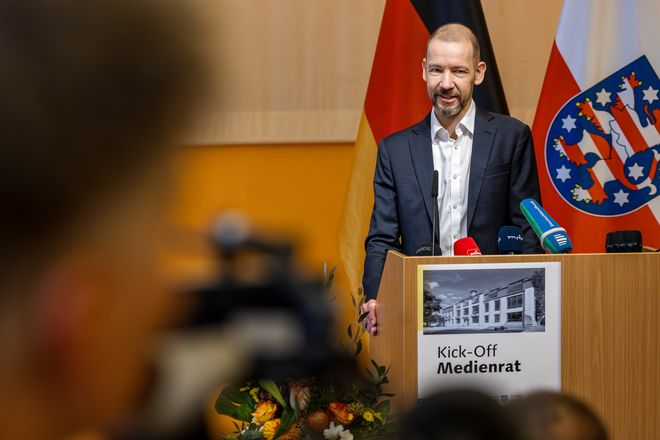

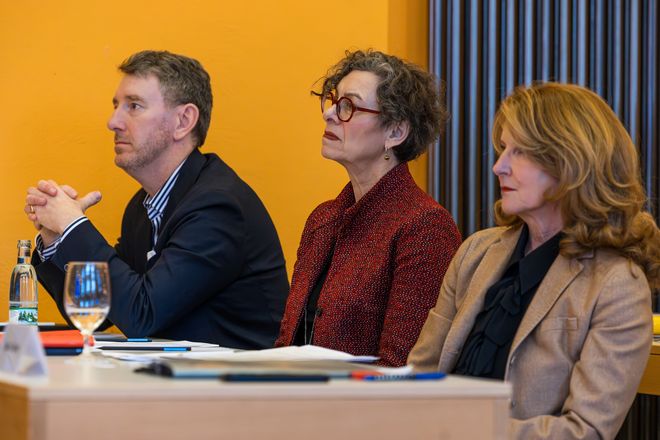
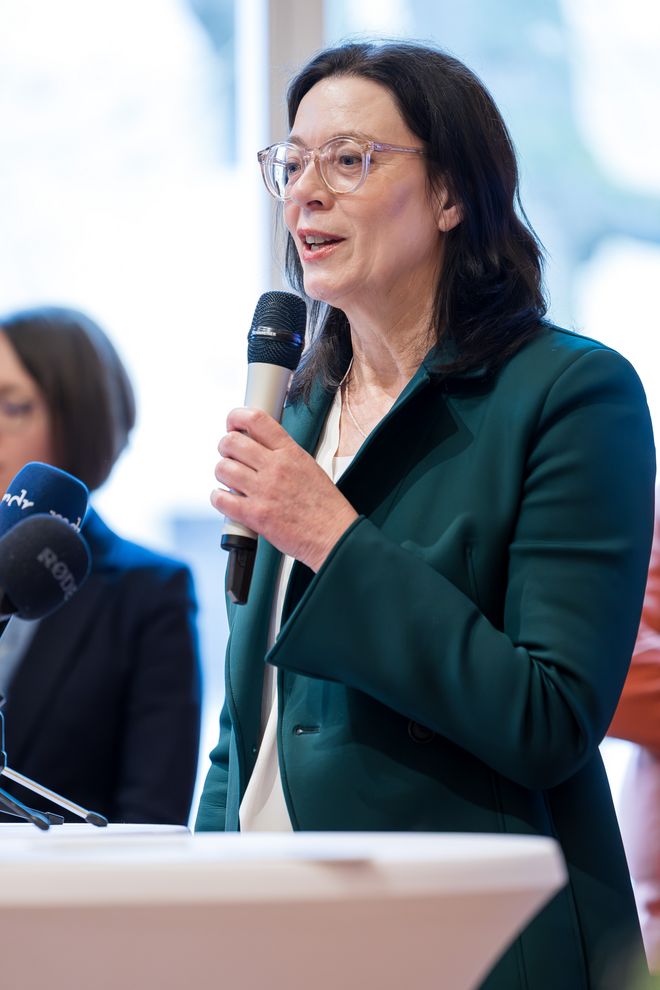
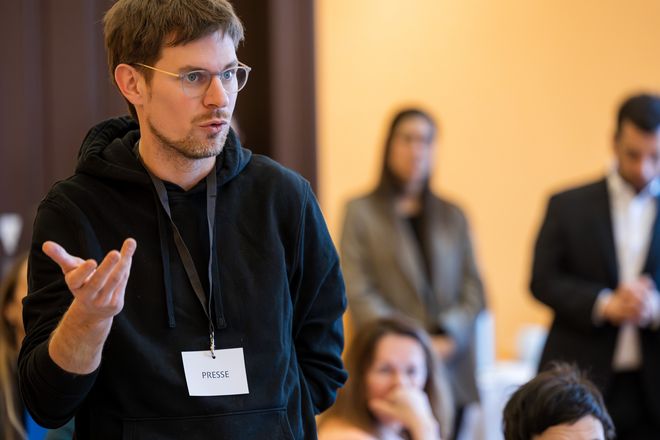
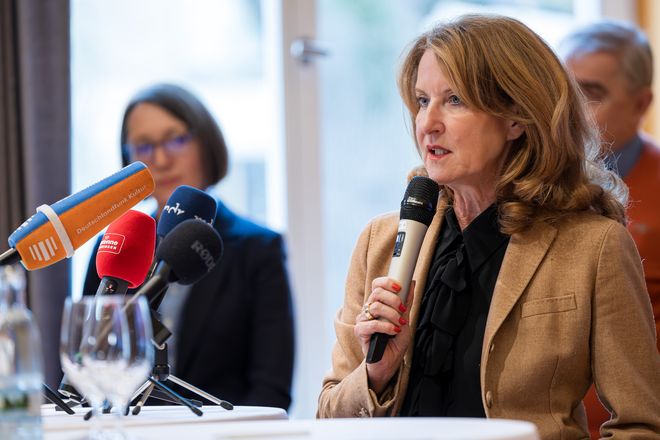
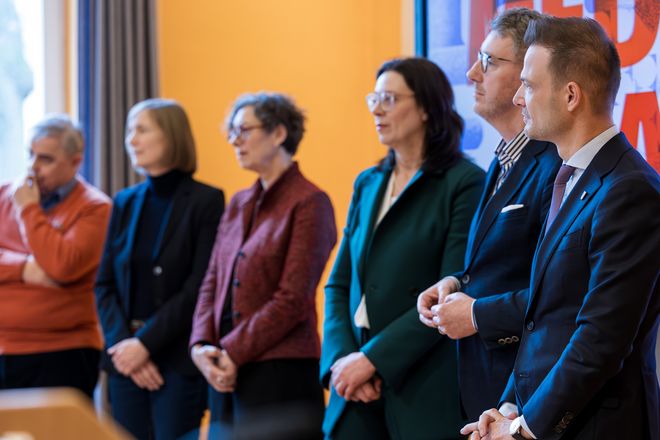

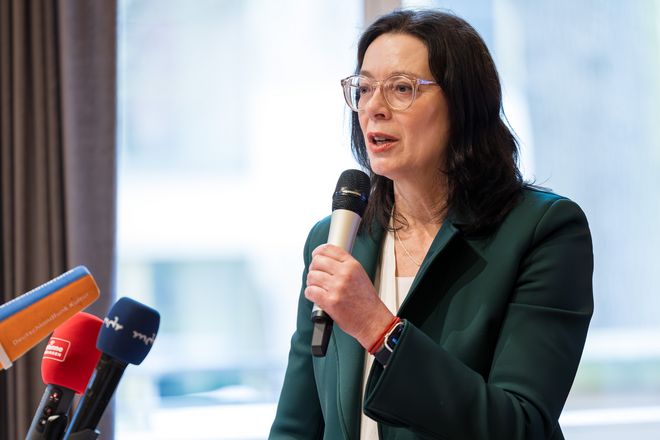
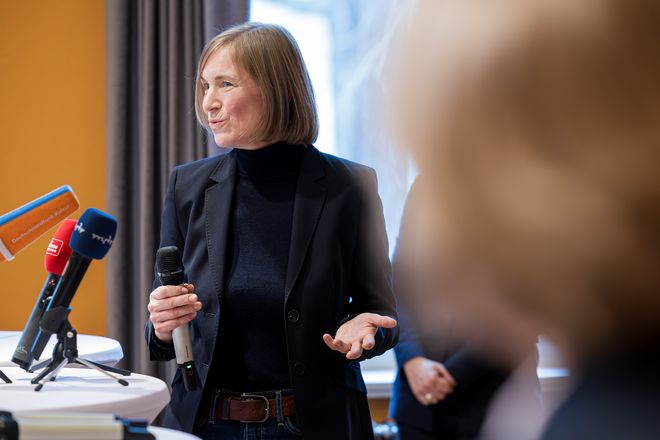
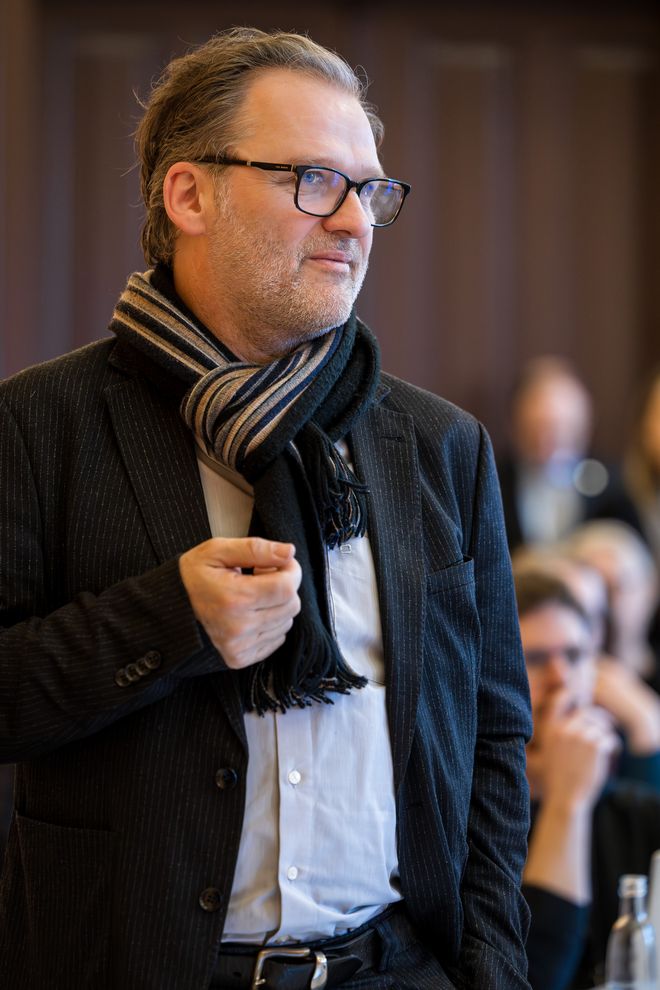
About the Media Council Members:
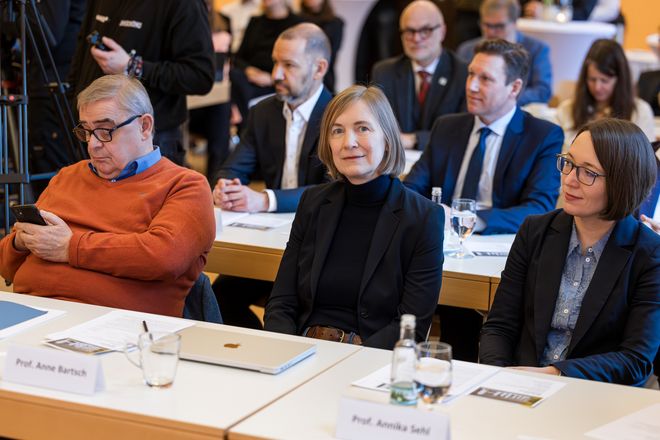
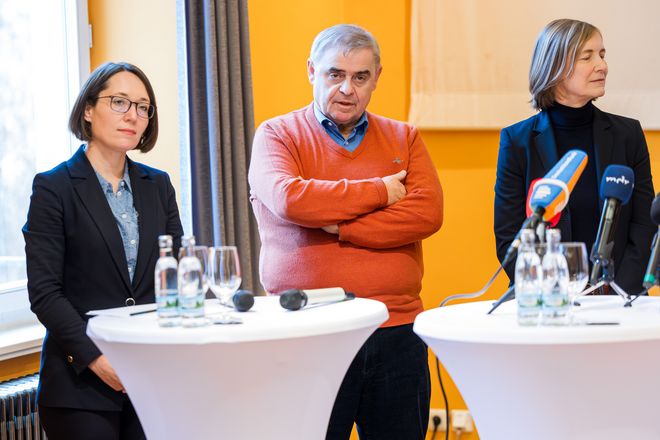
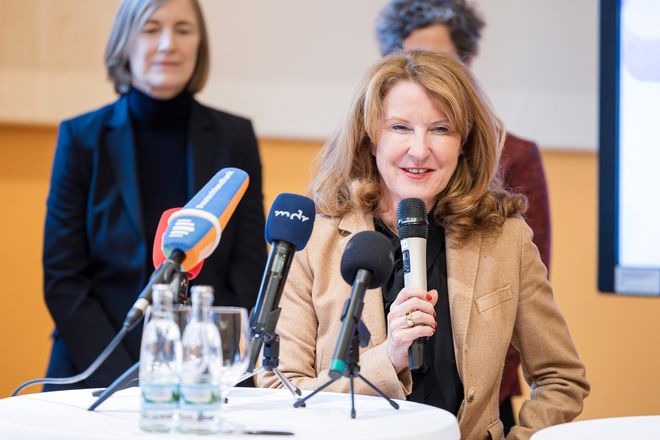
The new advisory council is made up of six independent experts from the fields of media economics, media management, communication sciences, information and broadcasting technology, and media law. The work of the Media Council will complement the work of the supervisory bodies within the broadcasting institutions. The only criterion for appointment to the Council is expertise, not the idea of social representation. Two experts were elected by the Gremienvertreterkonferenz der ARD (GVK), as well as one expert each from the Fernsehrat des ZDF and the Hörfunkrat des Deutschlandradios. Two additional experts were appointed by the heads of the federal state governments.
ARD has nominated former Federal Constitutional Court judge and former Minister President Peter Müller, as well as media manager Nathalie Wappler, who is currently serving as Director of the Schweizer Radios und Fernsehens (SRF) until April 2026 and is the former Deputy Director-General of SRG SSR; she is also known for her previous role as Director of Radio at MDR.
ZDF has nominated Prof. Annika Sehl, Chair of Journalism Studies with a Focus on Media Structures and Society at the Catholic University of Eichstätt-Ingolstadt.
Deutschlandradio has nominated Jeanette Hofmann, political scientist and Professor of Internet Policy at the FU Berlin.
The two experts selected by the heads of the federal states’ governments are Anne Bartsch, Professor of Empirical Communication and Media Research at the Leipzig University, and Boris Alexander Kühnle, Rector of the Hochschule der Medien Stuttgart.