
News

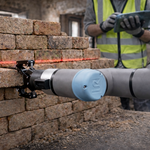
 The F.A. Finger Institute for Building Material Engineering (FIB) conducts research and development on building materials, renovation, and recycling. The focus is on cement, mortar, concrete, gypsum, polymers, and wood. Bauhaus-Universität Weimar, photo: Guido Werner

Hidden Champion: How Weimar Has Been Shaping Building Materials Research for Decades

With over 60 employees and millions of euros in third-party funding, the F.A. Finger Institute for Building Materials Engineering (or FIB) is currently the most important research facility at the Bauhaus-Universität Weimar. Founded in 1995, the Institute’s roots go back to the 1940s, when Friedrich August Finger, the man after whom it was named, established this innovative field of research and teaching. Together with the »Institut für angewandte Bauforschung« (IAB) and the Materials Research and Testing Laboratory (MFPA), Weimar’s innovative location is going to expand to become a Federal Construction Research Centre. These and other milestones of the FIB will be honoured at a ceremony marking its 30th anniversary.

© IAB / Thomas Müller

Significant Momentum for Weimar as a Centre for Building Materials Research: Federal Government and Three States Decide to Establish Federal Construction Research Centre

This decision represents a major move towards a sustainable future for the construction industry. Today, Monday, 24 November 2025, representatives from the Bundesministeriums für Wohnen, Stadtentwicklung und Bauwesen (BMWSB) and the three federal states of Thuringia, Saxony, and Baden-Württemberg signed a key issues paper confirming the establishment of a »Bundesforschungszentrums für klimaneutrales und ressourceneffizientes Bauen (BFZ)« (Federal Research Centre for Climate-Neutral and Resource-Efficient Construction). The federal government will invest a total of 52.5 million euros in this project over the next few years.

Photo: Raphael Obertreis

Power Transition: Nationwide Survey Shows Trent Towards Alternative Energy Solutions in Heavy-Duty Transport

Transport and logistics companies are increasingly turning to alternative energy sources such as electricity and hydrogen. Alternative power systems for heavy-duty transport will dominate in the mid- to long-term – despite high investment costs and the current lack of infrastructure. These were the findings in a recent study carried out by the Bauhaus-Universität Weimar. The study was conducted as part of the h2-well Markthub«, which involved 143 companies nationwide.

Copyright: Institut für Europäische Urbanistik

Weimarer Stadtgespräch: Nachhaltig wärmen

Das Institut für Europäische Urbanistik (IfEU) der Bauhaus-Universität Weimar lädt herzlich ein zum nächsten Weimarer Stadtgespräch, das am Mittwoch, 19. November 2025, in den Räumlichkeiten der Stadtwerke Weimar stattfindet.

Bauhaus-Universität Weimar beteiligt sich an deutschlandweiter Lehmbau-Ringvorlesung »Down to Earth«

Mit zwei Beiträgen im Dezember 2025 und Januar 2026 bringen Wissenschaftlerinnen der Fakultät Architektur und Urbanistik der Bauhaus-Universität Weimar ihre Expertise in die deutschlandweite Ringvorlesung »Down to Earth« ein. Die vom Dachverband Lehm e. V. und weiteren Partner*innen organisierte Vortragsreihe beleuchtet aktuelle Entwicklungen, Perspektiven und Forschungsansätze des Bauens mit Lehm.