Search

Frequently Searched Pages

Deutsch

Accessibility

Zahl 30 als Symbol für das Namensjubiläum der Bauhaus-Universität Weimar

Central Interest

Central interest of the chair of Heritage Conservation & Architectural History is the significance and function of historic buildings and the history of building for the society of our time. It is not a matter of understanding the present solely as the result of a long history, but, on the contrary, of understanding our built environment in all its complexity and significance through an examination of its history.

Teaching fields

Both teaching fields deal with architecture from past epochs, but each has its own goals and research interests.

In architectural history, which examines buildings and building processes of the past, the knowledge process is at the same time the goal. The aim is to develop an understanding of the complex interplay of social, constructional and semantic mechanisms that have led - and continue to lead - to the formation of the respective building types, urban spaces and specific architectural solutions. Furthermore, the examination of the history of building trains the ability to reflect on contemporary architecture.

Heritage conservation, on the other hand, is concerned with the link between architecture and memory. It asks for the reasons why and how societies (want to) preserve certain buildings and ensembles. It is also responsible for developing preservation and communication strategies for the objects defined as monuments.

The aim of both teaching areas is to develop the students' competence in the field of building in existing fabric. This includes imparting both technical and methodological knowledge. How can we identify and develop the potential of buildings that are underestimated, disregarded or considered obsolete? How can existing buildings be treated in a sustainable manner that preserves their substance?

Research Interests

The research activities of the chair are also located in both disciplines. One of our main focuses is the study of contested, uncomfortable heritage. In addition to questions of architectural and planning history, we are interested in the relationship between architectural heritage and society, both on the theoretical level of reception of monument, memorial and remembrance cultures as well as on the level of the practical handling of substance.

In this context and beyond, we focus our research on the architectural heritage of the 20th century. In addition to urban planning aspects, we deal with the "early diagnosis" of potential monuments, i.e. the recognition and communication of heritage values, which are often (still) difficult to convey to the public, especially in the case of younger and youngest building stock.

Another interest lies on building research, especially related to historic construction materials and methods as well as their applicability for contemporary building.

Finally, being a history-oriented university chair, we are concerned with the history and theory of our own disciplines.

The chair of Heritage Conservation & Architectural History is member of the Bauhaus Institute for History and Theory of Architecture and Planning, the Institute for European Urban Studies, the International Heritage Centre and the Graduate Program Identity and Heritage.

Lehrgebiete Less More

Lehrgebiete

Die beiden Disziplinen, welche die Professur umfasst, beschäftigen sich beide mit Architektur aus vergangenen Zeiten, haben aber jeweils eigene Ziele und Erkenntnisinteressen.
Bei der Baugeschichte, die Bauten und Bauprozesse der Vergangenheit untersucht, ist der Erkenntnisprozess zugleich das Ziel. Es geht darum, ein Verständnis für das komplexe Zusammenspiel gesellschaftlicher, baukonstruktiver und semantischer Wirkmechanismen zu entwickeln, die zur Ausbildung der jeweiligen Bautypen, Stadträume und architektonischen Detaillösungen geführt haben – und weiterhin führen. Überdies schult die Auseinandersetzung mit der Geschichte des Bauens das Reflexionsvermögen hinsichtlich zeitgenössischer Architektur.
Die Denkmalpflege hingegen beschäftigt sich mit der Verknüpfung von Architektur und Erinnerung. Sie fragt danach, aus welchen Gründen und auf welche Weise Gesellschaften bestimmte Gebäude und Ensembles erhalten (wollen). Und darüber obliegt es ihr, für die als Denkmale definierten Objekte Erhaltungs- und Vermittlungsstrategien zu entwickeln.
Ziel beider Lehrgebiete ist die Kompetenzbildung der Studierenden im Themenfeld Bauen im Bestand. Hierzu gehört das Vermitteln sowohl von Fach- als auch methodischem Wissen. Wie können Potentiale bislang für obsolet gehaltener, unterschätzter oder missachteter Bauten erkannt und erschlossen werden? Wie kann man substanzschonend und klug mit dem Bestand umgehen?

Forschungsschwerpunkte Less More

Forschungsschwerpunkte

Forschungsschwerpunkte

Die Forschungsinteressen der Professur sind ebenfalls in beiden Disziplinen verortet. Zu unseren Schwerpunkten gehört die Beschäftigung mit konfliktbehaftetem, unbequemem Erbe. Neben den architektur- und planungshistorischen Fragen interessiert uns das Spannungsverhältnis zwischen Architektur und Gesellschaft, sowohl auf der theoretischen Rezeptionsebene von Denkmal-, Mahnmal- und Erinnerungskulturen wie auch auf der Ebene des praktischen Umgangs mit der Substanz.

In diesem Kontext und darüber hinaus steht das bauliche Erbe des 20. Jahrhunderts in unserem Forschungsfokus. Hierbei beschäftigen wir uns – neben städtebaulichen Aspekten - auch mit der „Frühdiagnose“ potentieller Denkmale, d.h. dem Erkennen und Vermitteln der gerade bei jüngeren und jüngsten Baubeständen in der Öffentlichkeit oft (noch) schwer zu vermittelnden Denkmalwerte. 

Einen weiteren Schwerpunkt an der Professur bildet – epochenunabhängig – die Bauforschung, vor allem bezogen auf historische Baumaterialien und Konstruktionsweisen und deren Nutzbarmachung für das zeitgenössische Bauen.

Und schließlich versteht es sich für eine historisch orientierte Universitätsprofessur, dass wir uns mit der Geschichte und der Theorie unserer eigenen Disziplinen beschäftigen.

Die Professur Denkmalpflege und Baugeschichte gehört zum Institut für Europäische Urbanistik und ist am Internationalen Heritage-Zentrum und dem Graduiertenkolleg Identität und Erbe beteiligt.
News

Current information on events, dates and new publications.

Team

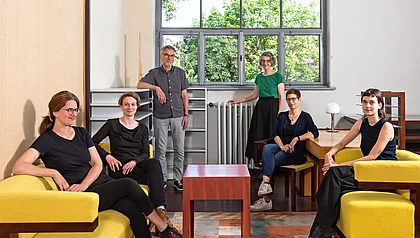
The team of the Chair of Heritage Conservation and Architectural History.

Publications

An overview of publications by members of the professorship as well as our publication series.

Ph.D.

Information on current doctoral theses and Ph.D.s at the professorship.

Teaching

Information on our current and past teaching and courses.

Identität und Erbe

Arbeitskreis Theorie und Lehre der Denkmalpflege e.V.

SPP 2255 KULTURERBE KONSTRUKTION