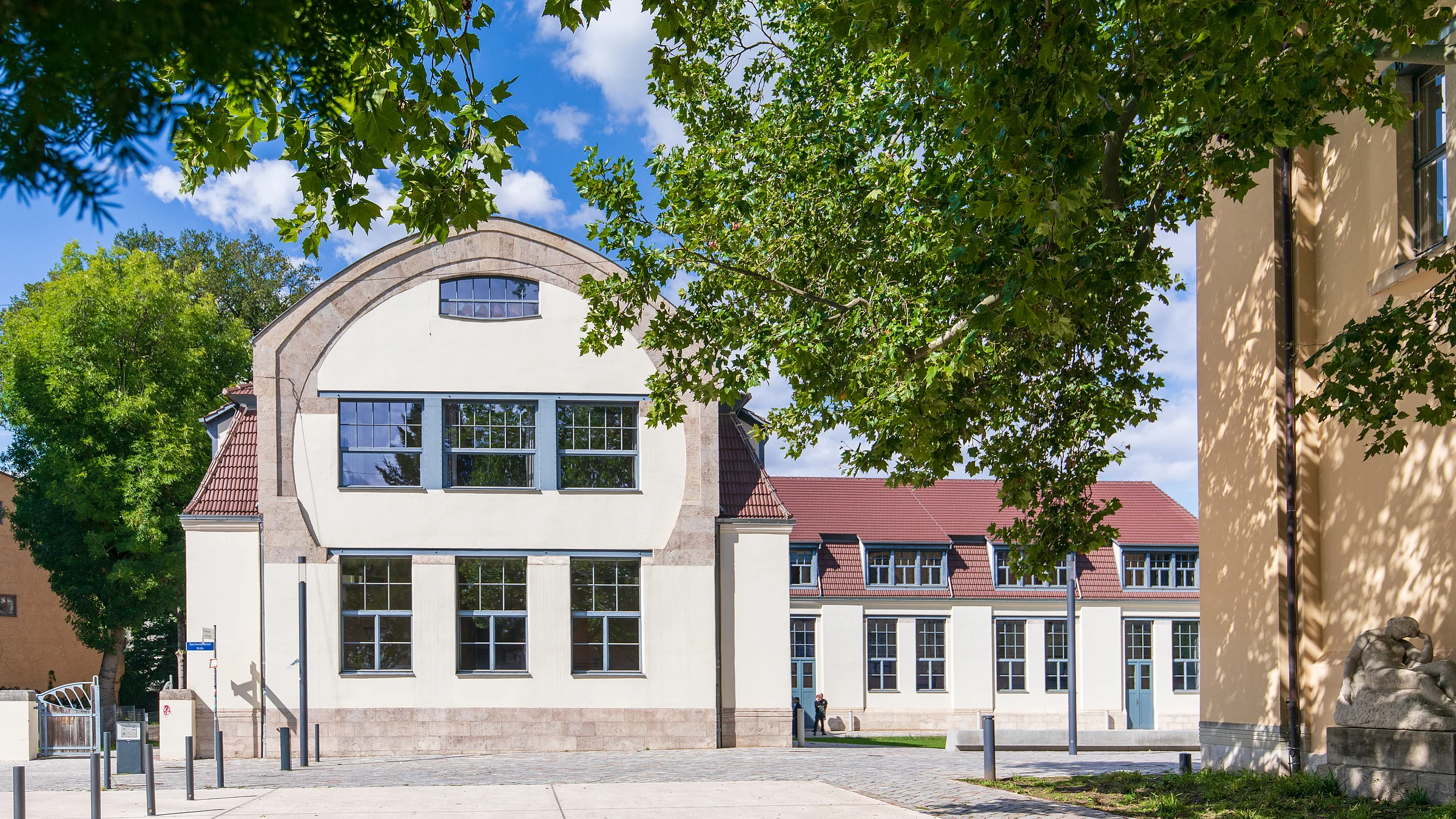
Although the buildings of the Kunsthochschule and the Kunstgewerbeschule were planned and built as independent institutions, they share fundamentally similar design features and thus appear today as a unified ensemble.
The building of the former »Großherzoglich Sächsischen Kunstgewerbeschule« was erected in 1905 and 1906 by Henry van de Velde as an L-shaped structure with a unified architectural design, and was extensively reconstructed in 2009. Today, it houses the Dean's Office, as well as teaching and workrooms for the Faculty of Art and Design. Inside the School of Applied Arts – which was designed as a workshop building – the wide spiral staircase in the central stairwell is particularly noteworthy, as are the reconstructed wall designs (14, 15, 16) by Oskar Schlemmer, created for the 1923 Bauhaus exhibition, are particularly worth seeing.
Oskar Schlemmer (1888 – 1943) was appointed head of the mural workshop at the »Bauhaus« in 1920. He remained a master here until 1929. From 1923, he was also head of the stage workshop and from 1925, after the »Bauhaus« moved to Dessau, head of the independent Bauhaus theatre. He mainly focused on the position of the human figure in space in his work.
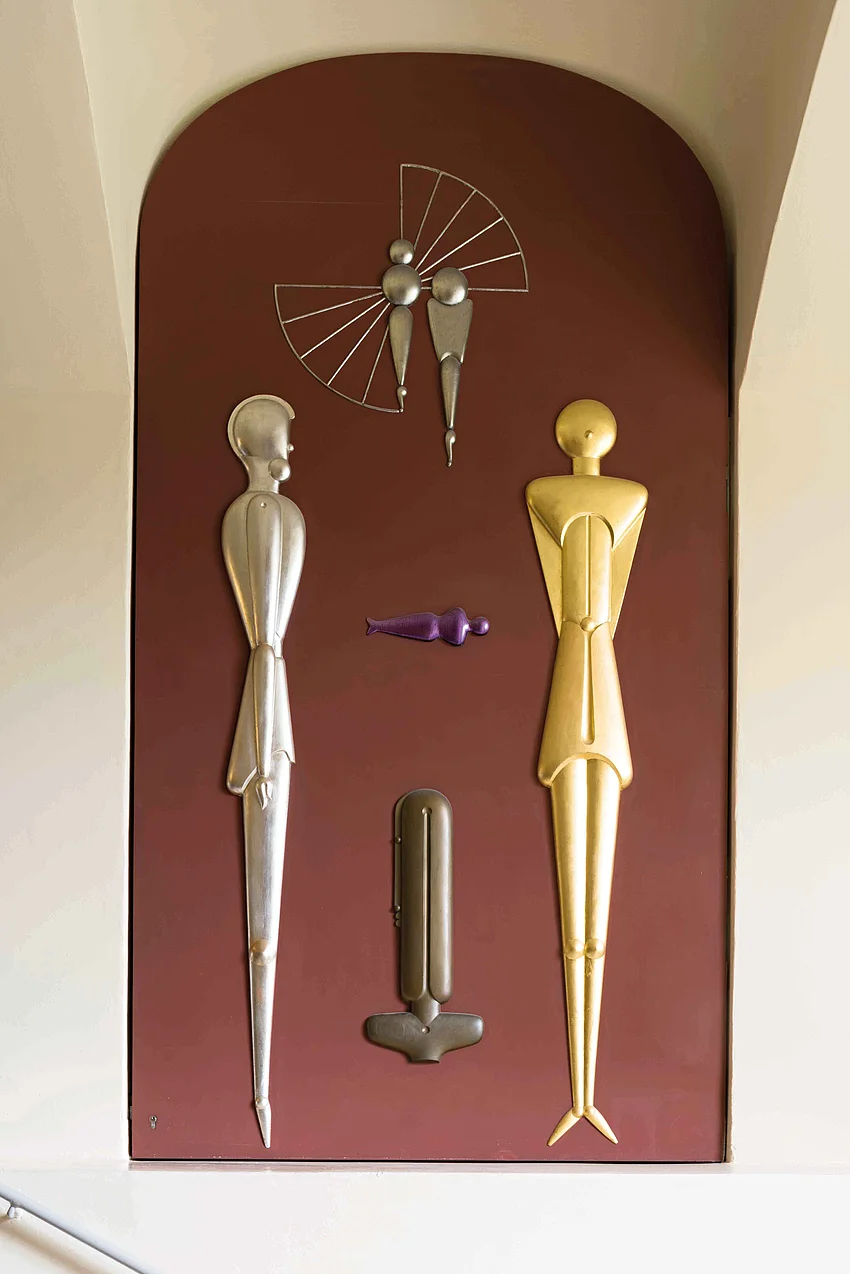
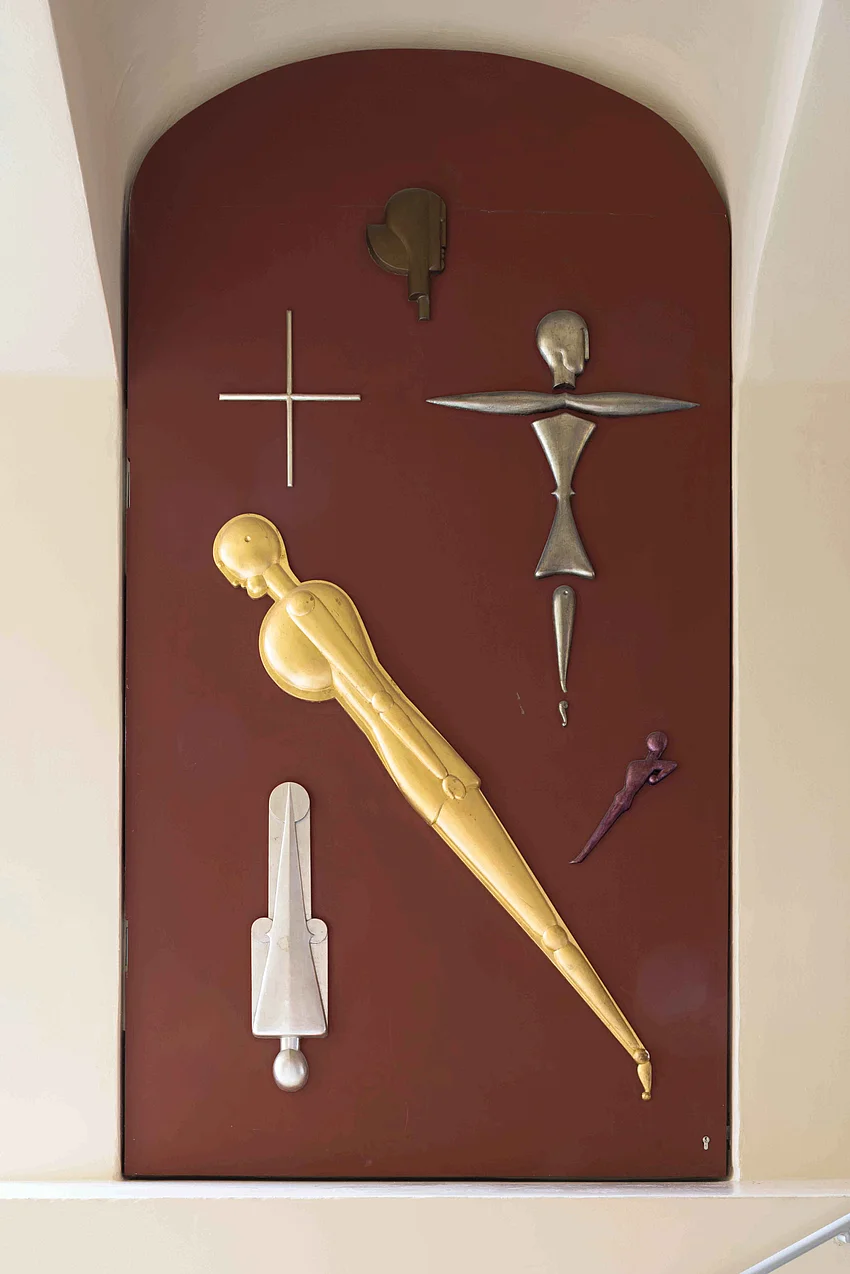
16 Mural – Spiral staircase
Mural | 1923 | Oscar Schlemmer | Recreated in 1980 by Bruno Dolinski
One of the artistic highlights of the 1923 Bauhaus Exhibition were the murals by Oskar Schlemmer in the workshop building. Here, the patterns depict the activity of people ascending or descending the stairs. The horizontal/vertical orientation of the rigid-looking figures to the right of the entrance conveys the principle of standing, while the diagonal orientation of the figures to the left conveys the principle of moving. In contrast, the floating figures in the mural on the spiral staircase address the relationship be-tween humans and architecture.
17 Wall designs - first floor
Wall designs | After 1930
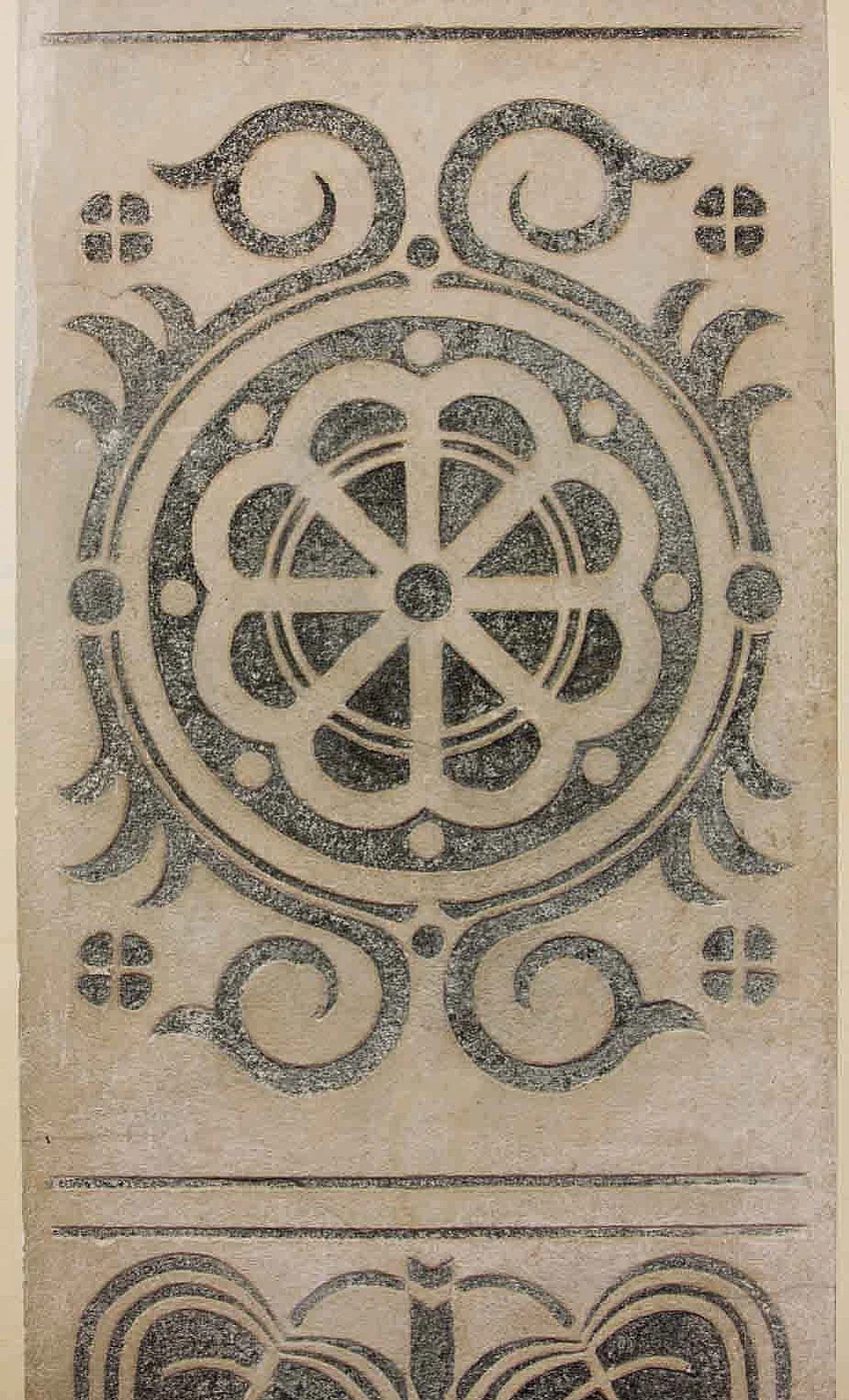
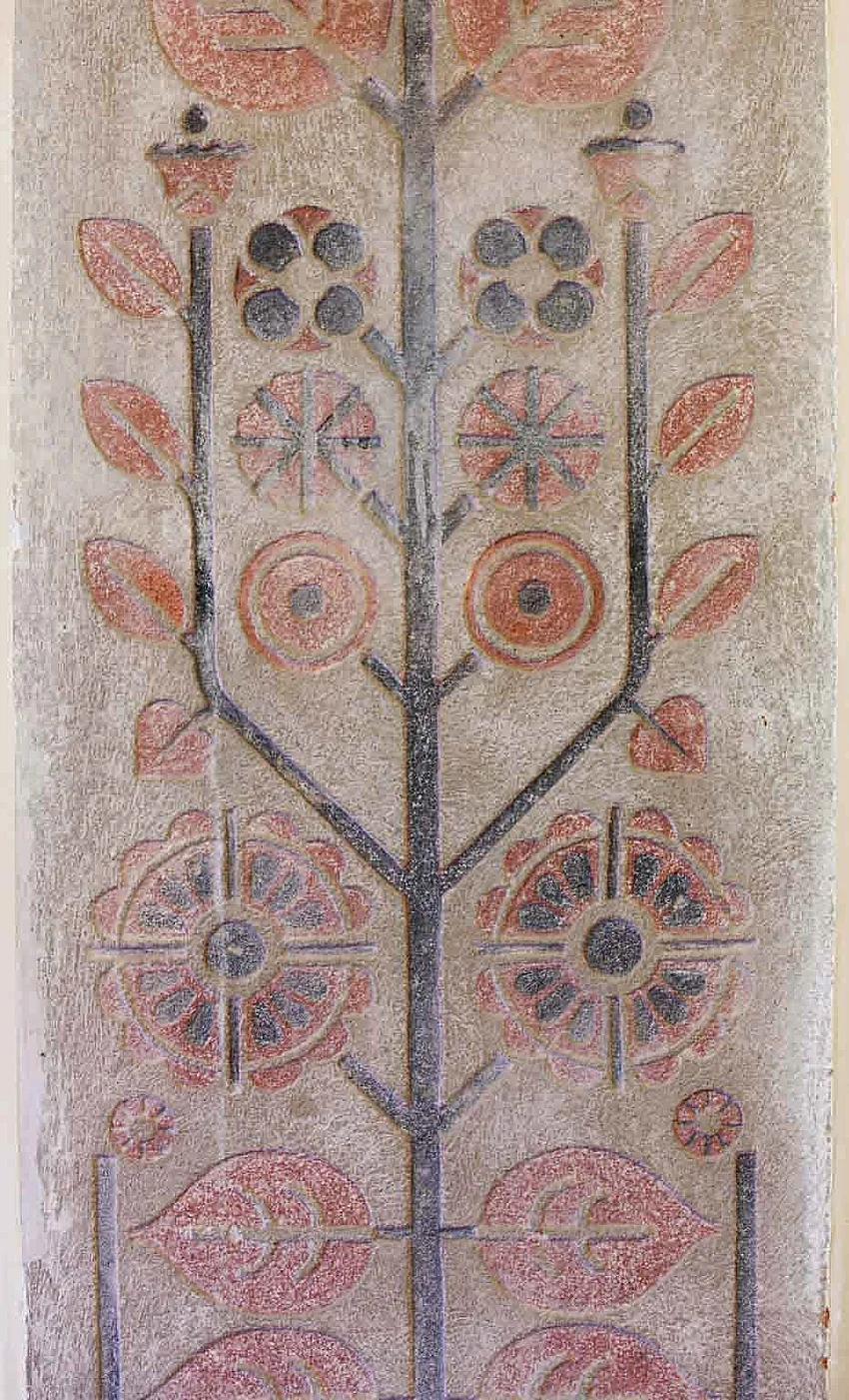
When the national socialists (NSDAP) came to power in Thuringia, the architect Paul Schultze-Naumburg (1869 – 1949), who was an outspoken opponent of modernism, was appointed direc-tor of the Arts Academy in Weimar in 1930. Under his leadership, education was radically reformed and the curriculum adjusted to »National Socialist tendencies and beliefs«. The murals by Oscar Schlemmer in the former workshop building of the Bauhaus also fell victim to the »purge« in the run-up to the 1930 opening of the »Staatliche Hochschulen für Baukunst, bildende Künste und Handwerk in Weimar«. They were replaced with wall designs featuring popular ornamentations.