

Hidden Champion: How Weimar Has Been Shaping Building Materials Research for Decades
With over 60 employees and millions of euros in third-party funding, the F.A. Finger Institute for Building Materials Engineering (or FIB) is currently the most important research facility at the Bauhaus-Universität Weimar. Founded in 1995, the Institute’s roots go back to the 1940s, when Friedrich August Finger, the man after whom it was named, established this innovative field of research and teaching. Together with the »Institut für angewandte Bauforschung« (IAB) and the Materials Research and Testing Laboratory (MFPA), Weimar’s innovative location is going to expand to become a Federal Construction Research Centre. These and other milestones of the FIB will be honoured at a ceremony marking its 30th anniversary.
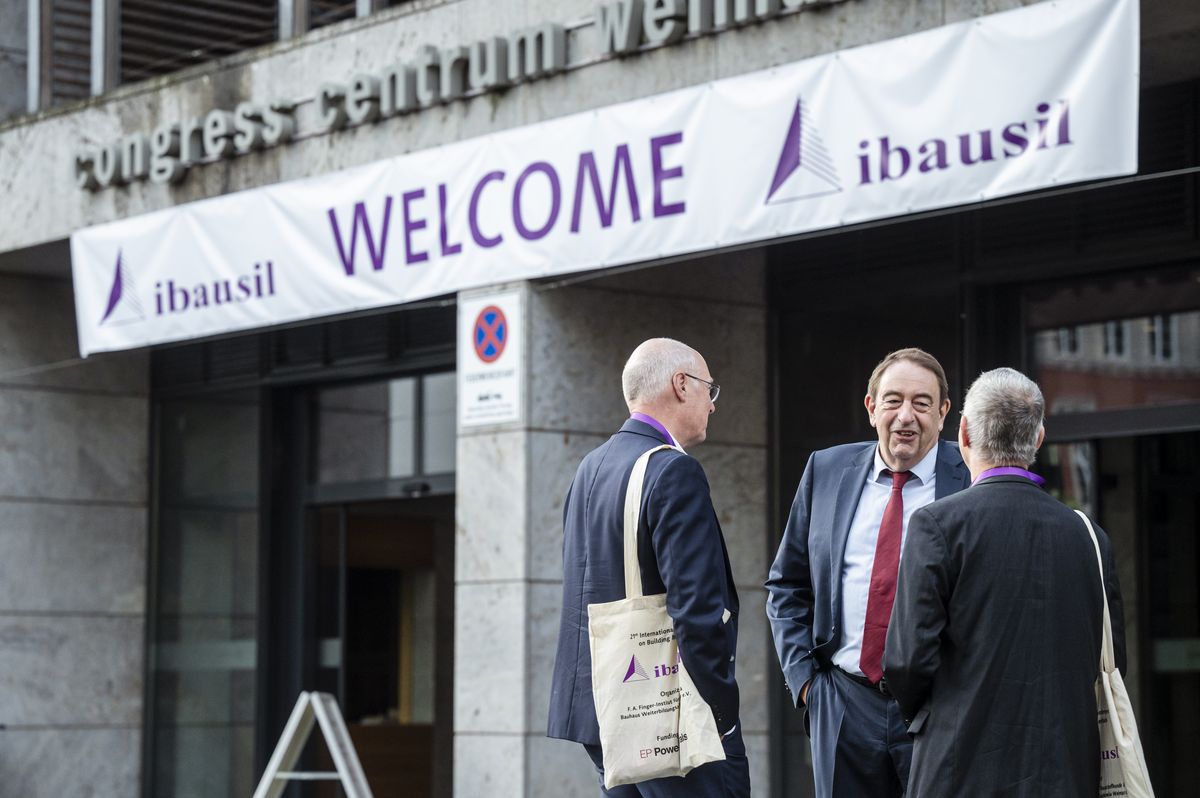
Weimar has been an important centre for building materials research and teaching in Germany for over 70 years. This is especially apparent when it comes to the »internationalen Baustofftagung« (ibausil), which is organised every three years by the F.A. Finger Institute for Building Materials Engineering and will bring together hundreds of experts from over 20 countries in 2026. »In 1964, the ibausil established an international forum for a scientific exchange that aims, among other things, to bring together researchers from universities and the industry to address current challenges such as the climate crisis, deteriorating infrastructure, and housing shortages from a building materials perspective«, explains Prof. Horst-Michael Ludwig, Director of the FIB and ibausil organiser.
The F.A. Finger Institute for Building Material Engineering (FIB) conducts research and development on building materials, renovation, and recycling. The focus is on cement, mortar, concrete, gypsum, polymers, and wood. Numerous Successes: A large number of third-party funding applications, expert reports, patent applications, and spin-offs such as »Sonocrete« (an ultrasonic premixer that makes concrete set faster), »Polycare« (building technologies with a strong focus on the circular economy), and »Oliment« (CO2-neutral binding agent, funded by the Bundesagentur für Sprunginnovationen) demonstrate the innovative strength of the Weimar research Institute.
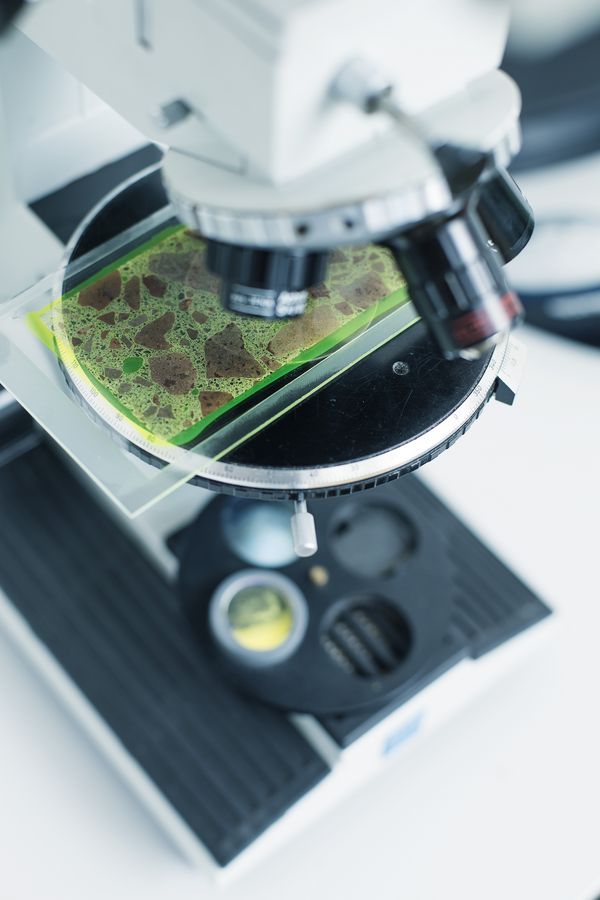
»Today, the Institute is equipped with state-of-the-art testing and analysis technology such as additive manufacturing, 3D scanning electron microscopy (SEM), CT scanning, and cryopreservation. And is involved in research collaborations with numerous German and international universities«, adds Prof. Ludwig. More Good News: By the end of 2026, construction of the new laboratory building at Coudraystraße 13 is scheduled to be complete. This will provide the FIB with modern infrastructure that will allow it to continue conducting cutting-edge research on climate-neutral and resource-efficient construction.
The Institute is also involved in university education: In 2025, the number of students enrolled in the Building Materials Engineering Master's degree programme and the »Nutzerorientierte Bausanierung« (User-Orientated Refurbishment) further education programme increased significantly. »However, given the shortage of skilled workers, especially in this field, these numbers are still too low«, admits Prof. Ludwig.
30 Years of FIB
Celebrating the F.A. Finger Institute for Building Material Engineering
2 December 2025, »mon ami« Cultural Centre, Weimar
By invitation only
The »Institut für Baustoffkunde F.A. Finger« was established in 1995 by Prof. Jochen Stark (1943 -2025). Under his influence, the Institute has developed into one of the most important building materials institutes in the world. It offers unique engineering training and joined the »Innovationszentrum Bau« in Weimar in 2020. The institute has been under the leadership of Prof. Horst-Michael Ludwig (Professorship of Construction Materials) since 2009. He is assisted by Prof. Andrea Osburg (Professorship of Construction Chemistry and Polymer Materials) as Deputy Director of the Institute. The Junior Professorship of Mechanics of Engineering Materials, led by Jr. Prof. Luise Göbel, joined the Institute in January 2024.
The Institute is named after Friedrich August Finger (1885-1961), who came to Weimar in 1940, first as a lecturer and later as a professor of»Baustoffkunde, Ingenieurbau und Statik«. He established this innovative field of research and teaching as the founding dean of the former »Fakultät für Baustoffkunde und Baustofftechnologie« at Weimar’s University of Architecture and Civil Engineering (HAB), establishing an academic educational institution with a focus on building materials that was unique worldwide.
In case of questions, please contact Dana Höftmann, Public Relations Officer at the Faculty of Civil and Environmental Engineering, by e-mail: dana.hoeftmann[at]uni-weimar.de, or by phone: +49 (0) 3643 58 11 93.