

Automated and Networked Public Transportation: Opportunities for Thuringia
Rural regions in particular benefit from self-driving and on-demand bus systems when it comes to making mobility services more flexible, better adapted to demand, and more cost-effective. Pilot projects in Saalfeld-Rudolstadt, Bad Berka, Ilmenau, and Weimar are testing and scientifically evaluating how these systems could be deployed in Thuringia and beyond. This work is being coordinated by the newly established »Kompetenzzentrum für automatisiertes und vernetztes Fahren (AVF)« led by the Professorship of Transport System Planning at the Bauhaus-Universität Weimar.
Automated and networked vehicles could be used in areas where the economic viability of traditional bus routes are limited due to low passenger numbers. Much of the potential lies in connecting villages to train stations and regional centres, improving mobility for older people, and developing new transportation solutions for tourist regions such as the Thuringian Forest.
Experts like Professor Uwe Plank-Wiedenbeck, Head of the Professorship of Transport System Planning at the Bauhaus-Universität Weimar, do not see autonomous shuttles as a replacement for traditionally scheduled public transportation, but rather as a useful addition to the existing systems. The goal is to align mobility more closely with people’s actual needs and, in doing so, sustainably improve accessibility in rural areas:
»Automated and networked driving is essential in making mobility in rural areas more reliable, flexible, and climate friendly. The research and technology transfer need to be closely integrated with one another from the very beginning. With the new ›Kompetenzzentrum für automatisiertes und vernetztes Fahren (AVF)‹ and the European Digital Innovation Hub MID GERMANY, we are combining research and development, transportation planning, and technology transfer so that new technologies can be turned into concrete solutions for public transportation.«
Four Labs for Infrastructure, Operations, Safety, and Acceptance
Research and application are being brought together early on at the new »Kompetenzzentrum für automatisiertes und vernetztes Fahren (AVF)«: The project partners – the Bauhaus-Universität Weimar, Technische Universität Ilmenau, the Federal Ministry of Research, Technology, and Space (BMFTR), as well as the Thüringen Ministries of »Wirtschaft, Landwirtschaft und Ländlichen Raum« (TMWLLR) and »Digitales und Infrastruktur« (TMDI) – are responsible for the technical and scientific infrastructure. The European Digital Innovation Hub (EDIH) MID GERMANY offers access to continuing education, consulting, testing formats, and European innovation networks. The »Thüringer Mobilitätsnetzwerk«, as part of the TMDI, brings the transition-relevant partners together for practical operation.
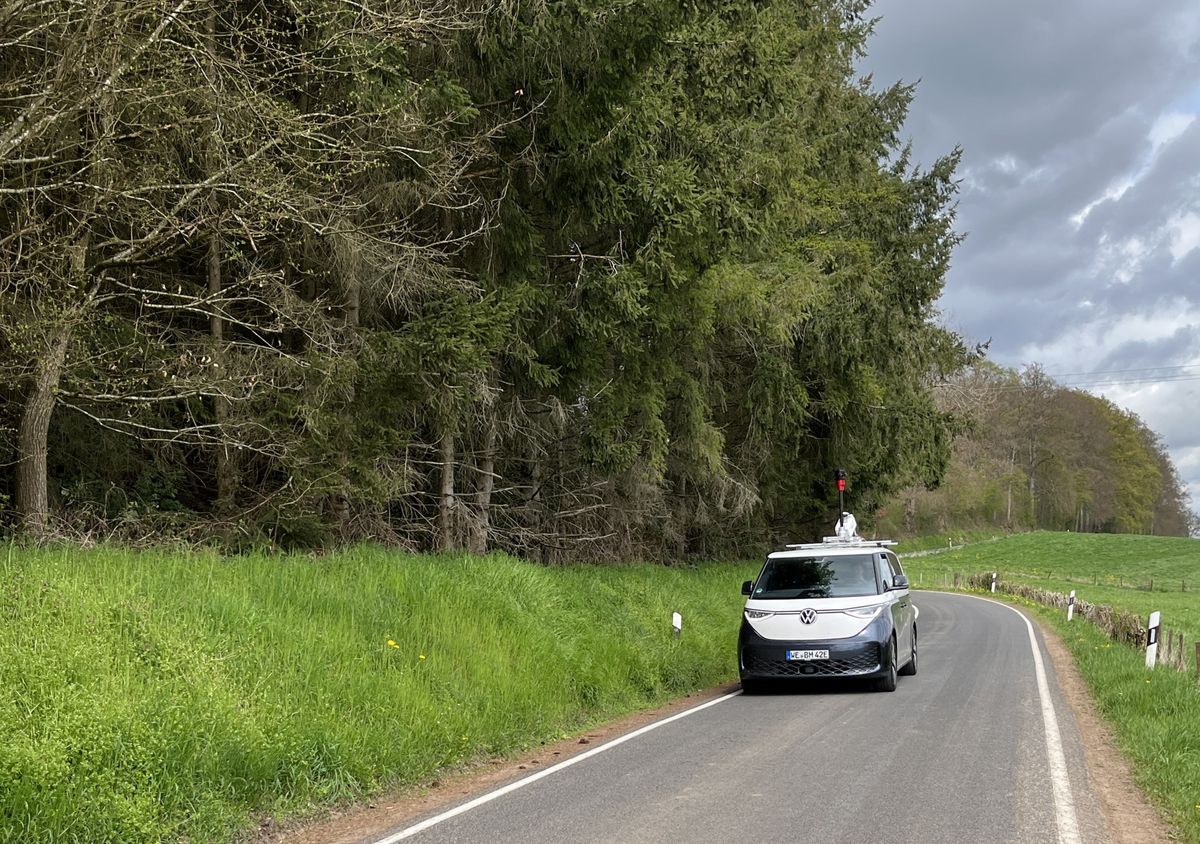
Four Reallabors located in Saalfeld-Rudolstadt, Bad Berka, Ilmenau, and Weimar are being used to test research approaches: a core facility for control centres, digital twins, and operational processes; a sensor laboratory for traffic and environmental data; an interaction laboratory for human-machine interfaces; and a field laboratory for testing, comparative studies, and technology transfer. The technologies used include, among others, a Level 4 (highly automated) driverless minibus, modern sensor technology, wireless communication systems between vehicles, infrastructure, and control centres, analysis methods based on artificial intelligence, and digital representations of real-world traffic environments.
Thuringia as a Model for Connecting Europe
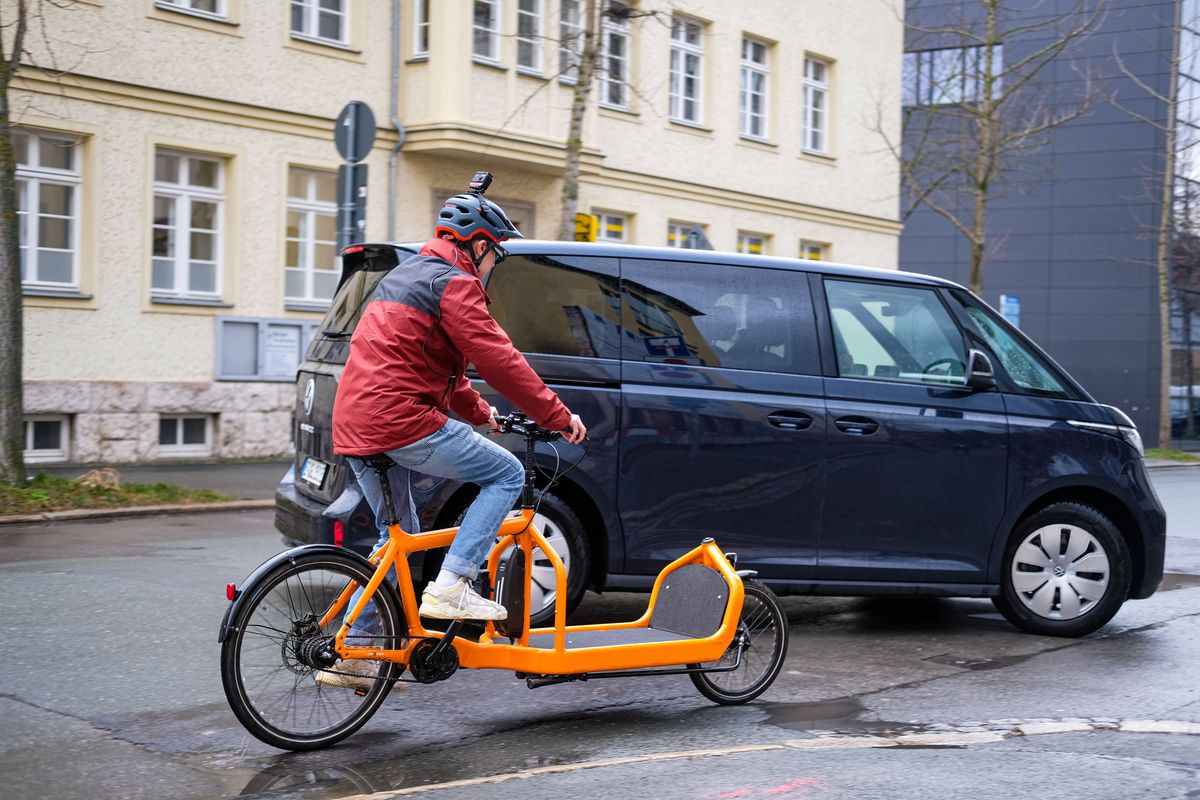
The systematic recording and analysis of safety-critical traffic situations – such as at bus stops, intersections, or during interactions with pedestrians and cyclists – plays a key role. The data, methods, and operational concepts resulting from this process will not only be scientifically analysed but also made available to other partners in government and industry through EDIH MID GERMANY.
»The ›Kompetenzzentrum für automatisiertes und vernetztes Fahren (AVF)‹ represents the next logical step for the ›Thüringer Innovationszentrum Mobilität‹ when it comes to long-term, strategically designed projects that includes the automated CAMIL shuttle bus, several Level 4 research vehicles, the Ilmenau Reallabor, and the MOVEwell project. This marks a breakthrough in research, development, and training public authorities and transportation companies for the real-world operation of automated and networked vehicles. The partnership with EDIH MID GERMANY acts as a central forum for knowledge and technology transfer«, explains Professor Matthias Hein, Director of the ThIMo and Professor of RF and Microwave Techniques at the TU Ilmenau.
The BMFTR is providing nearly 4 million euros in funding to support the establishment of the »Kompetenzzentrum« as part of the »Hightech Agenda Deutschland« and the »Mobilitätsverbund werthaltige ländliche Lebensräume« (MOVEwell) research project, which has been in operation at the two Thuringian universities since 2024. EDIH MID GERMANY, an EU-funded transfer structure, is also being developed to support municipalities, public institutions, transportation companies, and small and medium-sized enterprises in digitalisation and the implementation of artificial intelligence. »Automated and networked driving is essential to making mobility in rural areas sustainable. The new »Kompetenzzentrum« reinforces Thuringia’s reputation as a hub for innovation and stresses the importance of a solid foundation for the future of public services in our Federal State«, explains Steffen Schütz, Thuringian Minister of »Digitales und Infrastruktur«.
Questions can be directed to Prof. Uwe Plank-Wiedenbeck and Maximilian Wunsch at the Bauhaus-Universität Weimar’s Professorship of Transport System Planning, or Prof. Matthias Hein and Dr. Carsten Schauer at the »Thüringer Innovationszentrum Mobilität«.