
News

The pavilion was built by students as part of a semester project. It was built primarily with materials that had been reused numerous times. The construction reveals the potential that lies in reusing materials. Photo: Marlena Graßhoff

»Materialverteiler« Pilot Projects Kicks off at the Bauhaus-Universität Weimar

A pilot project promoting sustainable material cycles is being launched at the Bauhaus-Universität Weimar: »Materialverteiler«. The project hopes to provide students and instructors with a designated space for collecting recyclable materials and making the materials available for reuse free of charge. The aim is to conserve the resources being used in the Architecture and Urbanism degree programmes, reduce waste, and relieve the financial burden on students.

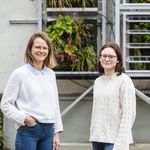
Maria Hartmann and Gloria Kohlhepp are carrying out joint research from different approaches on the multifunctional VertiKKA façade, which can be seen in the background and is currently being tested in Coudraystraße. Photo: Thomas Müller

BAUHAUS.INSIGHTS: Greener Façades in Our Cities – Is VertiKKA the Solution?

The global population is increasing steadily, as is the trend towards urbanisation. More and more surfaces are being paved. Green is turning more and more into grey – even in cities. Without plants to cool and clean urban air, heat islands and particle pollution will increase dramatically. Additionally, the increasing heavy rainfalls lead to increased flooding if the water is only able to drain into the sewer system and not into green spaces. In order for our cities to be sustainably liveable, they need more vegetation without sacrificing the usable spaces for which demand is increasing. This is precisely where innovative solutions like the VertiKKA project at the Faculty of Civil and Environmental Engineering come into play.

Maria Hartmann and Gloria Kohlhepp are carrying out joint research from different approaches on the multifunctional VertiKKA façade, which can be seen in the background and is currently being tested in Coudraystraße. Photo: Thomas Müller

BAUHAUS.INSIGHTS: Greener Façades in Our Cities – Is VertiKKA the Solution?

The global population is increasing steadily, as is the trend towards urbanisation. More and more surfaces are being paved. Green is turning more and more into grey – even in cities. Without plants to cool and clean urban air, heat islands and particle pollution will increase dramatically. Additionally, the increasing heavy rainfalls lead to increased flooding if the water is only able to drain into the sewer system and not into green spaces. In order for our cities to be sustainably liveable, they need more vegetation without sacrificing the usable spaces for which demand is increasing. This is precisely where innovative solutions like the VertiKKA project at the Faculty of Civil and Environmental Engineering come into play.

Steven Mac Nelly. Photo: Matthias Eckert; Editing: Marit Haferkamp, Newsteam

BAUHAUS.INSIGHTS: Sustainability as a Matter of Course – The 2023 Environmental Report

Sustainability is more than just reducing emissions: It is a commitment to socially responsible behaviour. At the Bauhaus-Universität Weimar, sustainability and environmental awareness are more than just theoretical concepts – they are both a driving forces and a guiding principle. But what does it mean to make a university sustainable? Since the summer of 2023, the Sustainability Team, led by Vice President for Social Transformation Dr. Ulrike Kuch, has been working on implementing concrete changes.