

Welcome to the Chair of Advanced Structures!
Our research and teaching focuses on the system analysis of structures including derivation of suitable partial models, engineering consideration of coupling and interactions, recording and consideration of extreme and changing load conditions as well as avoidance or evaluation of collapse potential using latest technologies (tools of digital engineering). Advanced Structures not only include the structures with high risk potential, lightweight and tent constructions, but also includes the use of damping elements and the interaction phenomena in standard construction methods.
Joint Research for Improved Earthquake Safety: Successful Master’s Defense within the DAAD Project
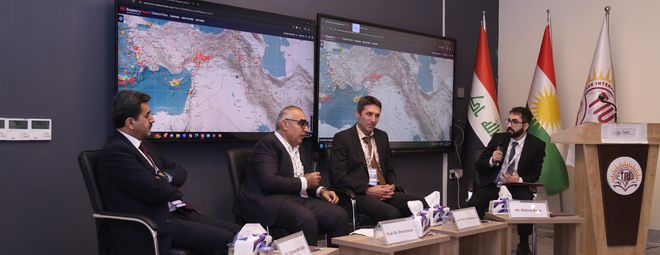
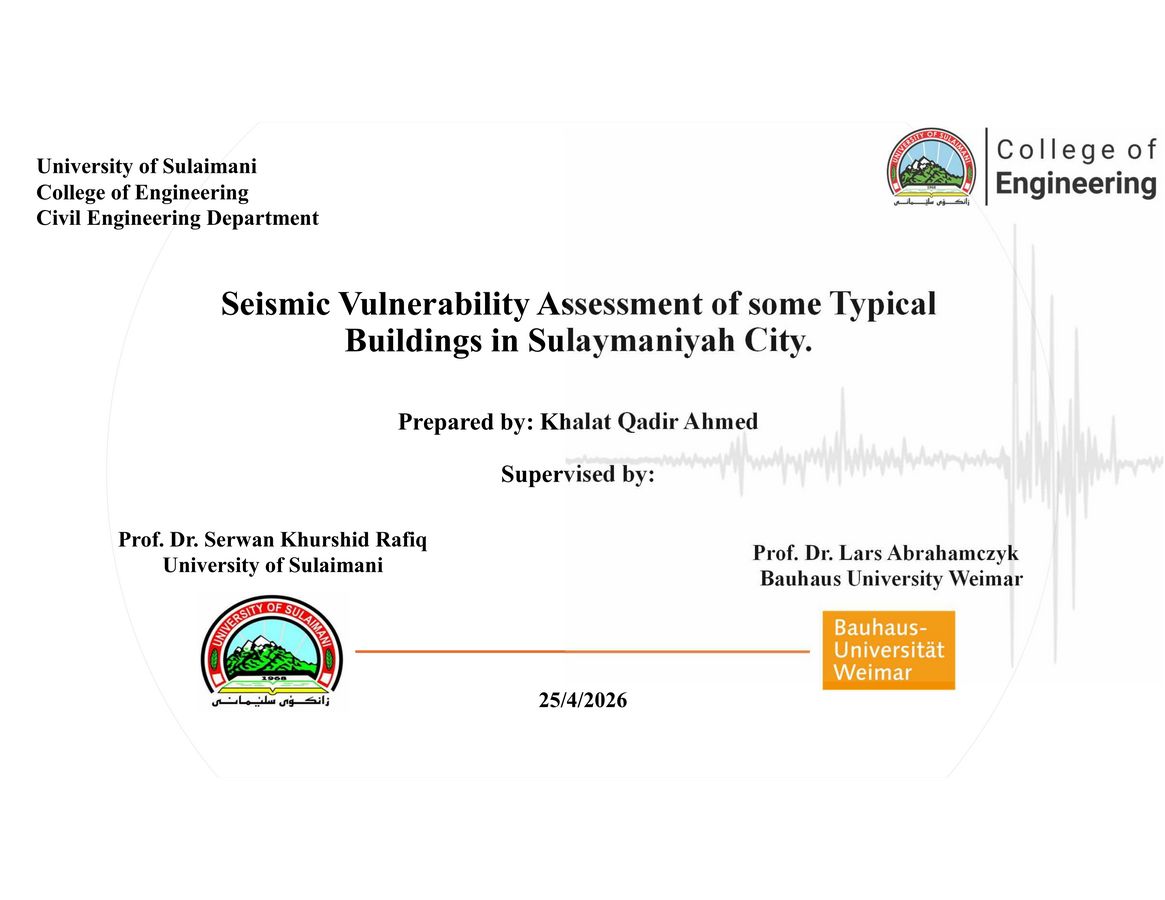
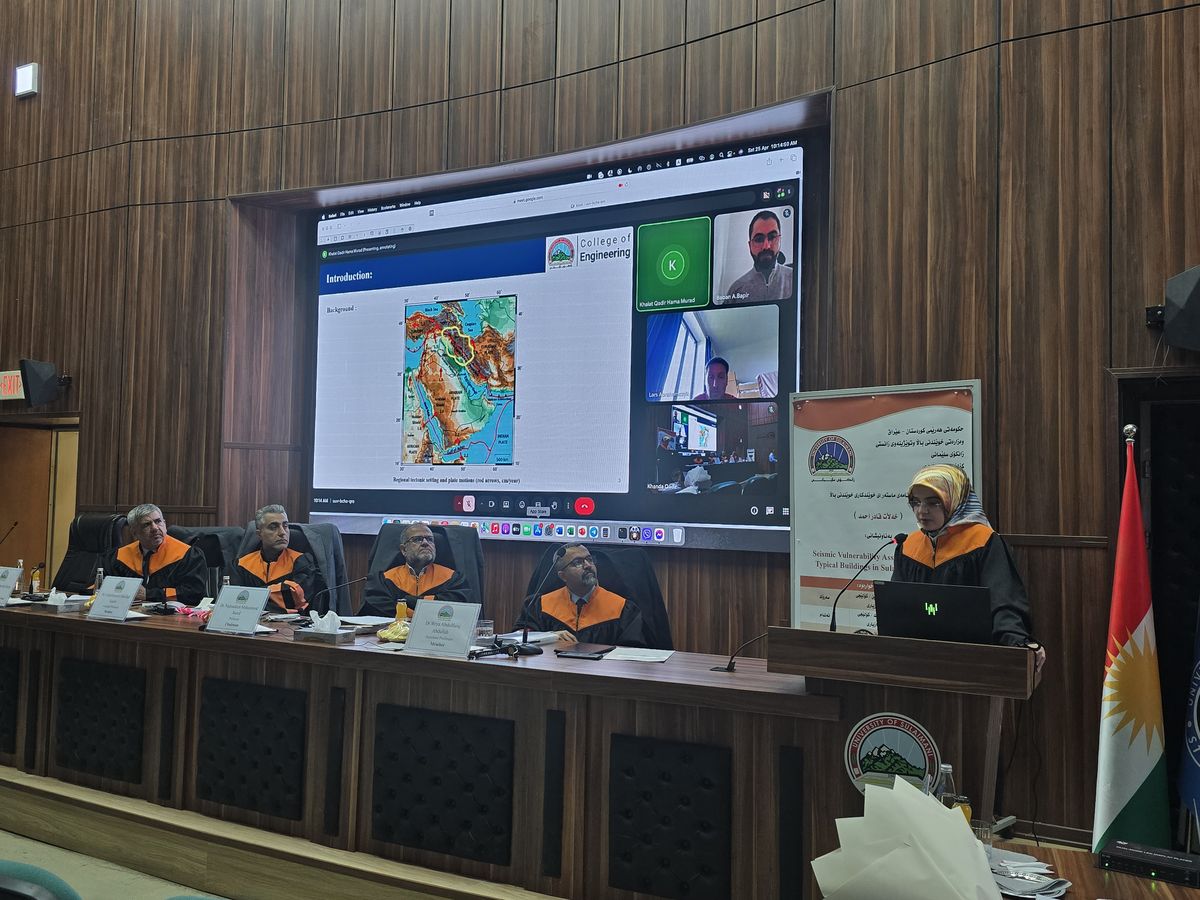
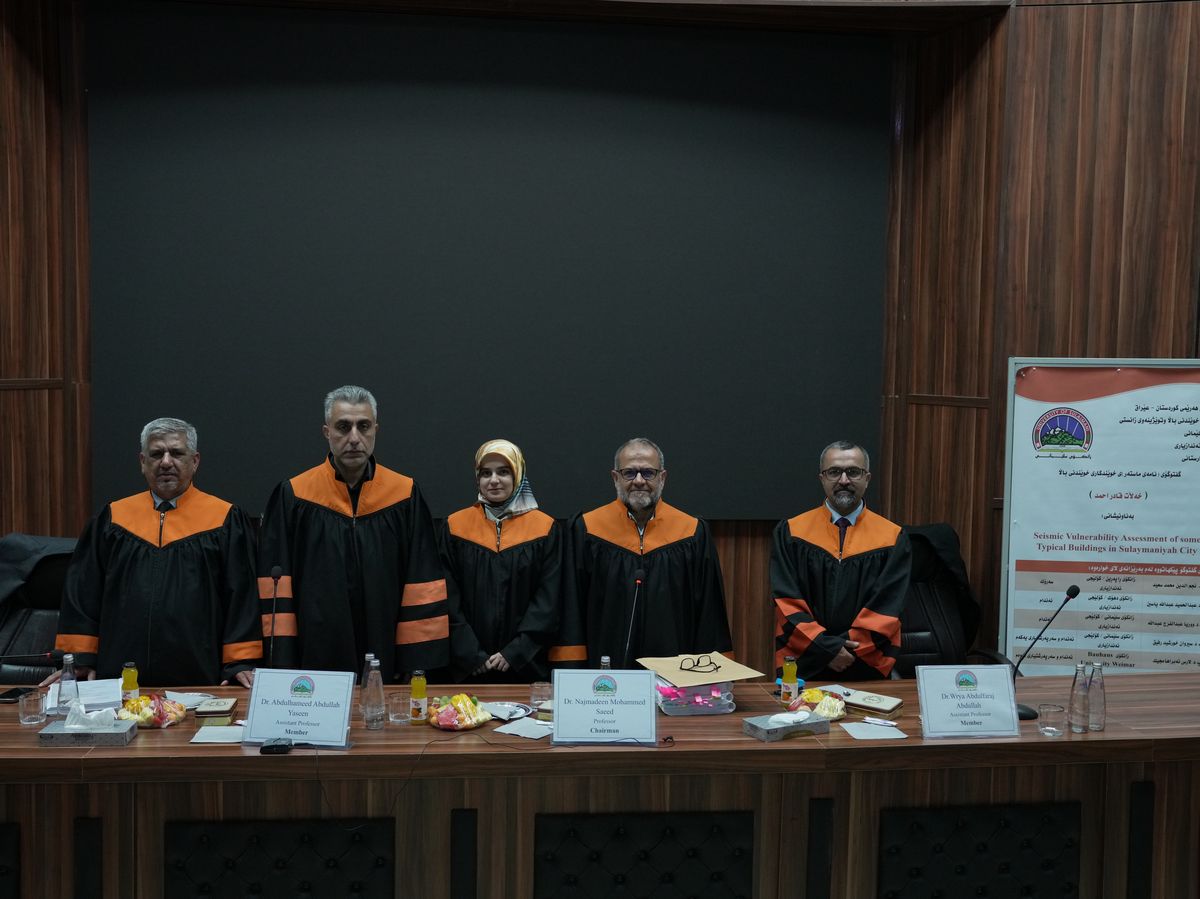
The Chair of Advanced Structures congratulates Khalat Qadir Ahmad on the successful defense of her Master’s thesis in structural engineering entitled “Seismic Vulnerability Assessment of some Typical Buildings in Sulaymaniyah City,” which took place on 25 April 2026 at the University of Sulaimani.
The thesis was carried out as a joint effort between the University of Sulaimani (UoS) and Bauhaus-Universität Weimar (BUW) within the DAAD-funded project “Towards Earthquake Mitigation in Iraq: EMS-98 Adopted Vulnerability Assessment of Existing Buildings.” The thesis builds on the project’s work on seismic risk and building assessment in Northern Iraq. It was supervised by Prof. Dr. Serwan Khurshid (UoS) and Prof. Dr. Lars Abrahamczyk (BUW), with Dr. Baban Abdulwahid Bapir (BUW) contributing as co-supervisor. The defense took place on campus at the UoS, with colleagues from BUW joining online.
The thesis focuses on the seismic vulnerability of typical residential masonry buildings in Sulaimani. Based on earlier field surveys conducted within the project, representative building types were selected and investigated under earthquake loading conditions. The study combines experimental determination of material properties with numerical modelling to capture the structural response of these buildings under seismic actions. The main results show that commonly used masonry buildings in the region are highly vulnerable to earthquake loading, particularly as the number of storeys increases. The findings provide a clearer understanding of expected damage patterns and contribute to the development of improved vulnerability assessment approaches. They also form a useful basis for future strengthening and risk mitigation strategies in the region.
Beyond the technical results, the thesis reflects the close cooperation between Iraqi and German partners. It shows how joint supervision and academic exchange can support locally relevant research and contribute to building expertise in earthquake engineering. With this completed thesis, the project delivers another concrete outcome that supports ongoing efforts toward safer and more resilient construction practices in Iraq.