
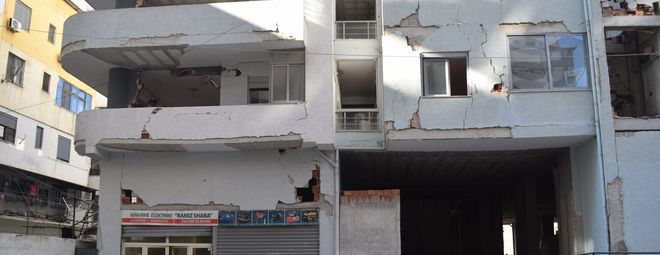
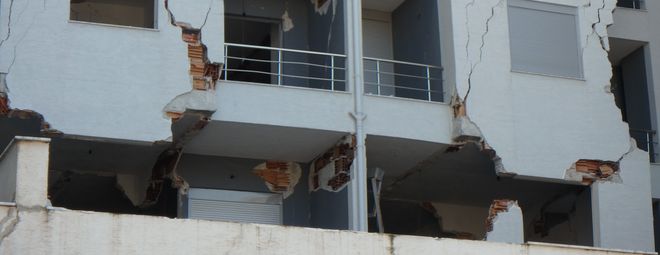
Forensic Structural Engineering database for HEI and pilot course with innovative and interactive learning methods

Following the shift from traditional didactic classroom models to the adoption of more learner-centered active learning approaches, gamification and, especially, escape rooms are gaining popularity as alternative learning and assessment environments designed to enhance students’ learning and skills in primary, secondary, higher education, and professional development programs. An educational escape room can be defined as an instructional method requiring learners to participate in collaborative playful activities explicitly designed for domain knowledge acquisition, skill development or behavioral change so that they can accomplish a specific goal by solving puzzles linked to unambiguous learning objectives (in a limited amount of time). Research indicates that, due to their playful nature, which favoring positive behavior, educational escape rooms can enhance learners’ motivation, engagement, and time management, increase confidence in critical thinking and decision-making, improve knowledge acquisition and academic performance.
The partners bring in different expertise and case studies suited to derive learning examples, thus the project consortium will cover a broad range of forensic cases finally triggered by wind, fire, earthquake and other at the beginning unknown events. The partners plan to take advantage of group diversity to find the best strategy for the problem at hand by using an AGILE approach with focus on the derivation of learning examples. Within the planned pilot course, each partner country will present a series of Lessons Learned and Best practices collected from their research and consultancy work (share of workload; establishment of transnational lectures and exercises). Key teaching materials and the educational escape rooms will be offered in local languages of the project partners to ensure a broad regional, national and European dissemination by the end of the project. Thus, the project generates an added value for all partners and Europe.
Objectives
- The application of educational escape rooms in civil engineering, particularly for training and continuing education in highly specialized courses on recursive damage identification, in order to close the gap in the education of civil engineers in the field of forensic engineering.
- Offering a new teaching method and introducing new content for master’s programs that retain their relevance and general applicability, while additionally providing training in a highly specialized and in-demand educational field. To this end, examples derived from real and investigated damage events will be used, which are intended to support cross-sectoral (academic/non-academic sectors) acceptance.
- Improving the credibility of forensic investigations and the reliability/validity of results through an innovative, integrated international collaborative educational framework for the exchange of experience among partners (literature and best practices), stakeholders, and early-career researchers/professionals.
- Creating new, innovative, and joint courses / fostering international relations and collaboration / developing and introducing new learning and teaching methods and approaches: The development and implementation of a pilot course in forensic civil engineering will challenge students with various real cases of damage events using an evidence-based and problem-oriented approach. The goal is to establish a collaborative network and to build courses/curricula in an international setting with participants from diverse engineering and educational backgrounds, within a specific case-oriented context.
Partners
Bauhaus University Weimar (BUW)
Location: Weimar, Germany
Website: www.uni-weimar.de
Expertise: Structural analysis, digital learning tools, earthquake damage assessment
Contact: Junior Professor Dr.-Ing. L. Abrahamczyk (Chair of Complex Structures)
Ruhr University Bochum (RUB)
Location: Bochum, Germany
Website: www.ruhr-uni-bochum.de
Expertise: Wind-induced damage, structural health monitoring, escape-room-based learning
Contact: Prof. Dr.-Ing. Rüdiger Höffer (Wind Engineering and Fluid Mechanics)
University of Aveiro (UA)
Location: Aveiro, Portugal
Website: www.ua.pt
Expertise: Fire resistance of structures, education in forensic engineering
Contacts: Prof. Dr. rer. nat. Uwe Kähler (Department of Mathematics), Dr. Nuno Lopes (Department of Civil Engineering)
Ss. Cyril and Methodius University in Skopje (UKIM)
Location: Skopje, North Macedonia
Website: www.ukim.edu.mk
Expertise: Seismic vulnerability, earthquake engineering, forensic investigations
Contact: Prof. Dr. Roberta Apostolska (Institute of Earthquake Engineering and Engineering Seismology – IZIIS)
Josip Juraj Strossmayer University of Osijek (UNIOS)
Location: Osijek, Croatia
Website: www.unios.hr
Expertise: Structural failure assessment, vulnerability of historic buildings
Contact: Prof. Dr. Davorin Penava (Faculty of Civil Engineering Osijek)
Istituto Universitario di Studi Superiori di Pavia (IUSS)
Location: Pavia, Italy
Website: www.iusspavia.it
Expertise: Bridge failure investigations, disaster risk assessment
Contacts: Asst. Prof. Ricardo Monteiro (Coordinator of the Doctoral Programme “Understanding and Managing Extremes”),
Asst. Prof. Nicola Scattarreggia (Department of Structural and Geotechnical Engineering)
English
Dear Ladies and Gentlemen,
Thank you for agreeing to participate in our survey. The purpose of this survey is to gather input for developing the framework of an international elective course syllabus in Forensic Structural Engineering.
All information will be consolidated and anonymized in accordance with European GDPR regulations (Regulation (EU) 2016/679).
The time required to complete the survey is approximately 10 minutes.
We would like to thank you in advance for your support!
The RECONSTRUCT European Team
Deutsch - German
Sehr geehrte Damen und Herren,
Vielen Dank für Ihre Mitwirkung an unserer Umfrage. Ziel dieser Umfrage ist es, Anregungen für die Entwicklung eines internationalen Lehrplans für das Wahlfach „Bauforensik“ (Forensic Engineering) zu erhalten.
Alle Informationen werden konsolidiert und anonymisiert in Übereinstimmung mit den europäischen GDPR-Vorschriften (Verordnung (EU) 2016/679).
Das Ausfüllen der Umfrage dauert etwa 10 Minuten.
Wir möchten Ihnen im Voraus für Ihre Unterstützung danken.
Das europäische Projekt-Team RECONSTRUCT
македонски - Macedonian
Почитувани Дами и Господа,
Ви благодариме на Вашето учество во оваа анкета. Целта на оваа анкета е да се соберат повратни информации за креирање и развој на наставниот план и програмата на меѓународен изборен предмет по форензичко инженерство на конструкции.
Сите информации ќе бидат синтетизирани и анонимни во склад со Европските GDPR регулативи (Регулатива (EU) 2016/679).
Времето потребно за пополнување на анкетата е приближно 10 минути.
Ви благодариме однапред за Вашата поддршка!
Од името на RECONSTRUCT проектниот тим.
Hrvatski - Croatian
Poštovane dame i gospodo,
zahvaljujemo što ste pristali sudjelovati u našem istraživanju. Svrha ovog upitnika je prikupiti povratne informacije za oblikovanje i razvoj nastavnog plana i programa međunarodnog izbornog predmeta Forenzičko inženjerstvo u građevinarstvu.
Svi podaci bit će objedinjeni i anonimizirani u skladu s europskim GDPR propisima (Uredba (EU) 2016/679).
Za ispunjavanje upitnika potrebno je otprilike 10 minuta.
Unaprijed zahvaljujemo na vašoj podršci!
Europski tim RECONSTRUCT
Italiano - Italian
Gentili signore e signori,
Grazie per aver accettato di partecipare al nostro sondaggio. Lo scopo di questo questionario è quello di raccogliere contributi per lo sviluppo della struttura di riferimento per un programma didattico internazionale per un corso elettivo in Ingegneria Strutturale Forense.
Tutte le informazioni saranno raccolte e rese anonime in conformità con la normativa europea GDPR (Regolamento (UE) 2016/679).
Il tempo necessario per completare il sondaggio è di circa 10 minuti.
Grazie in anticipo per il vostro supporto!
Il team europeo RECONSTRUCT
Português - Portuguese
Caros Senhoras e Senhores,
Obrigado por concordar em participar neste questionário. O objetivo deste inquérito é recolher contributos para o desenvolvimento do programa de um curso internacional em Engenharia Estrutural Forense.
Todas as informações serão consolidadas e anonimizadas de acordo com as regulamentações do RGPD europeu (Regulamento (UE) 2016/679).
O tempo necessário para completar o inquérito é de aproximadamente 10 minutos.
O nosso agradecimento pelo seu apoio.
A Equipa do projeto Europeu RECONSTRUCT
WP1 – Project Management
Work Package 1 provides the organisational backbone of RECONSTRUCT, ensuring effective cooperation among the six partner universities and steady progress in line with the approved work plan. A structured and transparent management framework guides the project across all key dimensions: coordination, time management, financial oversight, reporting, and quality assurance. The workpackage ensures:
Overall coordination of the international consortium
Monitoring of milestones and key performance indicators (KPIs)
Transparent financial management under the lump-sum model
Clear reporting procedures and documentation
Internal quality assurance and risk management
Progress:
Transnational kick-off meeting to established governance structures and responsibilities
Regular virtual coordination meetings
2 x in-person workshops
Shared digital platforms support documentation and collaboration
WP2 – Course Design & Development
Work Package 2 establishes the academic foundation including the development of a 6 ECTS Pilot Course in Forensic Structural Engineering at Master’s level. The course is designed around evidence-based, problem-based, and case-based learning principles. It introduces students to the professional role of the forensic engineer and connects structural engineering expertise with legal, ethical, and societal responsibility in damage investigations. To define the curriculum, a structured stakeholder survey was conducted. The Competency & Syllabus Survey was jointly developed, translated into all partner languages, and deployed internationally to structural engineers and court expert witnesses. The results provided a strong empirical foundation for the course design and were complemented by a SWOT analysis.
Progress:
Definition of learning objectives and competency framework
Derivation of the module description/syllabus
Integration of stakeholder feedback into course structure and assessment principles
Establishment of the technical learning environment supporting future delivery
All activities were implemented according to plan, without deviations. WP2 now provides a validated and professionally aligned curriculum framework, ready for implementation in the pilot phase.
WP3 – Case Studies & Gamified Learning
Work Package 3 forms the technical and pedagogical core by transforming real forensic structural damage cases into interactive, escape-room-based learning environments that allow students to investigate failure mechanisms step by step. Each partner contributes one case involving extreme actions such as earthquakes, storms, fire, or structural collapse:
RUB: Storm damage of a high-bay warehouse roof
UniOS: Stability assessment of historic unreinforced masonry
BUW: Seismic behaviour of unreinforced masonry (URM) buildings
IUSS: Collapse of a reinforced concrete arch bridge
IZIIS: Seismic damage of a reinforced concrete student dormitory
UA: Fire damage in an industrial steel hall
These six cases form the foundation of a digital learning environment. A shared Moodle platform has been established to host and structure the materials, ensuring coordinated development across the consortium. Using gamification tools (ThingLink and Moodle), the cases are implemented as interactive escape rooms. Students analyse evidence, identify failure mechanisms, and reconstruct damage processes within a structured investigative framework. During Workshop II, the first implementations were internally presented, tested, and reviewed. Expert feedback, including input from a professional game developer and forensic practitioners, supported refinement of narrative structure, question design, and technical functionality. Case study development is well advanced, and the gamified learning environment is continuously being refined toward full implementation.
WP4 – Pilot Course in Forensic Structural Engineering
Work Package 4 delivers the 6 ECTS international Pilot Course in Forensic Structural Engineering. The course combines structured lectures, guided self-study and collaborative case investigations to train students in evidence-based forensic reasoning. The course will:
- Integrate the escape-room-based case studies developed in WP3
- Encourage interdisciplinary and international teamwork
- Apply analytical, technical and legal reasoning in real forensic scenarios
- Strengthen critical thinking and decision-making under uncertainty
Although formal course delivery begins in the next project phase, preparatory coordination has already been addressed during project meetings. Responsibilities, course structure, and integration of WP2 and WP3 results have been aligned to ensure smooth implementation. WP4 represents the practical validation phase of RECONSTRUCT, bringing together curriculum design, gamified case studies, and international collaboration into a fully operational teaching format.
WP5 – Best Practice & Didactical Handbook
Work Package 5 consolidates the educational innovation developed in RECONSTRUCT into a transferable framework. Its main outcome will be a Best Practice Report and Didactical Handbook supporting long-term sustainability and replication. The handbook will:
- Document the pedagogical foundations of the course (evidence-based, problem-based and case-based learning)
- Provide structured guidance for implementing escape-room-based learning environments
- Include evaluation tools and feedback instruments for measuring learning success
- Offer recommendations for replication and adaptation at other higher education institutions
WP5 will also analyse data and feedback collected during the pilot course phase to refine teaching strategies and optimise the learning design. Although this work package formally begins later in the project timeline, its foundations are already embedded in WP2 and WP3 through continuous reflection on learning objectives, assessment principles, and gamification design. This ensures that the final handbook will be grounded in practical implementation experience.
WP6 – Overcoming Language Barriers
Work Package 6 strengthens the European dimension of RECONSTRUCT by ensuring that the project results are accessible across linguistic contexts. All educational escape rooms and supporting materials will be translated into the partner languages:
- Portuguese
- Croatian
- Macedonian
- Italian
- German
This multilingual approach enhances accessibility, inclusivity, and European dissemination, enabling broader adoption of the forensic engineering curriculum. Although the formal translation phase of the escape rooms will begin once their development is finalized, important groundwork has already been completed. The Competency & Syllabus Survey was translated into all partner languages and deployed internationally, and the course module description has been made available within the respective national contexts. This early multilingual alignment ensured inclusive stakeholder participation and broad professional input during curriculum development. WP6 will ensure that the final learning tools are fully accessible, culturally adaptable, and suitable for long-term European implementation.
Reports
- Course Development & Design: Abrahamczyk, L., Uzair, A., Penava, D., Kahler, U., Monteiro, R., Höffer, R., & Apostolska, R. (2026). Course development & design: RECONSTRUCT pilot course in forensic structural engineering. RECONSTRUCT Project (Erasmus+ Cooperation Partnerships in Higher Education).
- SWOT Analysis & Survey Results: Abrahamczyk, L., Hasan, P. L., Penava, D., Kahler, U., Monteiro, R., Höffer, R., & Apostolska, R. (2026). Analysis of the requirements for forensic structural engineering for the design of the RECONSTRUCT pilot course. RECONSTRUCT Project (Erasmus+ Cooperation Partnerships in Higher Education).
- Periodic Report: RECONSTRUCT Project Consortium. (2026). RECONSTRUCT Project – Periodic progress report (Reporting period 2024–2025). Erasmus+ KA220-HED Cooperation Partnerships in Higher Education.
Publications
- Abrahamczyk, L., Uzair, A., Apostolska, R., Höffer, R., Salzinger, J., Penava, D., Minazek, K., Lopes, N., Kähler, U., Monteiro, R., Scattareggia, N., & Delova, E. (2025). Forensic structural engineering database for HEI and innovative pilot course – RECONSTRUCT project. In Proceedings of the 21st International Symposium of the Macedonian Association of Structural Engineers (MASE 21), Skopje, North Macedonia.
- Penava, D., & Lozančić, S. (2025). Razvoj obrazovnih sadržaja za sudska vještačenja u građevinarstvu: Erasmus+ projekt RECONSTRUCT. Građevinar, 77(8), 815–820.
- Abrahamczyk, L., Höffer, R., Kalender, C., Apostolska, R., Lopes, N., Kähler, U., Monteiro, R., Calvi, G. M., Scattareggia, N., Penava, D., & Lozančić, S. (2024). Forensic structural engineering database for HEI and pilot course with innovative and interactive learning methods (RECONSTRUCT). Paper presented at the 8th Congress of Croatian Court Expert Witnesses and Valuers, Zagreb, Croatia, October 18–19.
- Monteiro, R., Scattareggia, N. (2024). IUSS protagonista nel progetto ERASMUS+ ''RECONSTRUCT'': innovazione nell'ingegneria strutturale forense. Newsletter IUSS Pavia.
Attention
Disclaimer
Funded by the European Union. However, the views and opinions expressed are solely those of the author(s) and do not necessarily reflect those of the European Union or the National Agency for Erasmus+ Higher Education Cooperation at the German Academic Exchange Service (DAAD). Neither the European Union nor the National Agency at the DAAD can be held responsible for them.