
30 Years of UNESCO World Heritage Sites: Between History, Present, and Future
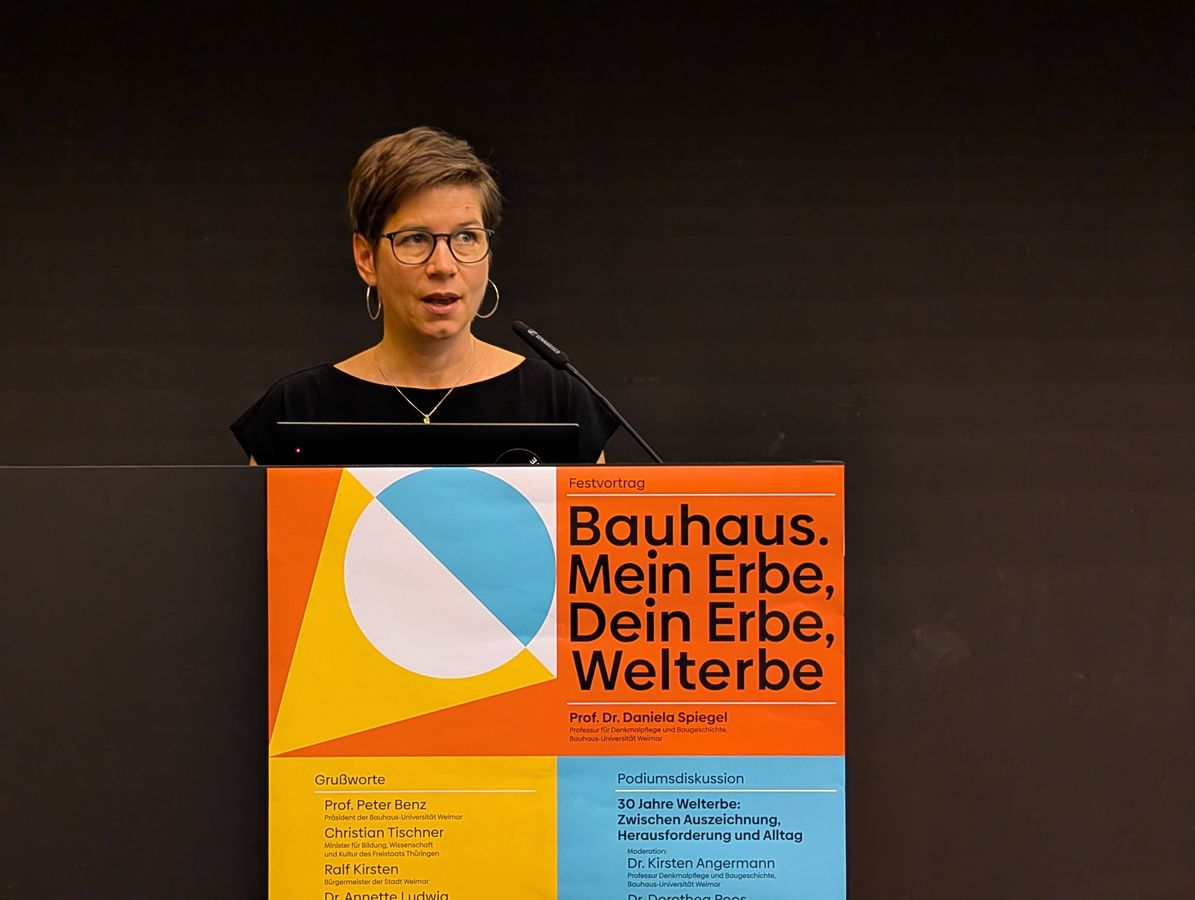
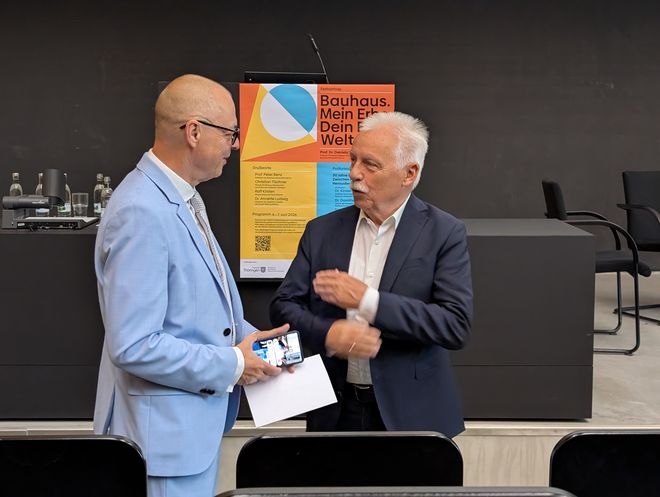
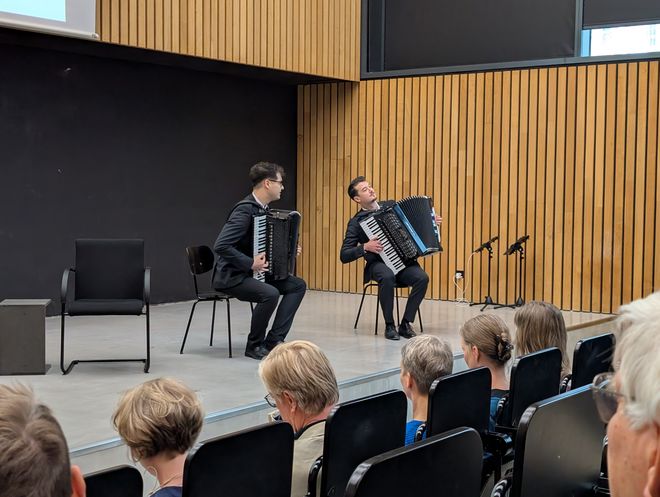
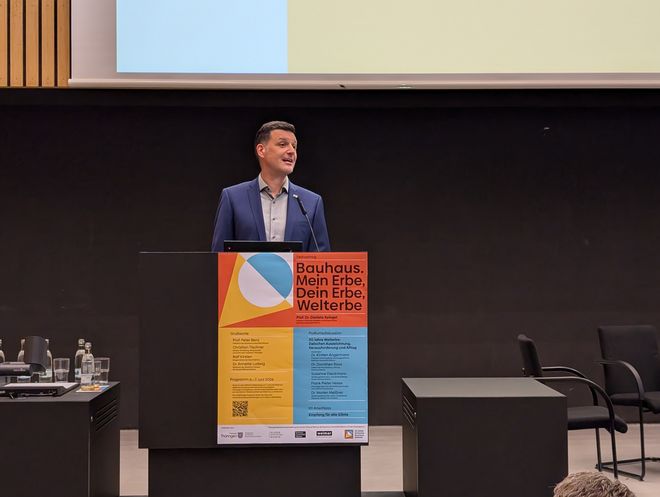
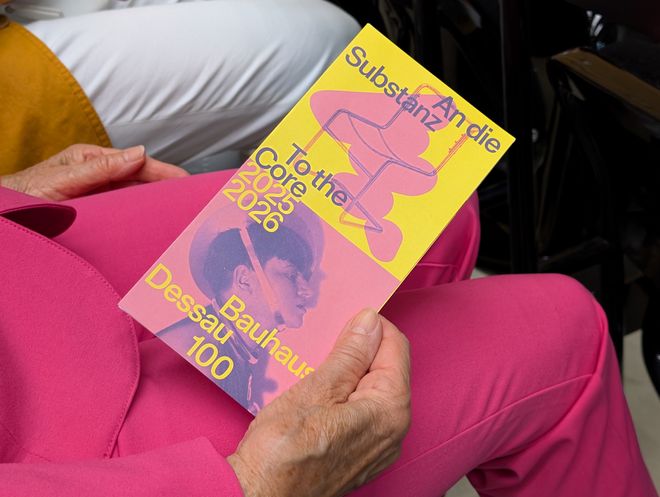
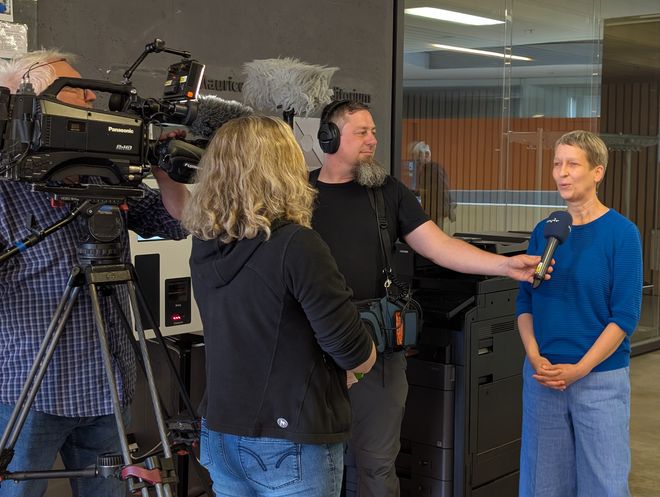
The Bauhaus-Universität Weimar, the Klassik Stiftung Weimar, the Stiftung Bauhaus Dessau, the German UNESCO Commission, the Thuringian Ministry of »Bildung, Wissenschaft und Kultur«, and the city of Weimar celebrated the 30th anniversary of the Bauhaus UNESCO World Heritage Sites during a ceremony in the Maurice-Halbwachs-Auditorium on 7 June 2026.
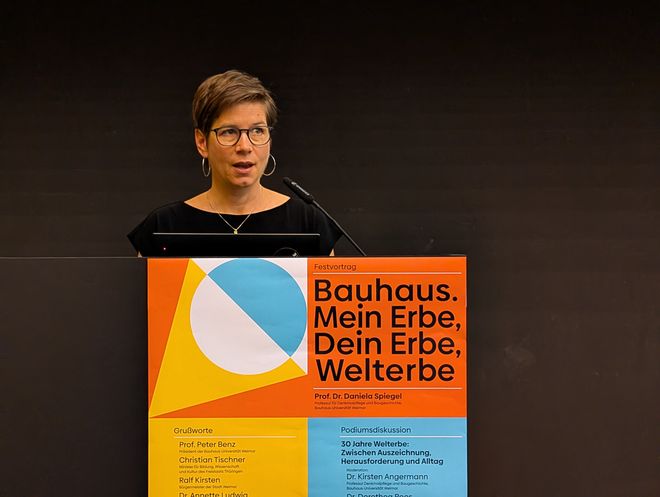
»When we look back on 30 years of the Bauhaus sites’ UNESCO World Heritage status, we aren’t just celebrating an award. We are celebrating a history of preservation, research, and future development«, said Prof. Peter Benz in his welcoming speech.
The President emphasised that the Bauhaus sites are preserved today in exceptional condition thanks to decades of joint efforts on the part of numerous partners from academia, historic preservation, politics, and society. However: For the Bauhaus-Universität Weimar, World Heritage means more than just preserving historical architecture. Rather, the Bauhaus legacy is continuously being reinterpreted, researched, and redeveloped every day.
Continuing the Bauhaus Idea
The event also focussed on the question of how to keep cultural heritage alive. The Bauhaus-Universität Weimar does not see its mission as reproducing the historic Bauhaus. Instead, it aims to build on its fundamental ideas in the context of the present.
Openness, an experimental spirit, interdisciplinarity, and social relevance remain the guiding principles of research, teaching, and artistic practice at the University today. This understanding sees the Bauhaus not as a closed chapter of history, but as a living source of inspiration for solving current challenges.
Photo gallery: Bauhaus-Universität Weimar, Photos: Dana Höftmann
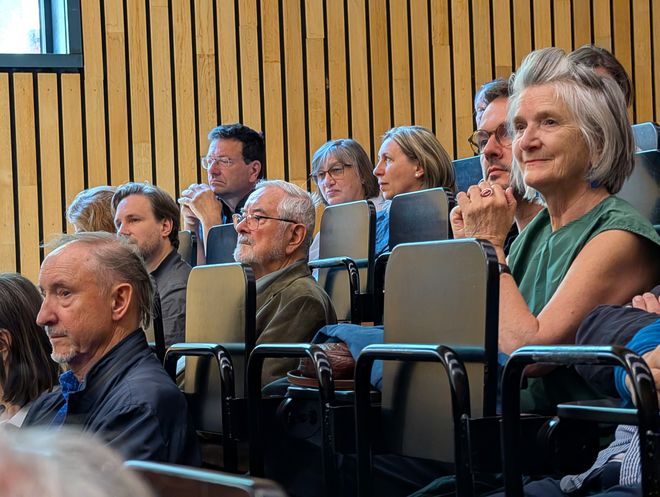
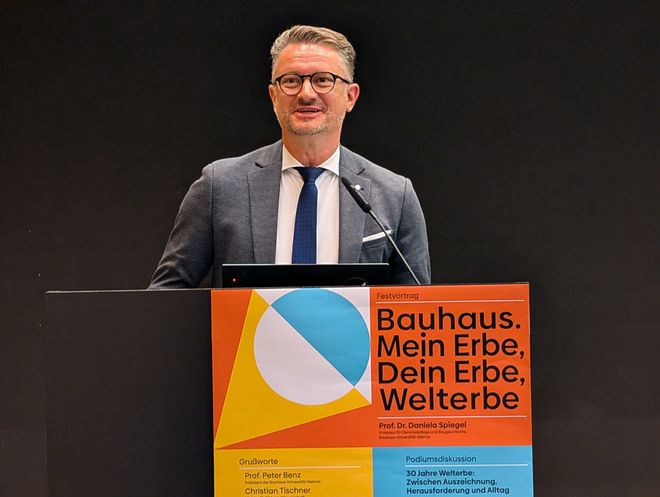
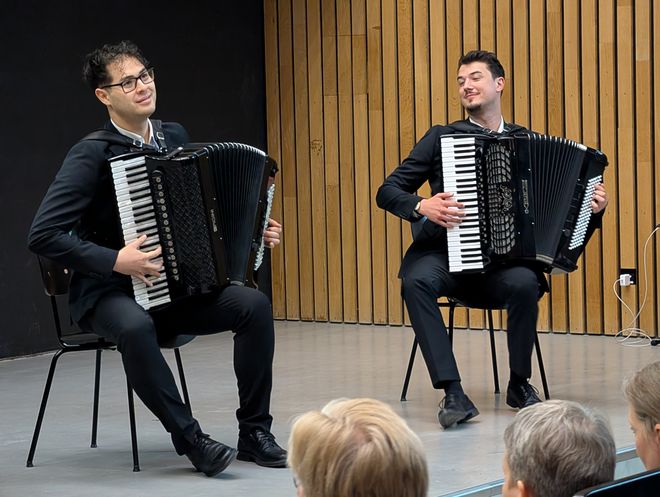
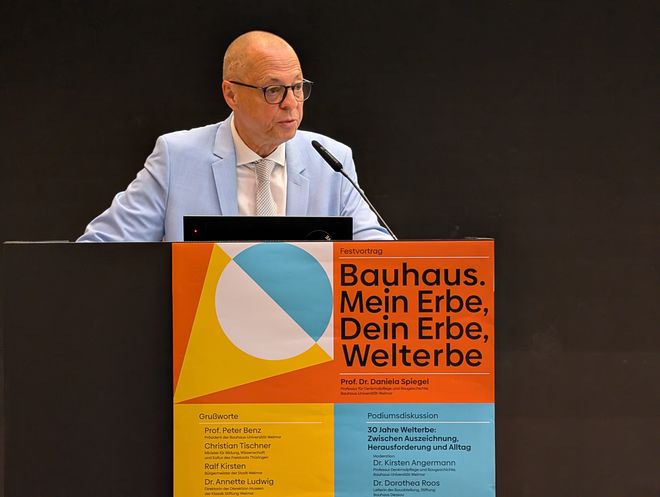


World Heritage Between Responsibility, Daily Campus Life, and Tourism
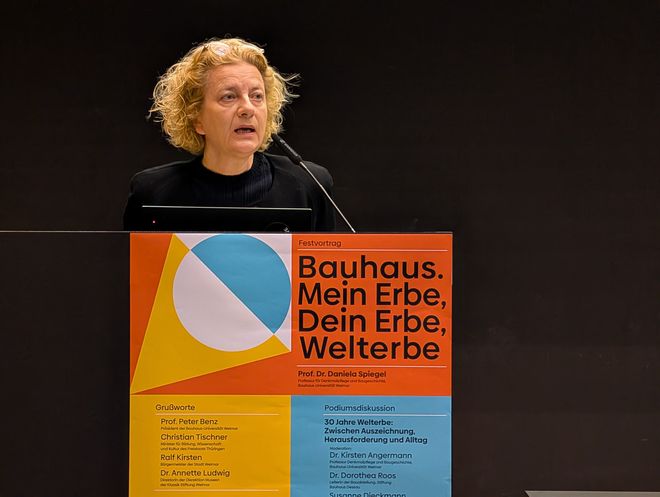
Prof. Daniela Spiegel’s keynote speech offered a unique perspective on the challenges and opportunities of UNESCO World Heritage status. She focussed on, among other things, the question of what it means when a World Heritage Site is not just visited, but lived in on a daily basis.
Unlike many UNESCO Sites around the world, the Bauhaus buildings in Weimar are not strictly museum spaces. They are still used today by students, instructors, and staff. Teaching takes place where the Bauhäusler once learned and worked.
This special situation also comes with tension. Given the numerous visitor groups interested in the Bauhaus sites, students occasionally felt as if they themselves were part of a tourist attraction. This experience led to the creation of the student-organised »Bauhaus Walks«. These guided tours offer visitors an authentic glimpse into the history and present of campus.
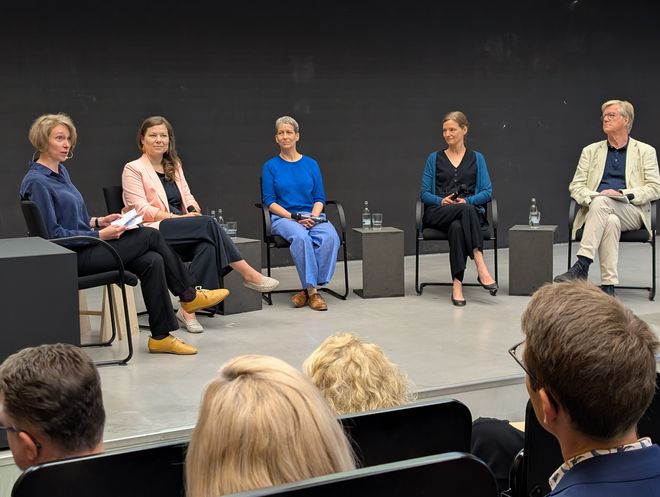
During the subsequent panel discussion, it was made clear that World Heritage status brings not only opportunities, but also comes with responsibilities. Preserving the historic buildings means continuously investing in upkeep, renovation, and maintenance. The long-term preservation of this architectural heritage is therefore a major task for the upcoming years.