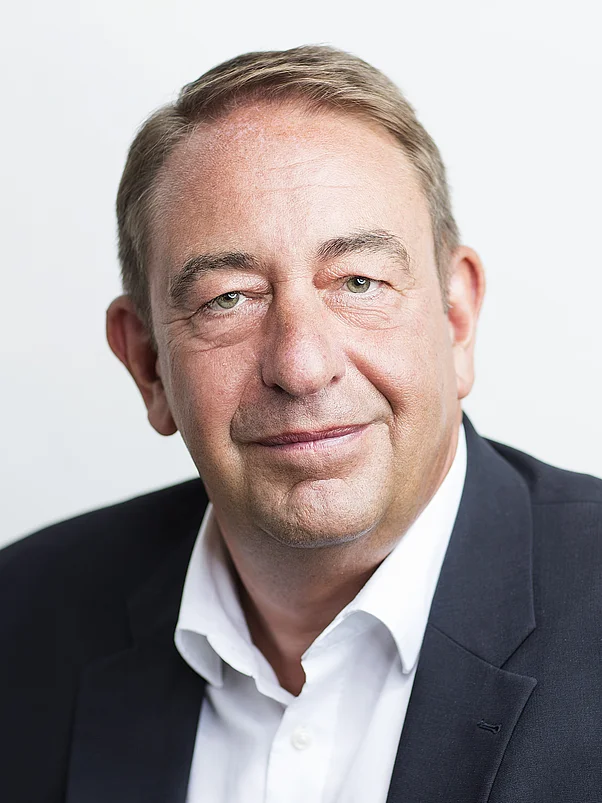
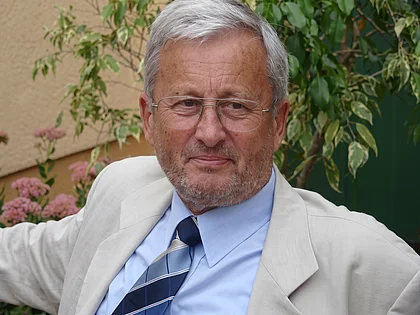
Prof. Dr.-Ing. habil. Jochen Stark
It is with great sadness that we have learnt that our former Director of the Institute and mentor, Prof. Jochen Stark, passed away on 10 September 2025.
We mourn the loss of our much-respected academic teacher, patron and friend
Professor Emeritus Dr.-Ing. habil. Prof. h. c. mult. Dr.-Ing. h. c. mult. Jochen Stark
- born on 24 October 1943 in Erlach (Vogtland)
- who passed away on 10 September 2025 in Bad Berka
Jochen Stark studied at the Faculty of Building Materials Engineering at the University of Architecture and Civil Engineering (HAB) in Weimar. He subsequently undertook postdoctoral research at the Mendeleev Institute in Moscow, where he was awarded a Dr.-Ing. in 1972 for his thesis on the kinetics of cement clinker firing. He remained devoted to ‘cement chemistry’ throughout his academic career and beyond. Until his appointment as a full professor of building materials science at the HAB in 1990, Jochen Stark worked at the Weimar Research Institute of Zementanlagenbau Dessau. There, he completed his habilitation in 1988 with a thesis entitled ‘On the development of hydraulically active Belit cement’. He headed the F. A. Finger Institute for Building Materials Science (FIB), which he founded in 1995, with rigour and a subtle sense of Vogtland humour until his retirement in 2009.
Jochen Stark was an internationally renowned scientist and a highly popular university lecturer among students for his dedicated and inspiring teaching. At the same time, he knew how to maintain links with industry and the building trade, ensuring that his research findings found their way into practical application.
More than 500 publications and countless lectures bear witness to his scientific creativity, as do the two textbooks he co-authored with his friend Bernd Wicht, of which *The Durability of Concrete* has been translated into Japanese, Russian and Ukrainian. His high academic reputation was reflected both in the honorary professorships conferred by the universities of Kyiv, Tashkent, Wuhan and Shanghai, and in the honorary doctorates awarded by the universities of Duisburg-Essen and St Petersburg. In 2004, Jochen Stark was elected a member of the Technical Sciences Class of the Saxon Academy of Sciences in Leipzig.
Jochen Stark supervised numerous undergraduate theses and more than 30 doctoral theses. He was a motivating and always approachable mentor, particularly to his doctoral students.
With the passing of Jochen Stark, we have lost an outstanding scientist and a man of great humanity. It is with deep sorrow and the utmost respect that the staff and students of the FIB bid him farewell.
Our thoughts are with his family in particular.
On behalf of the staff of the F. A. Finger Institute for Building Materials Science at the Bauhaus University Weimar:
Prof. Andrea Osburg
, Assistant Professor Luise Göbel
, Prof. Horst-Michael Ludwig
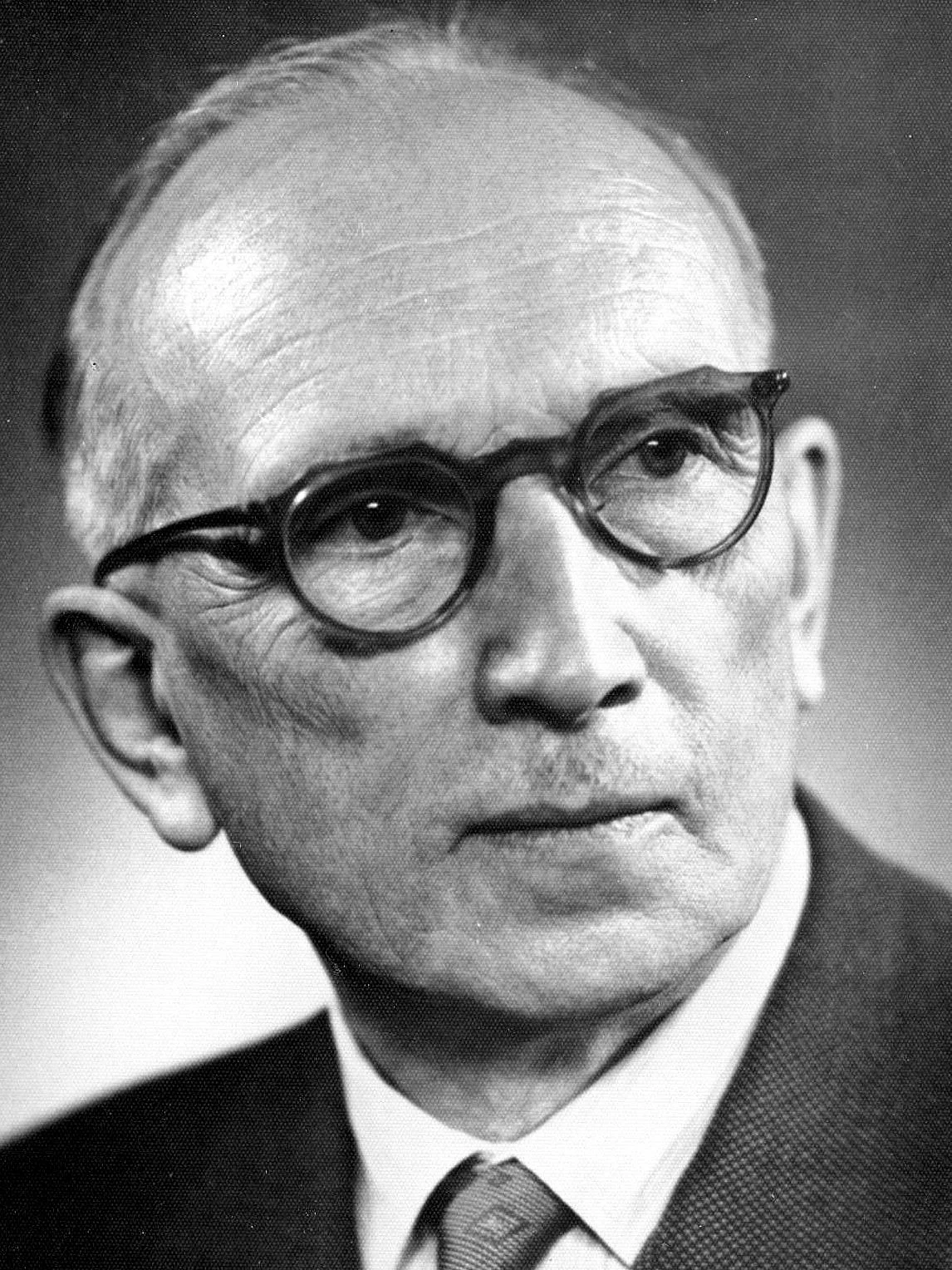
Friedrich August Finger was born on 29 April 1885 in Frankfurt am Main. He was one of the leading figures who established the science of building materials and the necessary academic training in this field. Through his work at that time, F. A. Finger ensured that Weimar remains known worldwide to this day as a centre for successful research and training in building materials.
The Building Materials Institute at the Bauhaus-Universität Weimar, founded in 1995 by Prof. Dr.-Ing. habil. Jochen Stark, is named after him. F. A. Finger’s work at the Faculty of Building Materials Science and Technology has been chronicled in this document by Jochen Stark and Bernd Wicht.
Curriculum vitae
| 1885/04/29 | born in Frankfurt/Main |
| 1904-1912 | Studies in civil engineering at the Technical Universities in Darmstadt and Munich |
| 1912 | Diploma in Darmstadt |
| 1912-1925 | Predominantly site manager during the construction of the Baghdad Railway |
| 1929-1940 | Technical journal and training manager at Deutscher Zementbau in Berlin |
| 1940 | Lecturer for structural analysis and engineering at the University of Architecture and Fine Arts in Weimar |
| 1944 | Appointment as professor for building materials science, civil engineering and statics in Weimar |
| End of 1945 | Foundation and management of an institute for building materials development in Weimar with special promotion of clay and anhydrite construction methods |
| 1946 | Establishment and management of a testing centre for building materials in Weimar |
| 1946 | Appointment as Professor for Building Materials and Special Areas of Civil Engineering |
| 1950-1951 | Acting Director of the Weimar School of Architecture and Civil Engineering (HAB) |
| 1953/08/06 | Foundation of the Faculty of Building Materials Science and Technology |
| 1953-1958 | First dean of this faculty |
| 1958 | Honorary senator of the HAB Weimar and honorary doctorate (Dr.-Ing.) at the Faculty of Architecture |
| 1961/07/06 | Friedrich August Finger deceased in Weimar |
The reference in the naming to F. A. Finger
by Prof Jochen Stark, from the FIB Annual Report 1995.
The reference in the name to Friedrich August Finger (1885 - 1961), the nestor of building materials research and teaching in Weimar and founding dean of the former Faculty of Building Materials Science and Building Materials Technology at the HAB Weimar, is intended to express, among other things, that the new institute is committed to the long and successful tradition of research and coursework in the
field of building materials in Weimar and will continue this tradition.
Friedrich August Finger had joined the former Weimar School of Architecture as a lecturer on 1 November 1940 and was responsible for training architects in Building Materials Science, with 2 hours of Building Materials Science per week being scheduled in the 1st and 2nd semesters from 1942. On 1 December 1944, F. A. Finger was appointed associate professor for Building Materials Science and Civil Engineering.
After the end of the Second World War, efforts were soon made to reopen the university and university staff were actively involved in the reconstruction of the state of Thuringia. F. A. Finger played an outstanding role in this. In October 1945, a so-called "Bauhaus planning collective" was founded at the university at the time, in which all full and associate professors of the Hochschule für Baukunst were united "as the top experts in their fields in the state of Thuringia". Initially, Hermann Henselmann was in charge of the research communities and from 1 September 1948, F. A. Finger took over. The Building Materials Development Research Association, headed by F. A. Finger, proved to be one of the most successful. Its main task passed in the development of local building material reserves. Work was carried out on the extraction, production and utilisation of clay, lime tuff (Magdala) and anhydrite (Niedersachswerfen) in particular. The results included an anhydrite binder (plaster for the National Theatre in Weimar) and the resumption of the production of sulphate cement in Thuringia, which became known as Thurolit.
In spring 1946, F. A. Finger succeeded in obtaining the machinery of the laboratory of the German cement industry (Berlin-Karlhorst), which had been relocated to Thuringia (Steudnitz), for use by the university. The direct successors to the former planning association are the building materials research centres that emerged from the AG Baustoffe and are located in Weimar inside and outside the university. Outside the university, it was in particular the Institute for Building Materials Development founded by F. A. Finger on 1 April 1946, from which the Institute for Building Materials (now MFPA), headed by F. A. Finger as director until 1955, emerged on 1 January 1951.
On 24 August 1946, the college was reopened as the "Staatliche Hochschule für Baukunst und Bildende Künste" (State Academy of Architecture and Fine Arts) and began teaching in October 1946. F. A. Finger took over the training of architecture students in Building Materials Science, was appointed full professor in March 1947 and founded the Chair of Building Materials Science, Civil Engineering and Statics. In 1950 and 1951, F. A. Finger was the provisional director of the university.
The first Institute for Building Materials Science at the HAB (1958 - 1970)
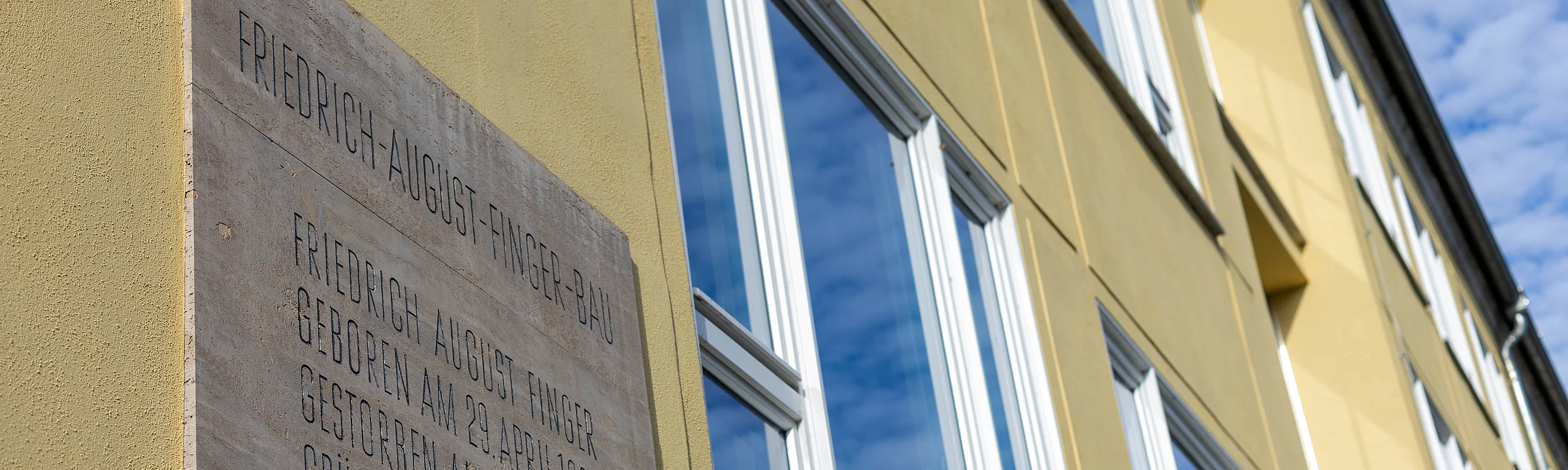
In autumn 1953, the GDR Council of Ministers commissioned F. A. Finger to found a new faculty of Building Materials Science and Building Materials Technology at the university in Weimar. F. A. Finger regarded this task as his own business and during his five-year term of office as Dean of this unique faculty, the first of its kind, he created the spatial, technical and personnel requirements for the necessary chairs and institutes, or at least prepared them with foresight. Technological planning for the establishment of an Institute for Building Materials Science at the new faculty began as early as 1956. The first construction phase of the new building for the future institute was completed in November 1957 and the second part of the complex, which was named the "Finger Building" in a ceremony on 10 July 1962, one year after the death of F. A. Finger, was completed in early 1960 and is known as such today not only in Weimar university circles.
The founding of the first Institute of Building Materials Science at the Faculty of Building Materials Science and Building Materials Technology took place on 15 November 1958, and the first head of this institute was the holder of the Chair of Ceramics and Glass, Prof. Franz Schwarz (1902 - 1980).
The institute at that time comprised three chairs, whose coursework and areas of research were divided as follows:
Chair of Building Materials Science I:
Ceramics, glass, enamel, industrial waste materials
Head. Prof Franz Schwarz
Chair of Building Materials Science II:
Binders, concrete, building materials testing, construction metals
Head: Doz. Rudolf Riedeberger (1899 -1961)
Chair of Building Materials Science III:
Building protection, barrier and insulating materials
remained unoccupied
The chairs were each occupied by one head and two assistants. With the completion of the "Finger Building", 105 workstations were available for the students of the faculties of Architecture, Civil Engineering and Building Materials Science for their practical training in building materials and Master's theses. The institute was divided into eight departments according to its tasks:
- Concrete
- Binders
- Ceramics and glass
- Construction metals and workshop
- Chemical laboratory
- Fine structure testing
- Wood and wood preservation
- Building protection
The Institute of Building Materials Science developed into the largest institute at the university, in which Dr Werner Riedel, who worked as head of operations, played a major role. In connection with the so-called 3rd university reform in the GDR, the faculty was dissolved and reorganised as the Building Materials Process Engineering Section in September 1968, whereby the basic ideas of F. A. Finger were completely lost. This was also the end of the first Institute for Building Materials Science at this university.
The Friedrich-August-Finger-Bau in Coudraystraße 11A was occupied by the Institute for Building Materials Science at the University of Architecture and Civil Engineering in Weimar (HAB) in 1960. The plans were drawn up together with the building behind it (concrete laboratory) in 1956 and the building complex was designed by Professor Emil Schmidt (member of HAB) and his two assistants at the time, Dipl.-Ing. Riemer and Dipl.-Ing. Geißler.
A detailed history of the institute and the building until 2012 is listed in this document (in german).
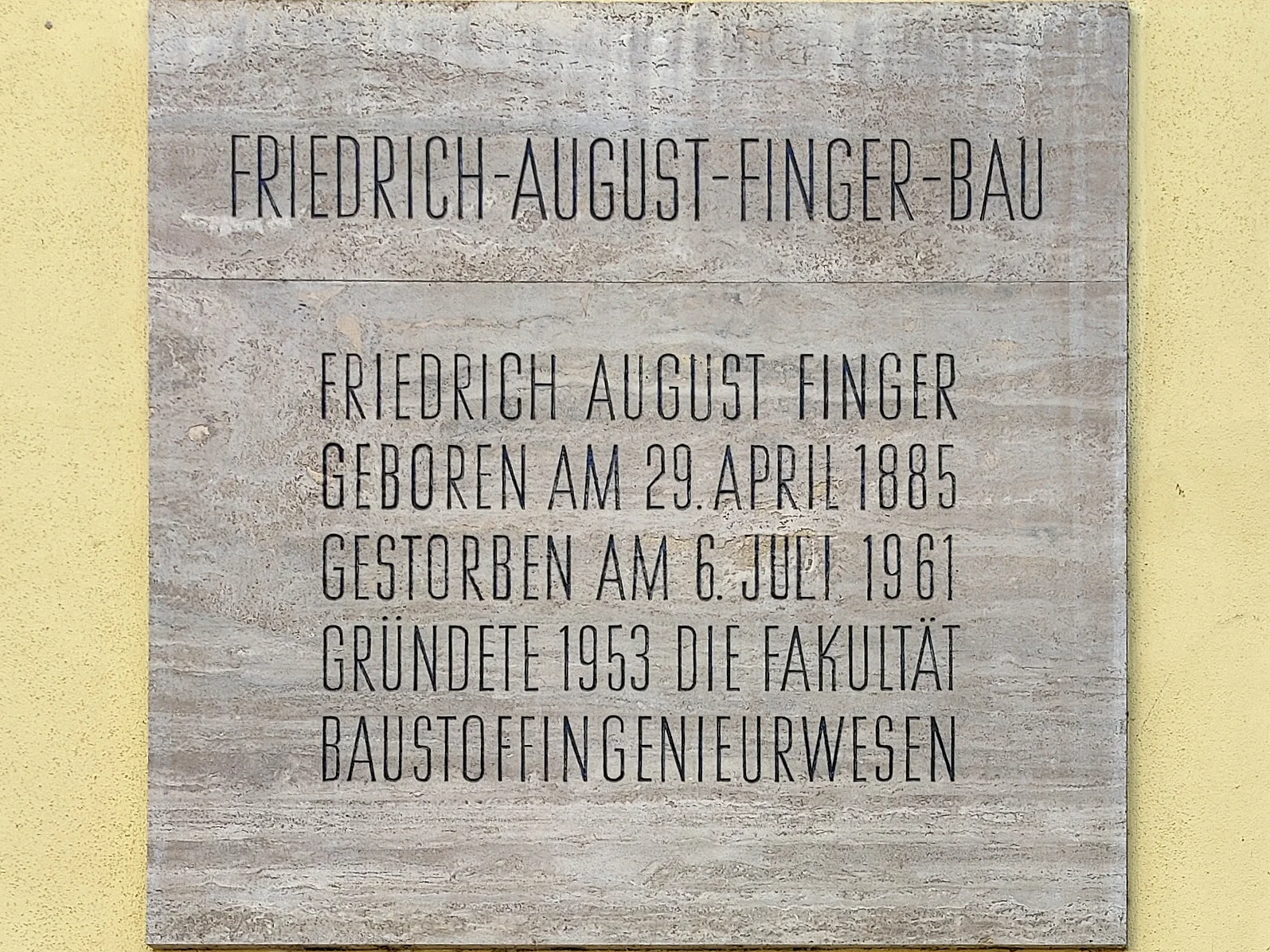
The building has since been refurbished in several phases:
- Roof renovation
- External staircase
- Facade in the inner yard
- Facade facing the street
- Roof interior fit-out
For the Main Building of the F. A . Finger building, a sum of 10,000 East German marks was earmarked for art within the building. Several works of art were created to decorate the stairwell of the building:
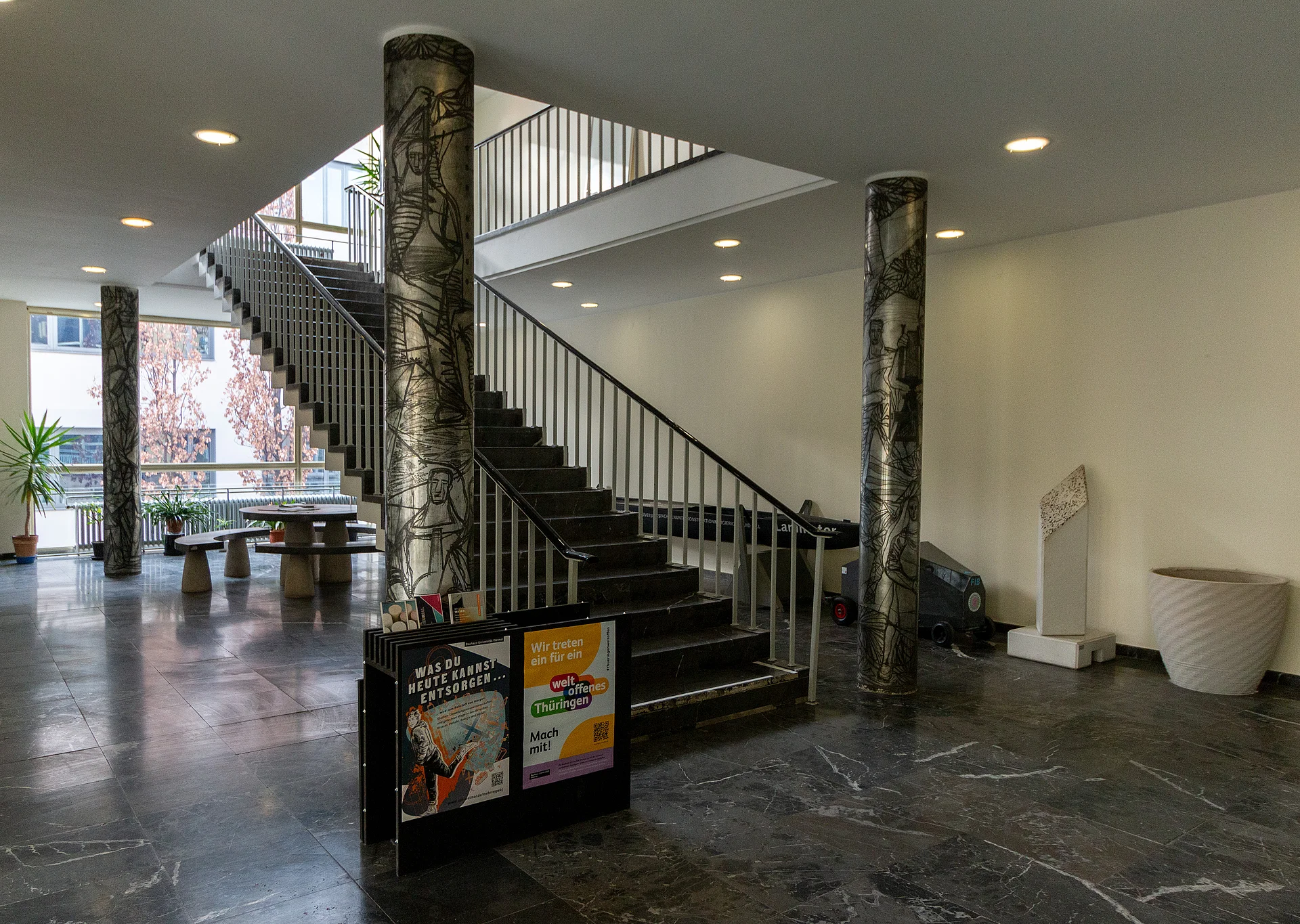
The four columns in the entrance hall of the Friedrich-August-Finger-Bau were designed by Bruno Quass and Gottfried Schüler from the Faculty of Architecture.
The motifs entitled "Glass - Ceramics - Concrete" show people working in the laboratory with glassware and clay pots. The design was executed using a grinding technique with black colouring on aluminium sheets that were rolled around the actual columns.
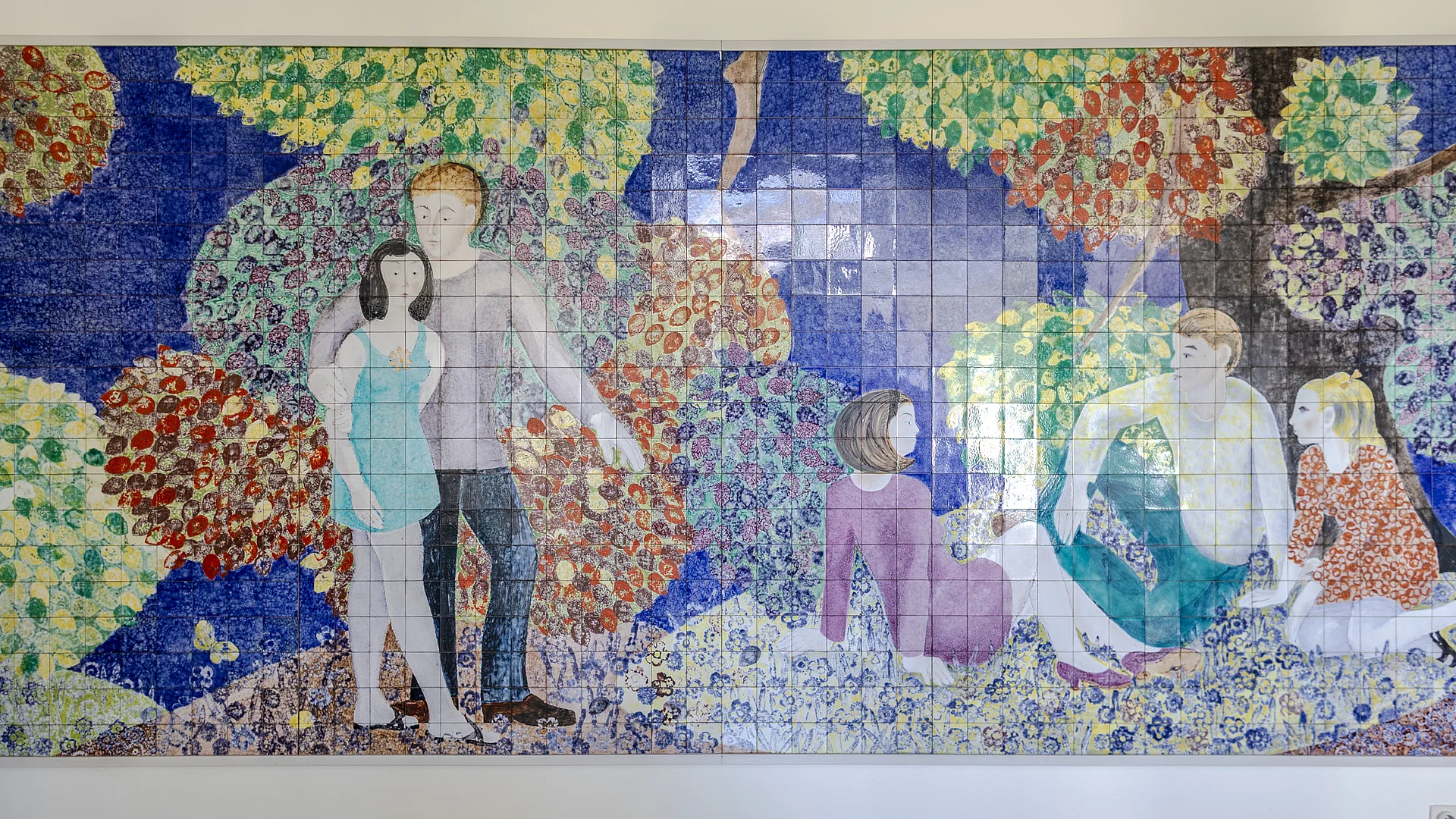
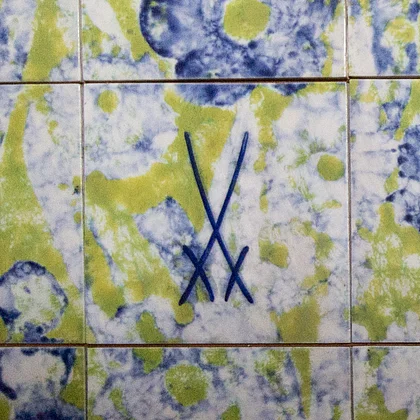
The mural "Leisure activities" on the 1st floor of the stairwell is artistically remarkable. It is a mosaic picture measuring 200 x 480 cm and is made up of 960 ceramic wall panels measuring 10 x 10 cm. The draft was created by Prof. Heinz Werner, the long-time decorator of the Meissen State Porcelain Manufactory, with the help of Ludwig Zepner and Peter Strang. The porcelain panels were produced in 1970 in the manufactory's Artistic Wall Design department. They are executed in overglaze painting and were mounted on six panels.
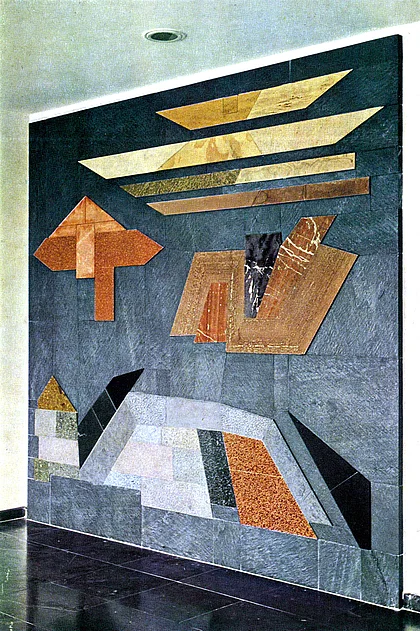
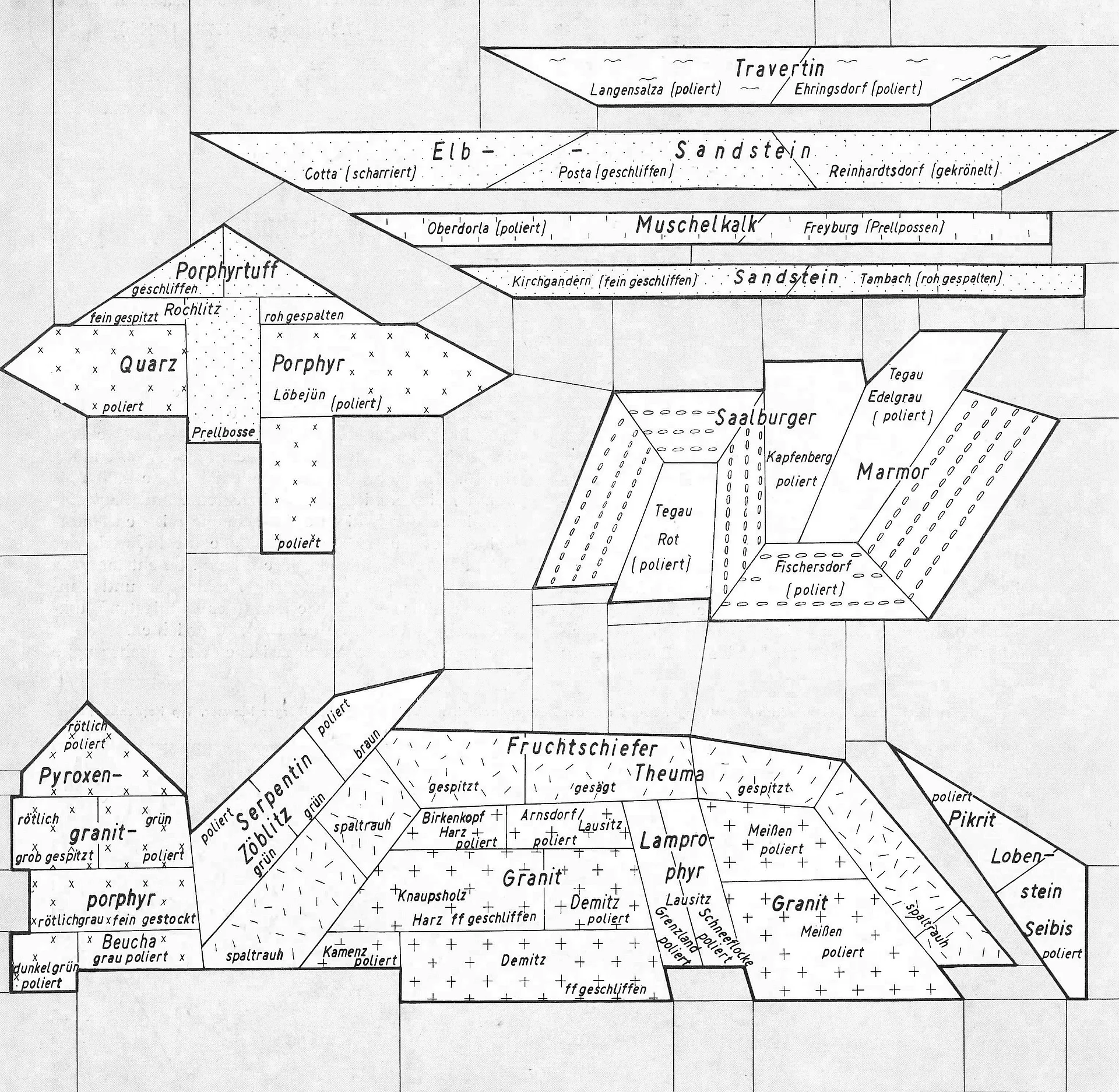
On the 2nd floor there is a natural stone wall that was installed in 1970 on the occasion of the 4th ibausil. The building geology working group of the Building Materials Process Engineering Section at the University of Architecture and Civil Engineering Weimar was responsible for realising this idea in collaboration with VEB Elbenaturstein Dresden. The inspiration came from a sample wall installed in the foyer of the VEB Elbenaturstein administration building in Dresden.
Then as now, the natural stone wall serves as coursework.
The detailed history of this wall design is presented in "Die Natursteinwand der Arbeitsgruppe Baugeologie der University of Architecture and Civil Engineering Weimar", Wissenschaftliche Zeitschrift der University of Architecture and Civil Engineering Weimar, Heft 6 (german).
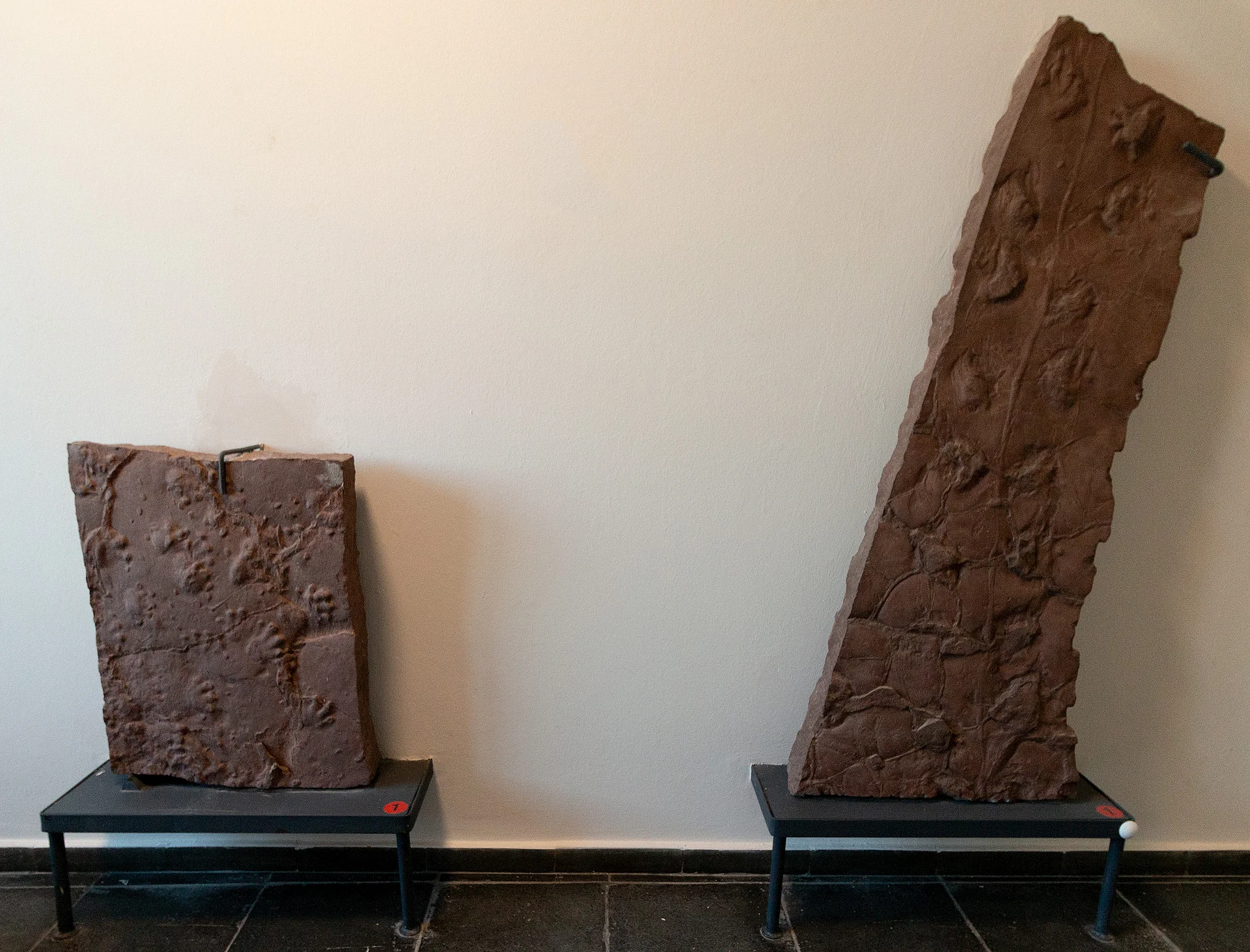
The two reddish stone slabs on the 2nd floor of the side staircase show dinosaur tracks. The slabs were acquired by Prof Walter Steiner and donated to the HAB. They were a rare find at the time. Only in recent years have comparable fossils been found again in Tambach-Dietharz.
Marble slabs with fossils
Between the first and second floors of the side staircase, there are two marble slabs with fossils. The slabs come from the former portal of today's Hotel Kaiserin Augusta at the railway station (formerly Hotel International Weimar, later Intercity Hotel). The fossils are mainly ammonites from the Devonian period.
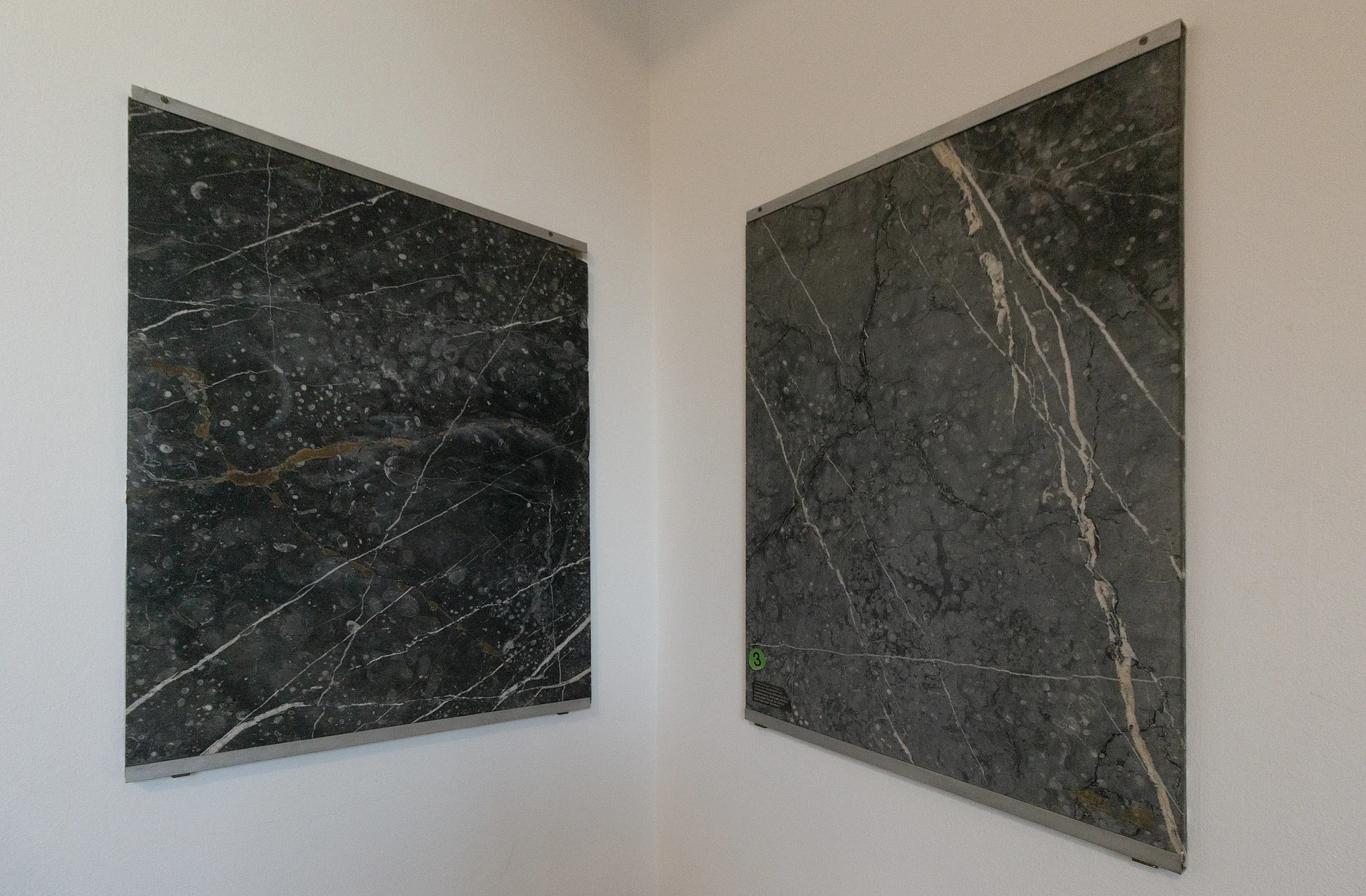
Zwischen der ersten und zweiten Etages des Nebentreppenhauses finden sich zwei Marmorplatten mit Versteinerungen. Die Platten stammen aus dem ehemaligen Portal des heutigen Hotel Kaiserin Augusta am Bahnhof (früher Hotel International Weimar, später Intercity Hotel). Die Versteinerungen sind hauptsächlich Ammoniten stammen aus dem Devon.