Teaching in Energy and Sustainability
Teaching Focus
The team is actively involved in the Faculty of Civil and Environmental Engineering's B. Sc. and M. Sc. programmes in Environmental Engineering and also delivers other lecturing units that consider energy in the urban environment. Further teaching is undertaken for the Faculty of Architecture and Urbanism in the B. Sc.-programme on Urban Planning.
The lectures and seminars offered on energy issues aim to provide the technical background knowledge that is needed to understand the complex interactions of energy supply and demand in today's society. This also includes considerations of the existing and the future energy infrastructure. The aim is to communicate the required technical and scientific skills and at the same time to encourage the students to develop creative approaches to problem solving.
Mission Statement and Themes
A more joined-up thinking between the various disciplines involved in the design process will be required in the future in order to address the challenges of creating a more sustainable environment and society. Tomorrow's professionals need to be prepared for these challenges in particular in view of a changing climate which will necessitate new approaches to urban planning, the provision of sustainable energy supplies and the delivery of the associated infrastructure. Therefore, in view of these challenges, teaching concentrates on the following themes:
- the interrelations between energy resource availability and human development
- sustainability and environmental footprinting
- fossil fuel resources and outlook
- conventional energy generation technologies
- sustainable and renewable energy technologies
- urban energy distribution infrastructure
- distributed energy systems and the transition of the energy supply infrastructure
- carbon emissions and climate change
Current Teaching Activities
At present teaching is undertaken on degree programmes instructed in German. Current teaching activities include lectures and seminars in the following modules:
BACHELOR courses
- Energy Industry → B.Sc. Environmental Engineering
- Climate and Meorology
- Thermodynamics
- Urban Engineering Energy → B.Sc. Urban Planning
MASTER courses
- Renewable Energy Systems → M.Sc. Environmental Engineering
- Hydrogen Systems and Sector Integration
- Energy System Modelling and Simulation
- Climate, Society, Energy
MSc Specialisation in Energy Systems
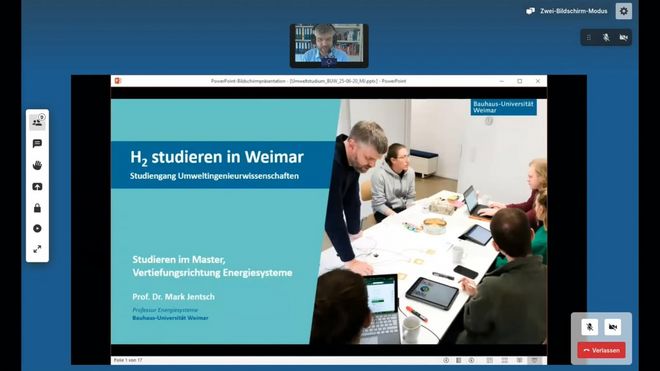
The specialisation in Energy Systems, which was newly established for the winter semester 2021/22 in the M. Sc. programme Environmental Engineering, deals with the development, dimensioning, modelling and numerical simulation of energy infrastructure systems based on renewable energies. In the modules offered by the team, students deal with the technical challenges of a future climate-neutral supply with electricity and thermal energy as well as with renewably produced energy sources such as hydrogen. The acquired knowledge is deepened through project work in small groups as well as in seminars in order to prepare the students for their practical work in the engineering profession.
Click the Play button to load and view external content from Vimeo.com.
Automatically load and view external content from Vimeo.com (You can change this setting at any time via our »Data protection policy«.)
Click the Play button to load and view external content from Vimeo.com.
Automatically load and view external content from Vimeo.com (You can change this setting at any time via our »Data protection policy«.)
Students are prepared for the challenges of transforming the energy system. While the specialisation module ‘Renewable Energy Systems’ provides a comprehensive insight into the world of renewable energies, the specialisation module ‘Hydrogen Systems and Sector Integration’ focuses entirely on hydrogen as an energy source. As the name suggests, this is not considered in isolation, but in interaction with different sectors. In addition, students are trained in electrochemical fundamentals, various storage options, and hydrogen production and application.
Click the Play button to load and view external content from Vimeo.com.
Automatically load and view external content from Vimeo.com (You can change this setting at any time via our »Data protection policy«.)
Click the Play button to load and view external content from Vimeo.com.
Automatically load and view external content from Vimeo.com (You can change this setting at any time via our »Data protection policy«.)
Experience from the programme shows that the transfer of theoretical content to practical application is also essential. For this purpose the master’s programme includes regular projects to ensure that students also gain practical experience with energy systems. In the summer semester of 2024, it was determined that hydrogen technologies can be integrated into university teaching in a low-threshold and safe manner: a group of master’s students worked on the design and construction of the model vehicle ‘NEP2N’, which is powered by a hydrogen fuel cell.
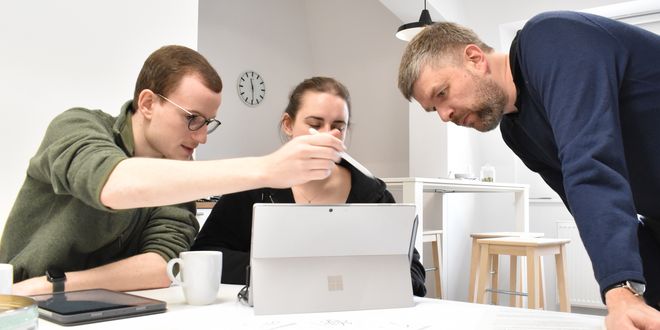
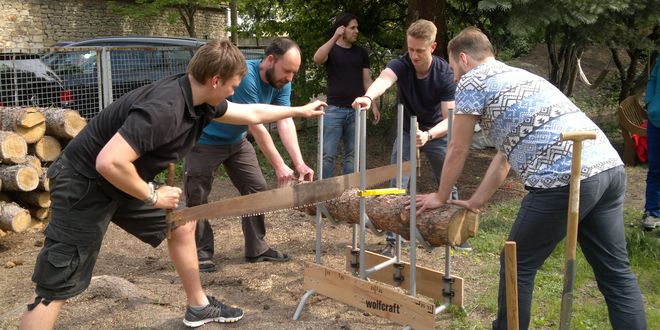
It is not only practical projects that support teaching in Weimar. The teaching approaches in the master's specialisation in Energy Systems also include interaction and hands-on experience. During the studies, for example, a group project is carried out in which a selected residential area has to be supplied with renewable energies. Experience shows that intensive engagement with a location and its potential helps students develop an understanding of the various site conditions in relation to renewable energies. In addition to projects accompanying the semester, workshops are also held in which students are asked, for example, to substitute conventional energy sources in an energy system with renewable ones. Experience from the workshop shows that this creates a deeper understanding of the mammoth task of climate neutrality by 2045 and the energy transition.
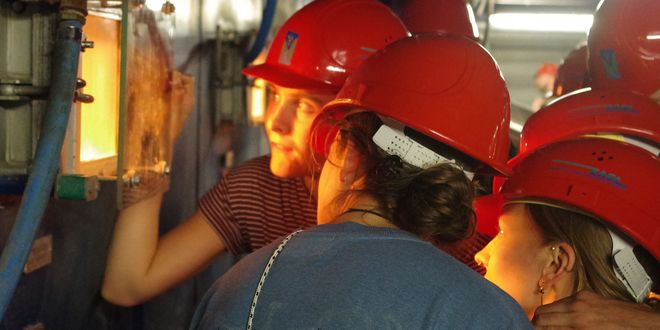
The mobile energy laboratory for research and teaching (MobELF), a workshop vehicle full of measurement technology and components, enables students to carry out practical experiments, right up to complete energy systems. The aim is to close the gap between school experiments and large-scale technical installations.
Click the Play button to load and view external content from Vimeo.com.
Automatically load and view external content from Vimeo.com (You can change this setting at any time via our »Data protection policy«.)
Click the Play button to load and view external content from Vimeo.com.
Automatically load and view external content from Vimeo.com (You can change this setting at any time via our »Data protection policy«.)