


Improving Hearing and Understanding: Measures to Support Accessibility and Eliminate Barriers Are Being Implemented
For a number of years now, the Bauhaus-Universität Weimar and other public institutions have been legally required to make their services fully accessible. This applies to structural measures as well as digital services and teaching. Thanks to funding from the Thüringer Ministeriums für Arbeit, Soziales, Gesundheit, Frauen und Familie (Thuringian Ministry of labour, social affairs, health, women and family affairs), the Bauhaus-Universität Weimar has been able to further its efforts towards accessibility and dismantling communication barriers.
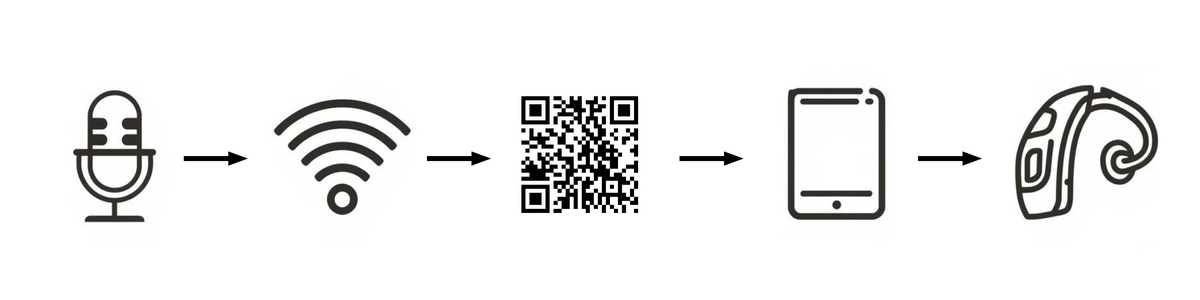
In order to make it easier for individuals with hearing impairments to take part in university events, an audio transmission system for a lecture hall at Marienstraße 13 was purchased last year with funding from the Ministry. This system enables WiFi-based hearing assistance for campus-wide audio transmission. Using an app, sound is transmitted to headphones, hearing aids, or cochlear implants. This allows spoken sound to be heard without external noise interference. By scanning a QR code in the lecture hall, participants have direct access to the transmission.
A total of five devices for lecture halls A to D in Marienstraße 13 and the Maurice-Halbwachs-Auditorium are currently available and are set to be installed by the University’s Media Technical Service in the upcoming weeks,
Additionally, a video showing the various advising services offered by the Bauhaus-Universität Weimar has been subtitled in sign language. The bilingual audio and subtitles in German and English have also been supplemented with German Sign Language (DGS) and International Sign Language (ISL).
https://www.uni-weimar.de/de/universitaet/profil/chancengleichheit-und-diskriminierungsschutz
Through additional funding from the Thüringer Aufbaubank’s »Thüringer Barrierefreiheitsförderprogramms – ThüBaFF«, a plan for implementing fully accessible buildings at the University Library will be commissioned this year and implemented by September 2026.
Contact:
Christiane Hempel, University Communications
http://www.uni-weimar.de/digitale-barrierefreiheit