radio.earth.Weimar is an ongoing teaching, mediation and artistic research collaboration by Kerstin Ergenzinger and Udo Noll from radio.earth & radio.aporee. It includes and connects students and staff from the whole sound department of the Bauhaus University Weimar, contributing to the community of the international, participatory radio art project radio.earth. The collaboration started with a jointly taught course in SoSe24, where two solar-powered permanent listening stations were developed and built together with 'standard' radio.earth mobilemic units to explore different locations in and around Weimar through regular long-term listening sessions.
The core idea of such live transmissions and listening stations is that attentive, regular, and conscious listening forms a basis for experiencing one's own environment, the diversity of lifeforms and fellow living beings in a more differentiated way. Despite spatial distance, an intense sense of connection and sensory engagement can emerge for listeners. Through repeated listening over extended periods, it becomes possible to learn about states and changes taking place within ecological relationships and living conditions. In such moments, sensory connections may arise in which one can experience oneself as part of this network of relationships. At the same time the shared life listening sparks conversations and further exchange.
The initiative is guided by a multidisciplinary approach to learning together, connecting and fostering exchange and discourse across communities and disciplines — open to flow into different outcomes and contexts.
Long-term Listening Stations
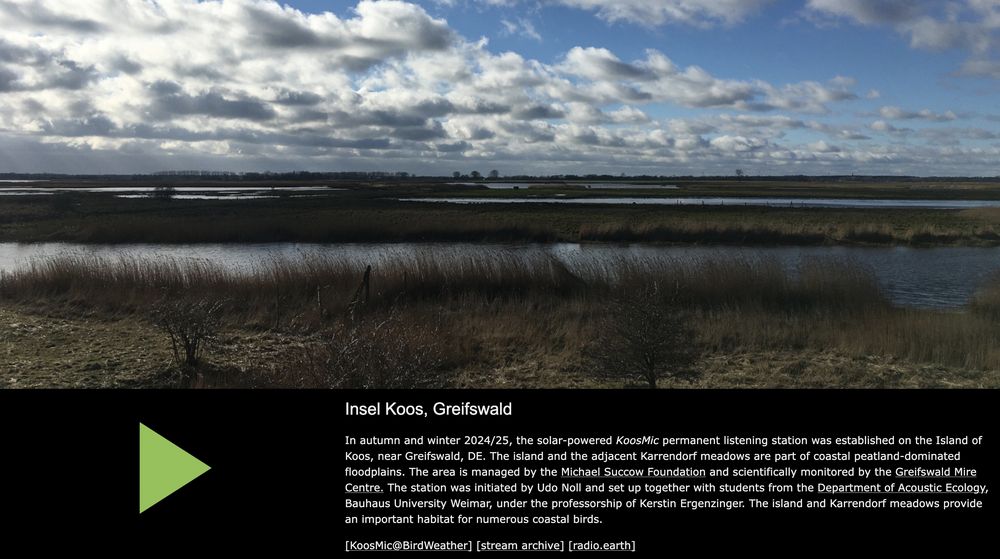
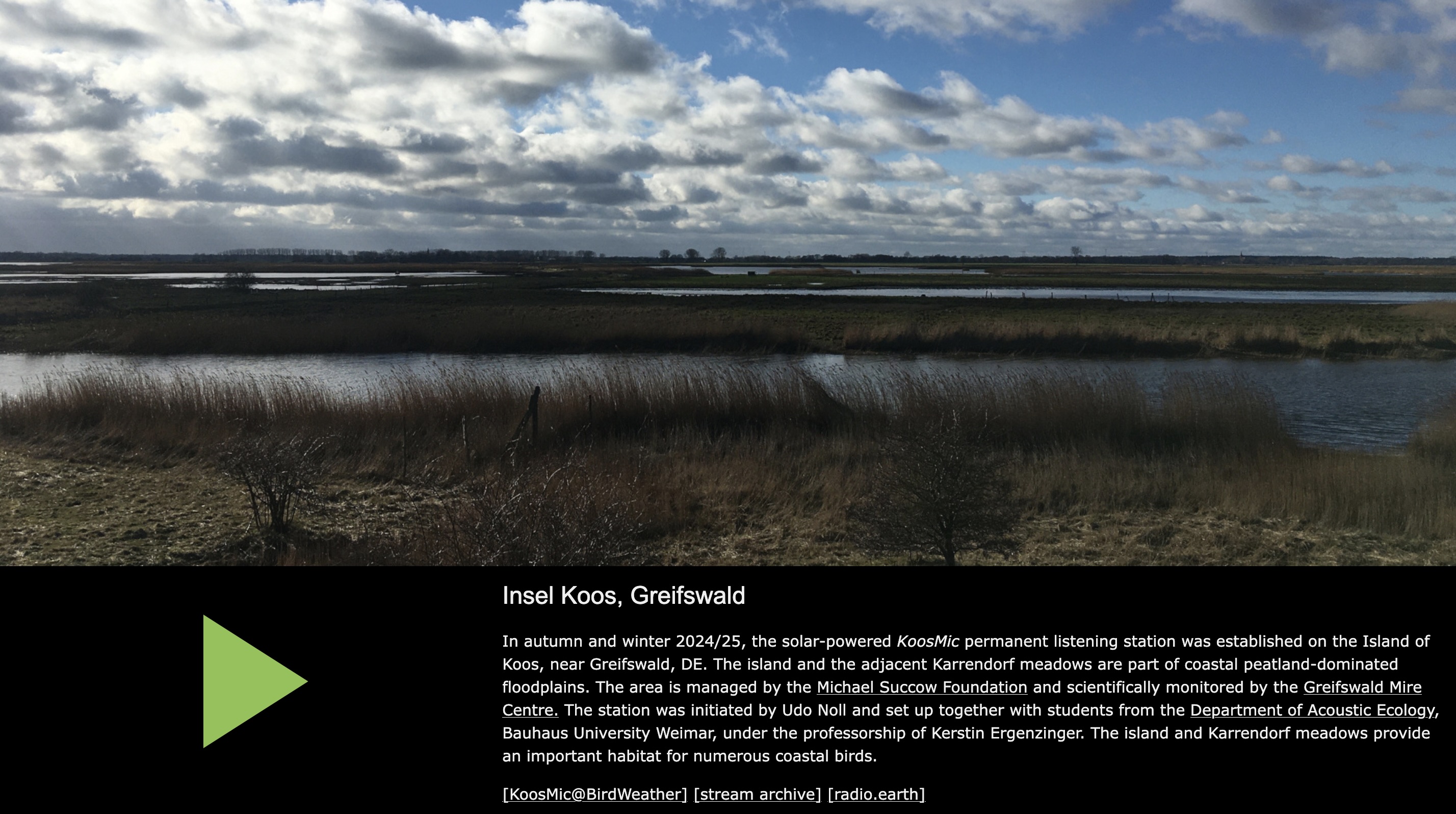
One solar-powered listening station, the KoosMic, has been set up since autumn 2024 as a long-term placement in cooperation with the Greifswald Mire Centre, the University of Greifswald, and the Succow Foundation.
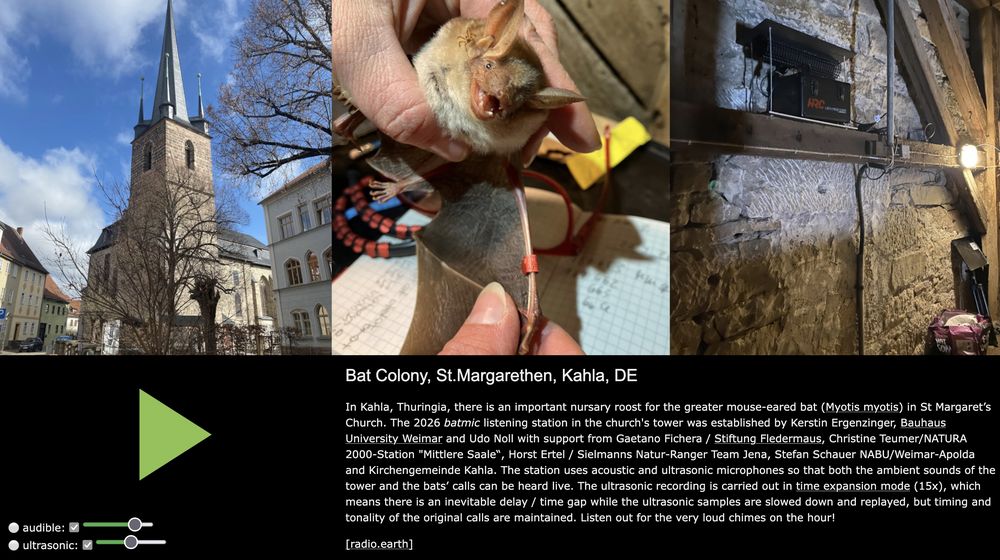
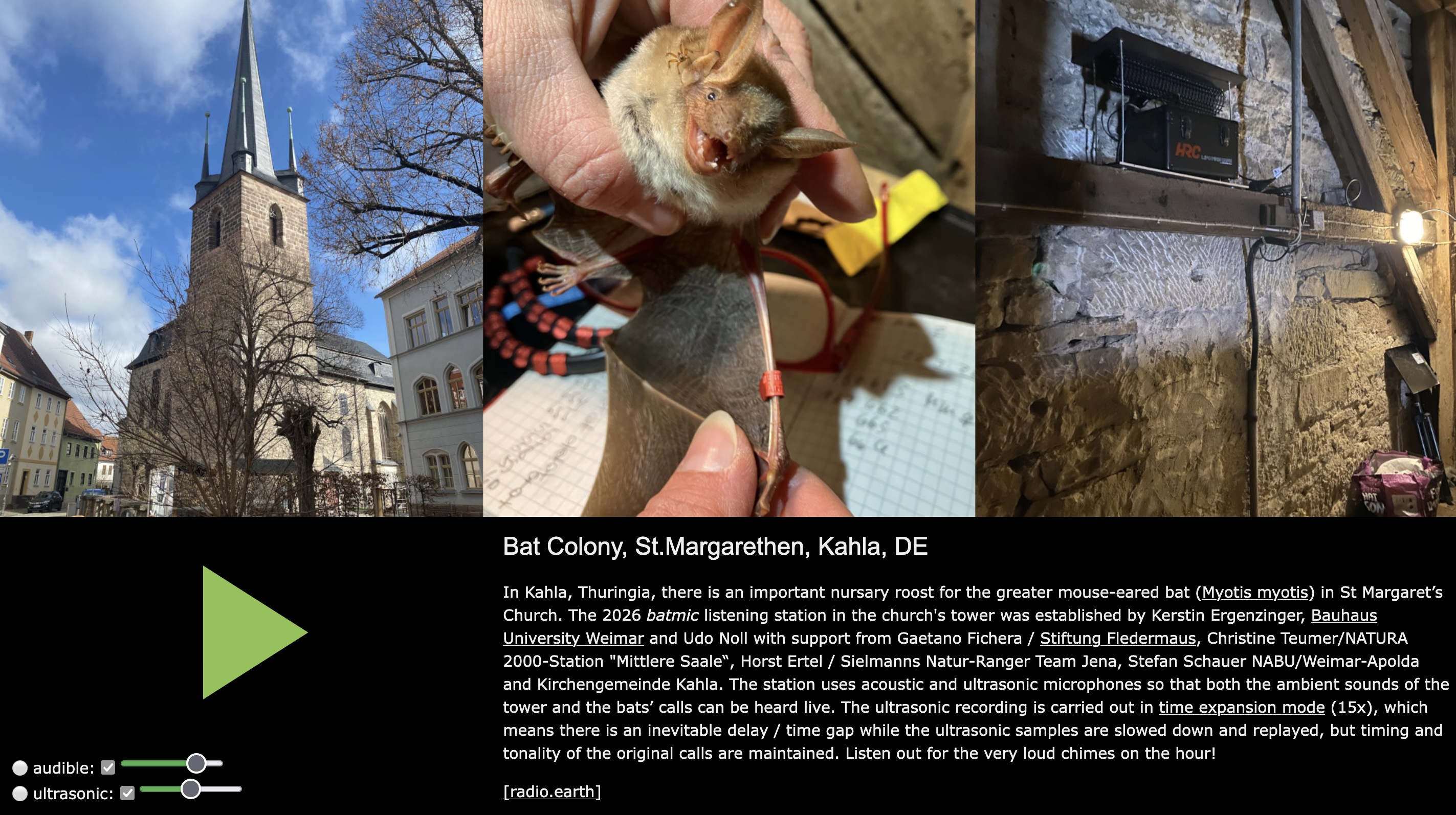
Currently we have set up the BatMic — a seasonal bat listening station in the St. Margarethen church tower, Kahla, Thuringia. It has been running since the end of March through November 2026, and transmits live from this important nursery roost of the Greater Mouse-eared Bat (Myotis myotis). Our aim is to make the presence, social community, and environment of bats perceptible to humans without disturbing them — both to support their protection and to raise awareness of the parallel world they share with us, as well as to contribute to research on bats' social communication. The transmission is realised with support from Gaetano Fichera / Stiftung Fledermaus, Christine Teumer / NATURA 2000-Station "Mittlere Saale", Horst Ertel / Sielmanns Natur-Ranger Team Jena, Stefan Schauer NABU/Weimar-Apolda, and Kirchengemeinde Kahla. The station uses acoustic and ultrasonic microphones so that both the ambient sounds of the tower and the bats' calls can be heard live. The ultrasonic recording is carried out in time expansion mode (15x), which means there is an inevitable delay while the ultrasonic samples are slowed down and replayed, but the timing and tonality of the original calls are maintained.
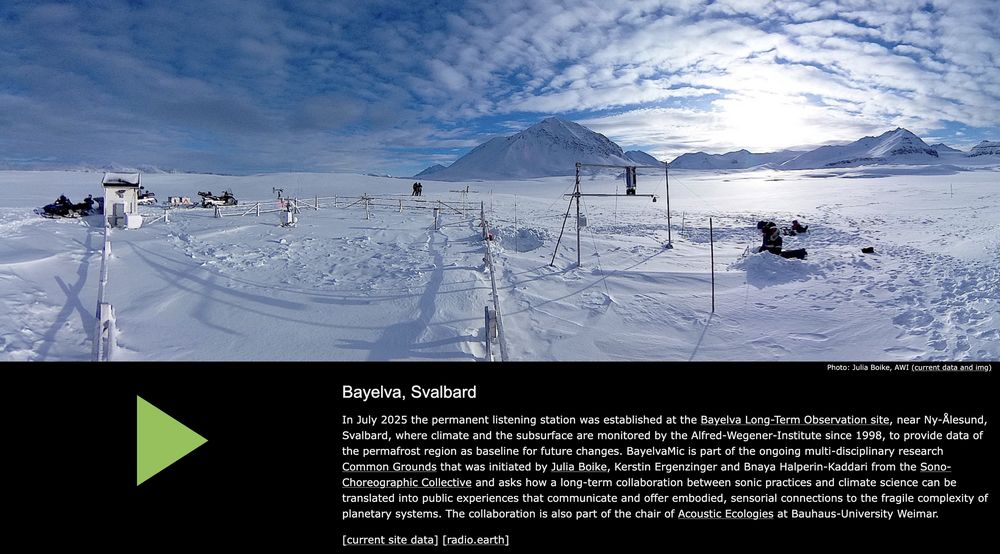
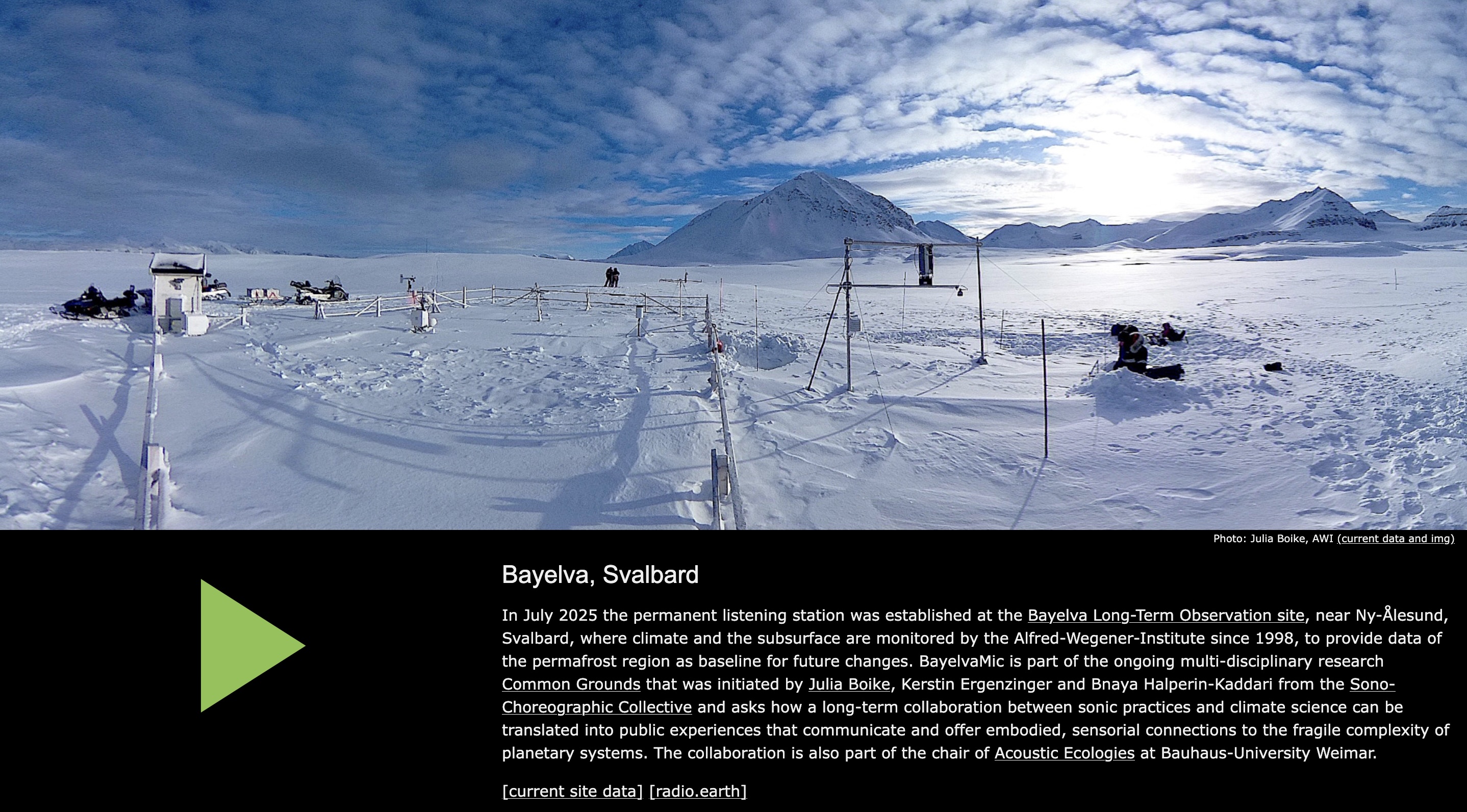
Furthermore, since July 2025 the BayelvaMic has been established as a live audio transmission from the long-term permafrost monitoring station Bayelva, located near Ny-Ålesund in Svalbard. The audio stream is part of the ongoing multidisciplinary research project Common Grounds, initiated by Kerstin Ergenzinger, Bnaya Halperin-Kaddari from the Sono-Choreographic Collective and Julia Boike, which asks how a long-term collaboration between sonic practices, acoustic ecologies and climate science can be translated into public experiences that communicate and offer embodied, sensorial connections to the fragile complexity of planetary systems.
radio.earth Weimar: https://radio.earth/
BayelvaMic: https://radio.earth/bayelva/
KoosMic: https://radio.earth/koosmic/
BatMic: https://radio.earth/batmic/