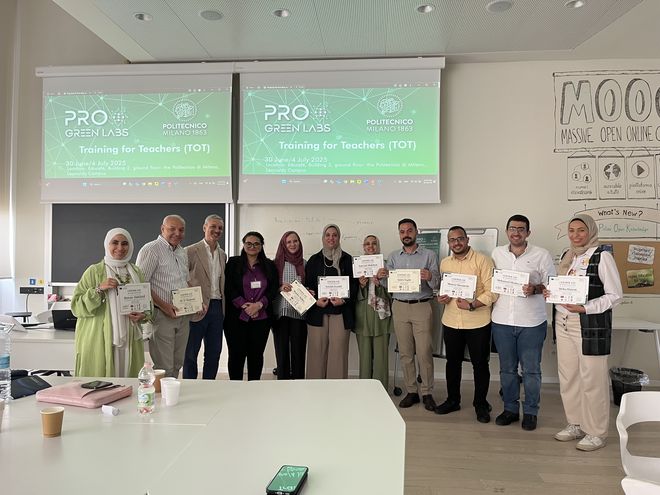
Training of Teachers Workshop at Milan Politecnico di Milano — July 2025
The final Training of Teachers of the PGL project took place at Politecnico di Milano from 30th June to 4th of July 2025, bringing the capacity-building series to a close. The session focused on consolidating knowledge and reflecting on the outcomes of previous trainings. Participants engaged in interactive formats, discussing teaching experiences, refining course content and exploring new methods for integrating sustainability into architectural education. The program emphasized collaboration across disciplines and institutions, while also opening up perspectives for long-term partnerships. As a concluding event, the Milan training helped connect insights from across the project and set the stage for future implementation.
Training of Teachers Workshop at Gothenburg Chalmers University of Technology — June 2025
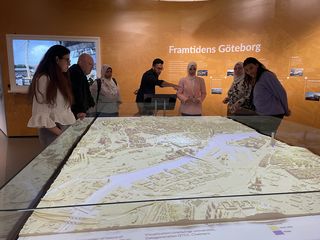
From 16th to 20th June 2025, the PGL consortium met in Gothenburg for another Training of Teachers hosted by Chalmers University of Technology. The program explored current challenges in urban development, with a focus on climate adaptation, resilience, and regenerative design. Combining inputs, discussions and practical sessions, the training introduced new perspectives on participatory planning and sustainable city-making. It created space for exchange between partners while supporting the development of forward-looking teaching approaches. The Gothenburg training contributed to strengthening shared expertise and advancing innovative educational practices within the project.
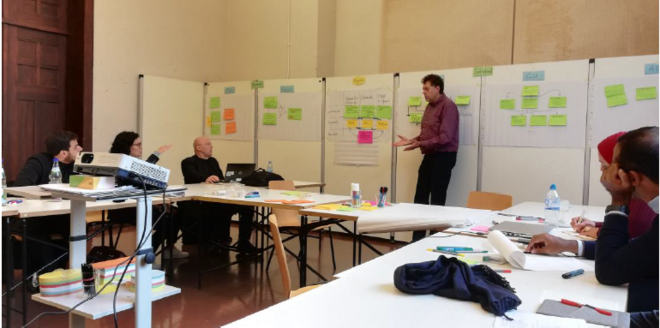
Training of Teachers Workshop at Bauhaus-University Weimar — May 2025
From 21 to 25 May 2025, the PGL project held a Training of Teachers at the Bauhaus-Universität Weimar. Over the course of the week, partners came together to exchange knowledge on sustainable urban development and innovative teaching approaches. The program combined lectures, site visits and interactive workshops, focusing on topics such as urban planning and design, participation processes and mapping methods. Participants explored new teaching formats, reflected on developed courses and discussed how to transfer these approaches into their own institutions. Through collaborative sessions and practical activities, the training strengthened shared methodologies and supported the integration of sustainability-oriented content into architectural education.
Interim Meeting – Alexandria
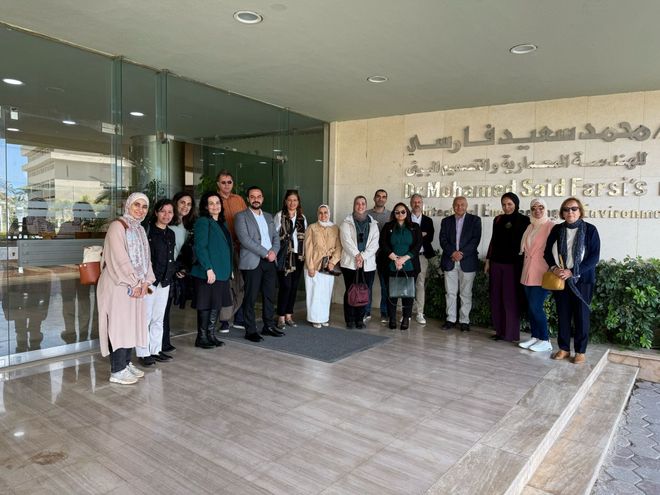
The PGL consortium hosted from 3–4 May 2025 its Interim Meeting in Alexandria, Egypt. The meeting took place at the Arab Academy for Science, Technology and Maritime Transport (AASTMT) and brought partners together to review progress and coordinate next steps. Key discussions focused on evaluating current project developments, preparing for the upcoming EU progress report, and refining planned activities. Particular attention was given to the advancement of teaching modules and Life Long Learning (LLL) components. The meeting played an important role in ensuring alignment across all partners and reinforcing a shared commitment to advancing sustainable architectural education in the MENA region.
Online Trainings for Academic Staff
As part of the PGL project, two online training tracks were successfully carried out to strengthen academic capacities across partner institutions in the SEMED region. The trainings focused on both curriculum development and the sustainable management of academic lab units.
The first track addressed Academic Developers and explored approaches for designing innovative and engaging curricula, with a particular focus on integrating the Sustainable Development Goals (SDGs) and Competences for Democratic Culture (CDC). The second track targeted Academic Managers and provided practical insights into the administration and long-term operation of lab environments through a series of interactive online workshops. Together, the trainings supported knowledge exchange and contributed to building sustainable educational structures within the project partnership.
Benchmarking Visit to Chalmers University of Technology
Between 14–17 January 2025, the PGL consortium conducted another benchmarking visit to Chalmers University of Technology in Gothenburg, gaining insights into its research facilities and teaching environments. The program included guided tours through a range of labs, such as the Wood Modelling Workshop, Building Physics Lab, HSB Living Lab, Spatial Morphology Group (SMoG), Acoustic Lab and Robotics Lab. Alongside the visits, participants engaged in discussions on emerging research topics, including Digital Twin Cities and the InfraVis project. A key takeaway was the integration of research and education at Chalmers, demonstrating how innovative teaching formats can be embedded within experimental and practice-based learning environments. The visit provided inspiration for the continued development of Pro-GREEN LABs.
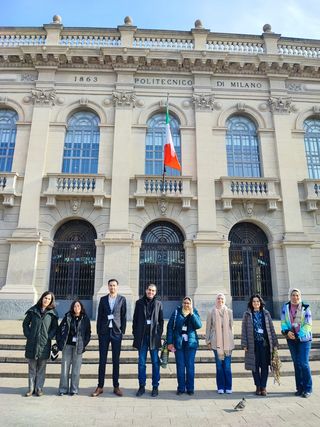
Benchmarking Visit to Politecnico di Milano
From 12–14 November 2024, the PGL team carried out its first benchmarking visit at Politecnico di Milano. During the visit, participants explored advanced laboratories, innovative technologies, and contemporary approaches to urban planning and design. The program combined guided lab tours with expert presentations, offering insights into tools such as LabsimUrb, the Luminous Planning Table, I.Drive, and LABORA, alongside digital fabrication technologies including 3D printing and laser cutting. Work sessions and discussions, including meetings at Spazio Cubo, focused on effective lab management and best practices. Visits to research environments such as the MUAD Lab and Maba.SaperLab further highlighted interdisciplinary and sustainability-oriented methodologies. Overall, the visit strengthened the consortium’s understanding of innovative tools and approaches for addressing urban challenges.
Kick-off Meeting
The Pro-GREEN LABs (PGL) project officially started with its Kick-off Meeting, held on 18–19 April 2024. During the meeting, project partners came together to establish the foundation for international collaboration in sustainable architectural education. Representatives of all partner institutions came together to define governance structures, management procedures and communication strategies for the project duration. Key outcomes included the formation of core bodies such as the General Assembly, Steering Committee and Project Management Team, as well as agreements on quality assurance and monitoring processes. In addition, tasks, timelines and coordination mechanisms were aligned, ensuring a shared understanding of project goals, deliverables and milestones. The meeting also addressed key aspects of curriculum development, stakeholder involvement and long-term impact. By setting up clear organisational structures and workflows, the Kick-off Meeting created the basis for an effective and coordinated implementation of the project activities.