
Fine Art Education (Secondary School) – Double and Single Specialisation
The module-based Gymnasium-level teacher certification programmes »Fine Art Education (Secondary School) Single Specialisation« and »Fine Art Education (Secondary School) Double Specialisation« are both strongly project-oriented, which, along with instilling self-organisational skills, improves the students’ ability to reflect, cooperate, and conduct research work.
All teacher trainees are equitably integrated into projects focusing on Fine Art, Product Design, Visual Communication and Media Art and Design. Throughout the degree programmes, students are confronted with both the academic and extramural contexts of Fine Art Education as demonstrated by the long-standing cooperation with the Klassik Stiftung Weimar and the Faculty of Architecture and Urbanism in the professional field of »Architecture and Teaching«.
The integrated practical semester, which is based on the Jena Model, allows students to gain intensive experience with schools at an early stage. Students of the Bauhaus-Universität Weimar may choose to study Art Education as the first of two subjects (Double Specialisation) or as a dual subject (Single Specialisation). It is also possible for students in Thuringia to gain Gymnasium-level teacher certification in both Fine Art and Music Education. Courses in a second subject and/or Educational Sciences are offered at the Friedrich Schiller University of Jena.
Programme content
The teacher certification programme in Fine Art Education is structured in modules. In the project and specialist modules that run alongside the course, lecturers encourage students’ personal artistic and creative expression. They teach technical, organisational and critical-analytical methods. They also encourage theory-based reflection on art education practice, as well as on artistic working processes and outcomes.
The programme fosters an inquiring mindset through critical engagement with subject-specific role expectations. The interdisciplinary examination of artistic, academic and art-education-related questions and problems shapes the development of a professional identity as an art educator.
Halfway through the programme, students acquire practical teaching skills during a practical teaching placement. Accompanying seminars at Friedrich-Schiller-Universität Jena and the Faculty of Art and Design support this development. In the ninth and tenth semesters, state examination modules assess whether students meet the academic, artistic, subject-specific didactic and educational science requirements for admission to the preparatory service at grammar schools.
Mission Statement
Studying the Art Teacher Training programme at the Bauhaus-Universität Weimar means adhering to the objectives set out by the Standing Conference of the Ministers of Education and Cultural Affairs regarding education for sustainable development, and developing artistic and design strategies and forms of expression through discourse against the backdrop of our responsibility for a sustainable society.1
As part of developing a professional understanding of art education, the focus is on fostering the ability to reflect on the challenges we currently face. ‘Art education [and art pedagogy] … do not merely facilitate understanding between art and the public’. What is meant is ‘… also to harness the specific strengths of the arts for everyday coexistence, their ability to set communicative processes in motion, to shift perceptions of the familiar, and to show that everything could also be quite different.’2 Recognition of one’s own scope for action towards social, economic and political transformation fosters the ability to make responsible decisions and to participate in processes of negotiation and shaping, despite contradictions, uncertainties and conflicting goals.
This includes: self-acceptance; accessing one’s own emotions; giving expression to these emotions; and, through reflection, gaining a better understanding of oneself and the behaviour of one’s fellow human beings; seeking, trying out and finding forms of expression through which self-expression is possible; seeking out, discovering and observing, listening and empathising with them, in order to enter into a genuine exchange (resonance) and, through this, a constructive process of understanding, so as to be able to recognise, accept and value oneself in the other’s needs and the other in one’s own needs.
Taking on the responsibility of educating pupils to be open-minded and to consider multiple perspectives requires one’s own reflective ability to deal with the unknown in a tolerant manner. Enabling students in the subject of Art to analyse and stage developments with foresight requires the cultivation of their own capacity for judgement. Socially relevant issues are therefore always an integral part of the interdisciplinary project modules, specialist modules and Scientific Modules offered by the Faculty of Art and Design, in which concepts for sustainable development are developed and creative and artistic solutions are devised.
Dealing with risks, addressing prejudices and fostering the ability to act jointly are central to the modules in art education, as is the examination of inclusive, non-discriminatory practices in lesson planning, alongside heterogeneous learning objectives and teaching methods. An attitude developed in this spirit involves the development of skills that support young people in planning, deciding and acting with increasing personal responsibility, whilst engaging in a process of reflection.3
Studying for a degree in Art Education in Weimar also means participating in an avant-garde and progressive understanding of teaching and learning that develops, implements and shares innovative and sustainable approaches to art education. In this context, traditional concepts of art, design and spatial design, ideas and practices – such as discourses from related disciplines – are not only systematically scrutinised but also deconstructed through a conscious process of reflection, with the aim of fostering new, transformative approaches to artistic thinking and practice through contemporary art formats and dimensions.
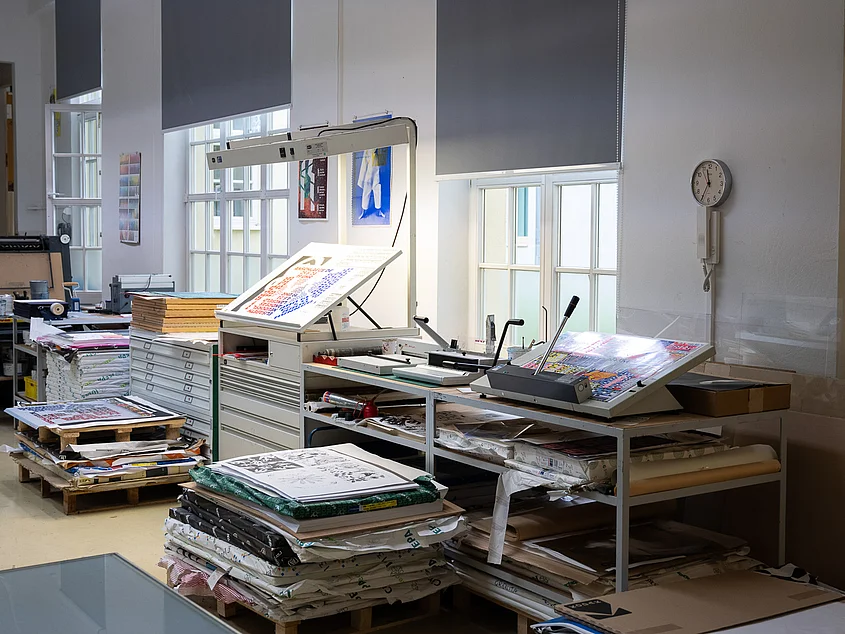
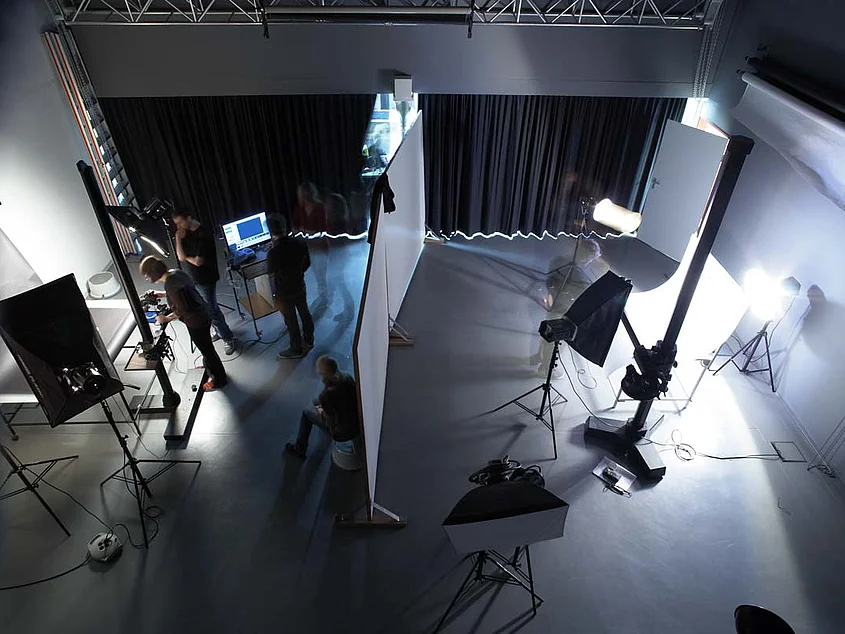
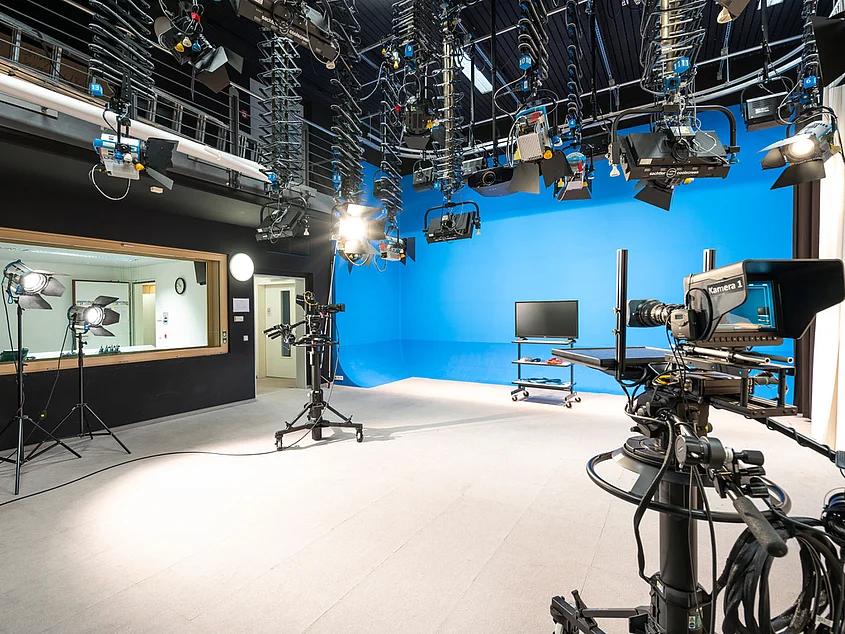
Students on the Art Teacher Training programme at the Bauhaus-Universität Weimar study in a high-quality academic environment that enables them to develop a nuanced and individualised study profile. This framework fosters the development of subject-specific strengths, individual interests and personal areas of specialisation, and is sustainably supported by the faculty’s established and successful transdisciplinary model. Well-equipped workshops, studios and laboratories provide students with a wide range of spaces and resources to comprehensively develop their practical abilities, implement their diverse ideas in a targeted manner and expand their specialist knowledge to the highest standard.
Active participation in the various university committees is of central importance to us, to the positioning and visibility of the Art Teacher Training degree programme, to the individual professional development process in art education, and to the sustainable development of the university; it is currently being undertaken with particular commitment by the members of the degree programme. This form of active participation reflects a collective commitment and a great sense of responsibility for the academic, institutional and professional future of the degree programme, as well as for the personal development of the students themselves.
Furthermore, a key responsibility lies in the ability to participate as informed stakeholders in all processes shaping and developing schools; in the willingness and ability to cooperate with non-school educational partners; in networking with other schools and stakeholders; in the incorporation of out-of-school learning environments drawn from the pupils’ everyday lives, and in the ability to create interdisciplinary and transdisciplinary spaces for experimentation and experience.⁴ This may also help to ensure that we consistently meet the requirement to engage continuously with current issues in teaching and learning, even beyond the first and second phases of teacher training, as this forms part of a professional self-image that must be developed during the studies.
The team at the Art Teacher Training Programme has agreed on joint guiding principles that form part of our teaching and learning concepts: transparency regarding decisions on the choice of methods, learning objectives and assessments; recognition of diversity; and the acceptance of both consensus and dissent as integral parts of negotiation processes; the establishment of respectful communication, the fostering of a culture that is sensitive to mistakes and the cultivation of a proactive attitude towards failure, the creation of low-hierarchy spaces for interaction, and the facilitation of participation and collaboration. Democracy education, language education, education for sustainable development, and inclusive, discrimination-sensitive education are overarching themes that shape joint teaching and learning at universities and in schools. Recognising one’s own responsibility, and jointly developing and reflecting on different practices, is therefore at the heart of every artistic, art-historical and art-educational encounter in project-based, research-oriented and transformative Reallabors.
Last but not least, the active practice of craft and material techniques is also an important part of the training, through which implicit knowledge is acquired that goes beyond language. Consequently, on the one hand, this broadens the scope of students’ expression, whilst on the other, it keeps material techniques alive, thereby preserving media diversity – with the opportunity to further develop and sustain them. To this end, numerous workshops and the staff supporting them are available, facilitating both space and dialogue.
‘It is therefore important to note that it is only the abilities required, fostered and acquired during one’s education – independence, judgement, tolerance, a gift for improvisation, courage, drive and a willingness to take responsibility – that enable people to shape their own lives. Experts in art education maintain that what is learnt in art lessons is of significance to pupils’ lives.”5 (Marr 2014: 59)
_____________________
1 https://www.kmk.org/fileadmin/Dateien/veroeffentlichungen_beschluesse/2024/2024_06_13-BNE-Empfehlung.pdf (p. 6)
2 Birgit Mandel in Reinwand, 113f
3 Cf. http://www.transfer-21.de/indexb4c1.html?p=222
4 See Anzengruber 2012, pp. 75ff
5 Marr 2014: 59
Special characteristics
Students can combine »Fine Art Education (Secondary School) - Double Specialisation« with all other Gymnasium-level teacher certification courses offered at the Friedrich Schiller University of Jena. The cooperation with the University of Jena, however, makes commuting back and forth between Weimar and Jena necessary.
Fine Art Education can also be studied as a »Single Specialisation«, in which case students are only required to take Educational Science courses in Jena instead of a second teaching subject.
To gain admission to this teacher certification programme, students must pass an aptitude test, demonstrating particular artistic and/or design-related competence. Candidates who wish to commence their studies in the winter semester, are required to register for the aptitude test at the Bauhaus-Universität Weimar by 31 March.
Requirements
Candidates should be open to embracing experimental forms of art-design instruction and be willing to reflectively examine their own working process. Students are expected to demonstrate competence in school educational practice and knowledge of current developments in the art field. Creativity, independence, verbal competence and flexibility are essential for successfully completing the programme. To meet these academic requirements, candidates are expected to develop their own artistic identity and art-pedagogical working method. Studying at two different locations requires a high degree of organisational skill, both in terms of drawing up timetables and the willingness to combine acquired expertise and skills in an interdisciplinary fashion.
Language requirements


Erstes Semester: Grundlagen legen
Das Studium startet mit einem Erstsemesterprojekt. Ergänzend lernen Sie Kunstgeschichte und Fachdidaktik kennen. Von Beginn an verbinden Sie künstlerische Praxis, wissenschaftliches Denken und kunstpädagogische Fragen.
Zweites bis viertes Semester: künstlerische und pädagogische Schwerpunkte entwickeln
In Projekt-, Fach-, Wissenschafts- und Fachdidaktikmodulen vertiefen Sie Ihre künstlerische oder gestalterische Arbeit Im Doppelfachstudium liegt der Umfang der künstlerischen und gestalterischen Praxis höher als im Zweifachstudium, da Kunst hier beide Unterrichtsfächer ersetzt.
Fünftes bis achtes Semester: Praxis gewinnen und Profil schärfen
In dieser Phase entwickeln Sie Ihre künstlerischen oder gestalterischen Schwerpunkte weiter. Projekt- und Fachmodule verknüpfen sich mit wissenschaftlichen, bildungswissenschaftlichen und fachdidaktischen Themen. Im Doppelfachstudium stehen Ihnen mehr Module in Kunst, Gestaltung und Fachdidaktik offen.
Das Praxissemester findet im fünften oder sechsten Semester statt. Die Friedrich-Schiller-Universität Jena organisiert das Schulpraktikum. Sie sammeln Erfahrungen im Schulalltag, erproben Unterricht und reflektieren Ihre kunstpädagogische Arbeit gemeinsam mit den betreuenden Lehrenden.
Neuntes und zehntes Semester: Abschluss mit der der ersten Staatsprüfung
In den letzten beiden Semestern absolvieren Sie die Staatsprüfungsmodule in Fachwissenschaft und Fachdidaktik. Zudem verfassen Sie eine wissenschaftliche oder künstlerisch-praktische Hausarbeit. Ein Examenskolloquium begleitet den Abschluss. Das Studium endet mit der Ersten Staatsprüfung für das Lehramt an Gymnasien.
Application process
The application for all degree programmes of the Faculty of Art and Design at the Bauhaus-Universität Weimar is exclusively conducted digitally via the Bauhaus.CampusPortal. Please register for the aptitude test between 2 and 28 February.
At the beginning of March, we will provide the homework assignment via our Bauhaus.CampusPortal. Along with the homework assignment, you will also receive further information about the documents to be submitted and the procedure.
Finally, upload your complete application with all the necessary documents and the completed homework assignment by 31 March.
Translated with DeepL.com (free version)
The selection of the students of the degree programme Fine Art Education (Secondary School) – Double and Single Specialisation is based on a three-step aptitude test:
- Registration for participation in the aptitude test via our Bauhaus.CampusPortal.
- Upload of the homework solution, a letter of motivation, your curriculum vitae with details of your education, previous knowledge if applicable and the most recently obtained school certificate as proof of the general higher education entrance qualification, your portfolio with up to 20 of your own artistic and/or design work samples.
- Personal interview and presentation of up to 20 original artistic/design work samples.
The aptitude test committee of the degree programme makes a preselection after reviewing the solution of the homework and the submitted work samples. Those who make it to the shortlist will be invited to the further aptitude test and take part in a personal interview, to which please bring the original work from your digital application. Further details on the aptitude test are regulated by the aptitude test regulations (only available in German language).
If you have passed the aptitude test and are enrolling at the Bauhaus-Universität Weimar, please apply for parallel studies for the compulsory accompanying study programme in Educational Science at the Friedrich-Schiller-Universität Jena. Further information can be found here: https://www.uni-jena.de/en/620/applying-for-parallel-studies
Language requirements
For International Applicants
Please note that passing the aptitude test does not mean automatic admission to the degree programme. Please submit a current proof of language proficiency with your application documents, which shows that you will reach the required language level by the time of your matriculation at the latest.
Lessons are taught in German. You must provide proof of German language proficiency. Prerequisite for International Students are German language skills at the level C 1 (DSH-2 or TestDAF TDN 4). If you have any questions relating to certification, please contact the colleagues at the Office of Student and Academic Affairs: studium[at]uni-weimar.de
For further information please visit the website of the Language Centre.
After graduation
The Art Teacher Training Programme specifically prepares students for a clear career path: teaching art in schools. Art teachers encourage artistic creation, creative thinking and a conscious engagement with images, spaces, materials and media. They help children and young people to find their own forms of expression and to understand art as part of culture, society and everyday life.
Students learn to guide artistic processes, stage lessons and incorporate their own artistic experiences into teaching approaches. They work with a variety of materials, methods and media, developing an understanding of artistic education, cultural participation and issues relating to built environment.
Graduates of the Art Teacher degree programme find employment in:
- Art teaching in schools
- Pre-service teacher training and school teaching
- cultural education
- Museum education and art outreach
- extracurricular educational programmes
- Workshops and projects with children and young people
- architectural and cultural education
- Cultural facilities and youth organisations
- Research and coursework (following further academic qualification)
The main career path leads into the teaching profession. In addition, the studies open up opportunities in cultural education, art education and extracurricular projects. It provides the specialist foundation by combining artistic practice with pedagogical thinking, sound reflection and the ability to bring art to life for different target groups.