About the degree programme
Freie Kunst students have the option of studying in Experimental Painting and Drawing, (Prof. Jana Gunstheimer), »Skulptur, Objekt, Installation« (Prof. Björn Dahlem), or »Kunst und sozialer Raum« (Prof. Christine Hill). Specialist courses and other classes allow students to choose from a wide range of topics, including video, media art, new media, performance, photography, new artistic strategies, curating, the fundamentals of the art business, and more.
Theoretical support is provided by the academic professorships in the Faculty of Art and Design and supplemented by guest lectures. Interdisciplinary collaboration with other programmes serves to further enhance the Freie Kunst degree programme. Students have the opportunity to spend one or two semesters abroad thanks to connections with international partner universities.
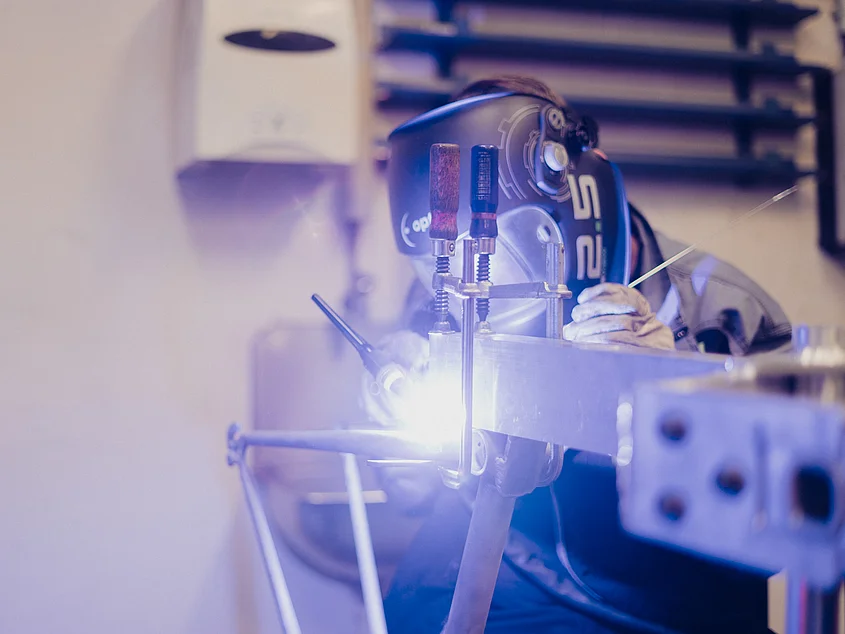
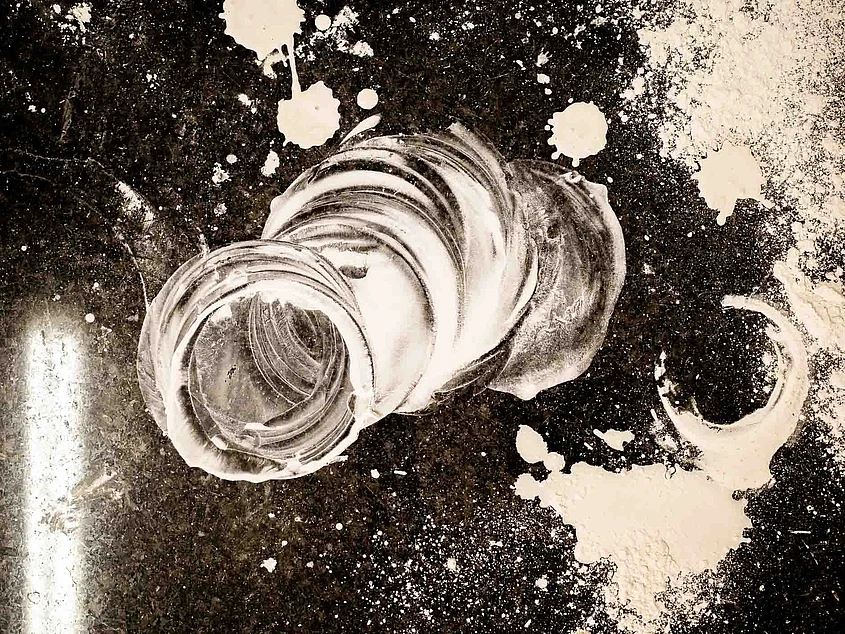
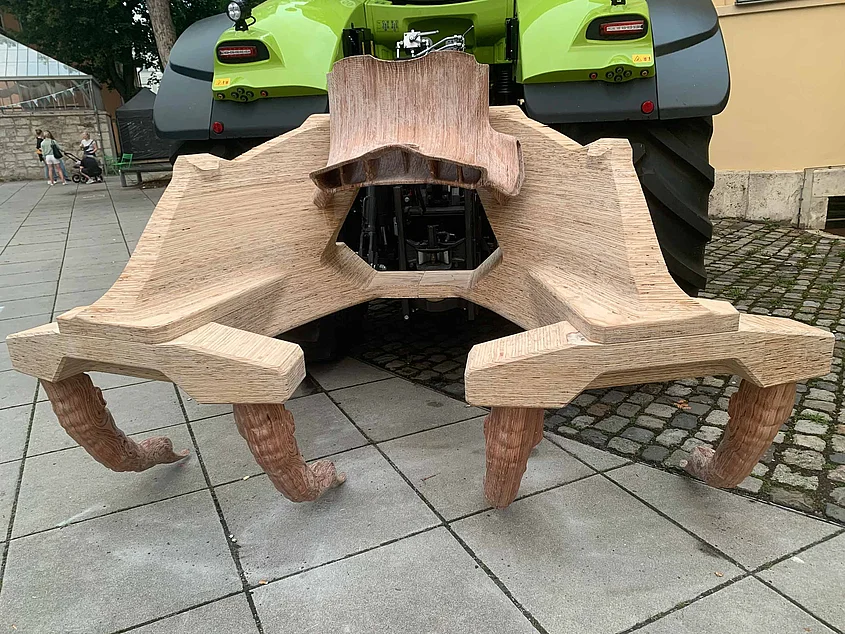
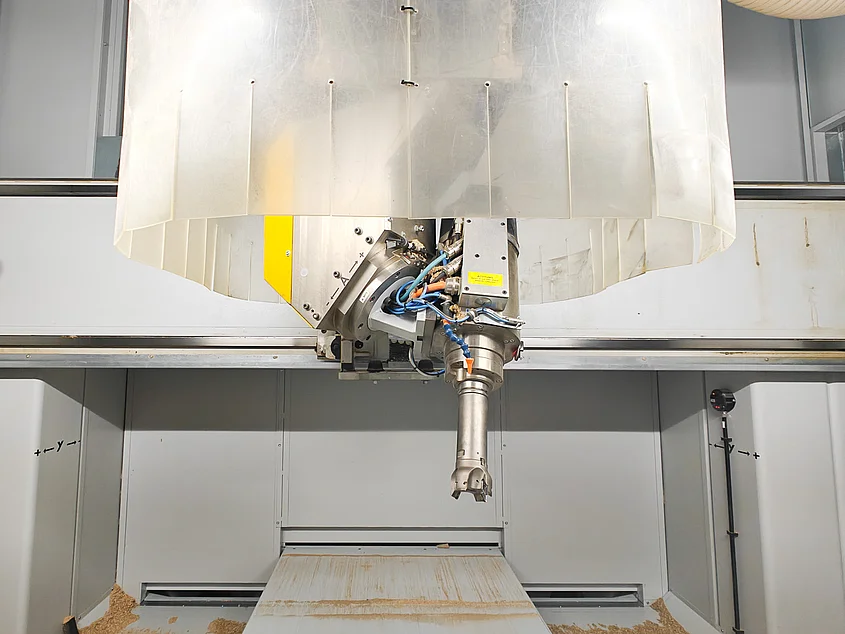
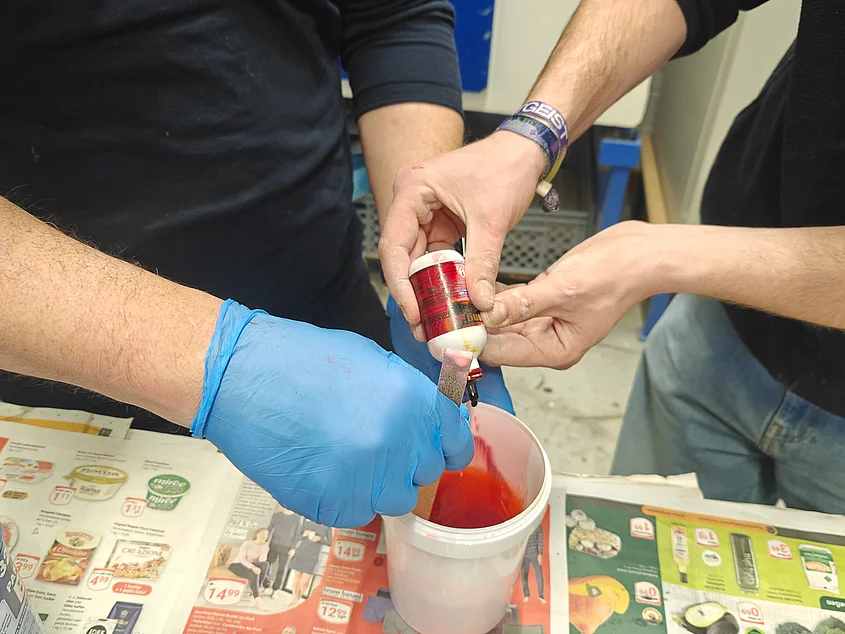
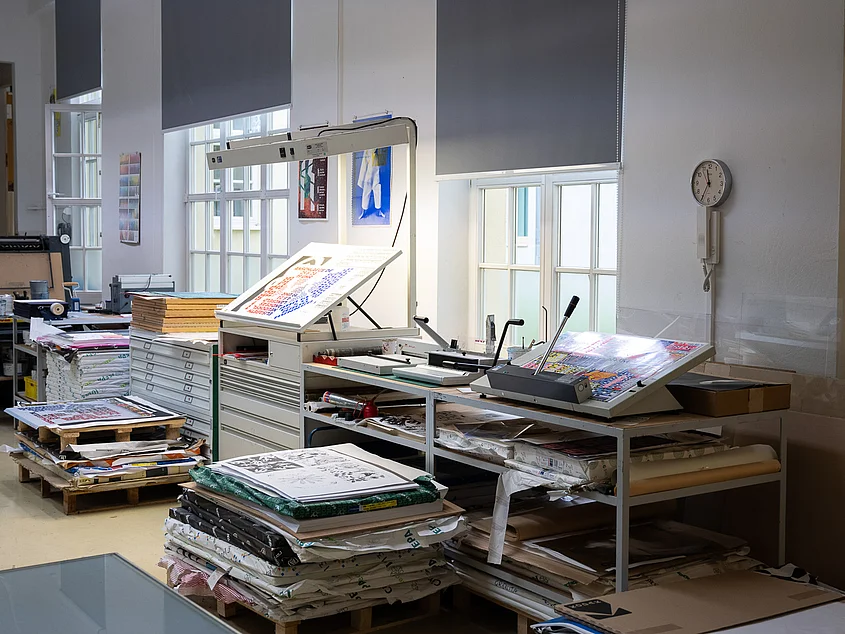
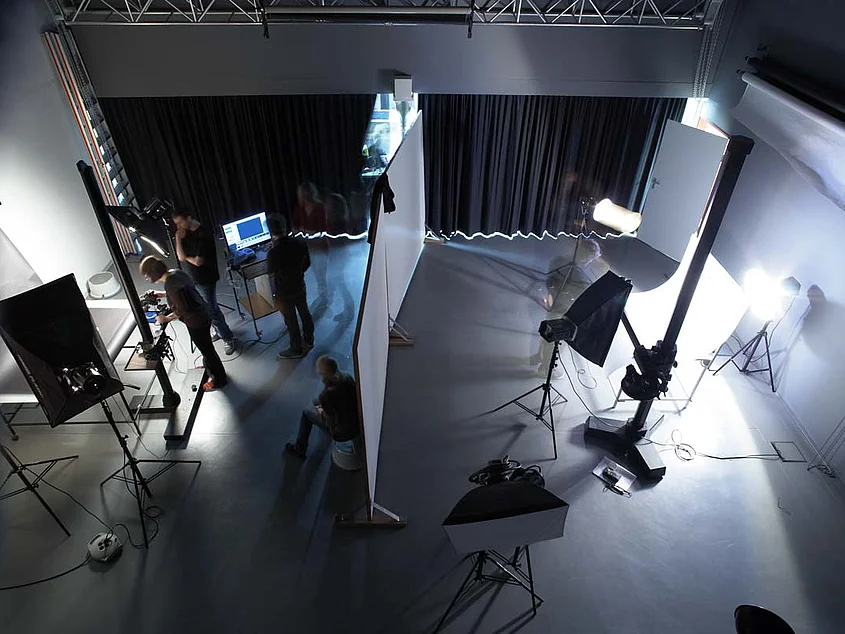
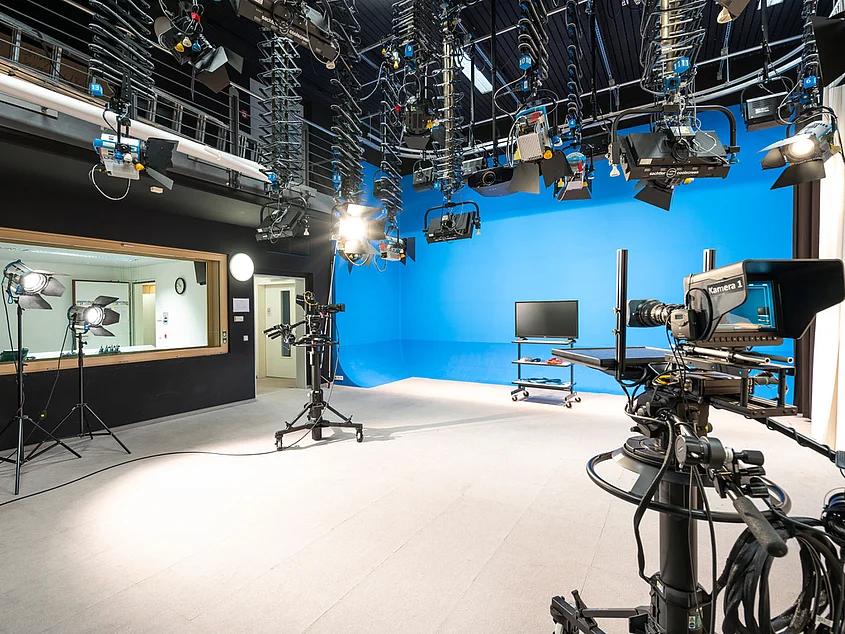
Students have access to professionally equipped workshops, including a wood workshop, metal workshop, printing workshops, photography workshop, and a plaster and mould construction workshop.
Theoretical support is provided by the academic professorships in the Faculty of Art and Design and supplemented by guest lectures. Interdisciplinary collaboration with other programmes serves to further enhance the Freie Kunst degree programme. Students have the opportunity to spend one or two semesters abroad thanks to connections with international partner universities.
Students have access to professionally equipped workshops, including a wood workshop, metal workshop, printing workshops, photography workshop, and a plaster and mould construction workshop.


First Year: Experimenting and Determining Your Direction
The degree programme begins with the »Grundlehre« (foundational studies). Students work on short-term projects, exploring various artistic approaches, materials, and media. Initial ideas are conceived and experiments are carried out to determine how they can be developed into artistic works.
Second Year: Developing an Individual Artistic Practice
Students continue working on thematic projects while increasingly focussing on their own areas of interest. Through this process, artistic practice is combined with theoretical reflection. Starting in the fourth semester, students are also free to choose their own independent artistic projects.
Third and Fourth Years: Refining an Artistic Identity
Students continue to develop their artistic practice with increasing independence. They select topics, media, and work methods that correspond to their artistic vision. This allows them to gradually refine their individual artistic position. Students also have the opportunity to study abroad during this period. The Faculty of Art and Design has partnerships with around 75 universities worldwide.
9th Semester: Diplomarbeit (thesis)
In order to successfully complete the degree programme, students must develop and implement an independent artistic project. The »Diplomarbeit« (thesis) demonstrates how topics, methods, and forms of expression have been combined into an independent artistic position.
Application process
The application for the degree programme »Fine Art« at the Faculty of Art and Design at the Bauhaus-Universität Weimar is exclusively conducted digitally via Bauhaus.CampusPortal. Applications are possible from – Attention NEW – 2 February of the year. Please complete your application by uploading all necessary documents and your portfolio by 31 March.
These are the steps to passing the aptitude test:
- the upload of your digital application via the university's Bauhaus.CampusPortal consisting of your digital portfolio, your curriculum vitae, as well as proof of your school-leaving qualification or vocational training
- preselection by reviewing the submitted digital portfolio
- the aptitude interview and review of your original artistic portfolio.
The aptitude test commission of the Fine Art degree programme makes a preselection after reviewing the submitted work samples. Those who make it to the shortlist will be invited to the further aptitude test and take part in a personal interview, to which please bring the original work from your digital application. Further details on the aptitude test are regulated by the aptitude test regulations (only available in German language).
Language requirements
Please note that passing the aptitude test does not mean automatic admission to the degree programme. Please submit a current proof of language proficiency with your application documents, which shows that you will reach the required language level by the time of your matriculation at the latest.
Lessons are taught in German. You must provide proof of German language proficiency. Prerequisite for International Students are German language skills at the level C 1 (DSH-2 or TestDAF TDN 4).
If you have any questions relating to certification, please contact the colleagues at the Office of Student and Academic Affairs: studium[at]uni-weimar.de
FAQ on application
How and by when can I submit my portfolio?
How and by when can I submit my portfolio?
Digital portfolio submission is possible via the Bauhaus.CampusPortal.
Application deadline:
The digital application can be uploaded until and including 31 March of the year.
What should my digital application look like and what should it contain?
What should my digital application look like and what should it contain?
In the degree programme Fine Art, your digital portfolio should contain about 20 samples of your artistic work. The works must have been made by you. The portfolio should consist of artistic works (paintings, drawings, objects, photographs, etc.) that reveal individual interests and working methods and show interest in the chosen field of study.
- We recommend that you scan the work from your portfolio or simply take a photo with your mobile phone.
- Sketchbooks can be submitted digitally and count as one piece of work. Your sketchbooks are best represented by a short video in which you flip through your sketchbooks. This video(s) should not exceed 2 minutes in length. They can be provided in the form of links in the document within the digital application.
- Create ONE PDF file from your photographed or scanned work with a maximum size of 20 MB.
- Please upload your curriculum vitae and your school and professional qualifications as separate files.
- International applicants must also submit a current proof of language proficiency with their application, which shows that they will reach the required language level by the time of enrolment at the latest. German language skills at level C1 (DSH 2 or TestDAF TDN 4) are required for admission to the degree programme.
How do I create a PDF file?
How do I create a PDF file?
There are several ways to create a PDF file. The Acrobat Reader from Adobe is a free software that you can download from the following link:
https://helpx.adobe.com/de/acrobat/using/creating-simple-pdfs-acrobat.html
Create a PDF file by using menu commands, dragging files onto the Acrobat application icon or converting data from the clipboard.
For more information, see for example various tutorials on Youtube.
What can I do with larger files such as moving images or audio files?
What can I do with larger files such as moving images or audio files?
For the submission of moving images/audio files etc., only include links (e.g. to YouTube or Vimeo, if applicable as private/password-protected video) in the PDF of your portfolio. For capacity reasons, please avoid uploading such files.
How can I present the work from my portfolio and all other documents without a professional scanner?
How can I present the work from my portfolio and all other documents without a professional scanner?
You can also simply take photos of the work with your smartphone or camera. The original files can be reduced in size using the appropriate online tools.
E.g. https://compressjpeg.com/de/
What do I do with works that I cannot simply scan?
What do I do if the colours and materials of my work do not look like the original in the photos or scans?
What do I do if the colours and materials of my work do not look like the original in the photos or scans?
We are aware that photos or scans do not exactly reproduce the original. This is taken into account by the examination committee. You do not have to incur any additional costs to have your portfolio professionally digitised.
After graduation
The Freie Kunst degree programme fosters the development of an independent artistic approach. Graduates work with images, objects, spaces, materials, media, texts, performances, and installations. They establish artistic positions, implement their own projects, and present their work in exhibitions, publications, educational presentations, and public settings.
The programme teaches students to independently develop artistic processes, make decisions, and promote their own work. This includes portfolio development, exhibition experience, grant applications, networking, and the ability to clearly express their own artistic position.
Freie Kunst graduates pursue careers in the following fields:
- Independent artistic practice
- Exhibitions, project spaces, galleries, and art associations
- Architectural and public art
- Grants, residencies, and project-based work
- Cultural institutions and curatorial work
- Art and cultural education
- Workshops and teaching
- Artistic research
- Writing, publishing, and art criticism
- Digital art and new media
- Art therapy (upon successful qualification)
- Self-employment and creative industries
Artistic career paths are often project-based and rarely follow a linear course; they often lead to independent artistic practice, exhibition and outreach work, cultural institutions, research, teaching, and self-employment. The degree programme lays the foundation for these career paths by combining artistic practice with professional organisational skills and the ability to develop, articulate, and communicate a personal artistic perspective.