

Forschungsprojekte
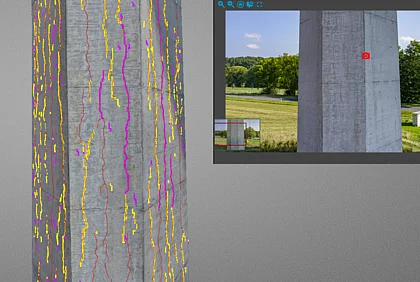
ReSKoMB – Tools for extending the remaining service life of solid bridges at risk of stress corrosion cracking
A key component of the strategy for maintaining transport infrastructure in Germany is to extend the remaining service life of bridges that meet the requirements for load-bearing capacity, serviceability and durability with sufficient reliability. The ReSKoMB research project will make a concrete contribution to the implementation of this strategy through experimental investigations and the use of modern digital technologies. The overall aim of the project is to develop and demonstrate tools that enable the remaining service life of existing solid bridges at risk of stress-corrosion cracking to be extended.
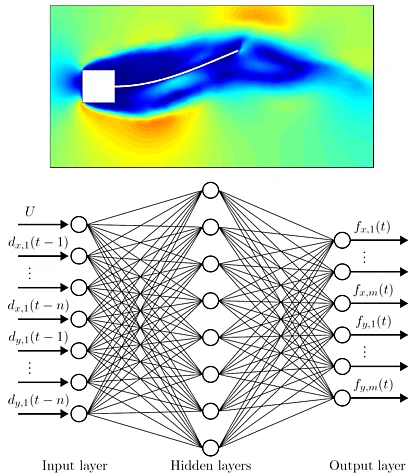
Advanced coupled numerical models for aeroelastic interactions in thin-walled structures
The aim of the project is to develop coupled numerical models for the analysis of aeroelastic interactions in thin-walled flexible structures, with significantly improved computational efficiency and quantified predictive accuracy. Data-driven aerodynamic prediction models based on machine learning (ML) methods will be formulated for selected thin-walled systems and coupled with a geometrically non-linear finite element formulation to develop partitioned FSI models. Provided the prediction accuracy is high, this will drastically reduce the computation time of FSI simulations. Training data on aerodynamic forces acting on thin-walled systems under various flow conditions must include the effects of motion-induced forces and vortex shedding; these are therefore obtained from high-resolution flow analyses using vortex particle methods (VPM).
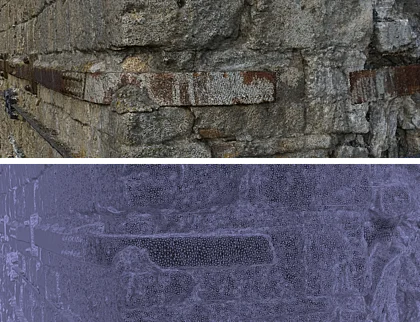
Digital technologies for the craft sector and cultural heritage – Bauhaus HeriTech –
With their historic monuments, Thuringia and Germany possess a cultural heritage that is of inestimable value both to our cultural identity and to tourism. Collectively referred to as ‘revitalisation’, the preservation, restoration in accordance with heritage standards and refurbishment of historic buildings and monuments present an enormous economic and technical challenge, one that requires a wide range of bespoke solutions. Cultural heritage ranges from richly decorated churches, palaces, castles and towers, through sites of Classical Modernism and the Bauhaus, to industrial monuments such as large halls, windmills and bridges.
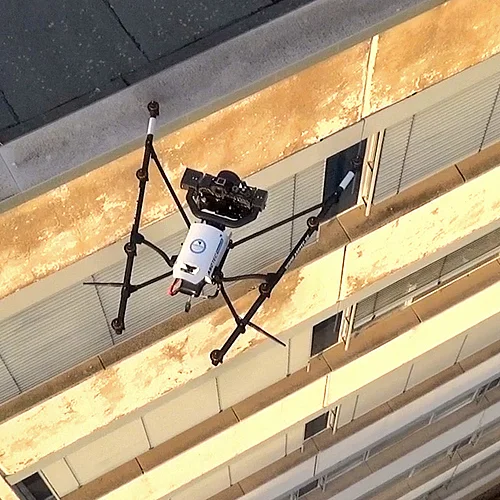

Research group: ‘Digital Engineering for the Planning and Regeneration of Urban Neighbourhoods’
Computer-aided methods are to be used to optimise the planning of new-build and refurbishment projects in cities. The research group adopted an interdisciplinary approach and utilised advanced technologies such as drone-based surveying of the geometry of existing buildings, the detection of structural damage using automated image analysis (computer vision), the energy performance assessment of buildings using thermography (building physics), sensor-based monitoring of key parameters, and the consistent storage of all collected data in Building Information Modelling (BIM). Research work in the field of sensor networks was carried out by the Institute for Microelectronics and Mechatronics Systems (IMMS) in Ilmenau.
Funding period: 11/2016 – 02/2019
Funding bodies: Free State of Thuringia and the European Social Fund (ESF)
Contact: guido.morgenthal[at]uni-weimar.de
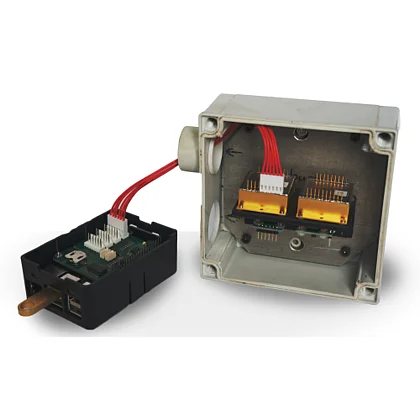
Efficient structural monitoring using MEMS tilt sensors and microcontrollers
As part of the research project, high-precision MEMS-based inclinometers and modern single-board computers were used to measure local rotations in structural frameworks, monitor system behaviour and detect critical stress conditions. The use of such cost-effective measurement systems enables the economical monitoring of structures to ensure their long-term safe use. To this end, extensive laboratory tests were first carried out to quantify the effective resolution and the achievable data quality of the sensors. For use on the structure, the sensors were integrated into suitable housings and the effect of the encapsulation was investigated. A prototype measurement system based on a Raspberry Pi and an associated modular software framework was developed in several stages for the acquisition, processing, evaluation, temporary storage and transmission of the measurement data. The interaction between the measurement system and the sensor technology was successfully tested in a series of short- and long-term measurements. To demonstrate its practical suitability, the inclinations of a roof structure and the skew of a tower were recorded using the developed system. This demonstrated both the potential applications and the limitations of the monitoring system.
Funding period: 10/2015 – 11/2017
Funding body: ZukunftBau
Research Initiative Contact: guido.morgenthal[at]uni-weimar.de
Final report

Unmanned aerial vehicles for assessing the condition of structures – motion for continuation
As part of the predecessor project “UAVs for Assessing the Condition of Structures” (SWD-10.08.18.7-13.05), scientific issues relating to the use of UAS in the vicinity of structures were addressed. The aim of this follow-up project was to optimise UAS navigation for the targeted, highly efficient and reproducible generation of photographic and thermographic images using UAS for the assessment of the condition of structures. Furthermore, research was conducted into extended application scenarios for non-destructive testing methods – in this case, building thermography – and into the further utilisation
of UAS-based building data in BIM software tools. New methods and algorithms were developed, prototyped and tested for the automated calculation of structure-specific flight paths for UAS, for the co-registration of RGB and thermographic images, their reuse in existing BIM software tools and other simulation tools for thermalenergy-related building simulation, and for the context-aware storage of UAS-based building data. These were prototypically implemented and tested. A method for calculating georeferenced flight paths for UAS based on existing Building Information Models (BIM) or coarse 3D building models was developed and prototypically implemented in software that guarantees a complete survey of the building. UAS-based condition assessment, utilising further innovative methods and technologies from the fields of computer vision, virtual reality or artificial intelligence, can form an important component in the digital chain of building maintenance. However, further research is required, particularly in the areas of data analysis and context-based data modelling.
Funding period: 01/2017 – 06/2018
Project sponsors: Federal Office for Building and Regional Planning (BBR), Federal Institute for Research on Building, Urban Affairs and Spatial Development (BBSR), ‘Zukunft Bau’
research initiative Contact: norman.hallermann[at]uni-weimar.de
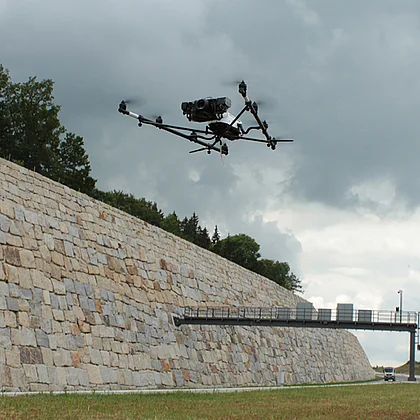
Unmanned aerial vehicles for assessing the condition of structures
This research project addressed scientific questions relating to the use of UAVs for assessing the condition of structures. Through specific investigations of selected reference structures, the aim was to realise the potential of such devices for the cost-effective inspection of structures. The focus was on evaluating the quality of image and video data for the identification of typical structural damage and their further usability.
Funding period: 06/2013 – 04/2015
Project organisers: Federal Office for Building and Regional Planning (BBR), Federal Institute for Research on Building, Urban Affairs and Spatial Development (BBSR), ‘Zukunft Bau’
research initiative Contact: norman.hallermann[at]uni-weimar.de
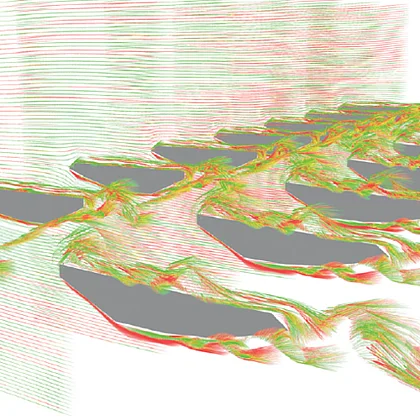
A pseudo-three-dimensional method for the numerical simulation of vibration excitation in linear structures caused by real wind
As part of this research project, a novel numerical method was developed for analysing bodies subjected to flow at high Reynolds numbers. The method enables pseudo-three-dimensional simulations of fluid-structure interaction phenomena in linear structures under the influence of incoming turbulence. The method is based on the vortex particle method (VPM) and is highly computationally efficient, making it suitable for analysing a wide range of problems in wind engineering.
Funding period: 2013–2017
Funding body: German Research Foundation (DFG)
Contact: guido.morgenthal[at]uni-weimar.de
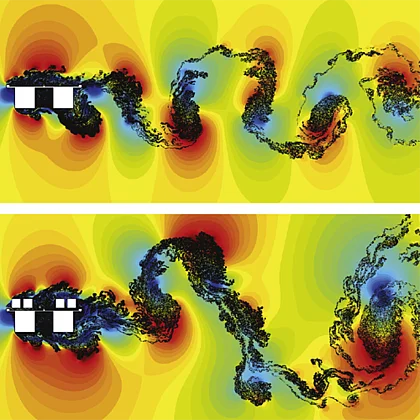
An adaptive method for the efficient numerical simulation of multi-scale phenomena in the flow of wind around structures
As part of this research project, methods are being developed for the efficient numerical simulation of wind flows around structures. These methods are designed to take account of the specific features of such flows, in particular the characteristics at high Reynolds numbers, the widely varying spatial scale ratios, the complexity of the structures’ geometries, and the effects of possible structural vibrations.
Funding period: 2012–2016
Funding body: German Research Foundation (DFG)
Contact: guido.morgenthal[at]uni-weimar.de

Assessment of ageing infrastructure using digital technologies (AISTEC) – BMBF
The reliability of transport infrastructure is a key factor in Germany’s competitiveness as a business location. Bridges are critical elements of transport networks that are constantly subjected to high levels of stress. They are currently inspected by specialists on site. Serious problems with motorway bridges in recent times have highlighted how important it is to detect age-related damage at an early stage so that maintenance measures can be carried out before it is too late.
Project fact sheet | Project website
Funding period: 09/2018 – 08/2021
Funding body: Federal Ministry of Education and Research (BMBF)
Contact: guido.morgenthal[at]uni-weimar.de
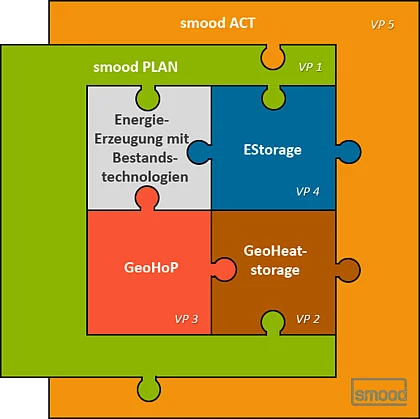
Regional Growth Hub Initiative ‘smood’ – smart neighbourhood
Existing housing estates are to be refurbished by ‘smood’ to achieve a high degree of local self-sufficiency in renewable energy, whilst remaining energy-neutral and maintaining stable rent levels. In doing so, the experts at ‘smood’ are combining newly developed technologies for energy generation and storage with established techniques such as photovoltaics, solar thermal energy and geothermal energy to create an optimised system. The chairs of Modelling and Simulation – Design (Prof. Dr Guido Morgenthal), Building Physics (Prof. Dr Conrad Völker) and Computer Vision in Engineering (Prof. Dr Volker Rodehorst) at the Bauhaus University Weimar are collaborating on the sub-project ‘smood PLAN – Neighbourhood-based Data Collection and Processing’.
Project fact sheet | Project
website
Funding period: 07/2019 – 06/2022
Funding body: Federal Ministry of Education and Research (BMBF)
Contact: guido.morgenthal[at]uni-weimar.de
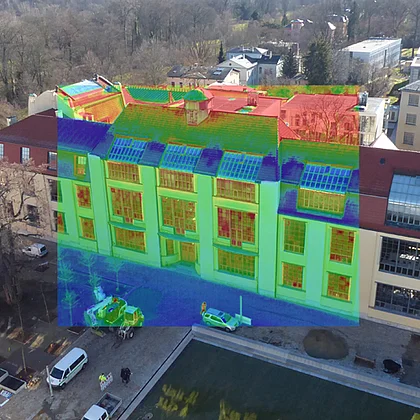
Energy-efficient neighbourhood regeneration to reduce CO₂ emissions (Bauhaus 2050+) – BUW
Buildings which, due to their use, remaining service life or architectural heritage value, cannot be made more energy-efficient – or can only be improved to a limited extent – offer particular potential for thermal and energy optimisation. By broadening the scope of analysis from individual buildings to urban neighbourhoods, the carbon footprint of the cluster can be assessed, meaning that it is not the energy efficiency of a single building but the collective efforts to reduce CO₂ emissions that are decisive. The campus of the Bauhaus-Universität Weimar is ideally suited as an exemplary case study due to its spread across several city districts and its historic building stock. The analysis covers the potential of the building envelope and (urban) energy systems, the benefits of mixed-use development, and the integration of listed buildings into concepts for sustainable urban development, supported by drone-based building surveys.
Project data sheet
Funding period: 07/2018 – 06/2021 Funding
body: Bauhaus University Weimar
Contact: guido.morgenthal[at]uni-weimar.de
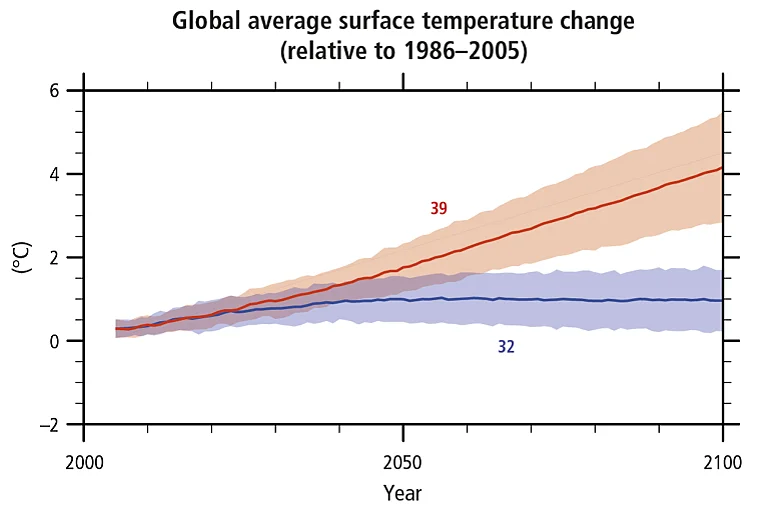
Impacts of climate change on buildings and neighbourhoods – structural integrity, indoor climate and energy efficiency (TAB)
Global warming and the associated changes to the climate system increase the risk of adverse consequences for the safety and resilience of the built environment. Sustainable structural adaptations to climate change through engineering measures can help reduce the vulnerability of buildings and their exposure to climatic changes. Several departments at the Bauhaus-Universität Weimar are involved in this project, working together to analyse a strategy for evaluating climate change models and their implications for structural safety and indoor climate by researching specific reference buildings.
Funding period: 01/2020 – 06/2022
Funding bodies: Free State of Thuringia and the European Social Fund (ESF)
Contact: guido.morgenthal[at]uni-weimar.de
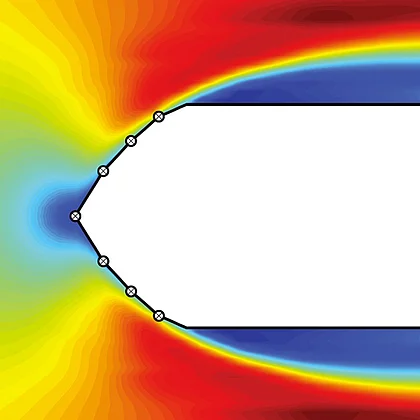
Optimisation of wind-induced structural systems, taking into account stochastic loads and various limit states – DFG
The fundamental aim of this project is to develop a universally applicable methodology that makes it possible to assess the forces acting on structural systems as a result of complex dynamic wind-induced phenomena. This is achieved through simulations that take defined limit states into account and by optimising the structures on the basis of probabilistic considerations.
Project fact sheet
Funding period: 09/2017 – 11/2020
Funding body: Bauhaus University Weimar
Contact: guido.morgenthal[at]uni-weimar.de
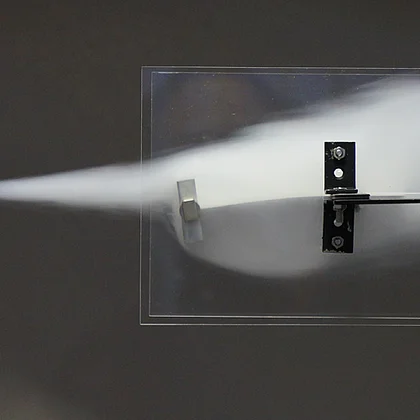
Aerodynamic instabilities in thin-walled structures for use in novel energy harvesters – DFG
In recent years, harnessing the unstable behaviour of thin-walled structures caused by aeroelastic instabilities has emerged as a practical approach to small-scale energy generation. The aim is to supply wireless sensor networks, portable and wireless electronic devices with sustainable green electricity, particularly those expected to operate for long periods without human intervention.
Project fact sheet
Funding period: 01/2018 – 12/2021
Funding body: Bauhaus University Weimar
Contact: guido.morgenthal[at]uni-weimar.de