Workspace and equipment
The workshop covers 180 square meters and offers around 20 workstations for concentrated student work.
The analog equipment includes:
- Plate roller
- Plaster lathe machines
- Pottery wheel
- Three kilns
- Clay oven
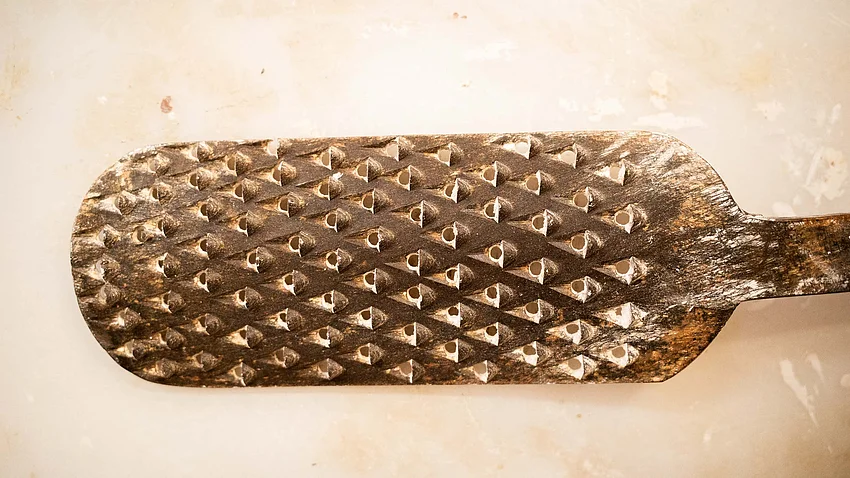
- Extensive tools for working with different materials
- Forklift for larger molded parts
Digital processes expand the workshop's range:
- 3D printer for ceramic masses
- 3D printer for plastic materials
- 3D scanner for precise capture and further development of models
- Decor printer for ceramic prints
The equipment supports both precise craftsmanship and experimental approaches to form and material.
Working in a study context
Students use the workshop for projects on various scales—from small studies to large-scale form constructions. They develop models, negative molds, prototypes, and originals, test designs in the material, and prepare them for further production steps.
The workshop is suitable for independent artistic projects as well as for study-related work focusing on mold making, casting processes, or ceramic techniques.
In close cooperation with the workshops for synthetic materials, model making, wood, and metal, the Plaster and Mold Construction Workshop supports many projects across several work steps. Students combine shaping processes with other techniques and implement their designs across different materials.
Technical support
Two employees support the work in the workshop:
Sabine Eichholz-Fleischer, head of the workshop and trained stonemason, and Robert Elias Wachholz, graduate Fine Artist.
They advise students on the planning and implementation of their projects, provide information on materials and methods, and contribute their experience to the work processes.