

Alumni Portraits

Meet Dilsad Aladag Master’s degree at BUW: M.Sc. European Urban Studies / Urbanistik | Graduation year: 2022
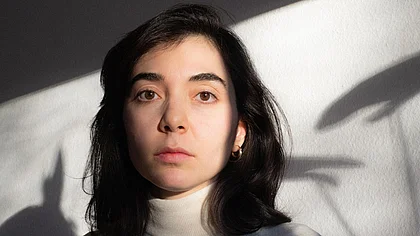
Master’s thesis topic: „Narrating the Discordant: Architecture Research Exhibitions in Turkey in the 2010s“
What are you doing at the moment?
I am currently working on my PhD in Arts and Design at the BUW. It is a practice-based PhD, meaning I can continue to develop my artistic practice: I make films, installations, crafts like weaving. Using all these practices, I investigate nomadic pastoralism in Anatolia, Turkey.
- How did you get there? (What steps did you take / what positions did you have after your master‘s until your current occupation?)
Practicing in artistic and cultural fields was already part of my research process during the EUS masters. During the program, with the influence of my master thesis, I started a project in my hometown as a preliminary work for the PhD. By creating an archive, online maps and documents, I investigated how 20th century modernization projects affected my hometown with regard to agrarian transformations of landscape. My work there was funded by the EU as a cultural worker, and I really wanted to be able to pursue these topics. When I then found this practice-based PhD program it was a gift, as it perfectly fitted my research practice, so I applied.
- What current projects do you feel most passionate about?
I am making a feature film, in which I am talking to shepherds as the last remnants of nomadic pastoralism in Southern Anatolia. Using filmmaking to relate with their knowledge is very valuable to me and also a first. It is a new medium for me, and it was such a pleasure that I surely will continue working with it!
- Why did you choose to do your master (Urbanistik / EUS) in Weimar?
It’s a funny thing, I first started IUDD. I then changed to EUS, as I really wanted to understand the discourses around the politics of space, and the politics of ecology. Architecture is a tool for power thatI wanted to understand this better, and I also was interested in doing research. As an architect and as an artist I had had contact with architectural research, but I wanted to have a sound base in both debates, and learn social scientific research methods.
- What have you learned during your studies that has benefited you now in your working life the most?
I really learned to write, which I hadn‘t done at all while I studied architecture. The first year was tough, because I didn’t know how to write academically. It’s like another language you learn, a way of communication, and I used this know-how later when I wrote various proposals in and out of academia.I also learned to work in groups, which is helpful even as a doctoral student, or at a cultural institute. EUS gave me this toolkit. Finally, it also prepared me for teaching, as we gave a lot of presentations and talked in front of groups. That’s very helpful, no matter what you do.
- Do you have any further tips and remarks for current (international) students joining the job market?
It’s a very difficult task, especially if you are an interdisciplinary person. Be confident and still apply for those jobs, even if the job description is narrow, because you never know. For me it was clear that I wanted to do a PhD so I tried to find funding and applied for many funding opportunities, because you never know which one will work out.
- Which advice would you give your younger student-self if you could?
Check out what’s happening in other faculties. The discourses that people in EUS are working on are also taking place in other programs: in the Arts there are people working on ecology, in Architecture they are discussing politics…. Even if the course is in German, just go there and listen. Get to know other chairs, even without needing credits, just as a listener. Most lecturers will welcome you openly, it makes them happy that you are interested in their topics. It will bring you diverse insights and be fun!
Meet Nathalie Jean-Baptiste Master’s degree at BUWeimar: M.Sc. European Urban Studies | Graduation year: 2007
Meet Jolien Vandoorne Master’s degree at BUW: M.Sc. European Urban Studies / Urbanistik | Graduation year: 2025
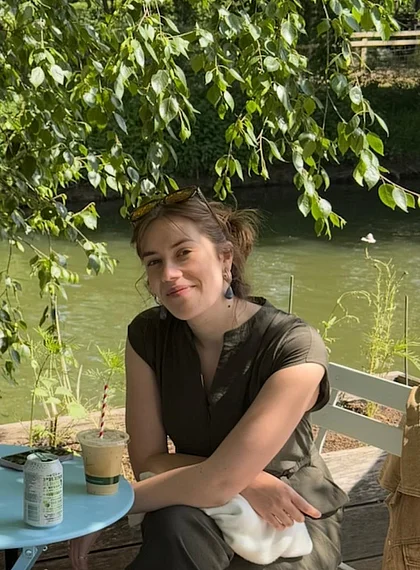
Master’s thesis topic: The impact of urban regeneration in post-conflict West-Belfast on the sense of belonging among Gaeilgeoirí residents (Irish speaking residents).
- What are you doing at the moment?
What am I doing, I do question it from time to time myself!
I am working for an NGO called International Federation of Pedestrians which advocates the always forgotten right of walking in urban planning. We are an umbrella organisation with more than 50 national walking advocacy groups.
Our NGO has several EU projects where we are partner of, one of them is under my responsibility which is called Just Streets. This project focuses on (re)developing 12 pilot sites in EU shaped by active mobility. The work deals especially with including people who are often left out of urban planning, like children, elderly and people with disabilities. The job allows me to work remotely and travel to these cities to proceed into action!
- How did you get there? (What steps did you take / what positions did have after your master‘s until your current occupation?)
I was incredibly lucky to land my current position even before defending my master’s thesis at Bauhaus. One of my EUS classmates (thanks, Jönne!) sent me the job posting, knowing it aligned perfectly with my passion for inclusive mobility and my fight for justice.
During my studies, I kept myself busy (and afloat) by writing for an architecture magazine. Also, I was teaching an introduction to inclusive urban planning during the 2025 Bauhaus4EU Blended Intensive Program in Bergamo.
- What current projects do you feel most passionate about?
We have some great projects in the pipeline (tbc ????), I am very excited to hopefully work about urban furniture as it seems so ‘normal’ but can be done in a way to create social cohesion, comfort in walking and fun public spaces. Also, we have plenty of school zones we are helping to develop, doing research on them and bringing all the new knowledge together.
- Why did you choose to do your master (Urbanistik / EUS) in Weimar?
Honestly? It was a bit of a last‑minute decision, driven by a graphic novel! I was trying to learn Italian and in doing so I picked up an illustrated book about the Bauhaus school. I had just finished a degree in history and realised along the way that I was more interested in how history shapes cities today than in history itself. The program seemed like the perfect space to dive into that: rooted in critical thinking, open to experimentation, and far from conventional.
- What have you learned during your studies that has benefited you now in your working life the most?
Hands-down, it’s how to do field research. My Guided Research Project focused on mobility for people with disabilities in Budapest, and that experience taught me to deeply understand people’s challenges. The theories we explored in seminars also gave me a lens to see cities as complex, interconnected systems. I reflect on them daily, even though my current work zooms in on mobility and street-level interventions.
On top of that, living abroad has taught me a lot. Since moving to Italy in 2022, after completing my previous studies, I’ve had to adapt constantly and figure things out on my own. As a pioneer student (the first in my family to pursue higher education) this experience has meant breaking new ground in many ways. (including many frustrations and tears, but I reflect now also a lot of persistence and courage) Honestly, I still think I could write a book about living out of two suitcases while studying over three years abroad. ????
- Do you have any further tips and remarks for current (international) students joining the job market?
In general, finding a first job, that fits your requirements, hopes and aspirations is just hard. It takes a lot of courage putting yourself out there. I’m not a fan of the word “networking,” but the truth is, it helped me a lot to figure out what I wanted to do (and what I certainly did not want to do). For me, networking was never about collecting LinkedIn contacts; it was about building good connections with people who share the same passion for inclusive cities.
You are not alone in your search, and we (EUS alumni and students) are there to help. You can always reach out!
- Which advice would you give your younger student-self if you could?
Be even more reckless, maybe I can still do that?
I learned from my Bauhaus peers is that everything is possible, makeable, and changeable. They are so vocal, hands-on, and driven that I wish I had put myself out there more during my time in Weimar. And also: take your time. That’s a privileged thing to say, I know as time is money, and not everyone can afford to slow down. But if you can find ways to support yourself, give yourself the time to learn and explore themes, not drill knowledge. I feel like Bauhaus students are very good at this!
Meet Joseph Kwasnik Master’s degree at BUW: M.Sc. European Urban Studies | Graduation year: 2024
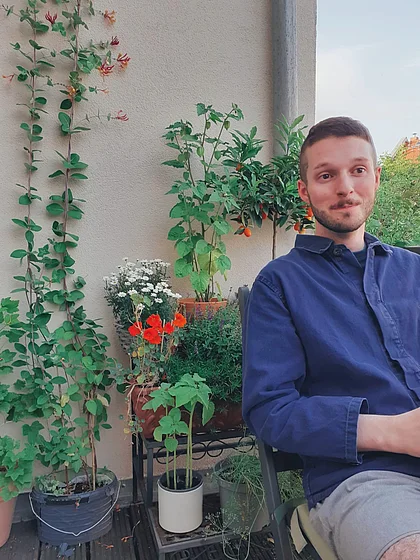
Master’s thesis topic: The impact of Airbnb on the Warsaw rental housing market following the Russian invasion of Ukraine. More broadly, the project investigated the role of the short-term rental market during periods of housing supply/demand shock.
- What are you doing at the moment?
I work as a freelance proofreader and editor, mostly for academics and universities. This involves things like editing journal articles for publication, improving the written component of funding applications, as well as helping universities market their courses through websites and adverts. It’s incredibly varied work, occasionally very interesting, with lots of freedom around your routine.
On the other hand, around 60% of the job is finding and keeping clients so you need to be comfortable with a level of insecurity and being quite cringey in marketing your services.
In other exciting news, I’m about to stop this work to begin a PhD at the Institute of European Urban Studies.
- How did you get there? (What steps did you take / what positions did have after your master‘s until your current occupation?)
I began freelancing in 2021 as soon as I moved to Germany. Mostly out of necessity: I was technically a qualified City Planner but unless your German is C1, there’s basically no chance of working in that field. So I began learning a skill that people were willing to pay for and presenting myself in a manner that they would trust enough to pay someone with comparatively little experience. Anyone can do the same, technically. However, it’s incredibly difficult to build a regular, dependable income and there have been times (sometimes many months) where I haven’t been able to pull it off. As a result, I’ve had all types of odd jobs since moving to Germany: Barista (mostly good), paid internships (okay but badly paid) and warehouse assistant (terrible).
- What current projects do you feel most passionate about?
My PhD. I can’t wait to begin. It’s in the field of housing studies, looking at Airbnb in Romania and Poland and its impact on people’s ability to access affordable housing. I’ll be conducting ethnographic research with real-estate entrepreneurs as well as studying housing entrepreneurship as an online phenomenon.
- Why did you choose to do your master (Urbanistik / EUS) in Weimar?
Before moving to Germany, I studied a very practical, job-focussed course in City Planning in the UK. I learnt a lot but absolutely hated it. I came out of it very cynical about working in that field, where there was no room for positive ambition and it seemed like a large part of the job (in the UK at least) involved helping rich people extend their gardens or working with councils in the selling-off of public assets/preventing the building of affordable housing. I missed the critical, politically engaged perspective. I was pretty sure that I wanted to do a PhD and the masters in EUS seemed perfect with its theoretical, comparative approach.
- What have you learned during your studies that has benefited you now in your working life the most?
The whole GRP experience was pretty special. The freedom to find a topic that you are passionate about, design a workable research project in a random place and actually be a researcher was challenging, exciting and overwhelming at the same time. Despite loads of things going wrong, it taught me how to organise a project from start to finish; contacting participants, conducting interviews and then bringing all of that together to form something half-readable was really beneficial.
- Do you have any further tips and remarks for current (international) students joining the job market?
There’s no getting around the fact that it’s getting harder to find graduate jobs, and after getting rejected for 100’s of jobs in the past I’m probably not the person to ask. But here’s a few: Don’t use AI to write your full application, it automatically goes to spam 90% of the time. By all means, use it to scan for keywords/key skills and try not to lie too much. Basic (and probably cringey) but true: Be kind to yourself and try not to take rejection as a personal character flaw or a reflection of your worth as a person.
- Which advice would you give your younger student-self if you could?
Pay attention in German class? That would have helped a lot.
Meet Luiza Maciel Costa da Silva Master’s degree at BUWeimar: M.Sc. European Urban Studies | Graduation: 2020
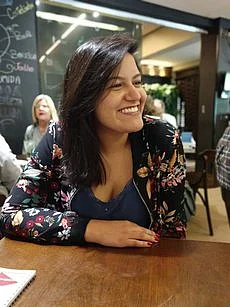
Master’s thesis topic: Smart cities and mobility hubs
- What are you doing at the moment?
I am currently working as a Coordinator at SYSTRA, a multinational consulting company in the field of transportation. I work in the office located in Belo Horizonte, Brazil, which is my home town. I used to work for this company before I started the EUS program, but my position was as an Analyst. Therefore, nowadays I have more responsibilities and I lead a small team. We develop transportation studies for Brazilian cities and metropolitan areas.
- How was your transition from being a student to your current position?
After finishing the EUS program, I was hired by a small consulting company in Germany. The experience was ok, but I struggled a lot for being in a new town during the pandemic, as it was hard to make friends and find myself in the city. Moreover, I did not feel like I could give my best in the job, as my German knowledge is still quite limited. Due to all those reasons, I have decided to return to Brazil and look for a job here. As I had previously worked for SYSTRA, my ex-bosses contacted me and offered me a job.
- What have you learned during your studies that benefit you now in your working life the most?
Improvement in organization skills, English language, reading, and writing. Moreover, while writing my thesis I did a lot of research on smart mobility, and I am currently able to apply this knowledge in my job.
- Do you have any further tips and remarks for current (international) students joining the job market in Germany?
As I had a short experience in the German job market, my recommendation is: learn the German language and practice it as much as you can! I think this is the main challenge for a foreigner that decides to work in Germany. Moreover, before you accept the job, make sure you understand the tasks you will be able to perform and that you like them. Those are lessons that I have learned the hard way. :)
- What was the project you were most passionate about in the past years?
Being a tutor for the Bauhaus Summer School in 2019 was a very short project, but still very important for me and I still miss it and all the people I have met during this experience.
- Can you tell anything about the most influential parts of your study experience at the Bauhaus-Universität Weimar (e.g. interests, courses, GRP, extracurricular activities)?
The GRP was of great importance for me! I grew a lot during this period, being proactive, researching on my own, interviewing people that I had never seen before in a strange country. It was a challenge, but the highlight of the program in my opinion! The opportunity to be an Erasmus exchange student and benefit from it (network, scholarship, contacts, uni enrolment) was also great. Concerning the courses, my favorite ones were Urban Sociology, Welcome to Weimar, Research Methods, and the Study Project in Gelsenkirchen.
- Which advice would you give your younger student-self if you could?
I would probably tell myself to take the German lessons seriously and to be brave and enjoy this unique opportunity to talk in German with locals as much as possible.
- In what ways are you still connected to the Bauhaus-Universität Weimar and your course peers?
Unfortunately, I am not much connected to anyone anymore - I just follow them on Instagram. However, I would love to know more about how they are doing. Hopefully, we will be able to meet again one day. It was strange and sad finishing the course without seeing any of the classmates or celebrating with anyone.
Meet Magdalena Janzic Master’s degree at BUW: M.Sc. European Urban Studies | Graduation year: 2021
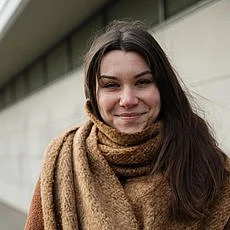
Master’s thesis topic: Biophilic urbanism as a perspective to improve human-nature relationship in the city. Developing nature stewardship in Lisbon
- What are you doing at the moment?
I am currently working in a non-profit consultancy for stakeholder engagement in projects related to environmental regeneration and sustainability. As a junior consultant, I am involved with two EU projects. My tasks include research – literature reviews and qualitative fieldwork; event management - workshop organization and report writing; and designing local community engagement processes for our partners.
- How was your transition from being a student to your current position?
The transition was not easy, as my German language skills are not advanced. Even though it took me some months to find this position, it was a valuable lesson of resilience, confidence, and persistence. :-)
- What have you learned during your studies that benefit you now in your working life the most?
In EUS, I had an opportunity to work both on my research skills, as a part of the program, and organizational skills. For example, in EUS I learned how to make a proper research design, how to use Citavi (literature review software), and how to organize an online event – all of which I actively use in my everyday work.
- Do you have any further tips and remarks for current (international) students joining the job market in Germany?
I would say – work on your German, even If you are looking to join international organizations (and even in Berlin).
- What was the project you were most passionate about in the past years?
Back in Croatia, I had a little NGO of my own – Association of Visual Anthropologists – where we organized a conference about sustainable urban development. That is where my enthusiasm for green and just cities grew so much that I decided to come to Weimar!
- Can you tell anything about the most influential parts of your study experience at the Bauhaus-Universität Weimar (e.g. interests, courses, GRP, extracurricular activities)?
For me, it was definitely the Guided research project. It includes many stages – research design, literature review, fieldwork, presentation of results – over one year. It gave me an opportunity to gain deep knowledge on a topic I am passionate about – nature-based solutions, and it taught me to be adaptable to circumstances, which proved to be a precious.
- Which advice would you give your younger student-self if you could?
If I could go back in time, I would definitely take more opportunities to participate in Research School activities, such as workshops and career coaching. The ones I did take were lovely experiences and very useful when transitioning to the practitioner role.
- In what ways are you still connected to the Bauhaus-Universität Weimar and your course peers?
Apart from being in touch with some colleagues, I have Elodie to thank for providing reference during my employment process! Moreover, the topics I had an opportunity to explore during my studies in Weimar are still very much part of my everyday work. For example, I recently presented the research conducted for during the EUS studies in a conference "In Search of Well-Being in Liminality: No Longer-Not Yet", so I feel like a proper EUS alumni. :-)
Meet Arnisa Halili Master’s degree at BUW: M.Sc. European Urban Studies | Graduation: 2022
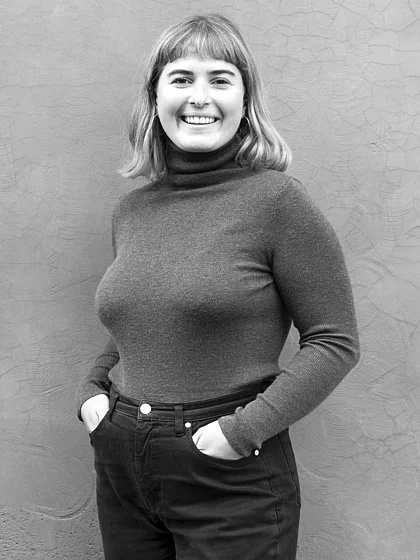
Master's thesis topic: Strategies of self-employed migrant women in family-run restaurants during the COVID-19 Pandemic. An analysis of transformed workspaces
- What are you doing at the moment?
Since October 2022, I have worked as a fellow at the DFG Research Training Group 2227 "Identity and Heritage" at the Bauhaus-Universität Weimar on the Demolition of the National Theatre in Tirana during the COVID-19-Pandemic.
- How was your transition from being a student to your current position?
I had a not-so-common experience. I saw the position at the DFG Research Training Group on "Identity and Heritage“ and wanted this job. I just focussed on this one, worked parallel to my master thesis on my PhD exposé and trained for the job interview. At the same time, other great positions were published, but I didn't apply and put everything into this application, which scared me from time to time. In the end, it worked out. I still can't believe it sometimes. So basically, I got the first job I applied to, and it was the job I wanted. In the summertime, from my Master's to my current position, I wanted to be active and went by bike alone to Belgium. I couldn't do my GRP in Brussels due to the COVID-19 pandemic, so I needed to somehow close this "Brussel-hole" in my heart and went by bike to Brussels and up to the coast and made great friends and memories on the way.
- What have you learned during your studies that benefit you now in your working life the most?
In December, I had my first colloquium at the Research Training Group, and it reminded me of the colloquium in our GRP. I was not as nervous as I expected. In EUS, you get prepared how to structure your research and communicate it through short presentations to others. Further, I'm thankful to my colleagues from my Master's program who shared so many insights from their home countries, which makes it easier for me to consider other perspectives but also understand the importance of my current colleagues' research topics on a European or Global level.
- Do you have any further tips and remarks for current (international) students joining the job market in Germany?
Give yourself time to learn the language and a new culture and find your position in the job market. It's already so brave you came and studied here. Be kind, understanding and patient with yourself. It takes time to join the job market for everyone. I’m sure you are doing your best. Also, talk to your fellow German students/friends/teachers if they have recommendations or networks or can help you. You don't have to do this all by yourself.
- What was the project you were most passionate about in the past years?
With one of my best friends from EUS Dilşad Aladağ, we started a pandemic diary project called "Hajde", where women and/or queer people from Germany, the Balkans and Turkey documented their experiences during the pandemic in a diary. So I have been experimenting with different ways of journaling, and it continues to be so much fun.
- Can you tell anything about the most influential parts of your study experience at the Bauhaus-Universität Weimar (e.g. interests, courses, GRP, extracurricular activities)?
I'm truly thankful for getting to know different perspectives through my colleagues in EUS due to their academic and personal backgrounds. I feel much more connected to many places in the world now, and although we don't see each other all the time anymore, there's an open door in many cities around the globe for me through them.
I have worked during my GRP on the effects of the right-wing terrorist attack in Hanau on the city, and I learned so much about how to research in emotional contexts. Also, I have met many strong characters in Hanau who keep on fighting against right-wing terrorism and who continue to inspire me up till now.
- Which advice would you give your younger student-self if you could?
Take breaks! You have enough time. :)
- In what ways are you still connected to the Bauhaus-Universität Weimar and your course peers?
While working at the Bauhaus-Universität in Weimar now, I still see some study colleagues, professors or student coordinators, which is beautiful. Otherwise, I try to follow up on my colleagues' life through social media. Of course, many memories we made in my EUS still pop up in my daily life and make me smile.
Meet Gytis Nakvosas Master’s degree at BUW: M.Sc. European Urban Studies | Graduation: 2023
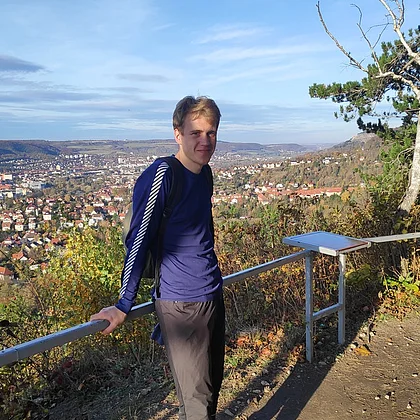
Master’s thesis topic: 'Loft' housing in Vilnius as an example of microliving in the context of post-socialist housing market"
- What are you doing at the moment?
I have just started working at the European Humanitarian University as a Coordinator for Development and Cooperation, which alludes to facilitating the process of research and publishing for the faculty (academic staff). The University itself is a liberal arts college for Belarusian students and researchers; therefore, it has specific challenges for the staff to work within the higher education in Lithuanian and European context.
- How was your transition from being a student to your current position?
Well, the transition took a while given that a year ago I was in the process of writing my Master's thesis. Given that I had been leaning towards returning to my home city after the studies, I have had some cushion and privilege to let some time pass before I wrap my head around. Besides applying to various jobs, primarily at the public sector, I have had several tasks where I could be useful with my insights and knowledge from the studies in Weimar.
A particular example: the EHU, in cooperation with the universities in Brno and Wroclaw, is aiming to establish a MA study programme on Urban Studies with a particular focus on Central and Eastern Europe - and I happen to be a graduate of EUS from Vilnius having done my Guided Research Project at the very university in Brno!
- What have you learned during your studies that benefit you now in your working life the most?
Besides the knowledge that is of high value and quite unique (in a way that it goes across the disciplinary boundaries), the studies and the odd experiences of being an actual researcher have also taught me some useful skills: a go-for-it attitude, eagerness to learn more, last but not least - not being afraid to improvise and be creative in situations when one might not be 100 percent sure of one's abilities or knowledge.
Improvement in organization skills, English language, reading, and writing. Moreover, while writing my thesis I did a lot of research on smart mobility, and I am currently able to apply this knowledge in my job.
- Do you have any further tips and remarks for current (international) students joining the job market outside of Germany?
I believe that my situation is quite specific and I have been always much more secure than my peers. I came back to my home city with hope (or ambition one would say) to get involved with urban development of the city - which, in case you are familiar with the context of postsocialist Central and Eastern Europe, can sometimes be challenging.
It is important to put a disclaimer - I have chosen to return home not only because I thought I could always do so, but first and foremost because it is safe to do so. As a citizen of EU, I could have stayed in any country of the EEE and not worry about visa and other requirements. For example, in the Czech Republic, where I have lived for several years and achieved proficiency in the local language.
I believe that there are many attractive locations in the CEE region that might be attractive for graduates of our programme. I would say that a lot of urban matters are still at the stage of development and the value of education in programmes like EUS is valued well. It might also be the case that there are more opportunities to get a job in English language. However, for sure, besides the cons there are certain cons and it might be just as hard to adapt and be accepted in another country.
- What are the project you feel most passionate about currently?
Besides my new position at the University which comes with the challenge of making it work, I have been involved in a wide array of other activities. For example, joining a cyclists' pressure group; a student/youth organization that aims to be vocal about progressive causes in education and youth politics; helping to organize the activities of my beloved sport, orienteering. Even though I might have entangled myself with too many extracurricular activities (as I call them), it gives me a lot of joy to help someone out. Lastly, what about my knowledge on the housing situation in Vilnius? Hopefully there will be opportunities to advance in that realm as well. Besides making a guided tour in the district where I had done most of my fieldwork, I wish to investigate more on the housing situation, given that I am myself affected by the housing market.
- Can you tell anything about the most influential parts of your study experience at the Bauhaus-Universität Weimar (e.g. interests, courses, GRP, extracurricular activities)?
The programme provided me with knowledge that would hardly be available in my country. So despite the fact that I had been familiar with many of the themes that are presented in EUS (I had studied Political science as a BA), the particular twist and issues have been strongly grounding and convincing. For me personally, learning about the field of housing was a huge eye-opener, and I can only be grateful to the lecturers and people behind the curriculum. Even as there have been many courses that I was not so sure about, in the end, different experiences from the courses or simply, having studied with people with such diverse backgrounds, somehow add up like a nice colorful puzzle.
- Which advice would you give your younger student-self if you could?
I was very impressed with the student life in Germany and the attitude of the students who are active, vocal, creative and at times, living their lives as if there was no tomorrow. I mean, when else would any of us do things such as help run a self-help bicycle workshop, help to decorate a party stage or build a vehicle for the SpaceKidHeadCup? That has been something that I have missed out on during my BA in Vilnius. Of course, for many foreign students, it is not always possible to enjoy that life as much as possible - that has also been a big lesson. So, go out, get involved, be supportive, don't be afraid of risks. Even if it means talking to the woman who starts her evening shift at the library in broken German even if there are 99 reasons not to do so.
- In what ways are you still connected to the Bauhaus-Universität Weimar and your course peers?
I am still in contact with many friends that I have made during my time in Weimar. I mean, Mensa - Atelier/M18 shifts, looking for a job after defending the thesis - those are strong bonding experiences! Referring to what I have written above, I have to say es tut mir leid to my friends from Weimar that I have not been out as often as I could :) I wish everyone the best of luck and success in finding a comfortable living in whatever you decide to pursue in the future!