Real-Time Rendering
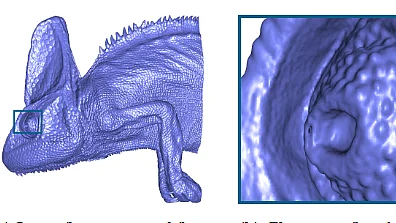
Real-Time Meshlet Extraction from Scalar Volumes
In this paper, we propose the first approach for real-time extraction and rendering of isosurfaces from scalar volumes as non-trivial persistent meshlets, which are compatible with efficient mesh shader pipelines supported by recent GPUs.
[more details]
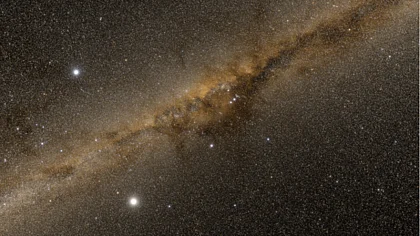
Smaller than Pixels: Rendering Millions of Stars in Real-Time
Rendering stars with their correct luminance.
[more details]
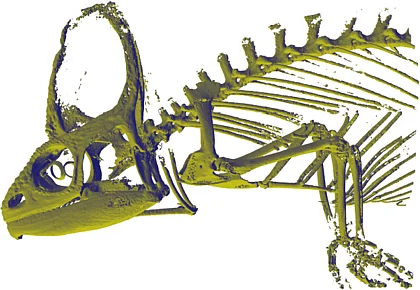
Efficient Direct Isosurface Rasterization of Scalar Volumes
In this paper we propose a novel and efficient rasterization-based approach for direct rendering of isosurfaces. Our method exploits the capabilities of task and mesh shader pipelines to identify subvolumes containing potentially visible isosurface geometry, and to efficiently extract primitives which are consumed on the fly by the rasterizer.
[more details]
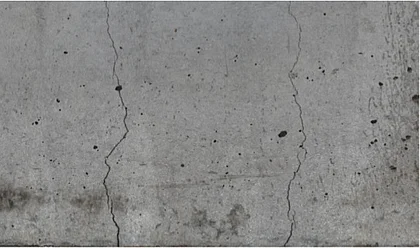
A Geometry-Based Method for the Spatio-Temporal Detection of Cracks in 4D-Reconstructions
In previous work, the detection of cracks is based purely on their color offsets. We replace the original material colors by a geometry-based artificial coloring, which allows for crack detection even in the presence of severe radiometric disturbances that would otherwise introduce false positive matches.
[more details]
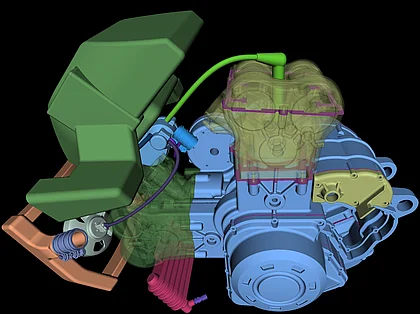
Efficient and Anti-aliased Trimming for Rendering Large NURBS Models
In Computer-Aided Design (CAD), Non-Uniform Rational B-Splines (NURBS) are a common model representation for export, simulation and visualization. In this paper, we present a direct rendering method for trimmed NURBS models based on their parametric description.

Efficient Hybrid Image Warping for High Frame-Rate Stereoscopic Rendering
Modern virtual reality simulations require a constant high-frame rate from the rendering engine. They may also require very low latency and stereo images.
[more details]
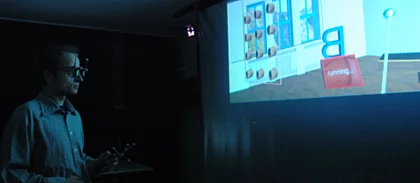
3D Image Warping and Multi-Frame Rate Rendering Techniques
We propose several techniques for latency reduction in real-time rendering in the context of virtual reality applications.
[more details]
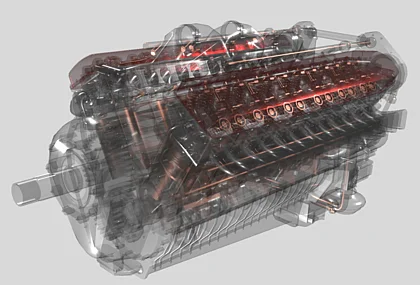
Order-Independent Transparency for Programmable Deferred Shading Pipelines
In this paper, we present a flexible and efficient approach for the integration of order-independent transparency into a deferred shading pipeline.
[more details]
Ray Casting of NURBS Surfaces
We present a highly efficient direct trimming technique for NURBS surfaces, which is applicable to tessellation-based rendering as well as to ray tracing systems.
[more details]
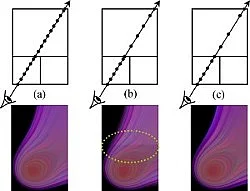
Error-Controlled Real-Time Cut Updates for Multi-Resolution Volume Rendering
We introduce a greedy cut update algorithm based on split-and-collapse operations for updating the cut on a frame-to-frame basis.
[more details]
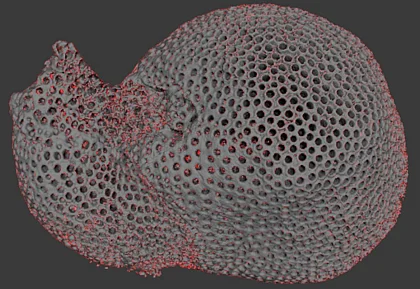
An Image-Warping Architecture for VR: Low Latency versus Image Quality
We describe the design, implementation and evaluation of a client-server depth-image warping architecture that updates and displays the scene graph at the refresh rate of the display.
[more details]
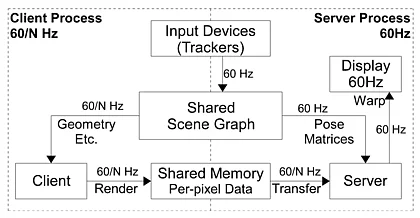
A Shared-Scene-Graph Image-Warping Architecture for VR: Low Latency versus Image Quality
We describe the design, implementation and evaluation of a client-server depth-image warping architecture that updates and displays the scene graph at the refresh rate of the display.
[more details]
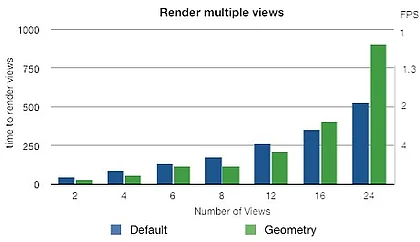
Multiple View Generation for Auto-stereoscopic Displays
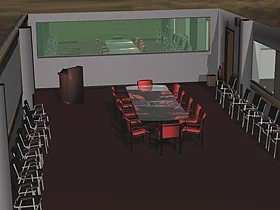
Beschleunigungsstrukturen für echtzeitfähiges Ray-Tracing auf aktueller Hardware-Infrastruktur

GPU-based Ray Tracing of Dynamic Scenes
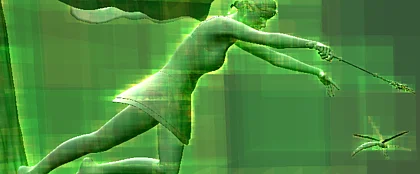
Fast Construction of SAH-based Bounding Interval Hierarchies using Dynamic Parallelism
Fast Normal Map Generation for Simplified Meshes
Selective refinement of progressive meshes using vertex hierarchies
Occlusion Shadows
Using Projected Light to generate realistic Occlusion Effects for Optical See-Through Displays
[more details]

LOD-Based Occlusion Culling
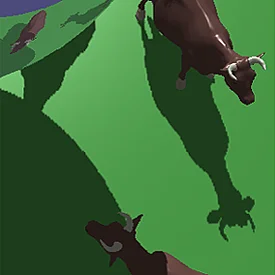
Real-Time Ray Tracing