

Prof. Maurice Jakesch
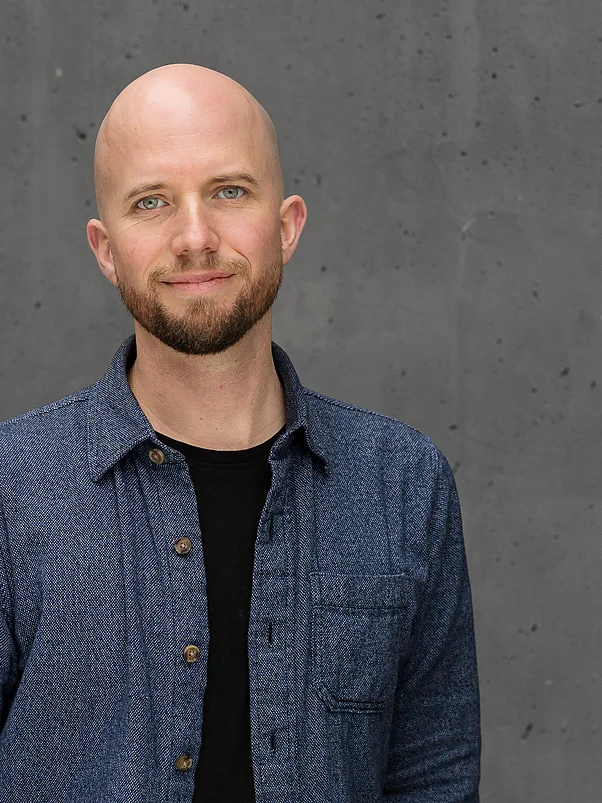
Prof. Maurice Jakesch
About
I’m an assistant professor working on the societal impact of digital technologies. I run the Computational Social Science Lab at Bauhaus University.
My research investigates how AI communication systems change society. Through behavioral experiments, machine learning apps and data science, I explore how large language models, or AI-enabled news and social media technologies affect interpersonal trust, people’s beliefs, and cultural values. My insights have been presented to the US Senate and White House Advisory Council and were reported in the Wall Street Journal.
More Information
Vita
I received a Ph.D. in Information Science from Cornell University where I worked with Mor Naaman. The German National Academic Foundation, National Science Foundation, and Cornell Digital Life Initiative generously supported my work.
Before Cornell, I completed a BS in Electrical Engineering at ETH Zurich and an MS in Information Technology at the Hong Kong University of Science & Technology. I studied an MA in Philosophy of Science and Technology at TU Munich and received an honors degree in Technology Management from the Center for Digital Technology and Management. I have also been a visiting researcher at Nanyang U, University of Toronto, Harvard and MIT.
I also worked or interned with industry and startups including Microsoft Research, Facebook Core Data Science, the Boston Consulting Group, GE Digital Foundries, and BMW.
Publications
For a regularly updated list of publications, see our lab's publications page or my Google Scholar profile. Below is a selection.
Biased AI writing assistants shift users’ attitudes on societal issues
Williams-Ceci, S., Jakesch, M., Bhat, A., Kadoma, K., Zalmanson, L., & Naaman, M. · Science Advances (2026)
Reactive Writers: How Co-Writing with AI Changes How We Engage with Ideas
Bhat, A., Aubin Le Quéré, M., Naaman, M., & Jakesch, M. · ACM CHI (2026)
Writing with AI boosts trust-building efficiency
Purcell, Z. A., Jakesch, M., Dong, M., Nussberger, A. M., & Köbis, N. · iScience, 28(12) (2025)
Human Heuristics for AI-Generated Language Are Flawed
Jakesch, M., Hancock, J. T., & Naaman, M. · PNAS 120.11 (2023)
Co-Writing with Opinionated Language Models Affects Users' Views
Jakesch, M., Bhat, A., Buschek, D., Zalmanson, L., & Naaman, M. · ACM CHI (2023)
Teaching
Computational Social Science Lecture + Exercise
How can we use data to answer questions about people and society? This course teaches how to turn a social question into concepts and measures, then collect and analyze your own data. Topics span surveys, digital traces, text analysis, and network analysis, with applications to toxicity, democracy, and news ethics.
Responsible AI Project
What does it mean to build AI systems that are fair, transparent, and accountable? In this project students learn about the principles and frameworks guiding responsible AI development. Combining hands-on research projects with weekly readings and discussions, students examine issues such as algorithmic bias, explainability, and societal impact.
Social Simulacra Project
How might we simulate human social behavior using AI? In this project, students build simulations with LLM-powered agents that recreate classic social science studies, from bystander effects to market panics, and test when the simulated population behaves like the real one. The groups show their simulations at the university’s Summaery exhibition, where visitors can intervene in the simulated world.
Digital Ventures Lab Project
How does a product idea become a venture? In this interdisciplinary project with Media Management, student teams develop a digital product from the first idea to a working prototype: they find a problem with Design Thinking, test it in interviews with potential users, research the market, and build an MVP with a business model, presented at the university’s Summaery exhibition.
Thesis Research Supervision
We supervise bachelor’s and master’s theses on topics at the intersection of computational methods and social science. Our linked thesis guide offers an overview of how we approach research, how we advise students, and the kinds of topics that interest us along with the steps to take if you’d like to write your thesis with us.