

Quality, commitment and international networking characterise the reputation of the Bauhaus-Universität Weimar. Rankings, quality certifications, and accreditations attest to the University’s excellence and its outstanding programmes, coursework, and research. Numerous memberships in national and international networks further underscore the University’s academic exchange, collaboration, and visibility beyond Weimar.
Date
Format
30 Years of Earthquake Damage Analysis Centre (EDAC): Workshop on Analysing Damage Caused by Extreme Natural Hazards

Natural Hazards as an Interdisciplinary Challenge
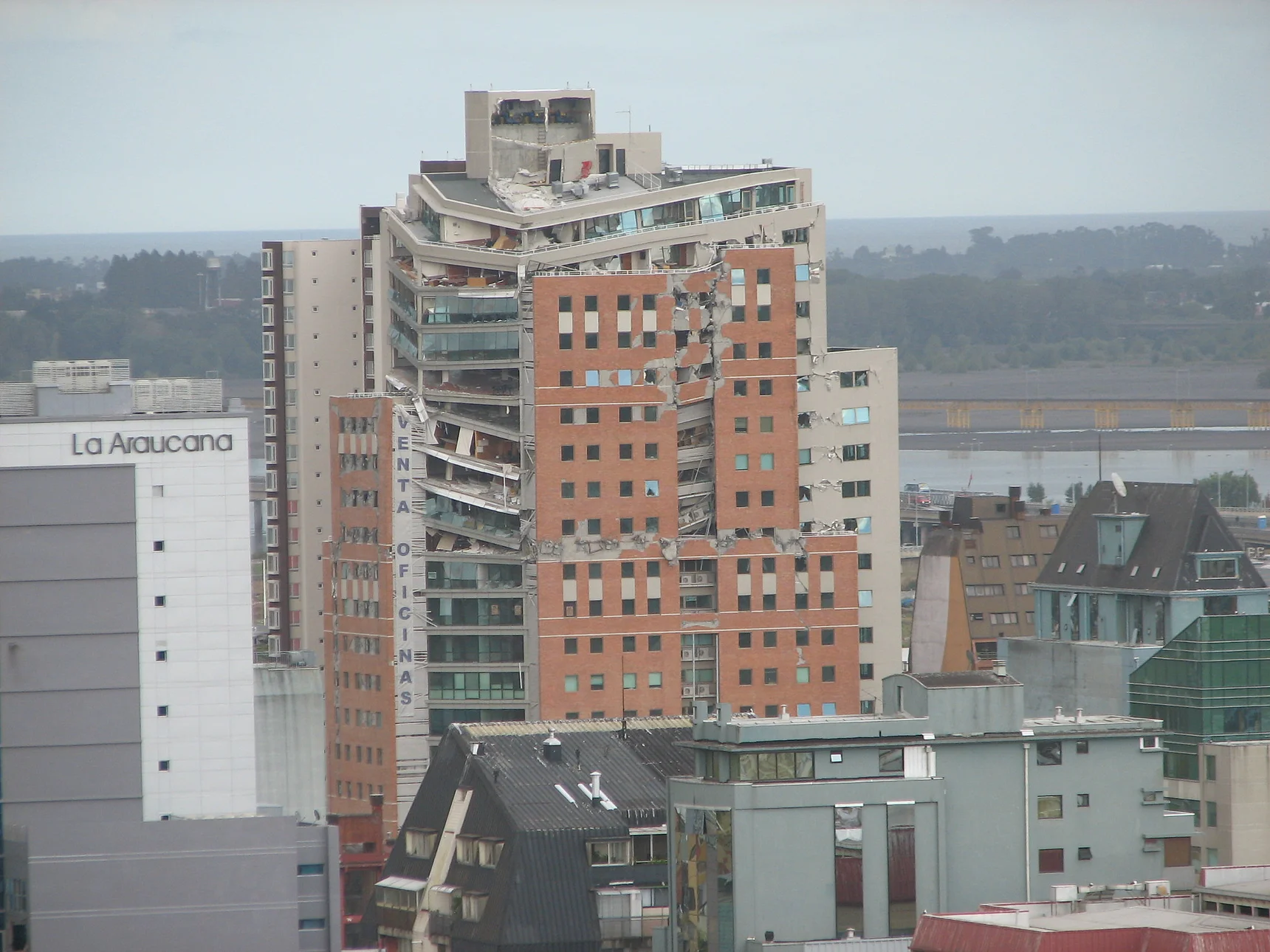
Natural hazards are real; they require decisive action when they have the potential to cause significant damage. Analysing the damage caused by extreme events is only one aspect of this, but it is an essential foundation for better understanding risks, making buildings more resilient, and making sure communities are properly prepared.
Addressing natural hazards can only be successful within the currently existing fields if interdisciplinary cooperation is taken into account.
Taking Stock – Shaping the Future
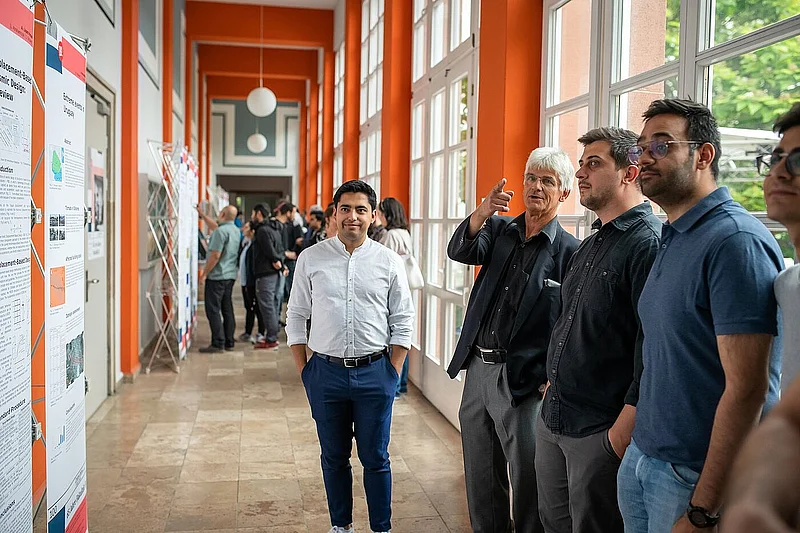
Although the workshop will also look back on the 30-year history of EDAC, the main purpose of the event is to provide a forum for discussing current issues, exploring new topics and potential partnerships, and honouring the more than four decades of close cooperation with the GFZ Helmholtz Centre for Geosciences in Potsdam. From designing safety-relevant facilities and developing seismic building codes to establishing the »Deutschen Task Force Erdbeben« and joint earthquake missions, the Bauhaus-Universität Weimar and the GFZ Helmholtz Centre for Geosciences in Potsdam have maintained a close partnership. This collaboration has consistently been realised through concrete research projects and, thanks to its interdisciplinary approach, has delivered nationally and internationally recognised contributions to natural hazard and risk research.
One key objective of the anniversary workshop is to generate research-focussed and project-specific support for the »Natural Hazards and Risks in Structural Engineering« international Master's degree programme. In this regard, plans have been made to establish an advisory board that will assist with the future development of the programme.
Programme Highlights
The workshop is divided into three themes sessions:
Session 1 (11:00 - 12:30): Natural Hazards – Needs and Benefits of Cooperation
Contributions on current developments at the Bauhaus-Universität Weimar, research approaches and areas of collaboration, and a review of milestones, contributions, and influence of the EDAC on natural hazards research.
Session 2 (1:30 - 3:00): Natural Hazards and Code Development
Presentations on resilience and risk concepts in earthquake design, on the development of seismic standards in Germany, and on experiences from field work and seismic monitoring.
Session 3 (3:30 - 5:30): Challenges and Requirements in Research and Education
Discussion on current successes and future tasks in hazard, vulnerability, and risk analyses, on the handling of existing buildings in teaching and standardisation, and on methods and tools for damage analysis.
Round Table Discussion
During the break between sessions 2 and 3, at around 3:30, the new earthquake terminal in the foyer of the Marienstraße 13 lecture hall building is scheduled to open.
Workshop: Damage Analysis of Extreme Natural Hazards
26 March 2026, 11 am to 5:30 pm
Marienstraße 13, Lecture Hall D
The workshop is open to all interested parties. The event can be attended both on-site in Weimar and online via participation link. We ask that those interested register by 16 March 2026 by e-mail to silke.beinersdorf[at]uni-weimar.de.
Phone enquiries: +49 3643 584581 (Dr. Silke Beinersdorf)
Further details can be found on the Earthquake Damage Analysis Centre website: https://edac.biz/edac30

CHE Ranking 2025: High levels of student satisfaction with the Master’s degree in Civil Engineering
The Master’s programme in ‘Civil Engineering – Construction Engineering’ at the Bauhaus-Universität Weimar has performed above average in the latest university rankings published by ZEIT Verlag, impressing in numerous categories. Particular praise was given to the level of student support, University Administration and digital coursework, as well as strong links to research. More than 8,000 Master’s students from across Germany were surveyed as part of the study. The focus was on subjects including civil and environmental engineering, electrical engineering, mechanical engineering and materials science and engineering.

CHE Ranking 2025: Top rankings in the fields of Architektur (Architecture), construction and the environment
In the latest ranking by the Centre for Higher Education Development (CHE), several degree programmes from the Faculties of Architecture and Urbanism, and Civil and Umweltingenieurwissenschaften (Environmental Engineering) at the Bauhaus-Universität Weimar have achieved outstanding results. In particular, students rated the overall study conditions and organisation, as well as the support and facilities provided by the university, very highly. The results were published in May 2025 in the ZEIT Study Guide and on DIE ZEIT’s online portal, HeyStudium.

CHE-Ranking 2019: Bauhaus-Universität Weimar receives top ranking for Civil and Environmental Engineering
In a nation-wide university ranking, the Bauhaus-Universität Weimar received high scores in the categories of general studies, study organization, lecturer supervision, excursions, studies abroad, and degree completion within a reasonable time period.
Bauhaus-Universität Weimar among the best art & design universities in the world
According to the »QS World University Ranking« system, the Bauhaus-Universität Weimar is among the top 150 universities in the world in the department of art and design. In 2019, 83,000 university graduates and 42,000 university employees were polled for the QS Quacquarelli Symonds’ ranking, which has been compiling results and ranking universities since 2004.

Bauhaus-Universität Weimar successfully completes »Shaping Diversity« audit
Together with eight other universities from Thuringia, the Bauhaus-Universität Weimar has successfully completed the two-year procedure for fostering diversity and been awarded certification for the coming three years. Various measures were developed as part of the audit and implemented at the Bauhaus-Universität Weimar. These include the installation of toilets for all genders, establishment of a diversity fund, implementation of measures for structural and digital accessibility, and deployment of diversity guides, who enable easy access to peer-to-peer counselling in case of discrimination.

Bauhaus-Universität Weimar recognized with »Total E-Quality« award
The Bauhaus-Universität Weimar successfully applied for the »Total E-Quality« award. This award is presented to scientific and industrial institutions that have successfully implemented and sustainable strengthened equal opportunities for both women and men within the institutions’ personnel and organisational policies. The jury confirmed that the Bauhaus-Universität Weimar »promotes a well-developed, professional equality, which is impressively practiced at the university«.

Bauhaus-Universität Weimar awarded certificate for »University Internationalisation«
On 5 December 2018, the German Rectors’ Conference (HRK) awarded the Bauhaus-Universität Weimar the certificate for »University Internationalisation«. The Weimar university had successfully completed an evaluation and consulting process which began in January 2018.
The Bauhaus-Universität Weimar is involved in numerous organisations, institutions and associations. Below is an overview of our memberships.
Further information can be found in MdU 04/2012.
As at January 2026
| Name of the association | Department/Contact partner |
|---|---|
| Academia Europaea , University of London , Malet Street, WC1E 7HU , London , United Kingdom | Faculty of Civil and Environmental Engineering Professorship in Computational Mechanics* |
| AG Kurzfilm e. V. Federal Association of German Short Film Förstereistraße 36 01099 Dresden | Faculty of Art and Design Professorship of Cross-Media Moving Image |
| Accreditation, Certification and Quality Assurance Institute e. V. (ACQUIN) Brandenburger Straße 2 95448 Bayreuth | President's Office |
| AKMB – Working Group of Art and Museum Libraries Saxon State Library – Dresden State and University Library Zellescher Weg 18 01069 Dresden | University Library |
| General German University Sports Association (adh) Max-Planck-Straße 2 64807 Dieburg | University Sports Centre |
| alumni-clubs net e. V. Association of Alumni Organisations in German-speaking Countries PO Box 12 01 10 68052 Mannheim | Alumni Office |
| American Association for Wind Engineering (AAWE) 2271 Howe Hall, Room 1200, Ames , Iowa, 50011 , United States of America | Faculty of Civil and Environmental Engineering Professorship in Natural Hazards and Structural Resilience* |
| American Society of Civil Engineers (ASCE) 1801 Alexander Bell Drive , Reston, VA 20191 , United States of America | Faculty of Civil and Environmental Engineering, Professorship of Natural Hazards and Structural Resilience* |
| Working Group of Internal Audit Departments at German-speaking Universities (AKIR) c/o Internal Audit Unit, TU Dortmund Wilhelm-Dilthey-Straße 1 44227 Dortmund | internal audit |
| Working Group of Language Centres at Universities e. V. c/o AKS Clearing House, Ruhr University Bochum , Universitätsstraße 150 , 44780 Bochum | Language Centre |
| Working Group on Internal Audit at Universities in Central Germany c/o Internal Audit Department, University of Leipzig Ritterstraße 24 04109 Leipzig | internal audit |
| Association for Computing Machinery (ACM) 1601 Broadway, 10th Floor New York, NY 10019-7434 United States of America | Faculty of Media , Professorship of Virtual Reality and Visualisation* |
| buildingSMART Deutschland e. V. Cottaer Straße 25 01159 Dresden | Faculty of Civil and Environmental Engineering Professorship in Intelligent Technical Design |
| Federal Conference of Women’s and Equal Opportunity Officers at Universities e. V. (bukof) Anklamer Straße 38 10115 Berlin | Equal Opportunity Office |
| Federal Association for University Communication e. V. Friedrich Schiller University of Jena Fürstengraben 1 07743 Jena | University Communications |
| Career Services Network Germany e. V. c/o German Rectors’ Conference (HRK) Leipziger Platz 11 10117 Berlin | Department of Studies and Coursework , Student Information and Advisory Service |
| Chemie-Cluster Bayern GmbH Schwanthalerstraße 100 80336 Munich | Faculty of Civil and Environmental Engineering Professorship of Construction Chemistry and Polymer Materials |
| Cogitatio Press I Open Access Publisher Rua Fialho de Almeida 14, 20 Esq. 1070-129 Lisbon , Portugal | University Library, Open Access |
| German Association for International Educational Exchange e. V. (DAIA) Nympfenburger Straße 19 80335 Munich | Department of International Relations* |
| German Conference of Deans and Heads of Department for Architecture, Spatial Planning and Landscape Architecture (DARL) Bauhaus-Universität Weimar Faculty of Architecture and Urbanism Geschwister-Scholl-Straße 8 99423 Weimar | Faculty of Architecture and Urbanism |
| German Research Foundation (DFG) Kennedyallee 40 53175 Bonn | Research Department |
| German Acoustical Society e. V. Alte Jakobstraße 88 10179 Berlin | Faculty of Civil and Environmental Engineering Professorship of Building Physics* |
| German Society for Earthquake Engineering and Structural Dynamics (DGEB) Bauhaus-Universität Weimar Institute of Structural Mechanics Marienstraße 15 99423 Weimar | Faculty of Civil and Environmental Engineering Professorship in Structural Engineering and Component Strength |
| German Society for Health Economics (DGGÖ) Weststadttürme, Berliner Platz 6–8 , 45127 Essen | Faculty of Media Professorship in Media Economics* |
| German Society for Sustainability in Higher Education (DG HochN) Professor Dr Georg Müller-Christ Koenenkampstraße 32 28213 Bremen | President's Office |
| German Society for Positioning and Navigation (DGON) Kölnstraße 70 53111 Bonn | Faculty of Civil and Environmental Engineering Professorship in Transport System Planning |
| German Society for Journalism and Communication Studies (DGPuK) Babelsberg Film University KONRAD WOLF Medienkultur degree programme Marlene-Dietrich-Allee 11 14482 Potsdam | Faculty of Media , Professorship of Innovation Management and Media |
| German Association for Water, Wastewater and Waste (DWA) Theodor-Heuss-Allee 17 53773 Hennef | Faculty of Civil and Environmental Engineering Professorship in Urban Water Management and Sanitation and Technologies for Urban Material Flows |
| German Academic Exchange Service ( DAAD) Kennedyallee 50 53175 Bonn | Department of International Relations |
| German Concrete and Construction Technology Association (DBV) Kurfürstenstraße 129 10785 Berlin | Faculty of Civil and Environmental Engineering Professorship of Construction Engineering and Management Professorship of Construction Materials |
| German Library Association (dbv) Fritschestraße 27–28 10585 Berlin | University Library |
| German Steel Construction Association (DSTV) Sohnstraße 65 40237 Düsseldorf | Faculty of Civil and Environmental Engineering Professorship in Steel and Hybrid Structures |
| German Association for Gas and Water (DVGW) Josef-Wirmer-Straße 1–3 53123 Bonn | Faculty of Civil and Environmental Engineering Professorship in Urban Water Management and Sanitation and Technologies for Urban Material Flow Utilisation |
| German Youth Hostel Association – Central Association for Youth Hiking and Youth Hostels e. V. Leonardo-da-Vinci-Weg 1 32760 Detmold | Department of Studies and Coursework |
| Central Germany Dual Career Network Max Planck Society for the Advancement of Science e.V. Hopfgartenstraße 8 80539 Munich | Human Resources Department |
| Dukenet International Network University of Kassel Faculty of Economics Nora-Platiel-Straße 4–6 34109 Kassel | Faculty of Media , Professorship of Marketing and Media Research |
| European Association of University Language Centres (CercleS) University of Zurich (UZH ) Rämistraße 71 8006 Zurich , Switzerland | Language Centre |
| European Association of Communication Professionals in Higher Education (EUPRIO) University of Antwerp Prinsstraat, 13 B-2000 Antwerp Belgium | University Communications |
| European Academy of Sciences (EURASC) Fondation Universitaire , 11 Rue d’Egmont , 1000 Brussels , Belgium | Faculty of Civil and Environmental Engineering Professorship of Computational Mechanics* |
| European Academy of Sciences and Arts St. Peter’s District 10 5020 Salzburg Austria | Faculty of Civil and Environmental Engineering Professorship in Computational Mechanics* |
| European Association for International Education (EAIE) PO Box 11189 1001 GD Amsterdam , Netherlands | Department of International Relations* |
| EUROPEAN ASSOCIATION FOR EXTENDED REALITY (EuroXR) Rue du Trône 98 1050 Brussels Belgium | Faculty of Media , Professorship of Virtual Reality and Visualisation |
| EUROPEAN UNIVERSITY ASSOCIATION (EUA) Avenue de l’Yser 24 , 1040 Brussels , Belgium | International Relations Department |
| European University Information System (EUNIS) L’Agence de mutualisation des universités et établissements (AMUE) 2 rue Albert Einstein 75013 Paris , France | Service Centre for Computer Systems and Communication |
| Professional Association for German as a Foreign Language (FaDaF) Georg-August University of Göttingen Käte-Hamurger-Weg 6 37073 Göttingen | Language Centre |
| Faculty Association for Civil Engineering, Geodesy and Environmental Engineering (FTBGU) Jülicher Straße 191–209 52070 Aachen | Faculty of Civil and Environmental Engineering |
| Research and Transfer Management Association (FORTRAMA) Nikolaistraße 29 37073 Göttingen | Research Department |
| GATE-Germany International Higher Education Marketing (part of the DAAD) Kennedyallee 50 53175 Bonn | International Relations Department |
| German Chemical Society (GDCh) Varrentrappstraße 40–42 60486 Frankfurt am Main | Faculty of Civil and Environmental Engineering Professorship of Construction Chemistry and Polymer Materials |
| German Computer Science Society (GI) Science Centre , Ahrstraße 45 , 53175 Bonn | Faculty of Media , Professorship of Intelligent Information Systems |
| Society for Media Studies (GfM) c/o Professor Dr Jiré Emine Gözen University of Europe for Applied Sciences Museumsstraße 39 22765 Hamburg | Faculty of Media Professorship in Innovation Management and Media |
| Society for Continuing Education in Water Management (GWW) c/o Peine Water Authority, Horst 6 , 31226 Peine | Faculty of Civil and Environmental Engineering, Professorship of Urban Water Management and Sanitation and Technologies for Urban Material Flow Utilisation |
| HIS Hochschul-Informations-System e.G. Goseriede 9 30159 Hanover | Chancellor's Office |
| University Compliance Network (HCoN) c/o TU Dresden Spokespersons’ Group Mommsenstraße 15 01069 Dresden | internal audit |
| German Rectors' Conference (HRK) Foundation for the Promotion of the HRK Prof. Dr Walter Rosenthal Ahrstraße 39 53175 Bonn | President's Office |
| Hydrogen Power Storage & Solutions East Germany e. V. (HYPOS) Heinrich-Damerow-Straße 3 06120 Halle (Saale) | Faculty of Civil and Environmental Engineering Energy Systems Group |
| Information Service for Science e. V. (idw) Richard-Wagner-Straße 36 95444 Bayreuth | University Communications |
| INSTITUTE OF ELECTRICAL AND ELECTRONICS ENGINEERS (IEEE) 3 Park Avenue, 17th Floor New York, NY 10016-5997 United States of America | Faculty of Media Professorship in Virtual Reality and Visualisation* |
| Institution of Civil Engineers (ICE) 1 Great George Street London, SW1P 3AA United Kingdom | Faculty of Civil and Environmental Engineering Professorship in Modelling and Simulation of Structures* |
| International Association of Bridge and Structural Engineering (IABSE) University of the Federal Armed Forces, Munich Institute of Construction Engineering Werner-Heisenberg-Weg 39 85577 Neubiberg | Faculty of Civil and Environmental Engineering Professorship in Modelling and Simulation of Structures* |
| International Union of Laboratories and Experts in Construction Materials, Systems and Structures (RILEM) 14–20 Boulevard Newton , Bâtiment Bienvenue – Cité Descartes , 77420 Champs-sur-Marne , France | Faculty of Civil and Environmental Engineering Professorship of Construction Materials* |
| Thuringia Logistics Network e. V. (LNT) c/o Twenty 5 Logistik GmbH & Co. KG Langenscheidtstraße 10 99867 Gotha | Faculty of Civil and Environmental Engineering, Professorship of Transport System Planning |
| Thuringia Sustainability Agreement (NAT) c/o Thuringia Business Association e.V. Lossiusstraße 1 99094 Erfurt | President's Office |
| National Research Data Infrastructure e.V. (NFDI) Albert-Nestler-Straße 13 76131 Karlsruhe | University Library |
| Network for Human Resources Development at Universities (UniNetzPE) University of Duisburg-Essen Universitätsstraße 2 45141 Essen | Human Resources Department, Human Resources Development and Health Management Unit |
| ORCID Germany Consortium Technical Information Library (TIB) Welfengarten 1 B 30167 Hanover | University Library |
| SEFI + EEDC – Société Européenne pour la Formation des Ingénieurs + European Engineering Deans Council 39 Rue des Deux Églises 1000 Brussels , Belgium | Faculty of Civil and Environmental Engineering Professorship in Natural Hazards and Structural Resilience* |
| Society for Artistic Research (SAR) Oranje Nassaulaan 1 PO Box 53028 1007 RA Amsterdam , Netherlands | Faculty of Art and Design Professorship in Arts and Research |
| THE SCIENTIFIC RESEARCH HONOUR SOCIETY (Sigma-Xi) P.O. Box 13975 700 Park Offices Drive, Suite 160 Research Triangle Park , North Carolina 27709 , United States of America | Faculty of Civil and Environmental Engineering Professorship in Computational Mechanics* |
| Thuringian Association of Higher Education and Technical College Sports (THFV) Bauhaus-Universität Weimar Belvederer Allee 25a 99425 Weimar | University Sports Centre |
| Thuringian University Start-up Network (StarTH) Central Coordination Office c/o FSU Jena Kahlaische Straße 1 07745 Jena | Start-up Workshop neudli |
| TÜV Thüringen e. V. Konrad-Zuse-Straße 21 99099 Erfurt | Chancellor's Office* |
| TYPO 3 Association Gewerbstraße 10 4450 Sissach , Switzerland | Service Centre for Computer Systems and Communication |
| uni-assist e. V. Geneststraße 5 10829 Berlin | Department of Studies and Coursework |
| University Association for the Qualification of Young Academics in Germany e. V. (UniWiND) c/o Graduate Academy of Friedrich Schiller University Jena Johannisstraße 13 07743 Jena | Bauhaus Research School |
| Association of University Lecturers in Business Administration (VHB) Reitstallstraße 7 37073 Göttingen | Faculty of Media , Professorship of Innovation Management and Media |
| Association for the Promotion of German and International Academic Law e. V. c/o con gressa GmbH Engeldamm 62 10179 Berlin | Chancellor's Office |
| Association for the Promotion of a German Research Network (DFN) Alexanderplatz 1 10178 Berlin | Service Centre for Computer Systems and Communication |
| Association of University Chancellors in Germany Helmholtzstraße 16 89081 Ulm | Chancellor's Office |
| United Services Trade Union – German Journalists’ Union Press Card Paula-Thiede-Ufer 10 10179 Berlin | University Communications |
| WBA Bauhaus Further Education Academy Weimar e. V. Coudraystraße 13A 99423 Weimar | Faculty of Civil and Environmental Engineering, Professorship of Building Physics* |
| Scientific and Technical Working Group for Building Conservation and Heritage Preservation International e. V. (WTA International e.V.) Linprunstraße 35, Rgb. 80335 Munich | Faculty of Civil and Environmental Engineering, Professorship of Construction Materials |
| Centres for Communication and Information Processing e. V. (ZKI) c/o Freie Universität Berlin Fabeckstraße 35 14195 Berlin | Service Centre for Computer Systems and Communication |
| Future of Construction e.V. Über der Nonnenwiese 1 99428 Weimar | Faculty of Civil and Environmental Engineering Professorship of Construction Materials |
Accreditation
The Bauhaus-Universität Weimar relies on programme accreditation as a form of external quality assurance. The procedures used are based on the peer-review principle and are carried out every eight years. For this purpose, the university is currently preparing a self-evaluation using extensive data conforming to the criteria outlined by the Kriterienkatalogs of the Kulturministerkonferenz (conference of ministers of education). Once complete, this self-evaluation will be examined by an accredited agency and discussed with professorial and student experts from other universities as well as experienced professional individuals during an on-site visit. This will result in a comprehensive report for each study programme which will then form the basis for the award from the Akkreditierungsrat (accreditation council).
All courses of study at the Bauhaus-Universität Weimar are accredited with the exception of the diploma course in Freie Kunst (Fine Art) and the Lehramt an Gymnasien (Teaching Qualification in Art Education), both of which conclude with a state exam. The majority of the courses offered at the university have already undergone this process numerous times. An overview with expert opinions can be found on the accreditation council’s website.