

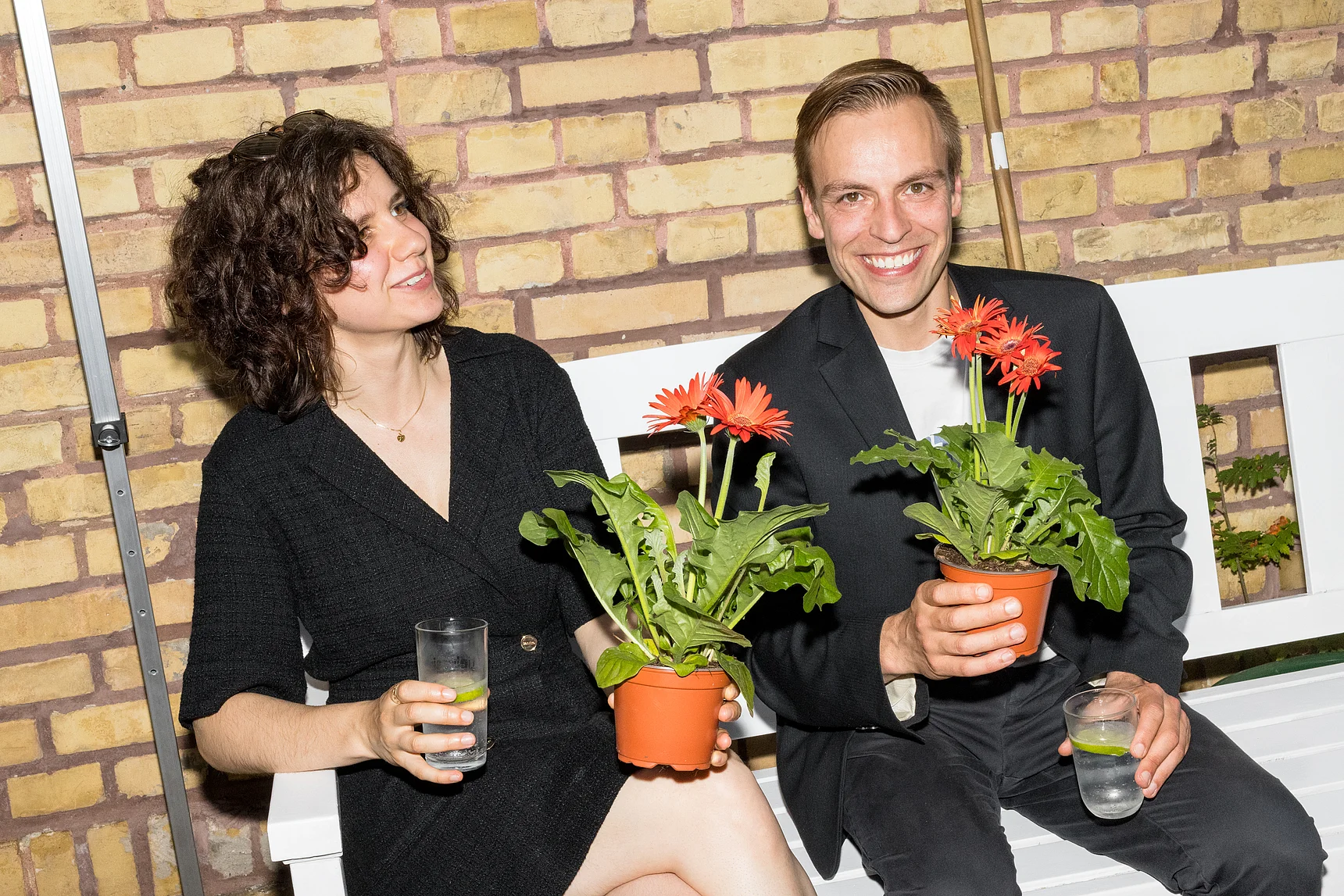
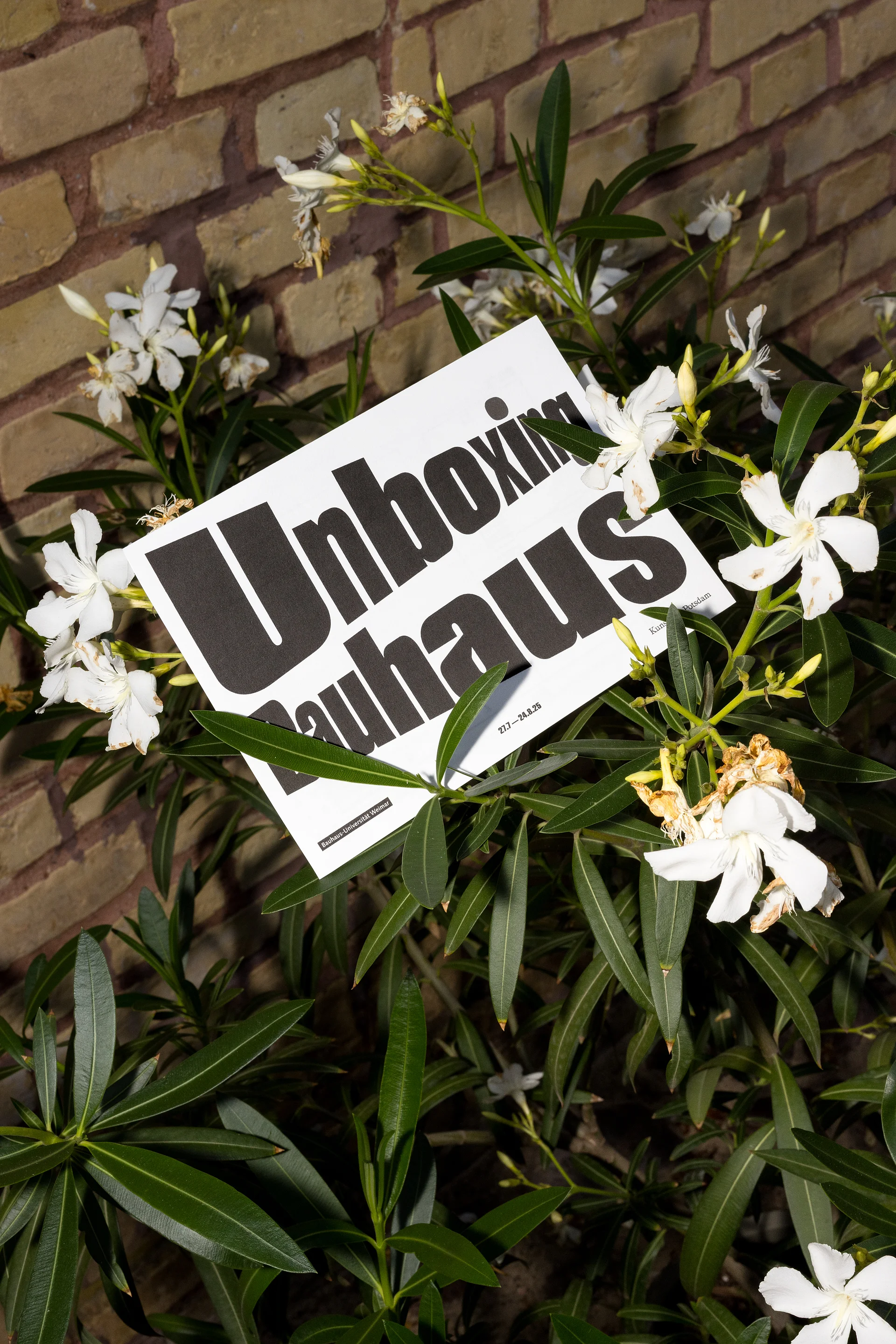
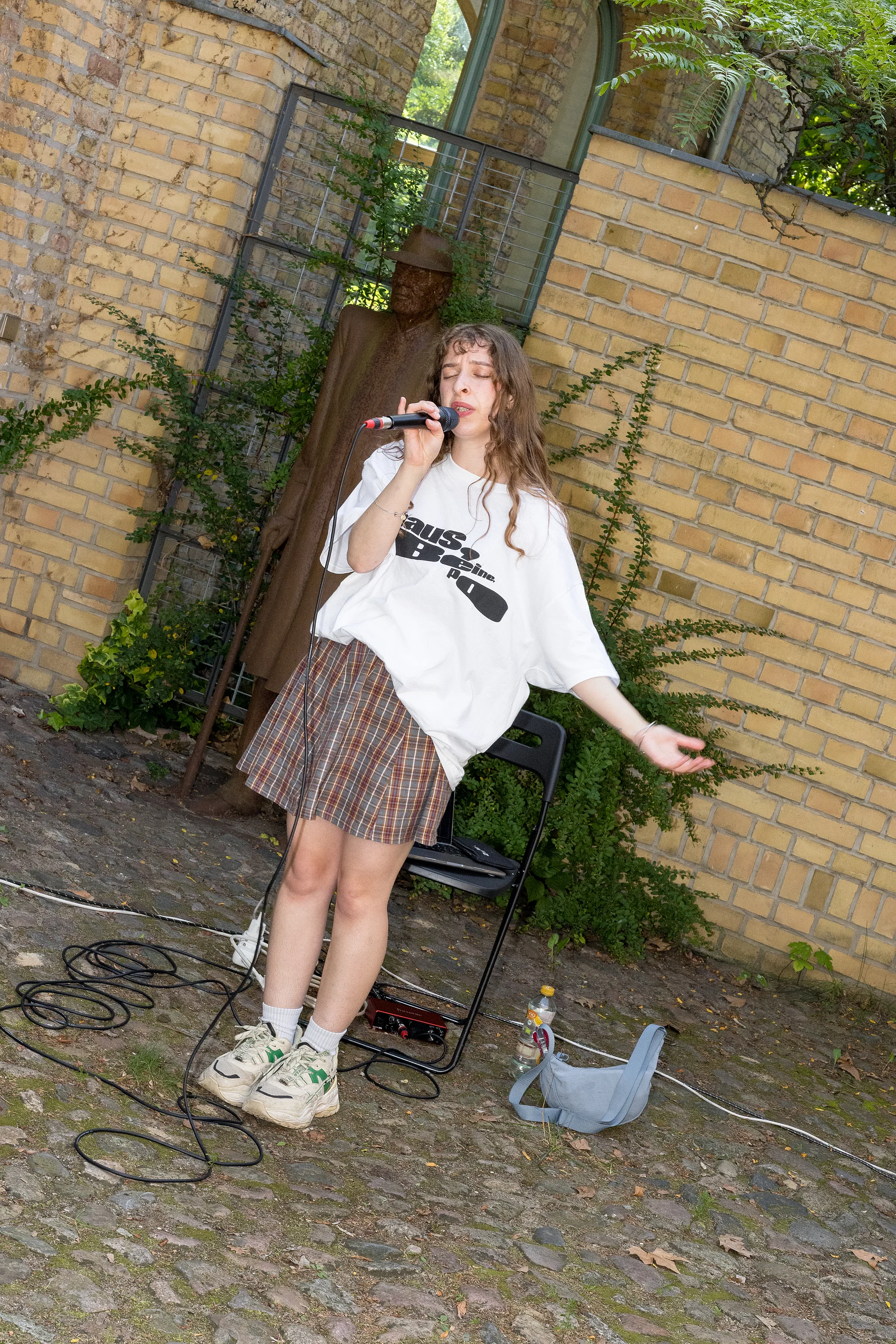

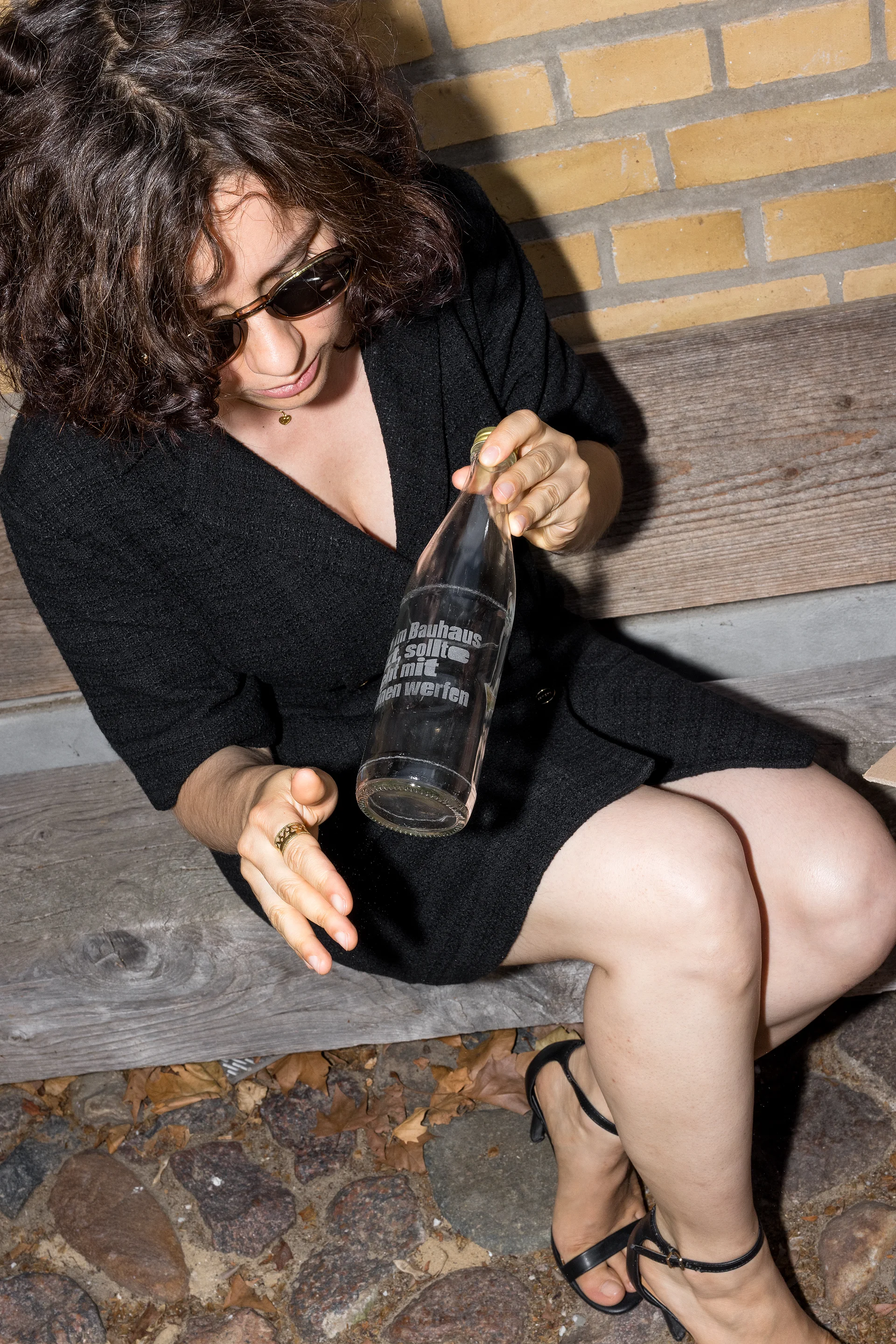
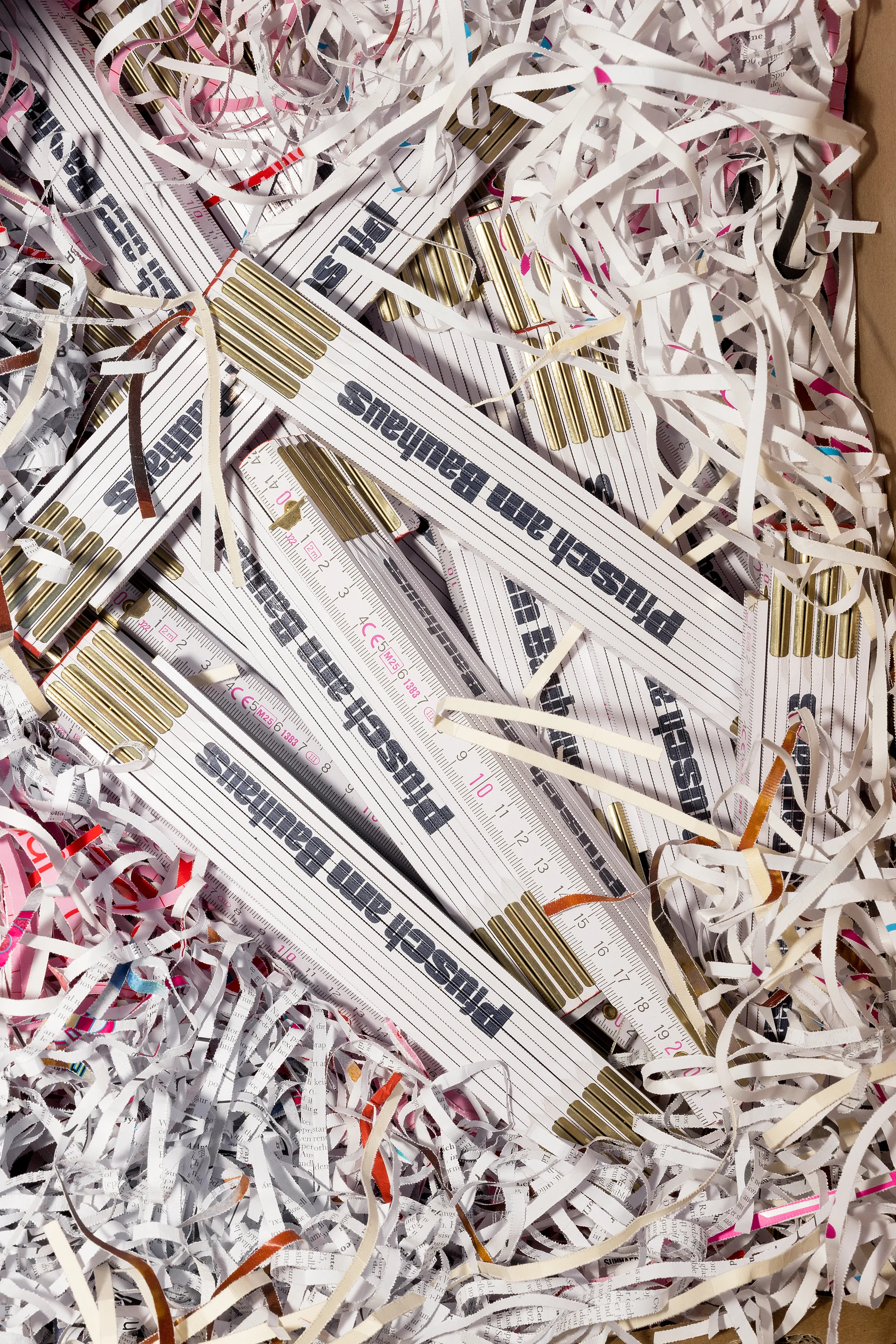

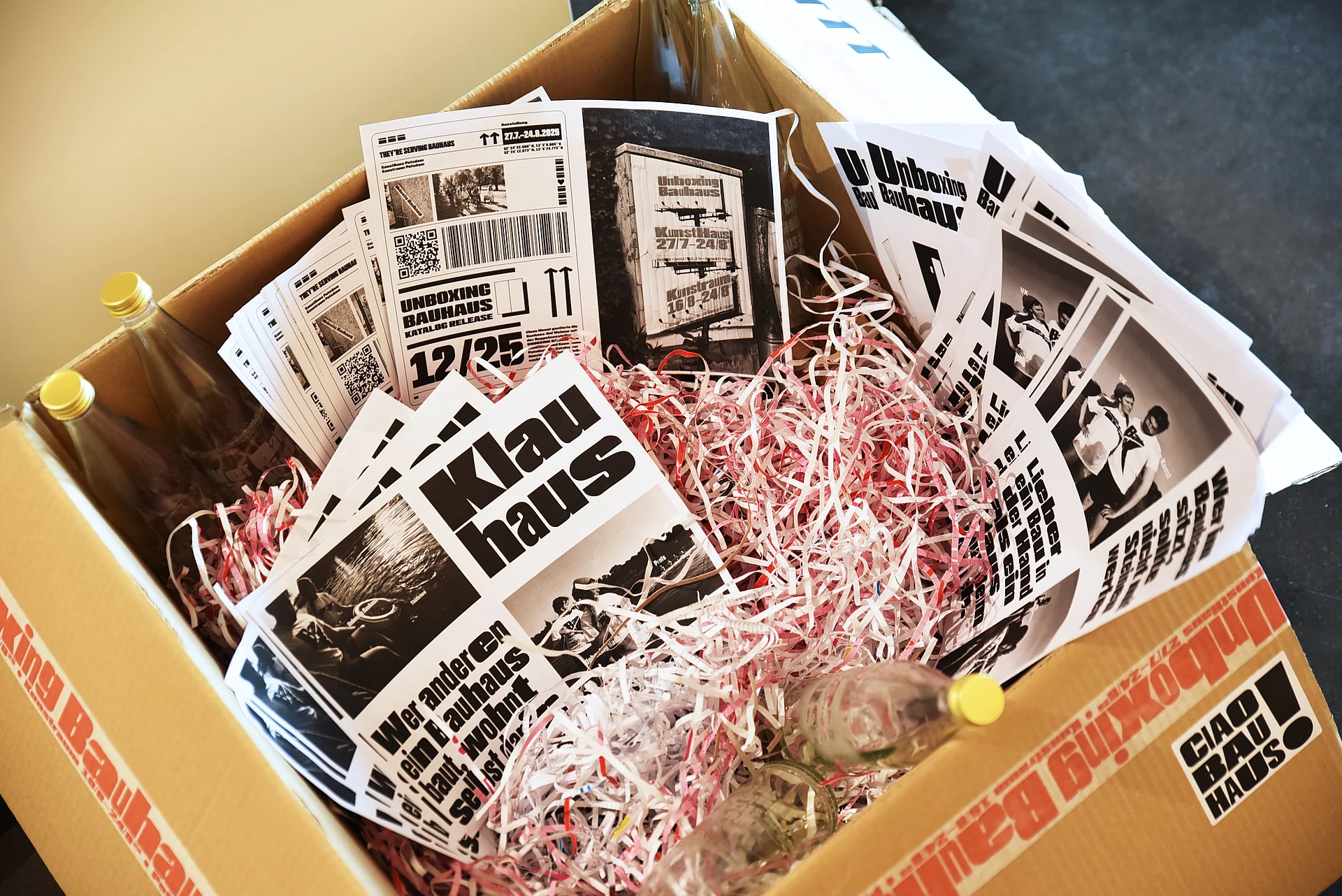
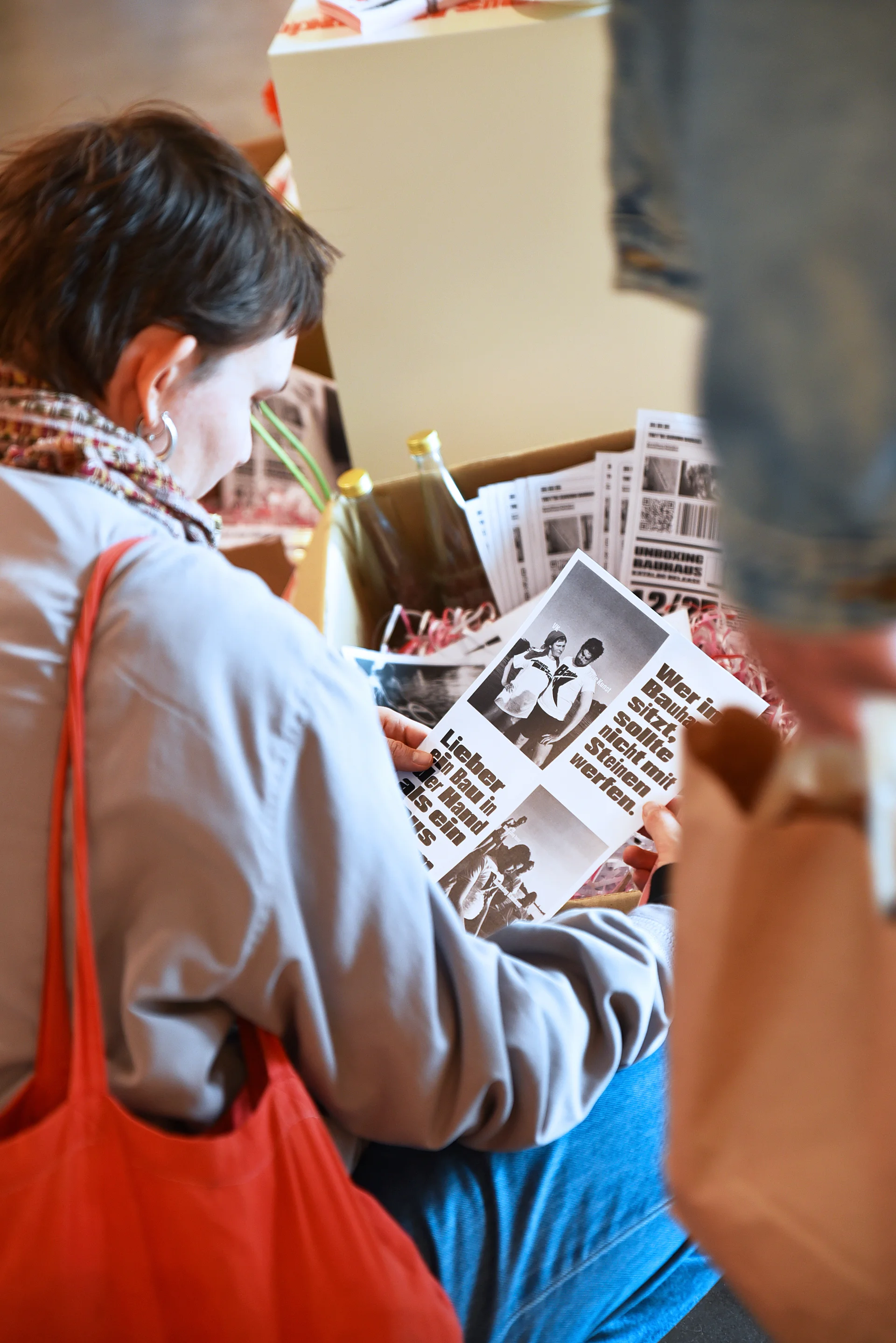
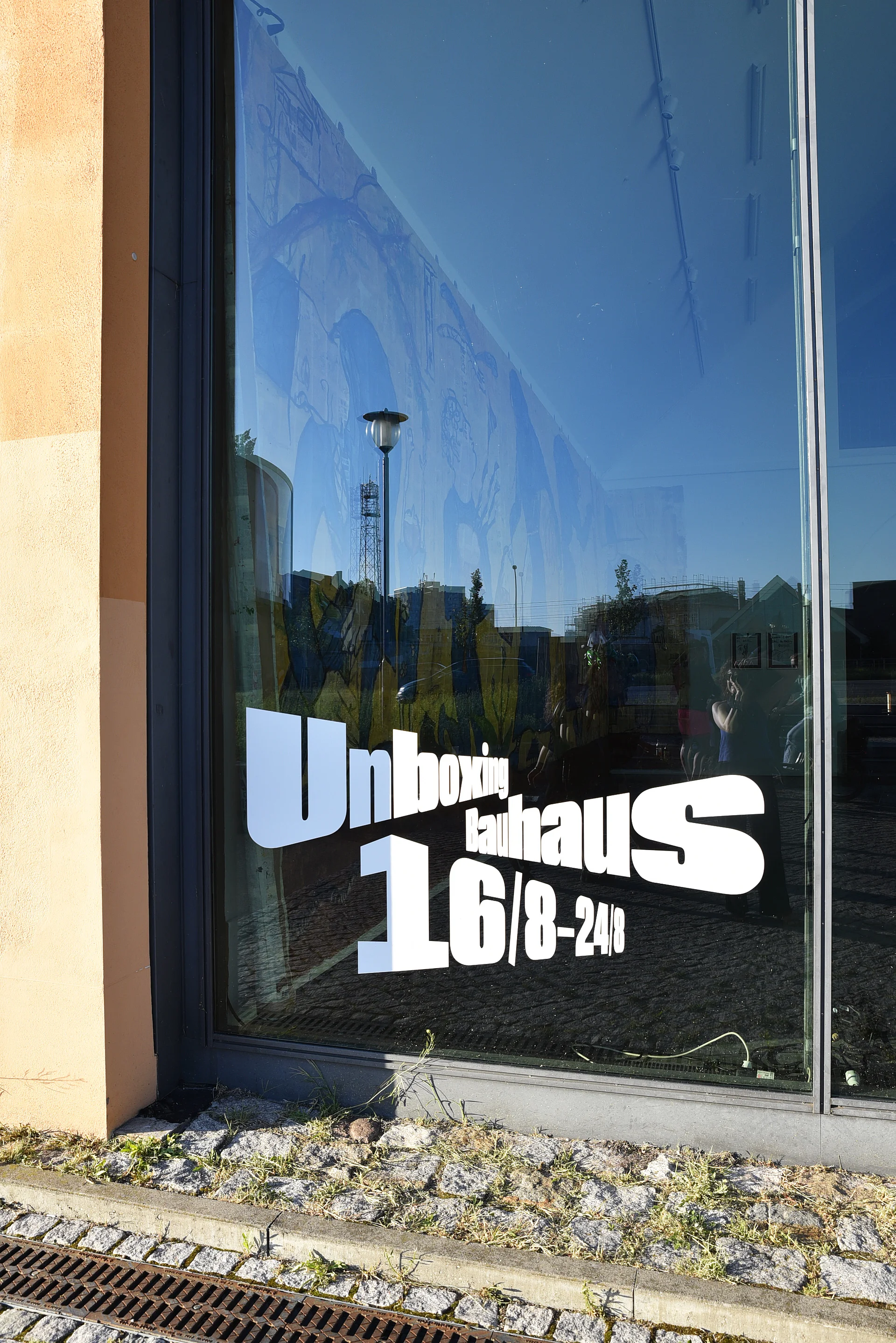
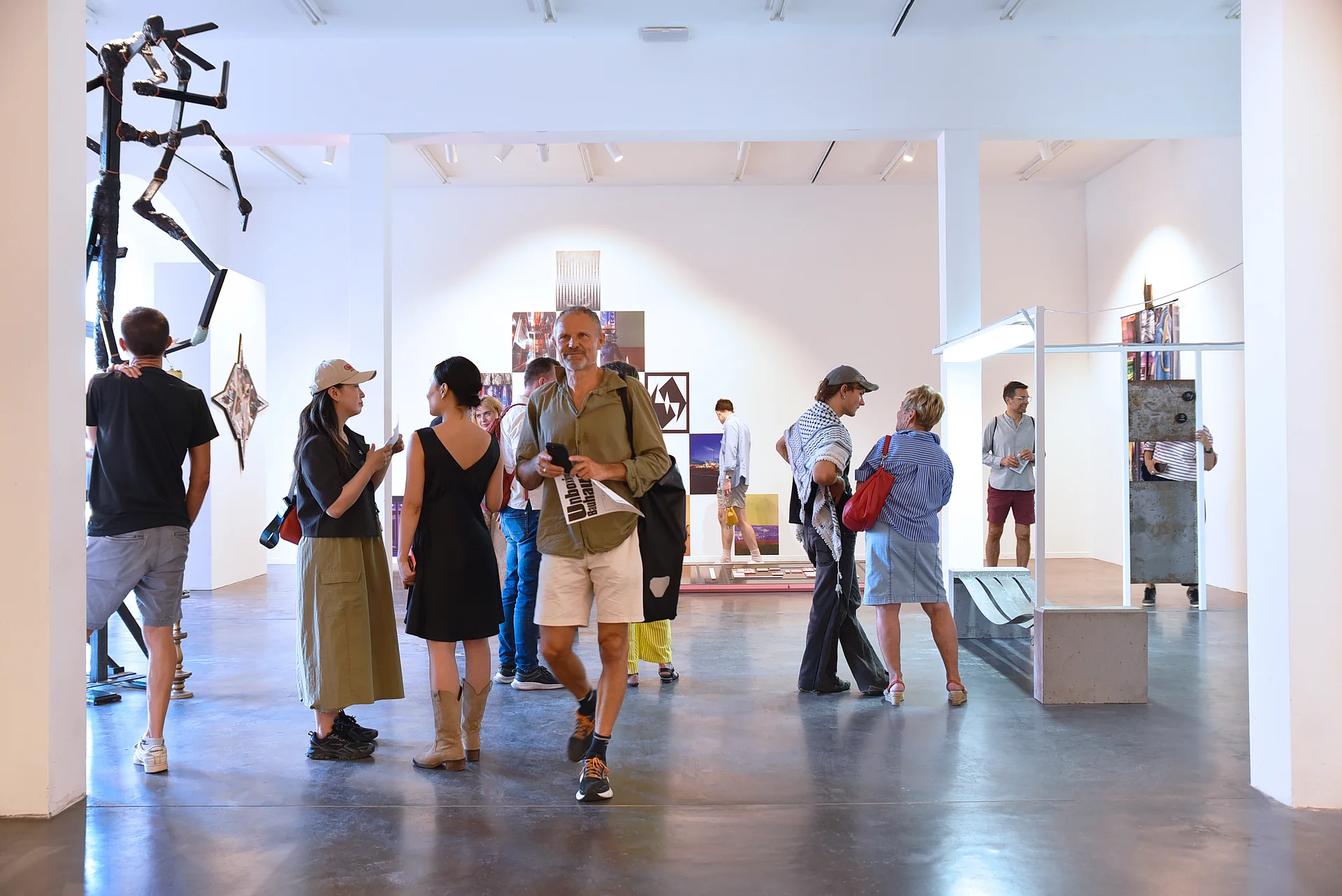
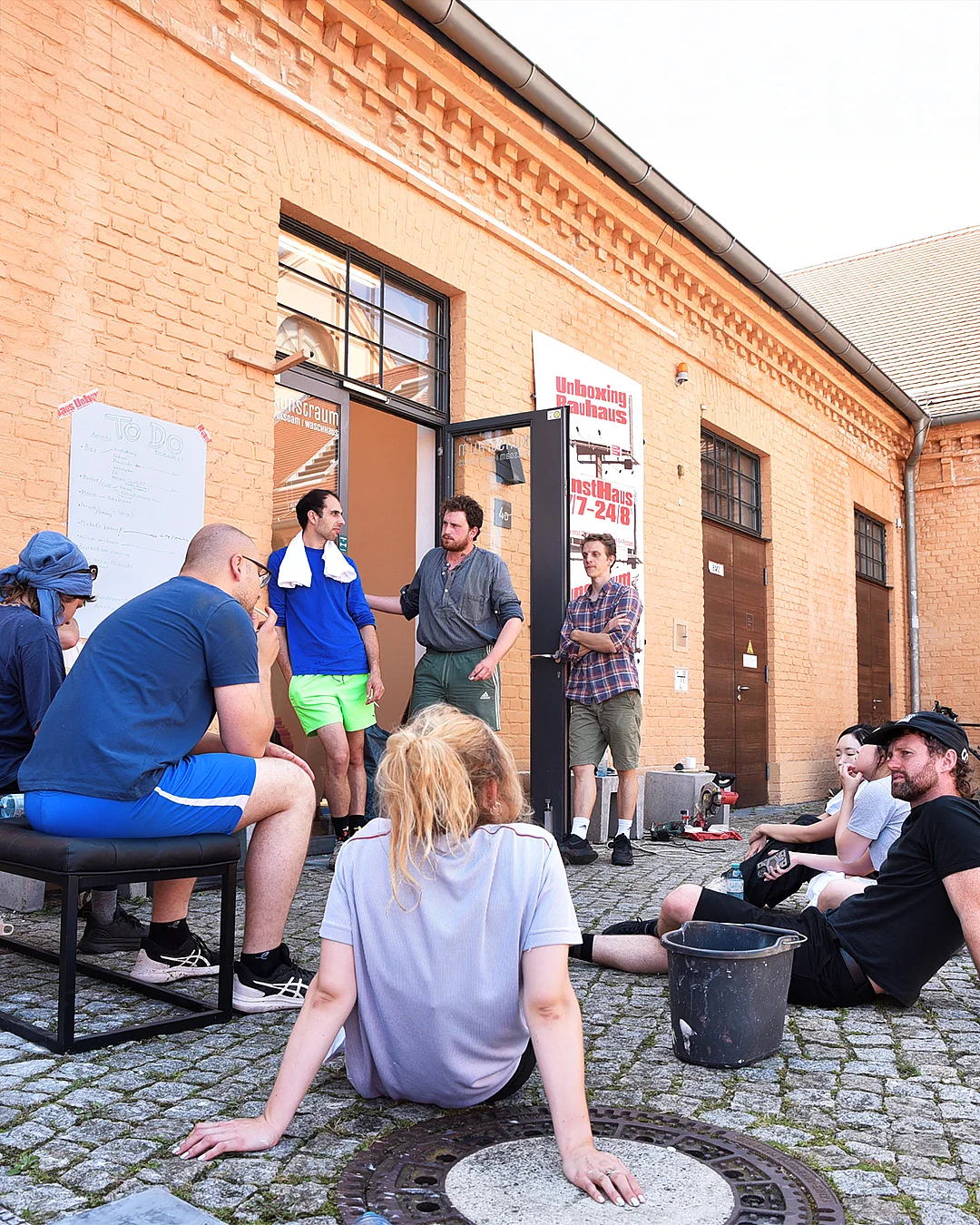
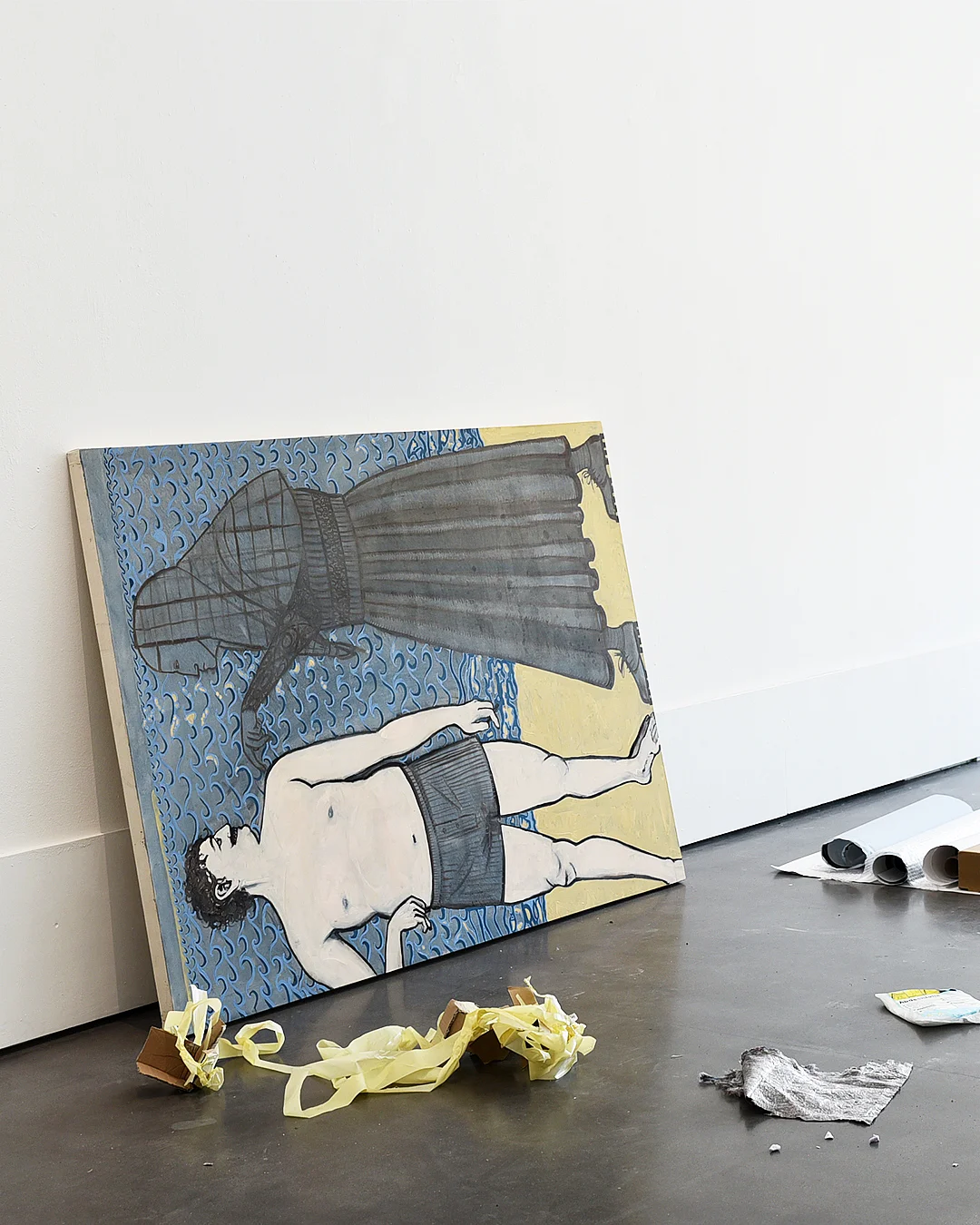
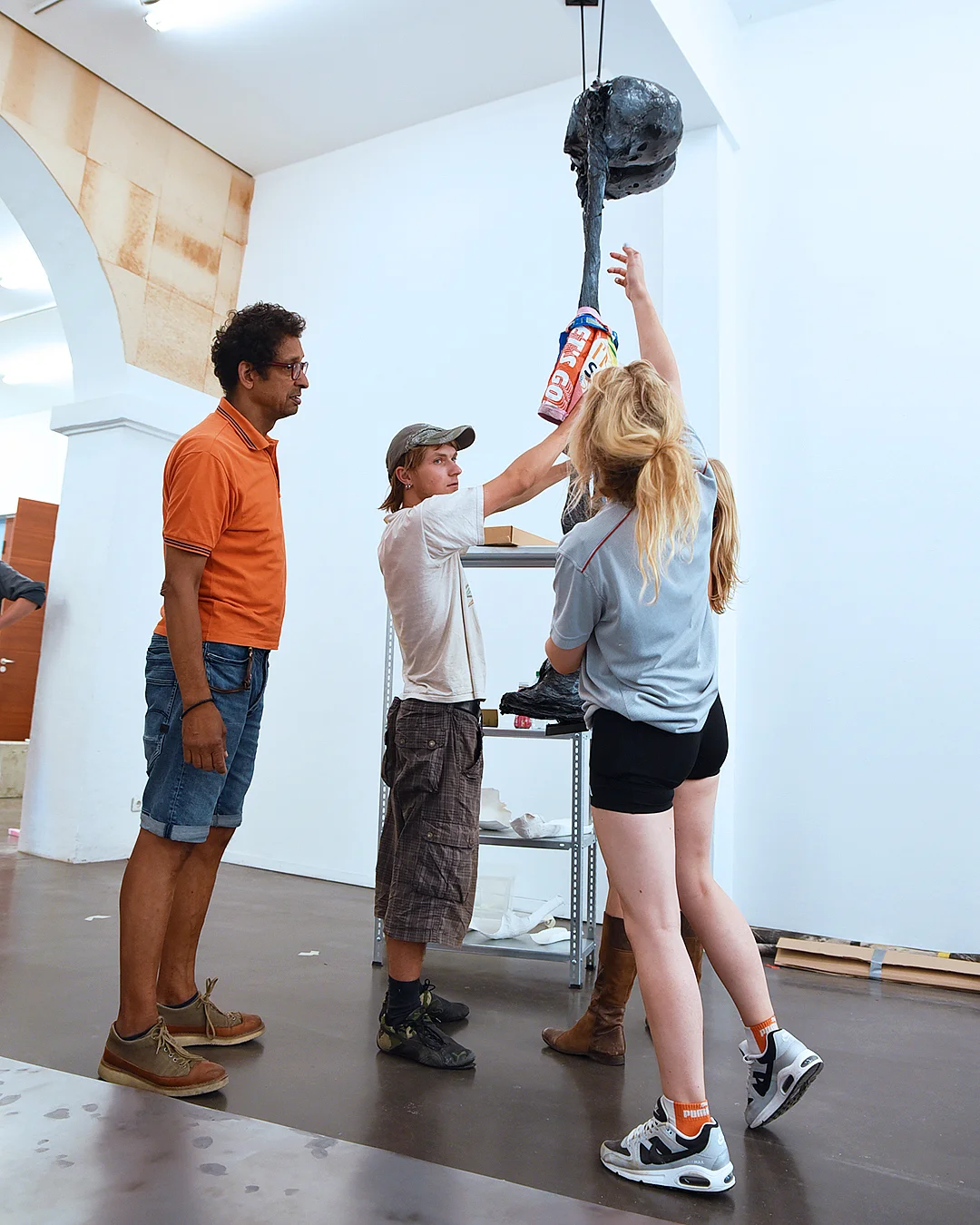
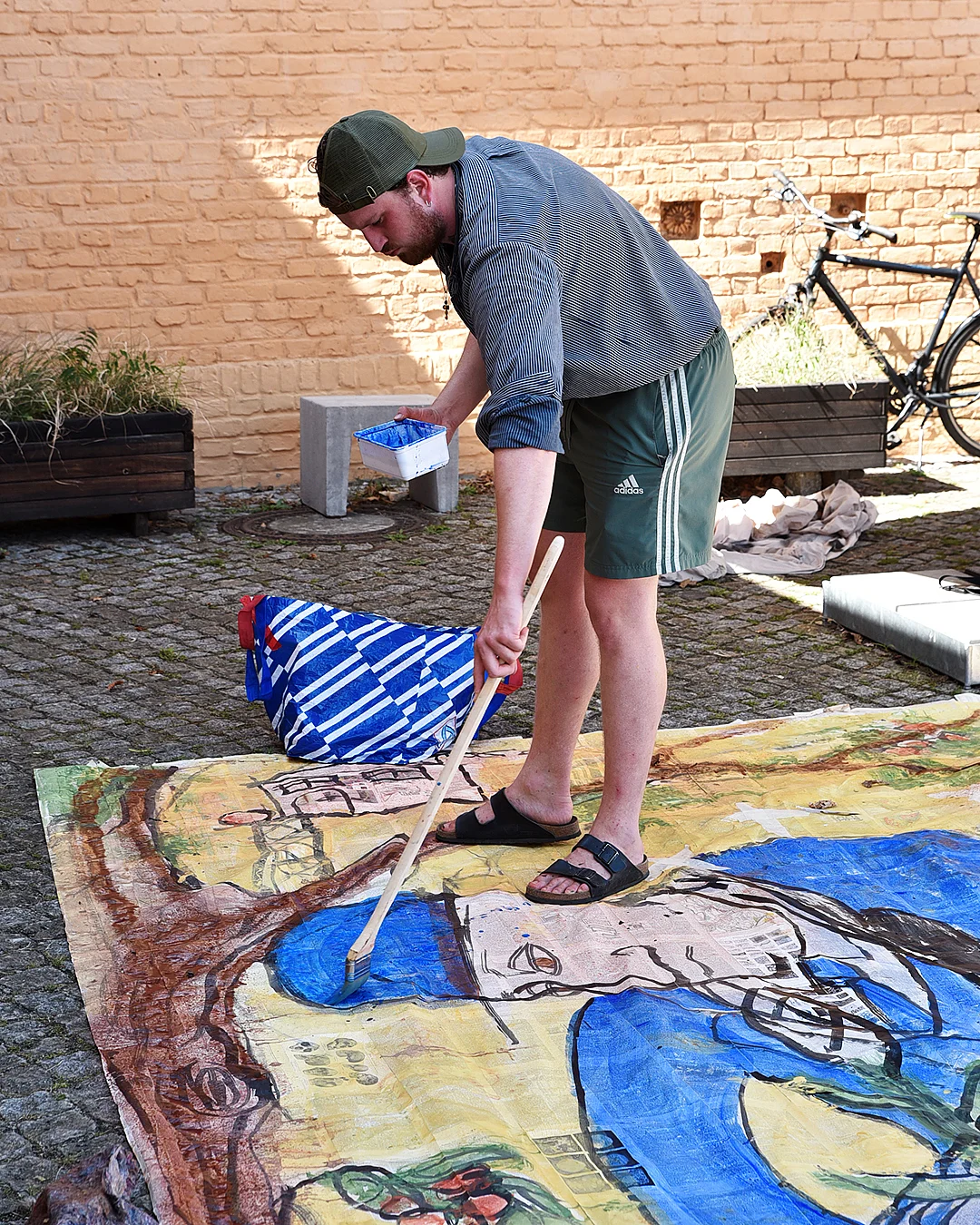
The actual work then began at the exhibition site in July. Adapting an exhibition to the conditions specific to a new space requires great tenacity and energy, even with a larger team. The process was intensive and demanding, but most certainly worthwhile. Particularly the second exhibition space, the Kunstraum, allowed for entirely different dimensions for artistic work than the spaces available at the Bauhaus-Universität Weimar. During a ten-day residency, works with a powerful impact inspired by the space were created directly at the site.
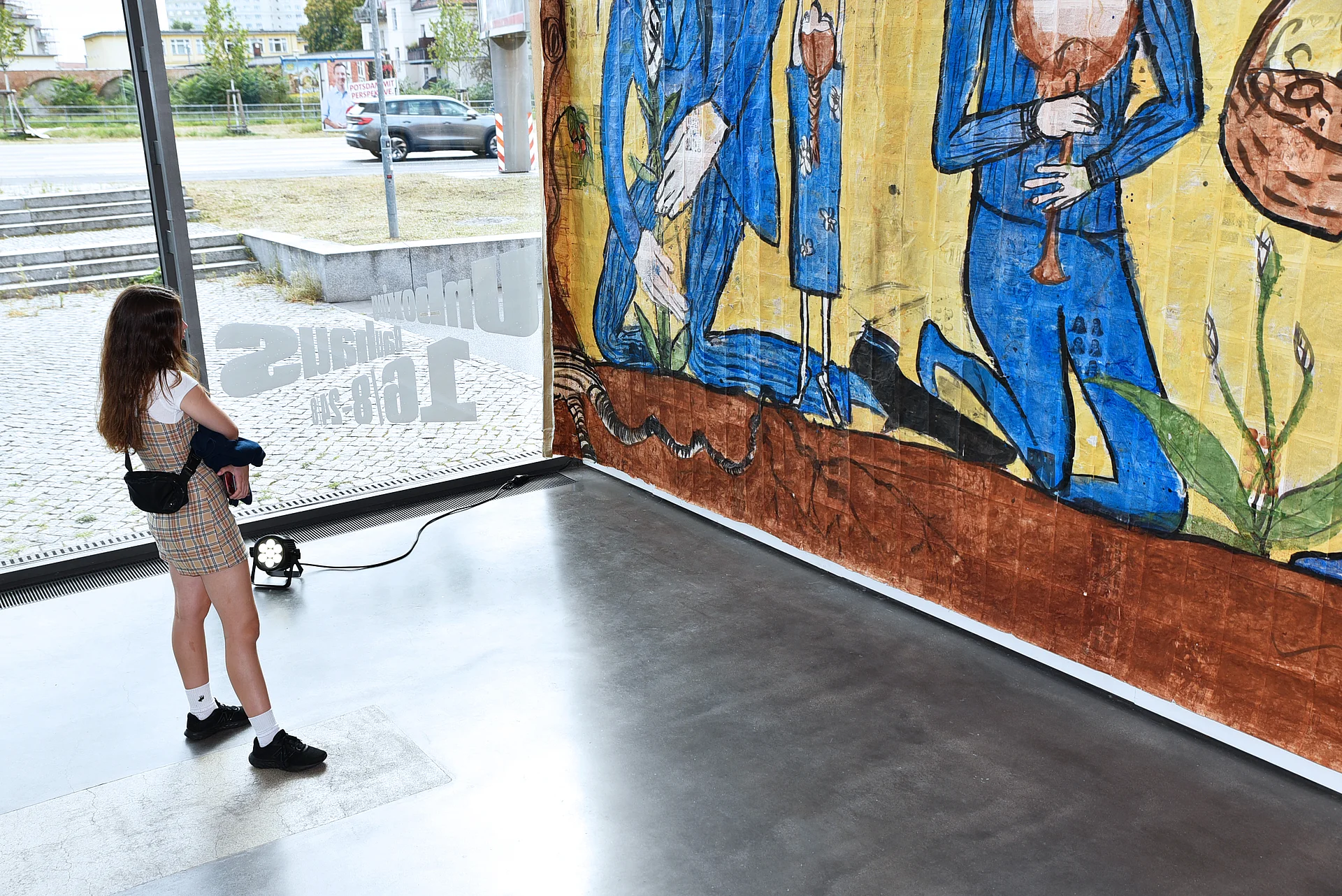
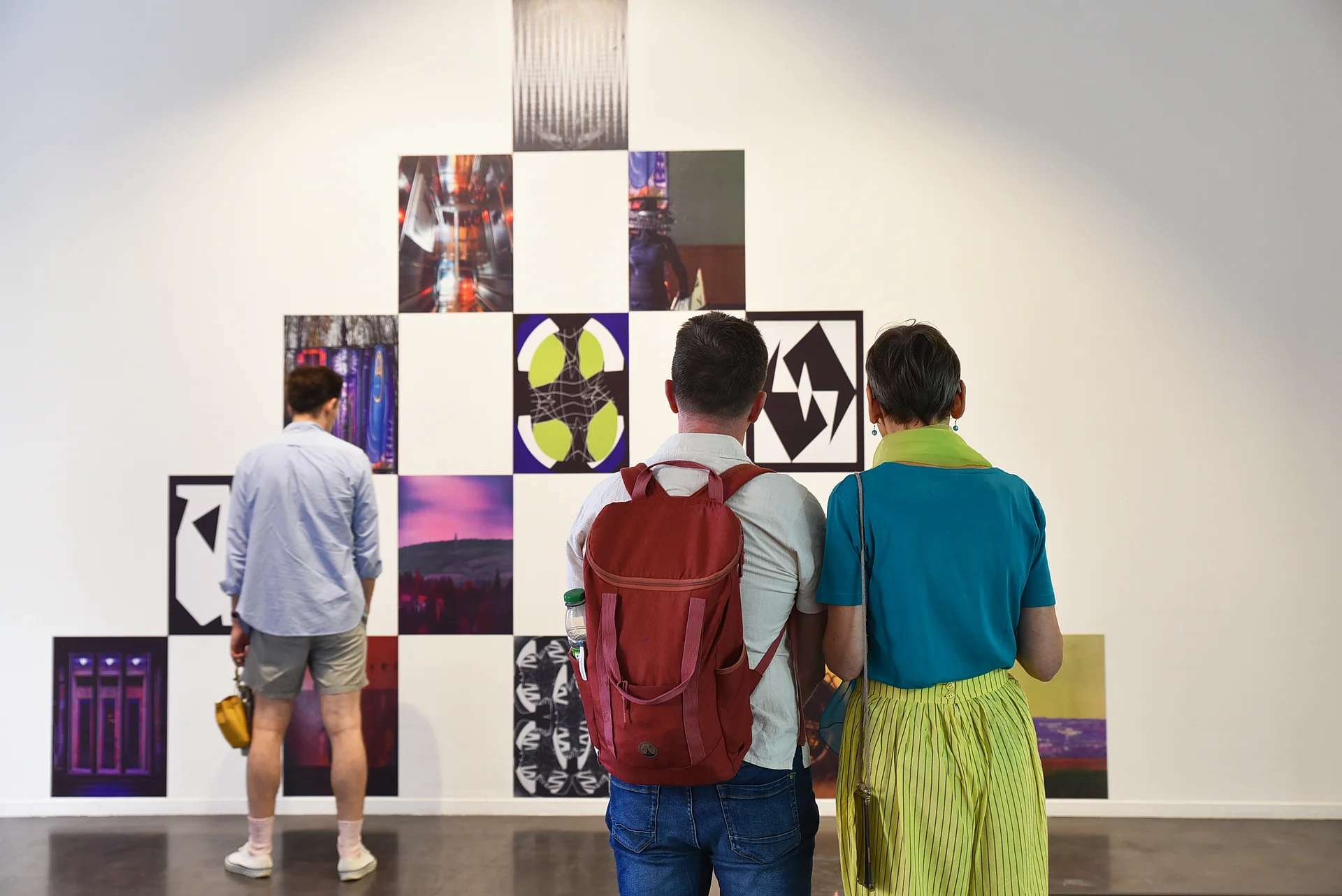
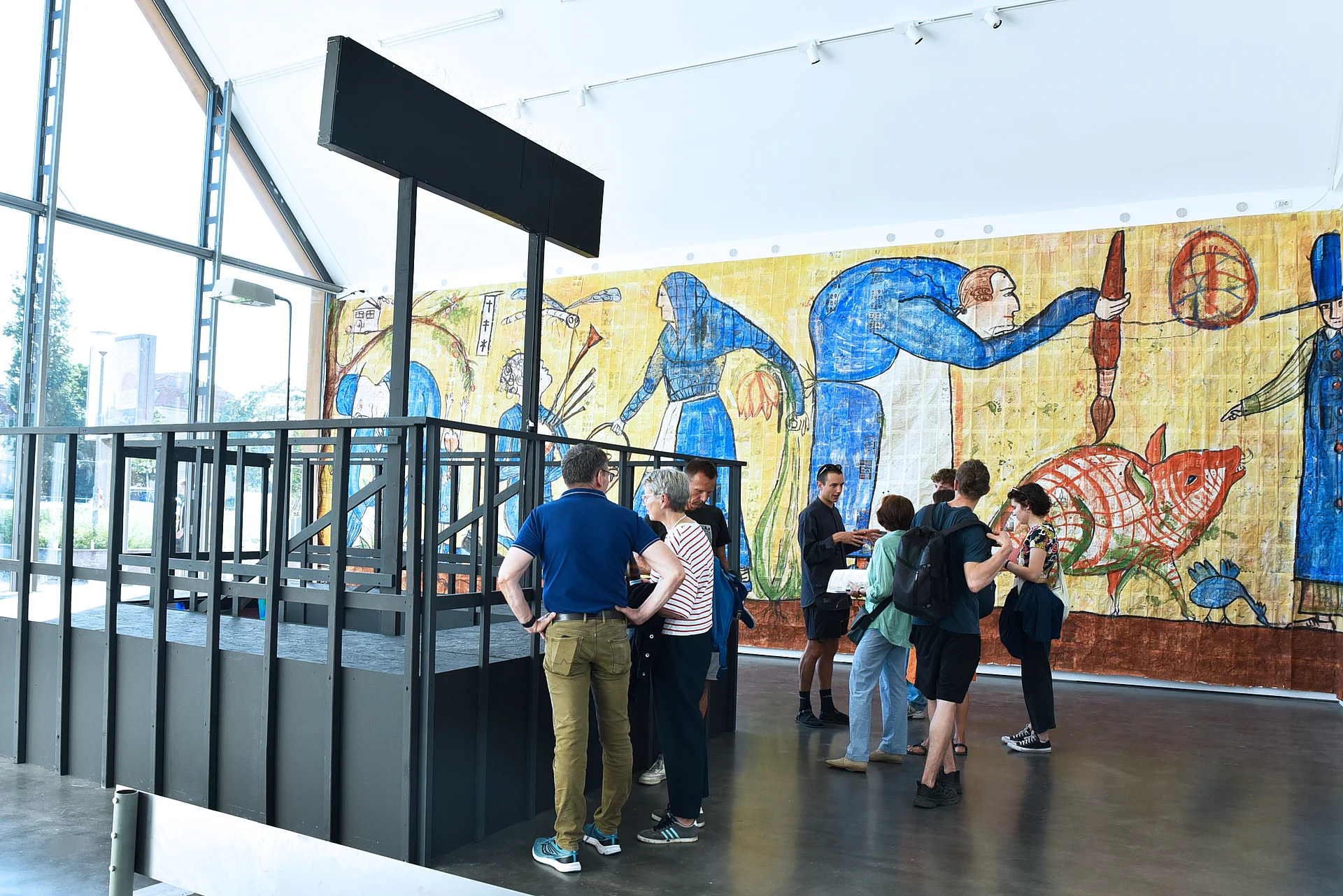
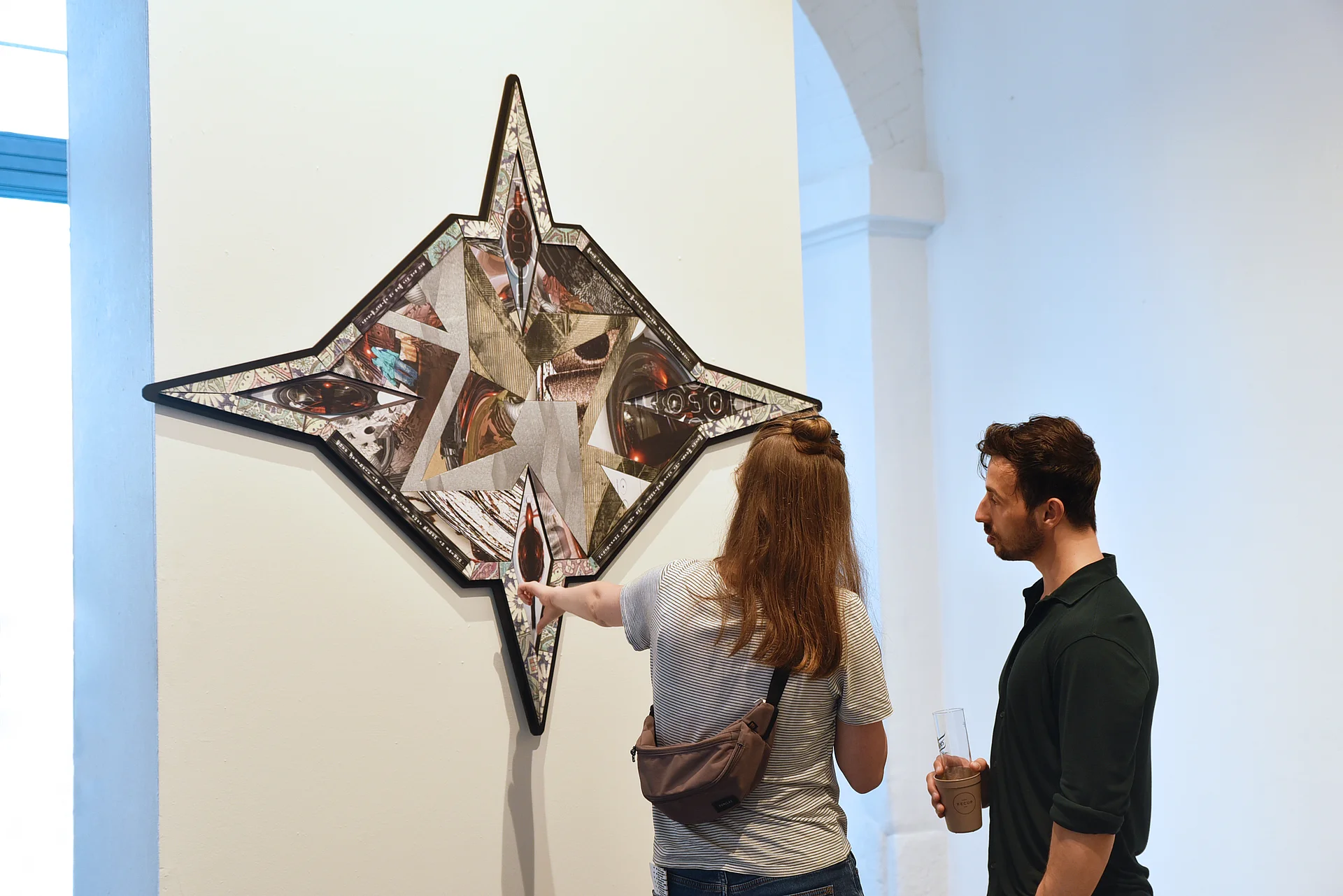
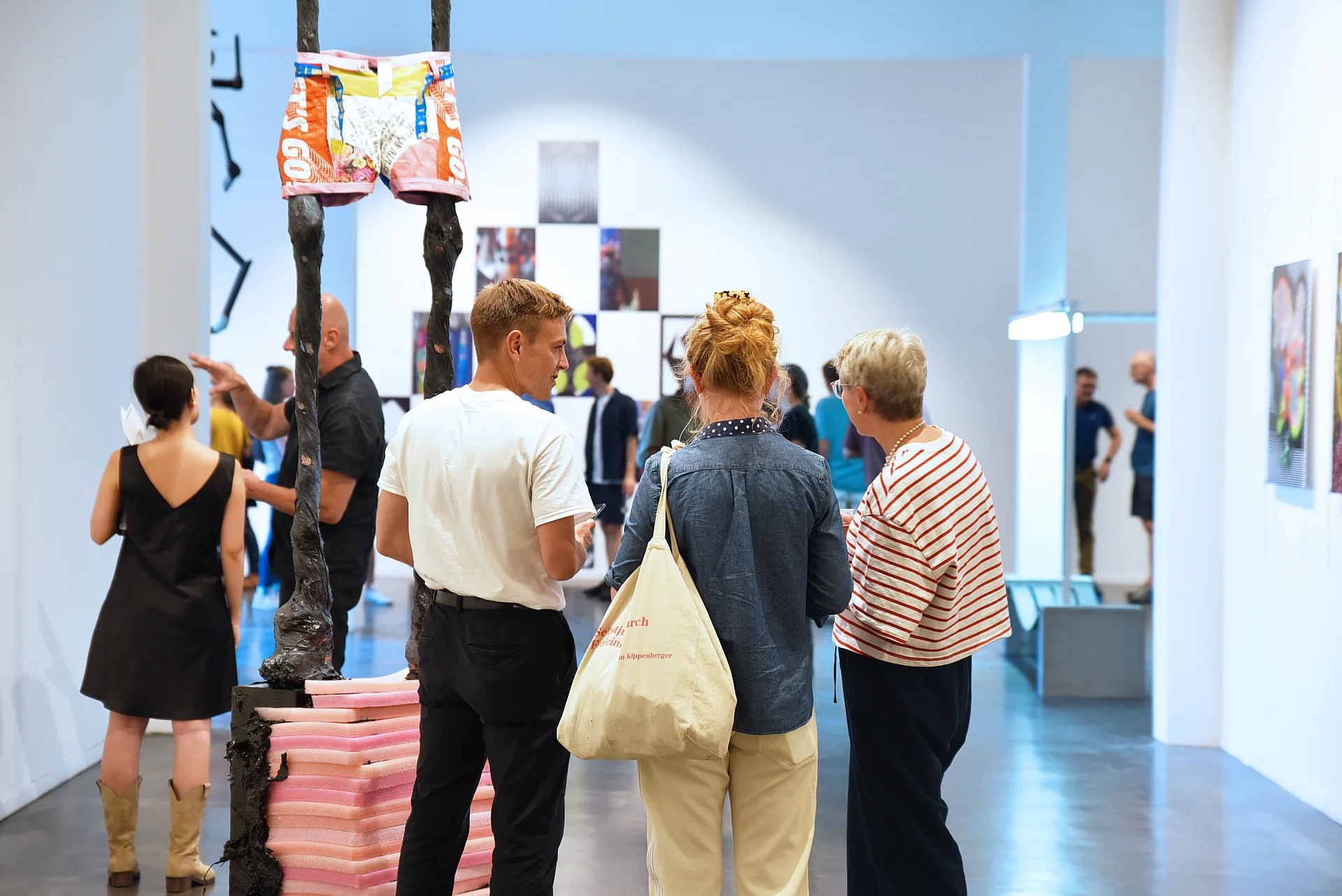
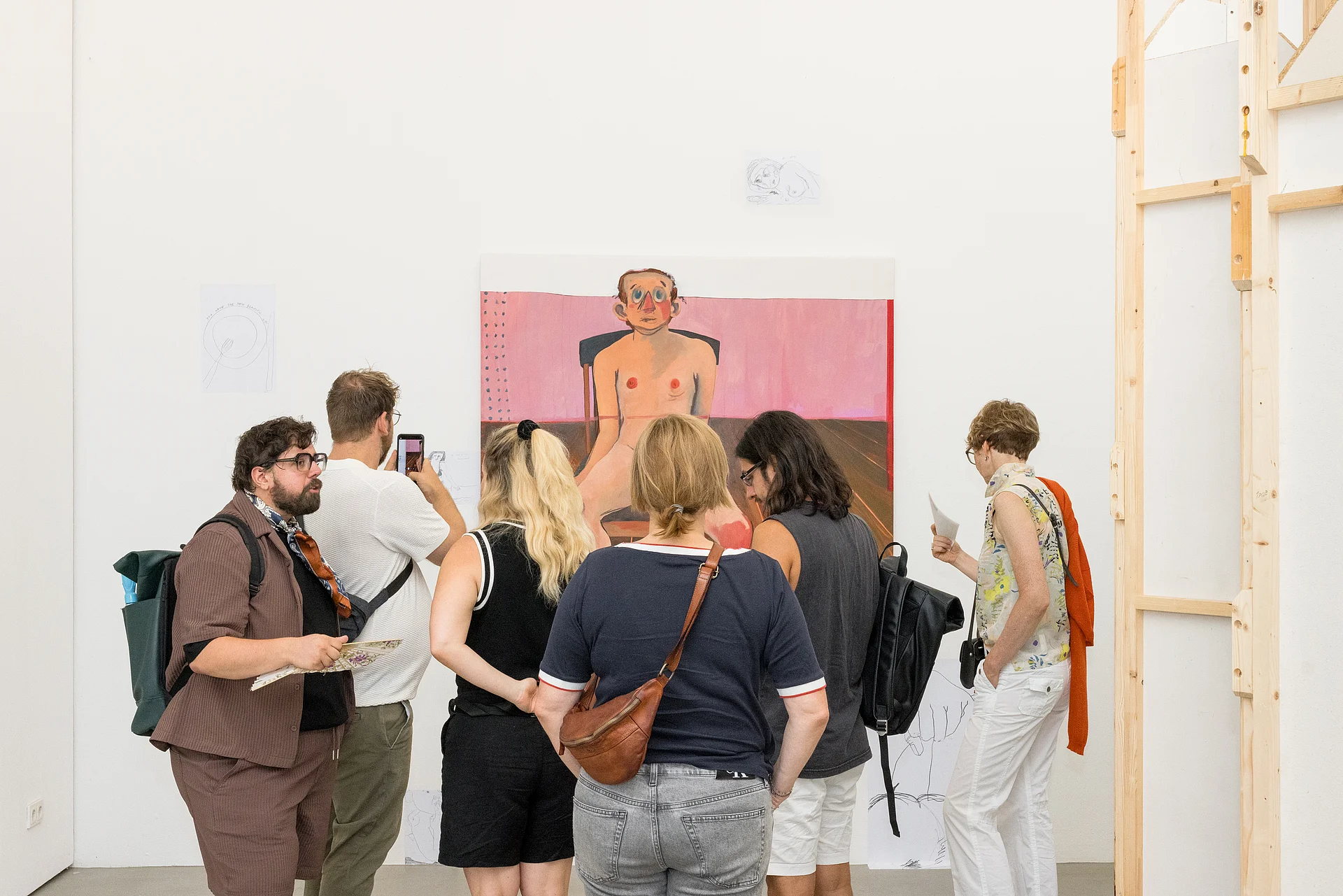
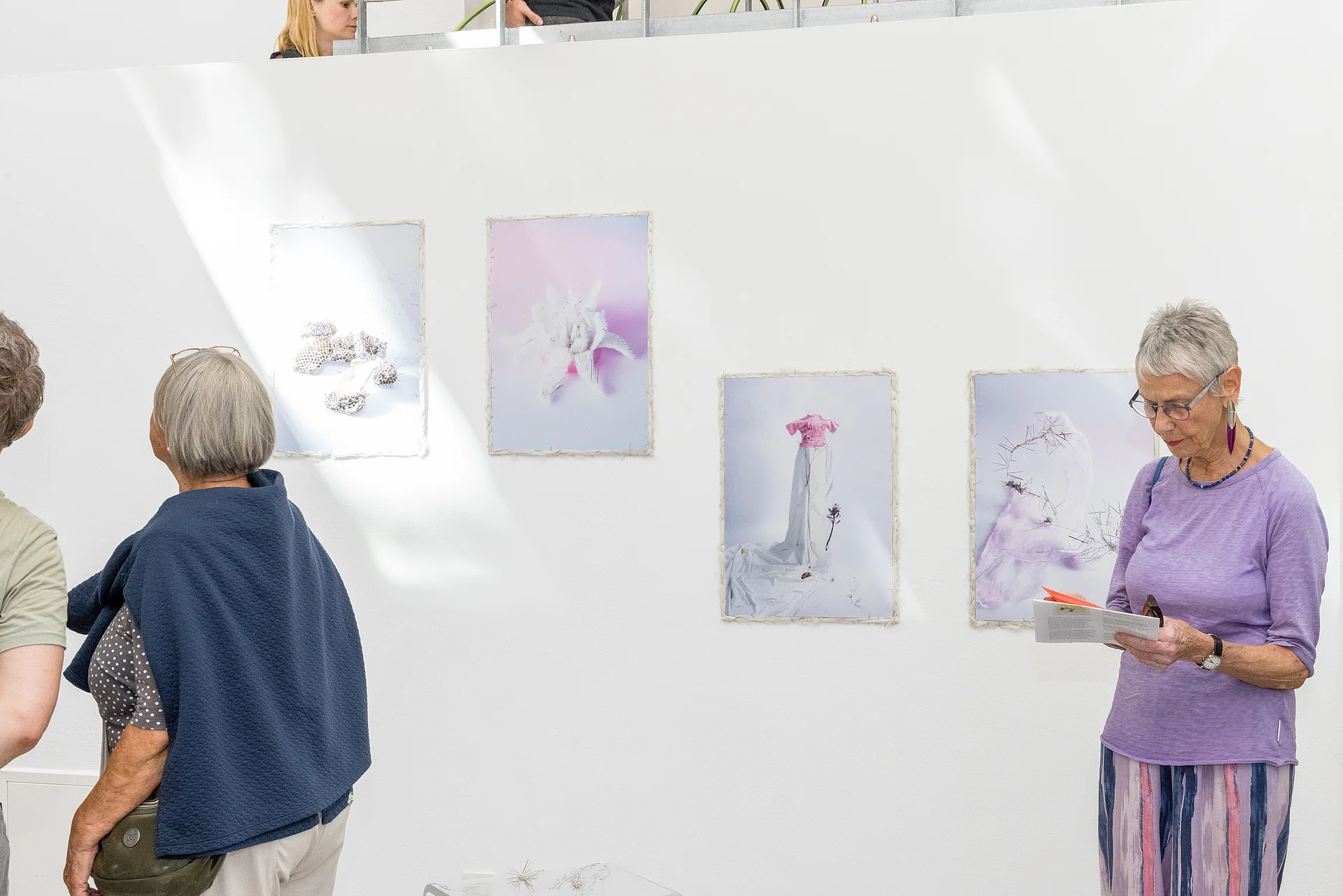
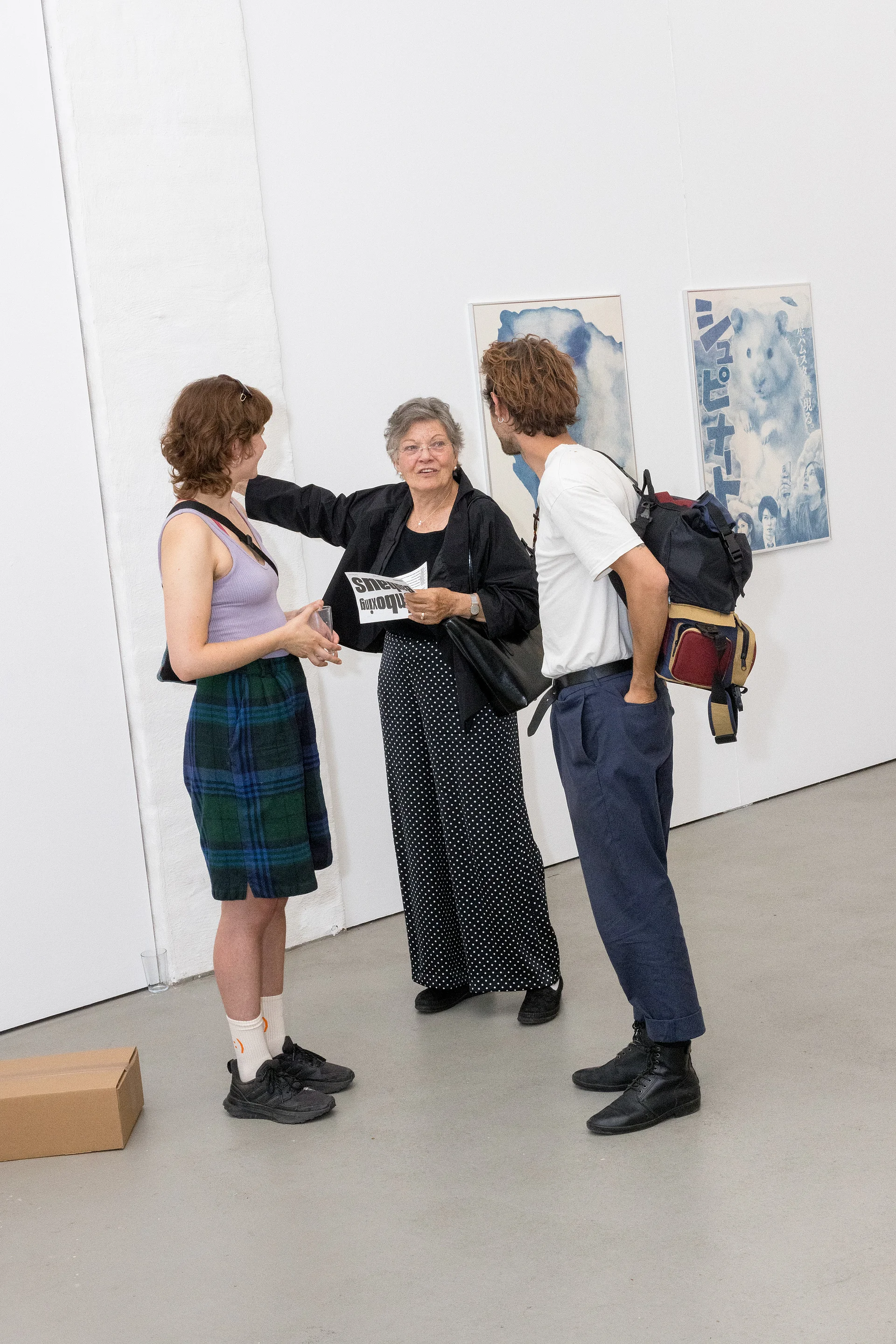
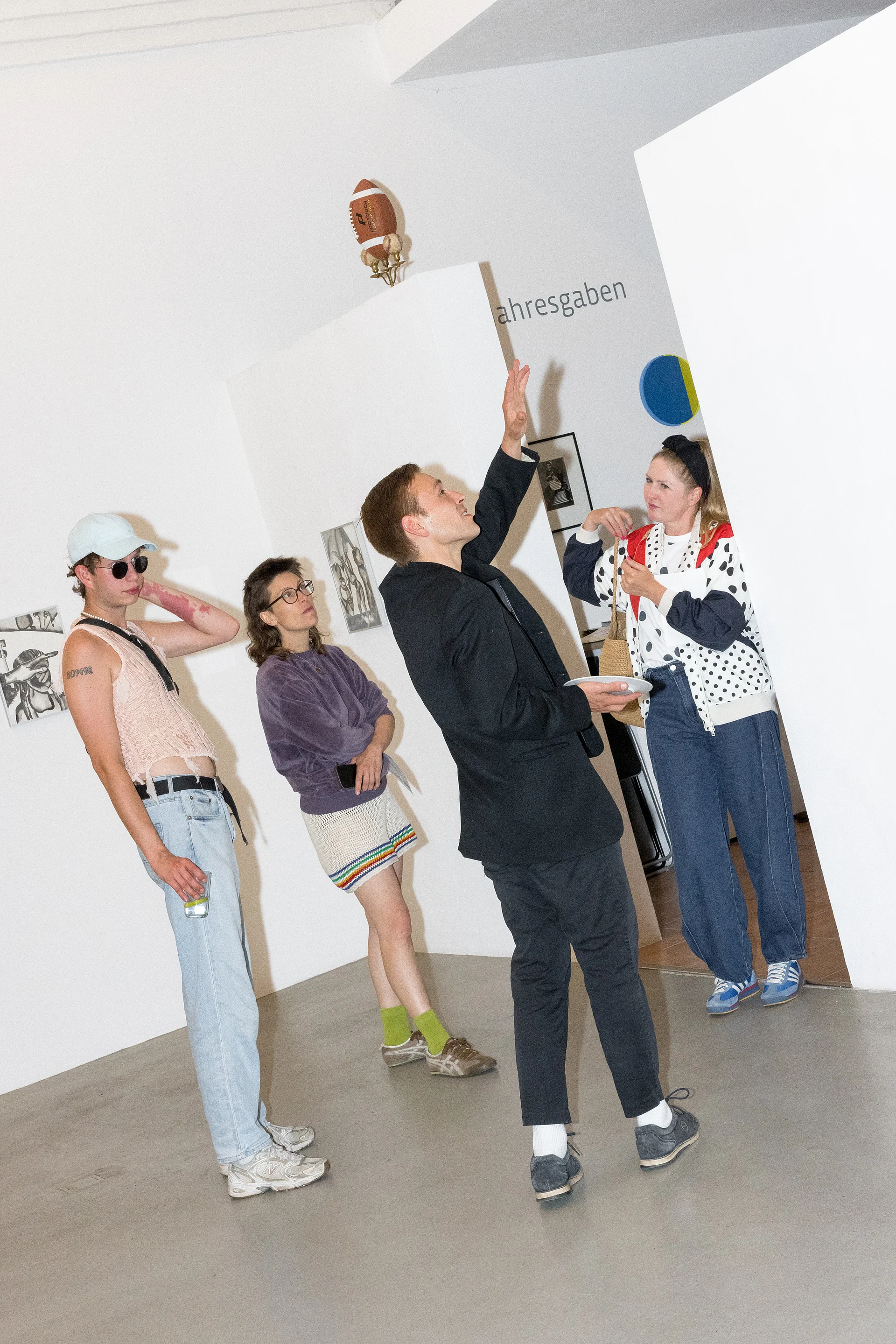
Fridtjof Knospe created the painting »Potsdamer Dampfhammer«, for instance, which filled an entire wall in the exhibition space. He assembled the 12 metre by 4.5 metre sheet of paper he needed for this from thousands of book pages on which he then used paint he had made himself. In his work »visual merchandising«, Hauke Scholz used woodchip wallpaper as a material to create vivid textures in several places in the art space. It was also a good experience in incorporating in existing works: Eunsae Lee showed »Nature_404«, for example. Her work had already been displayed during the Winterwerkschau 2025 in Weimar, however she was able to develop a new presentation format in the Kunstraum. The reinstalled book fair stand from Leipzig – a fictitious underground station with a direct connection from Potsdam to Weimar – also proved to be a great centre for the exhibition and was a popular place for visitors to take a break and gather.
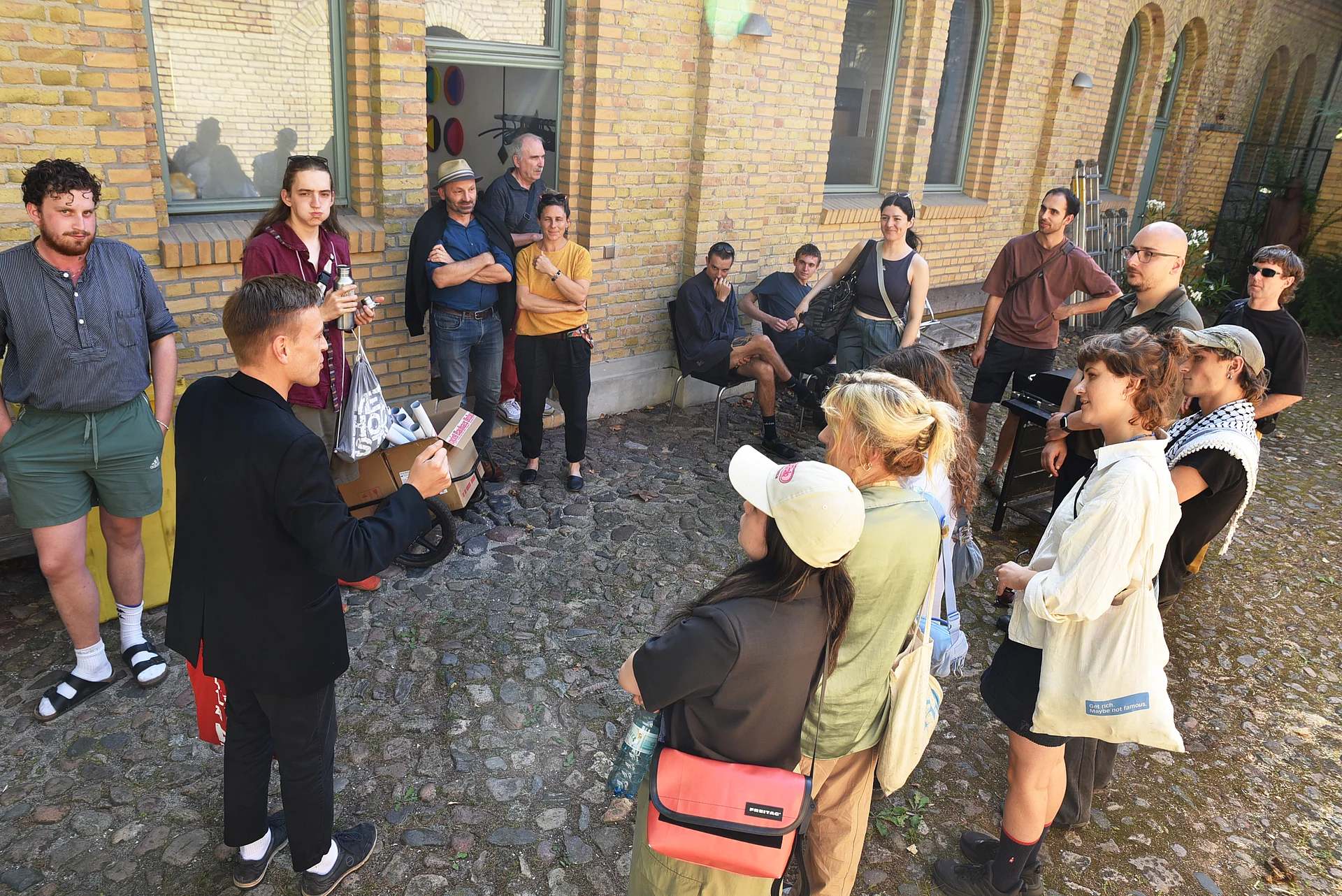
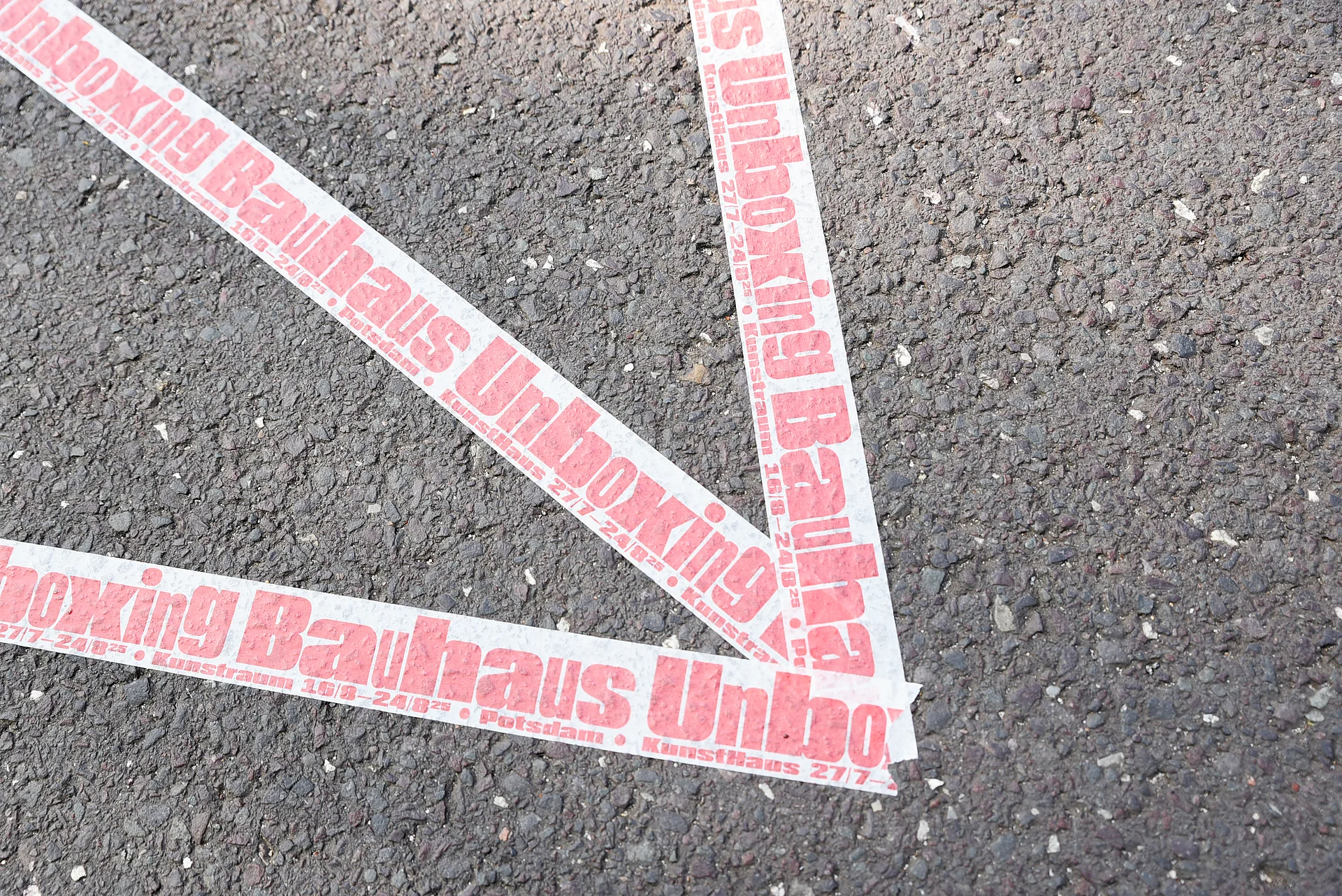
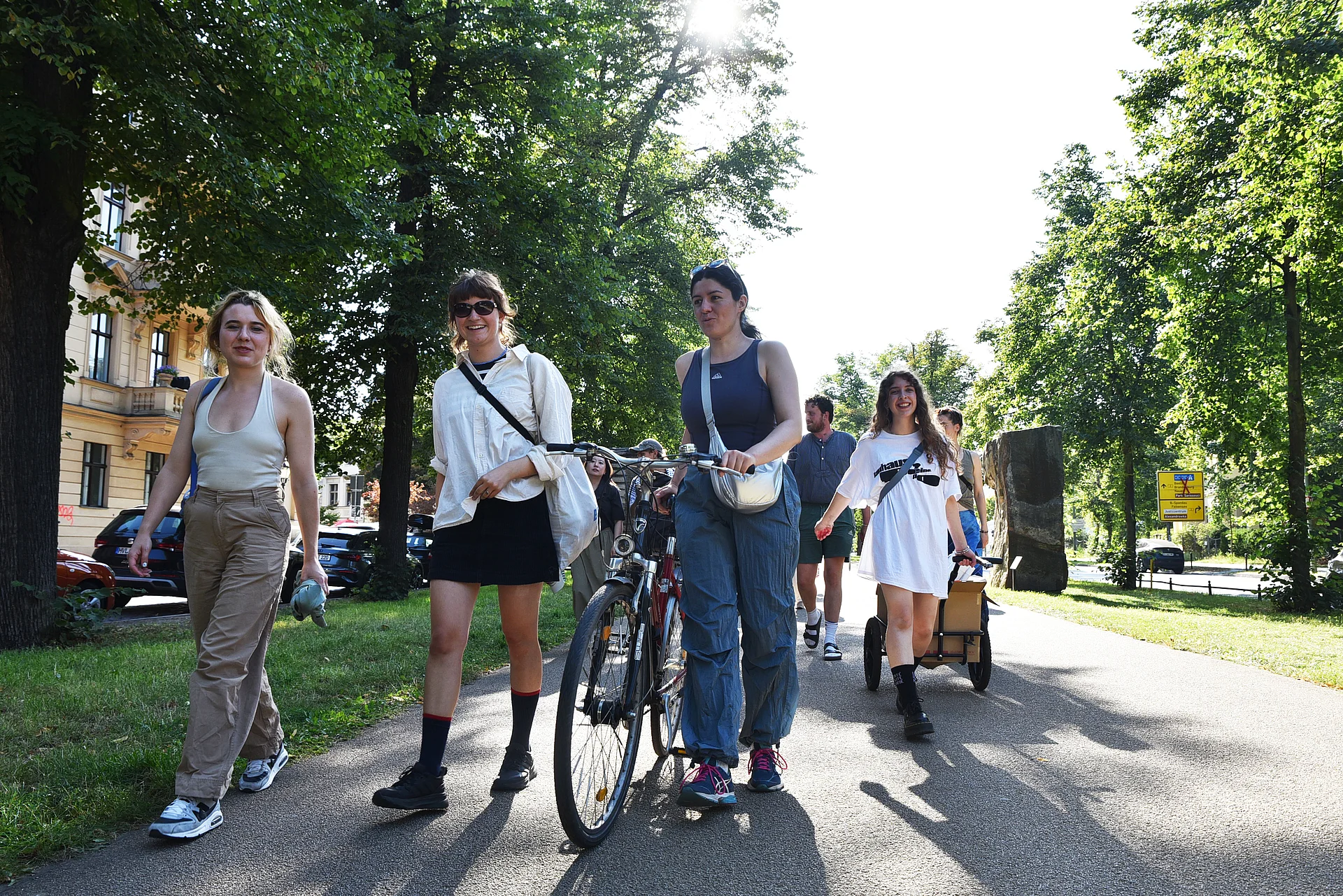
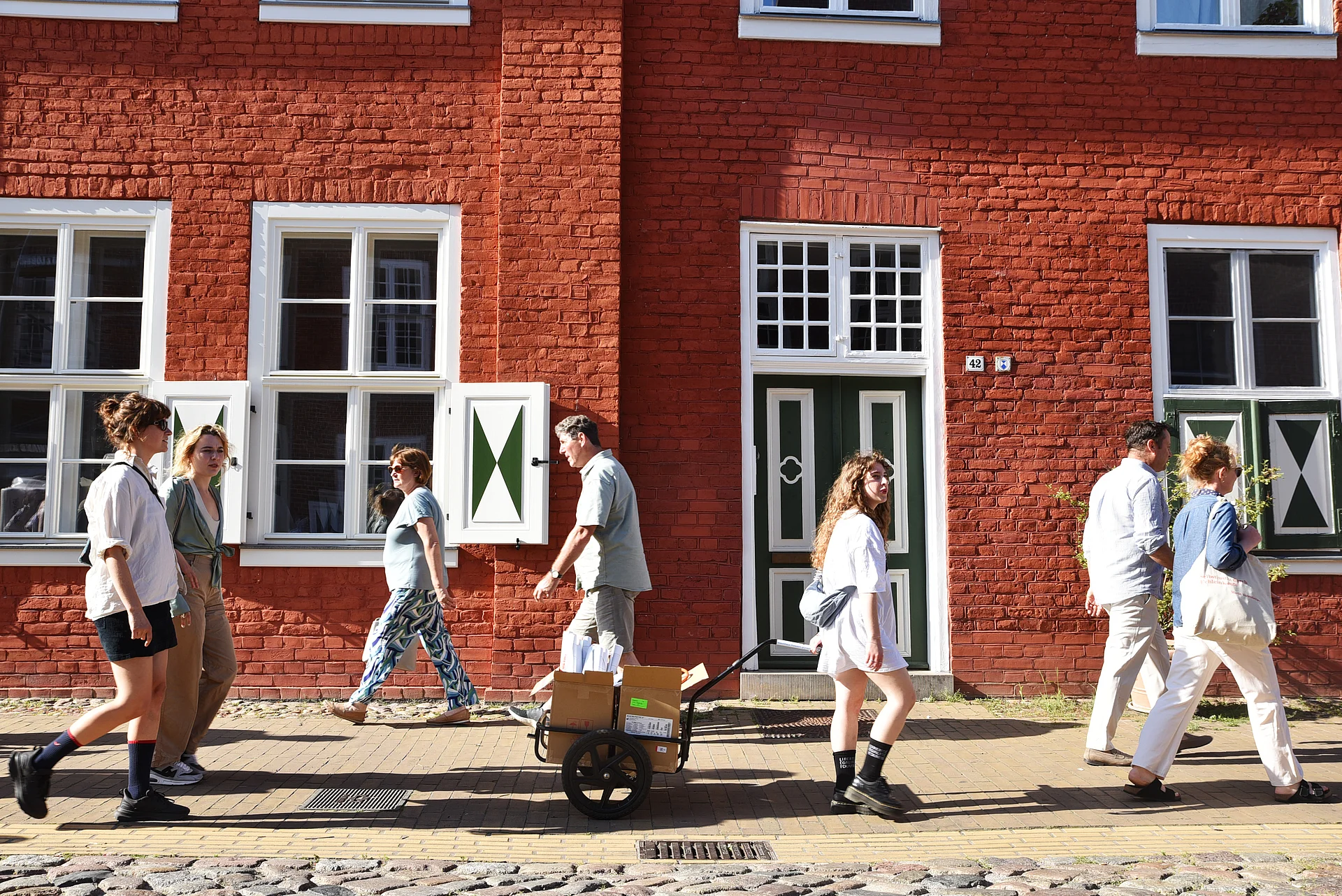
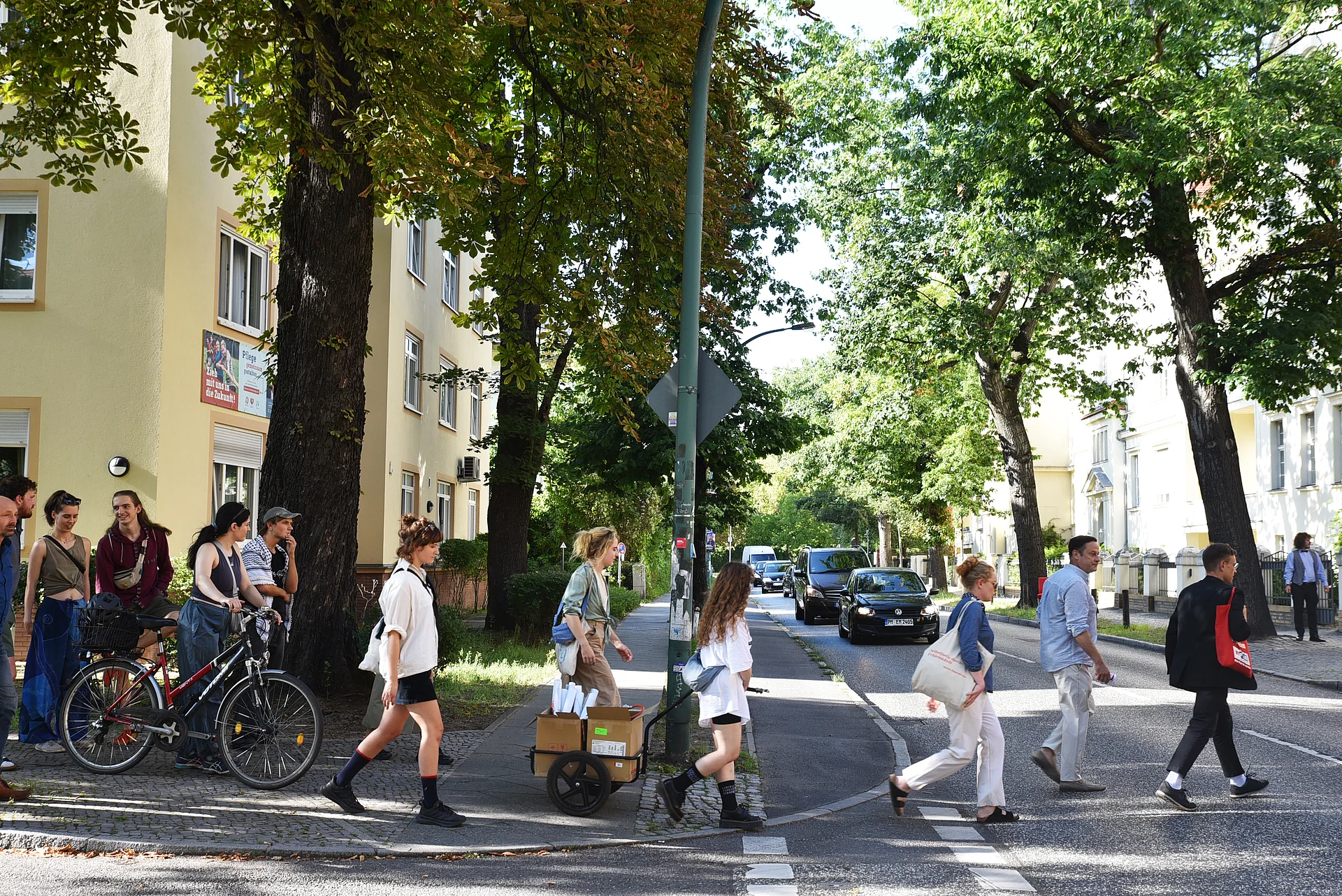

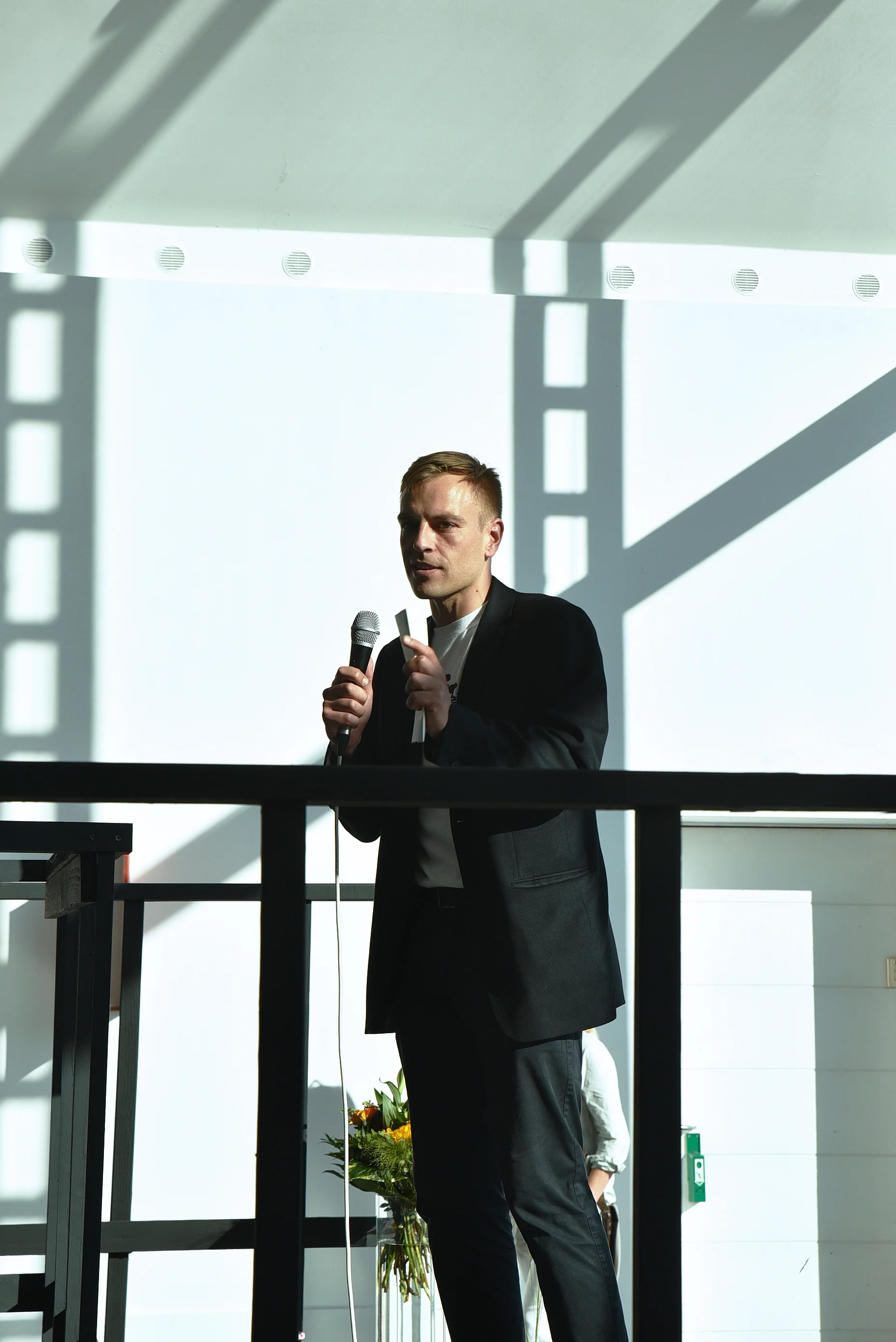
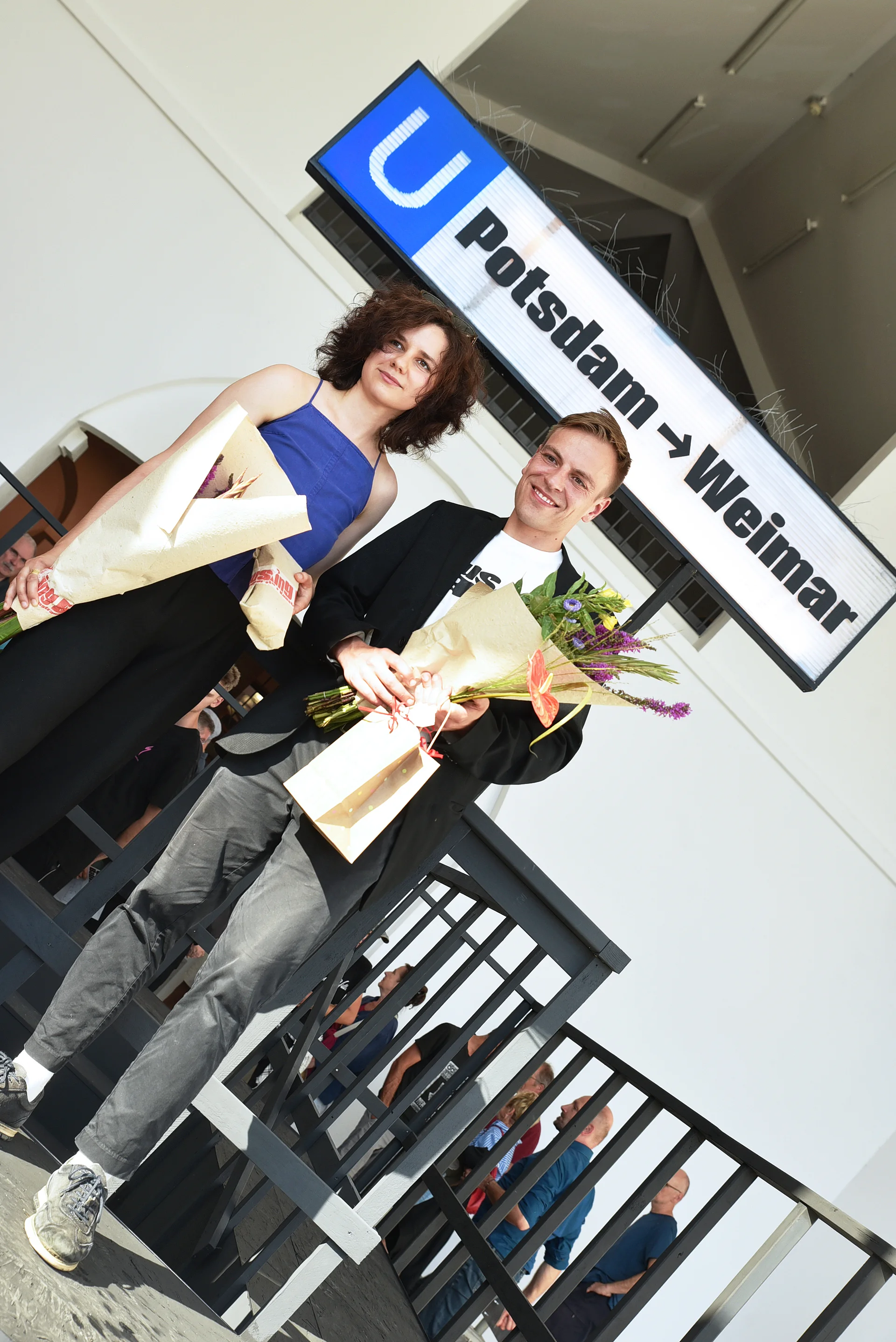
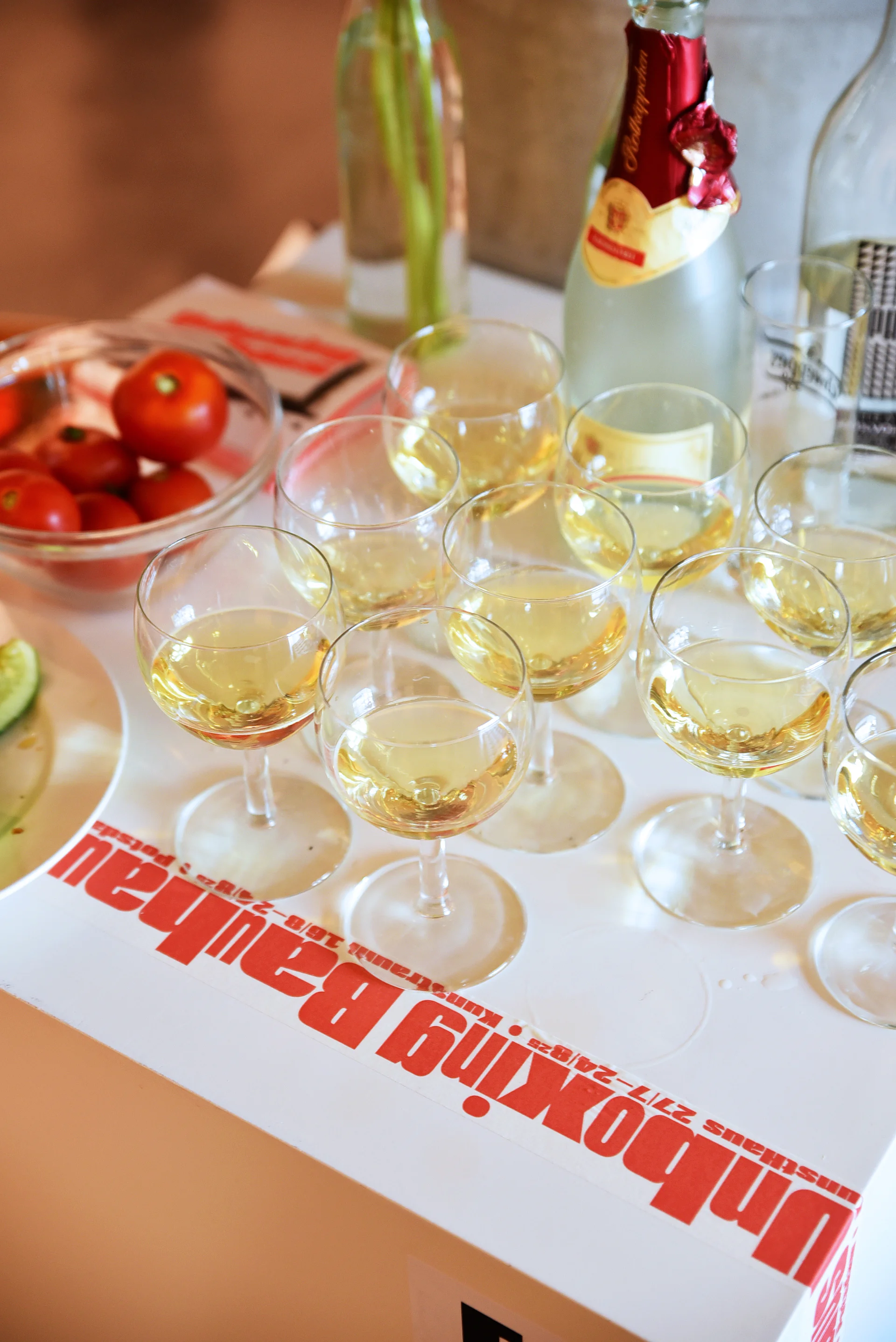
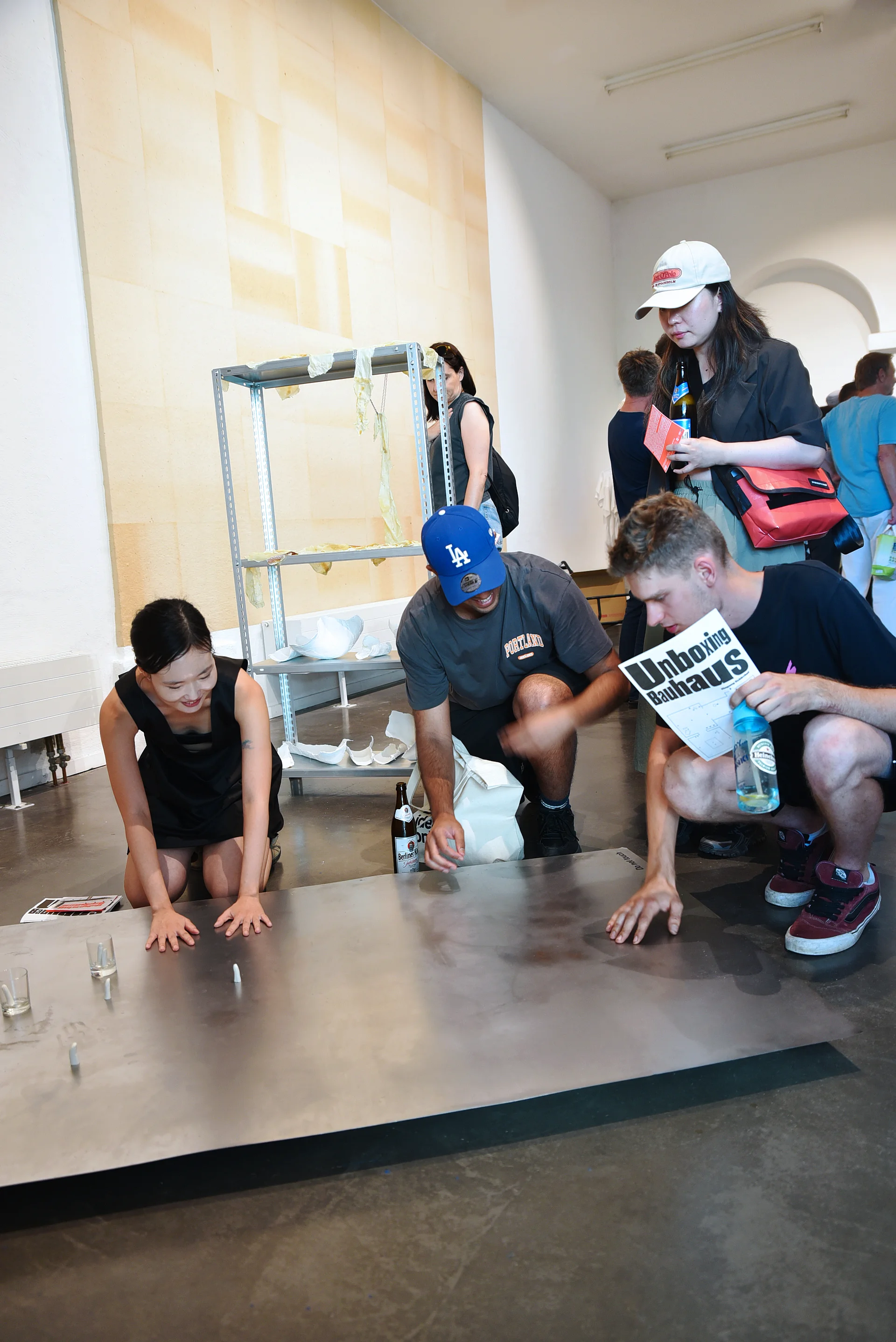
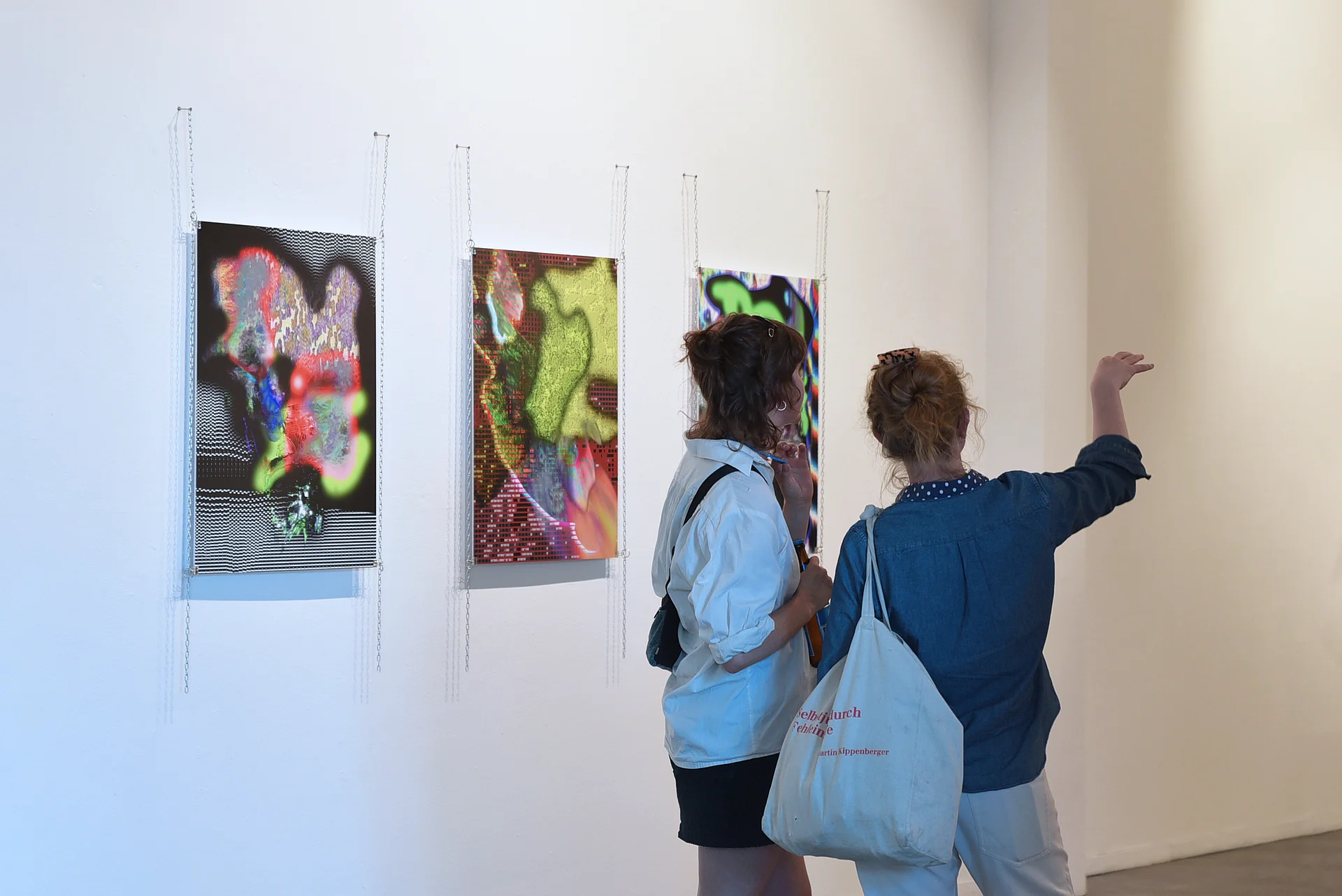
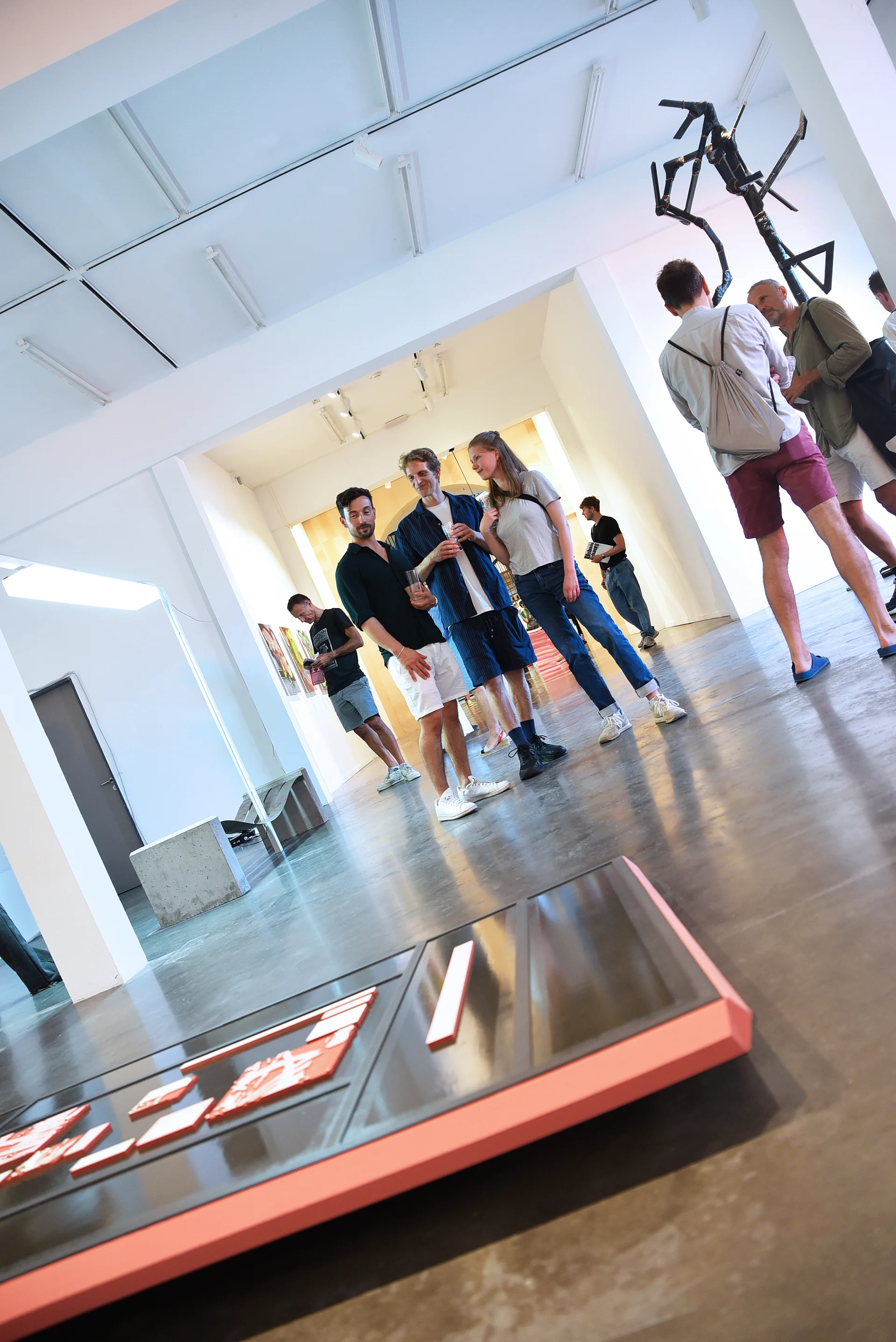
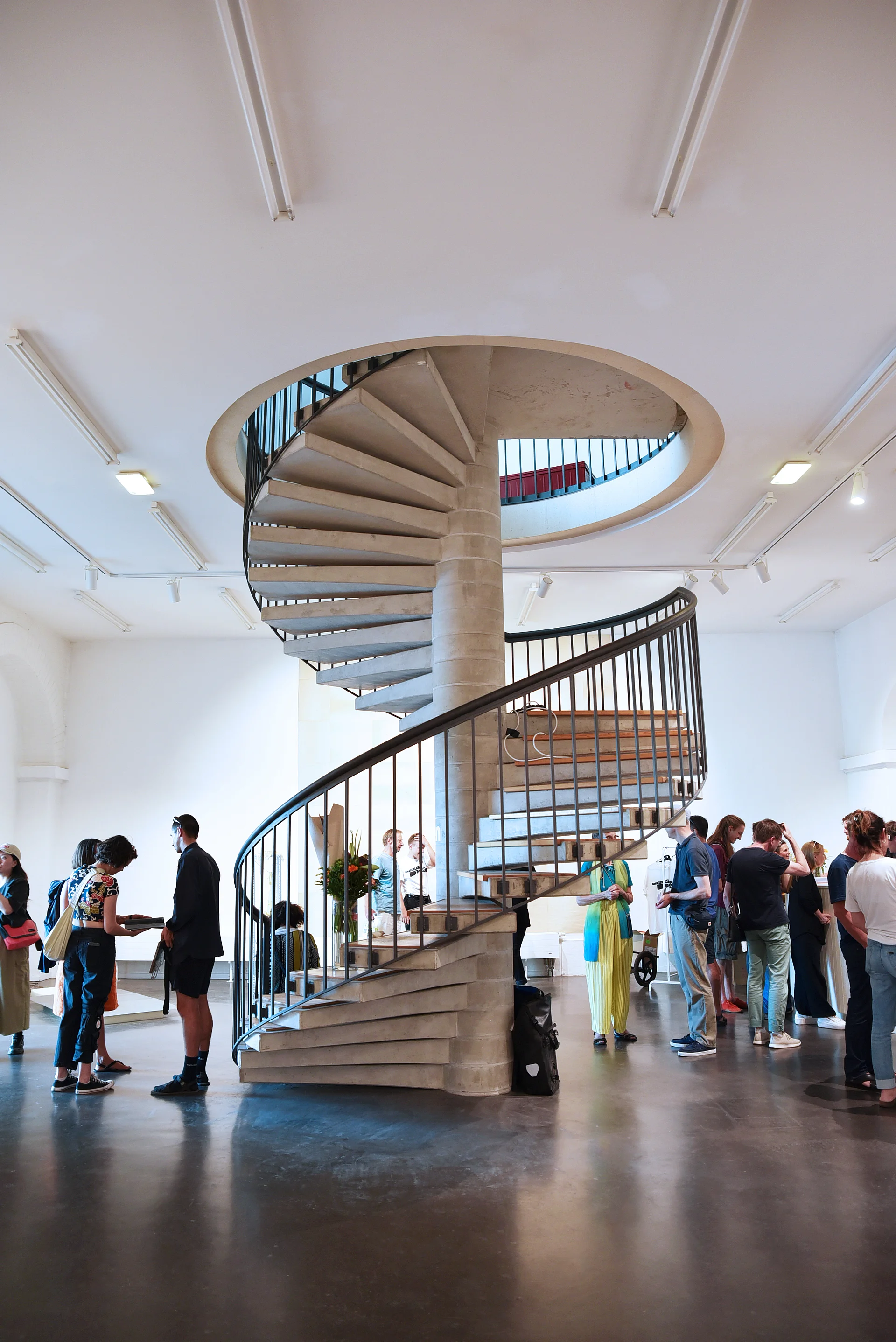
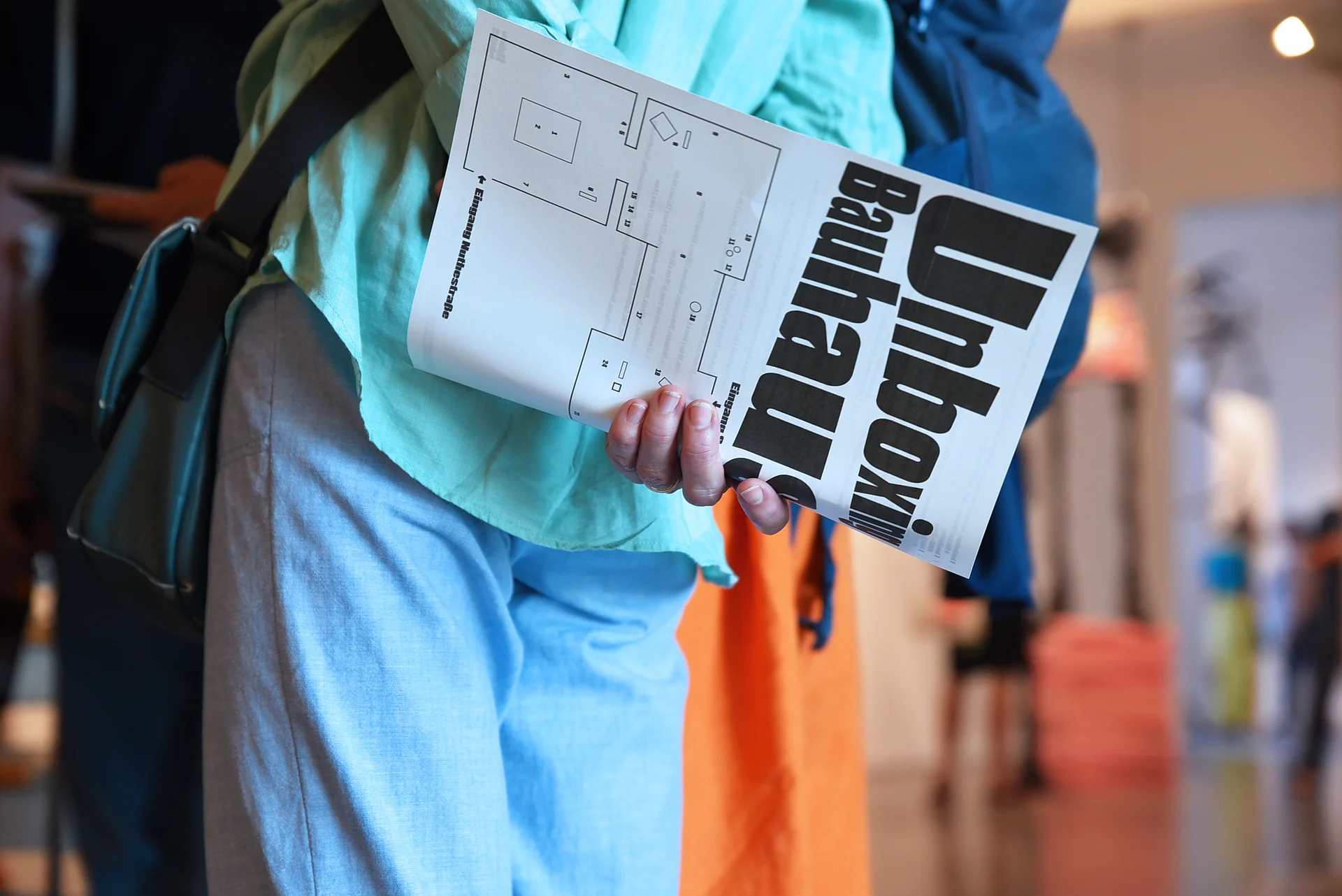
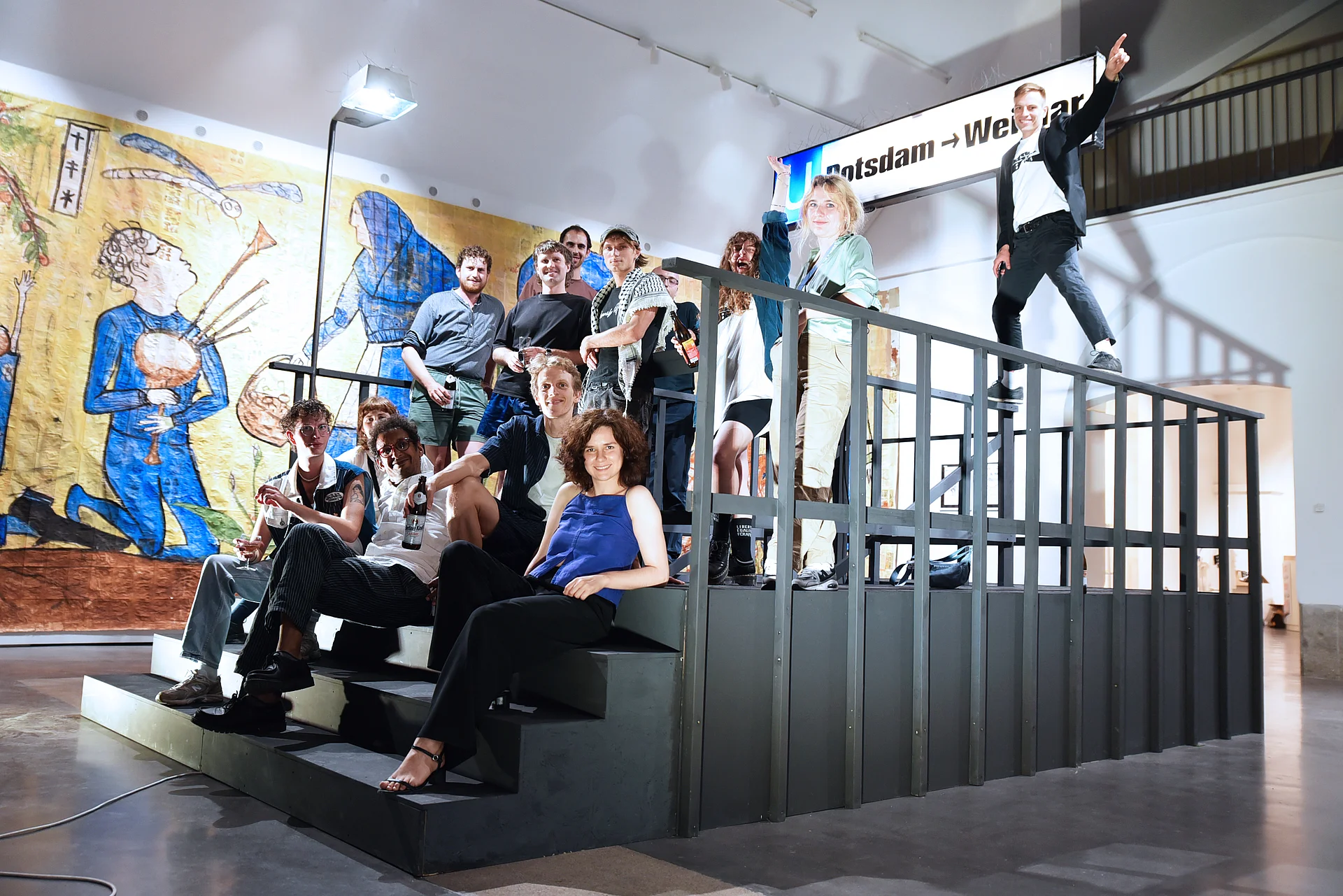
The two teaching staff, Florian Hesselbarth and Masihne Rasuli, said of the exhibition: »The ten-day creative process was of course exhausting because in addition to setting up the exhibition, we also had to put up posters, document the process and prepare for the vernissage. The students mastered this all with excellent teamwork though and supported each other wonderfully the whole time. In addition to gaining experience within a professional exhibition environment, the students take away the insight that with good teamwork, commitment and careful organisation, projects of this size can also successfully be handled.«
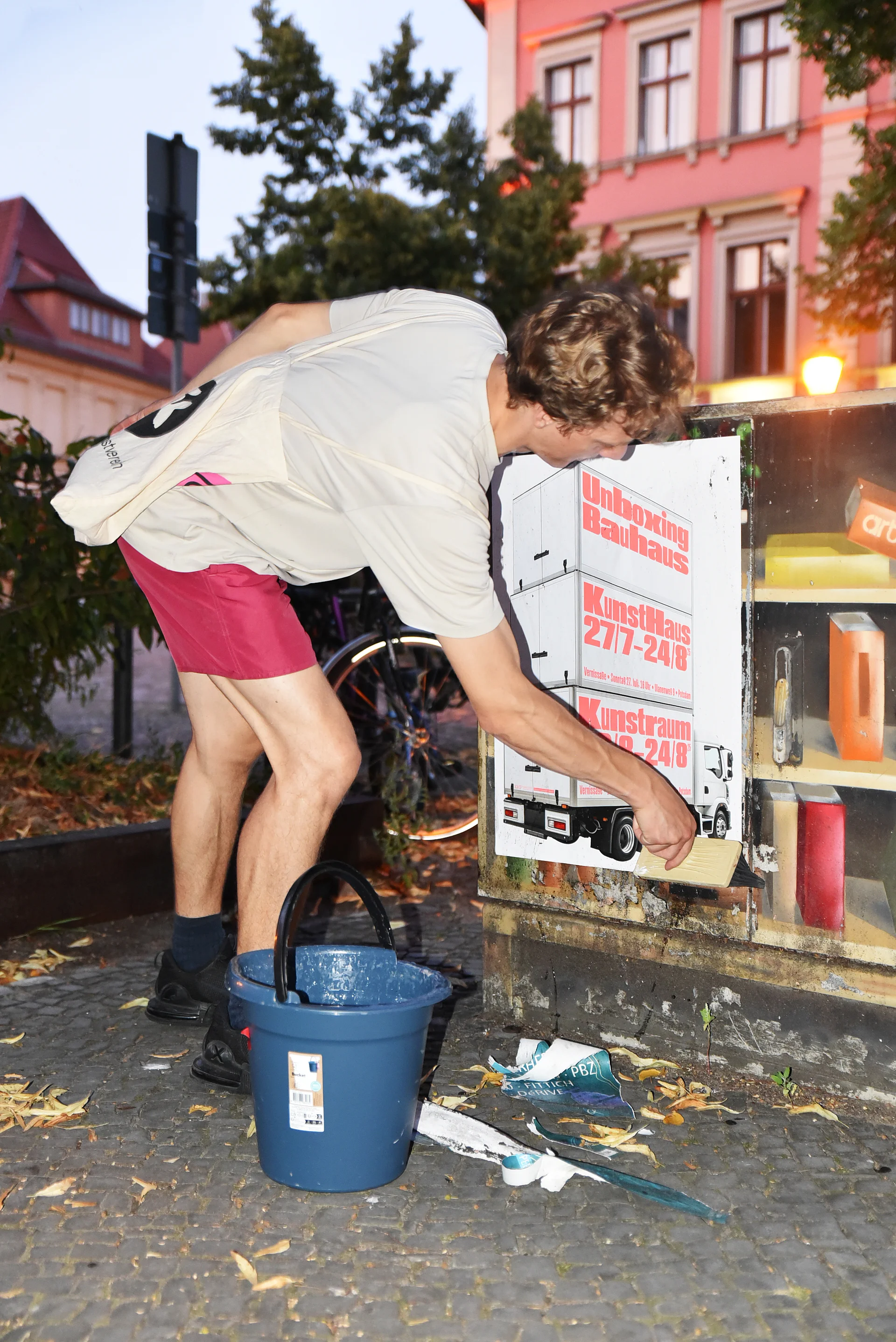
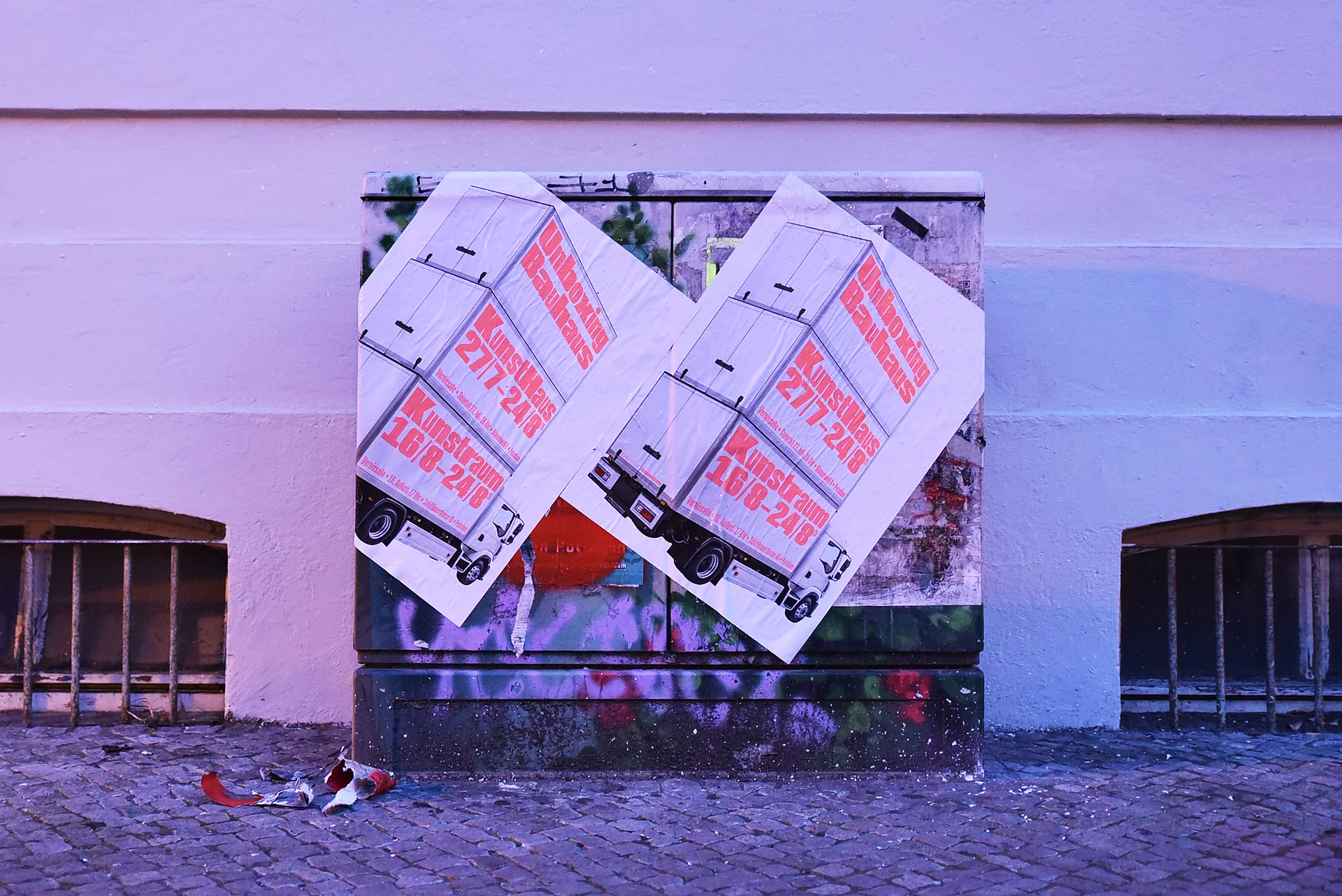
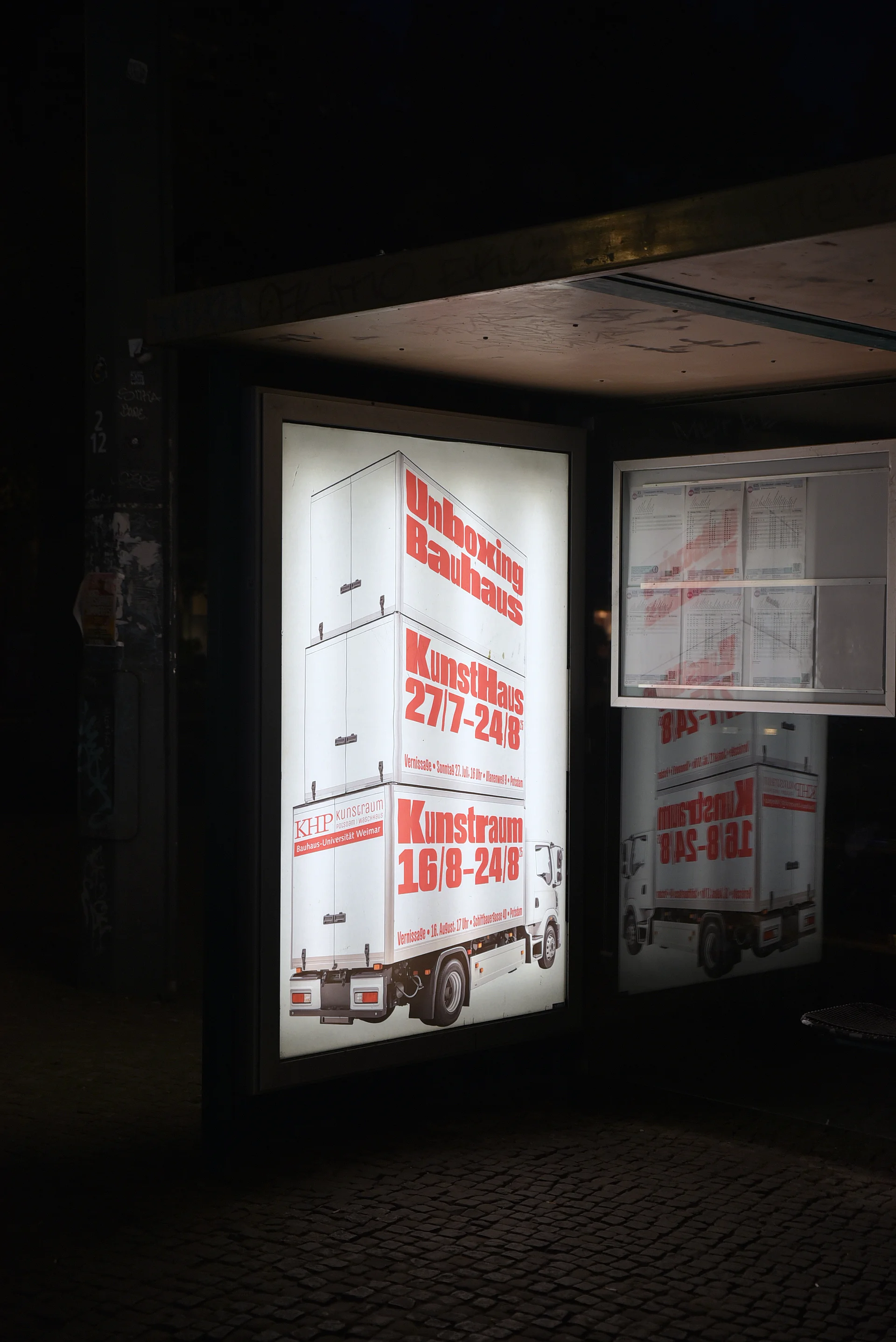
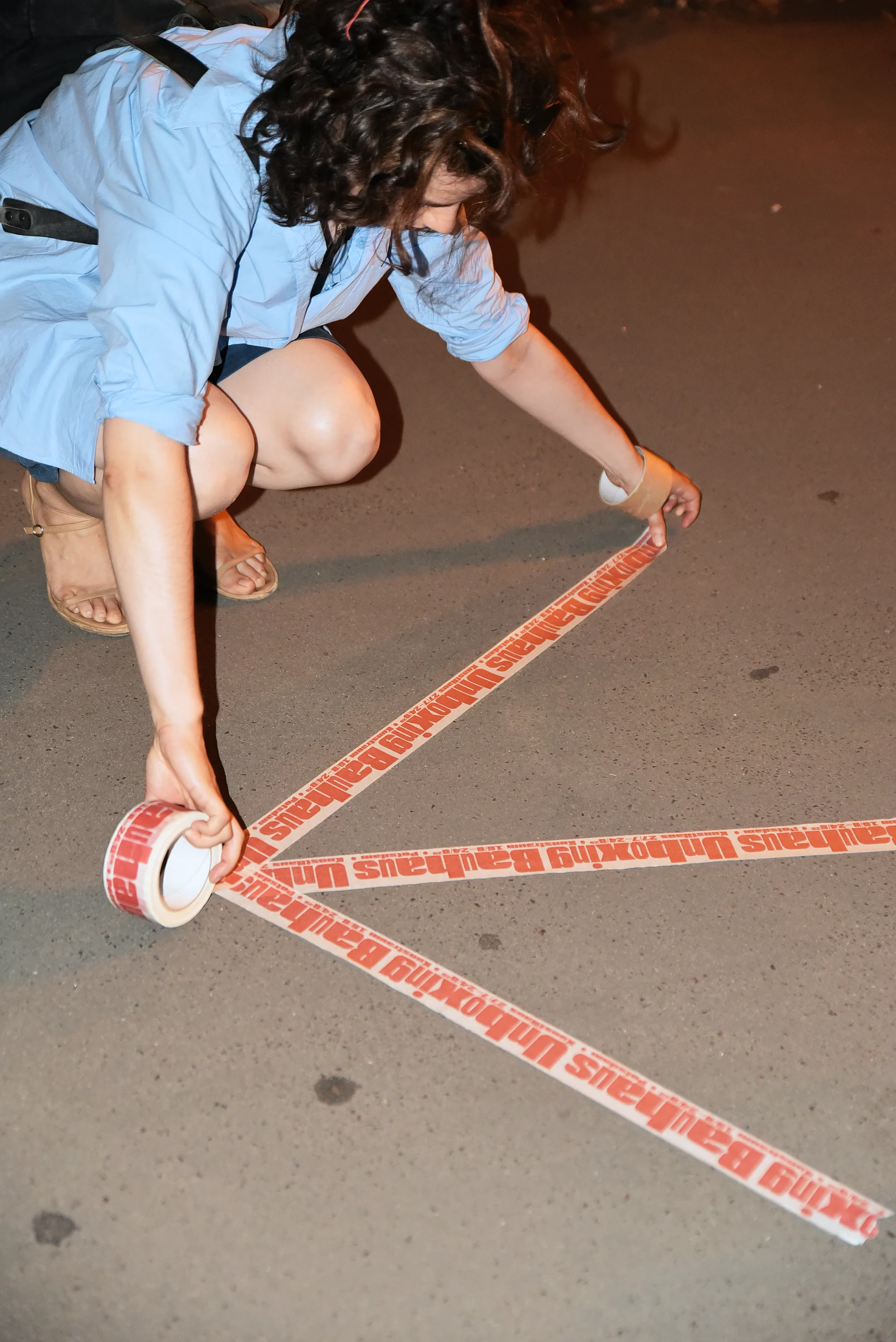
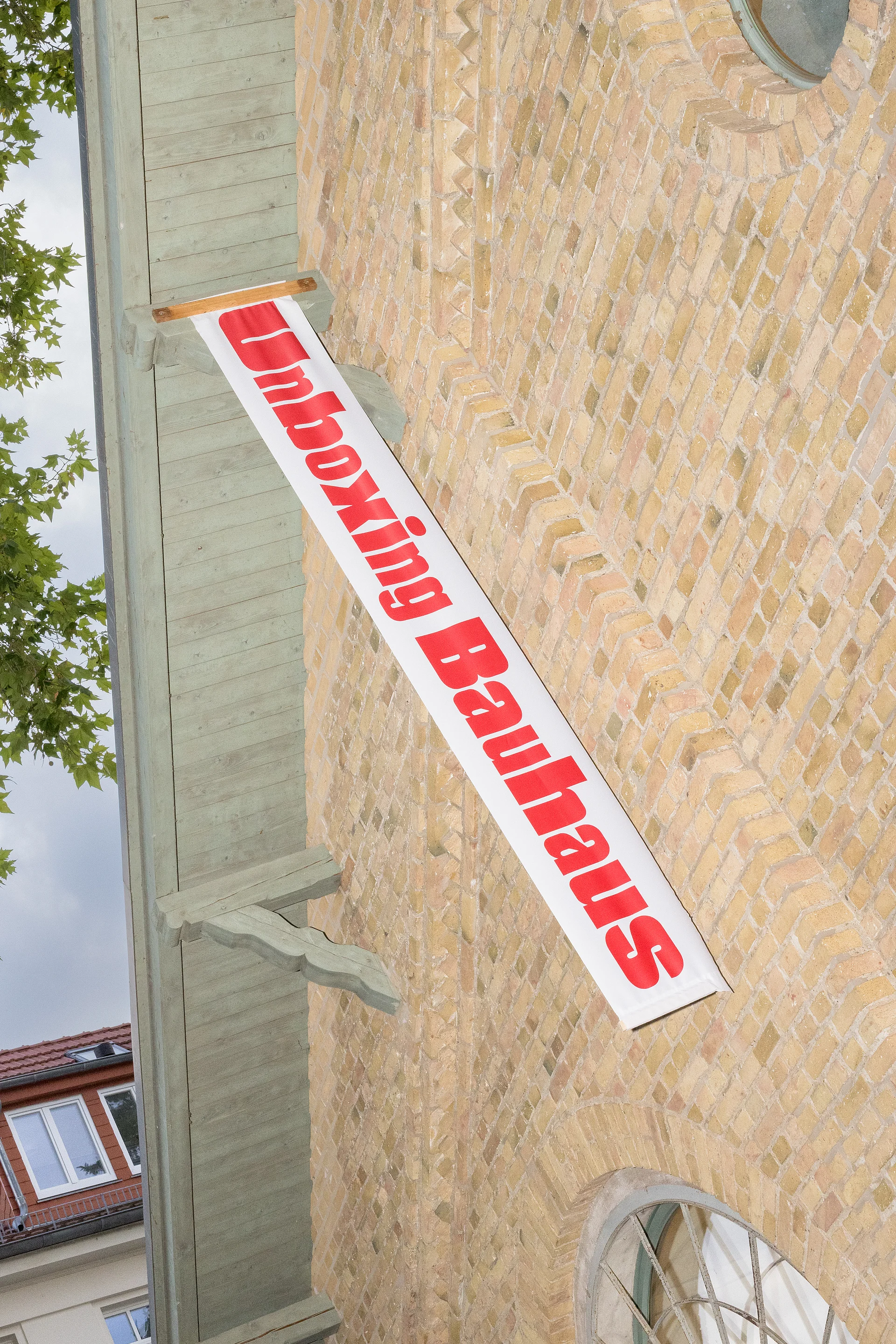
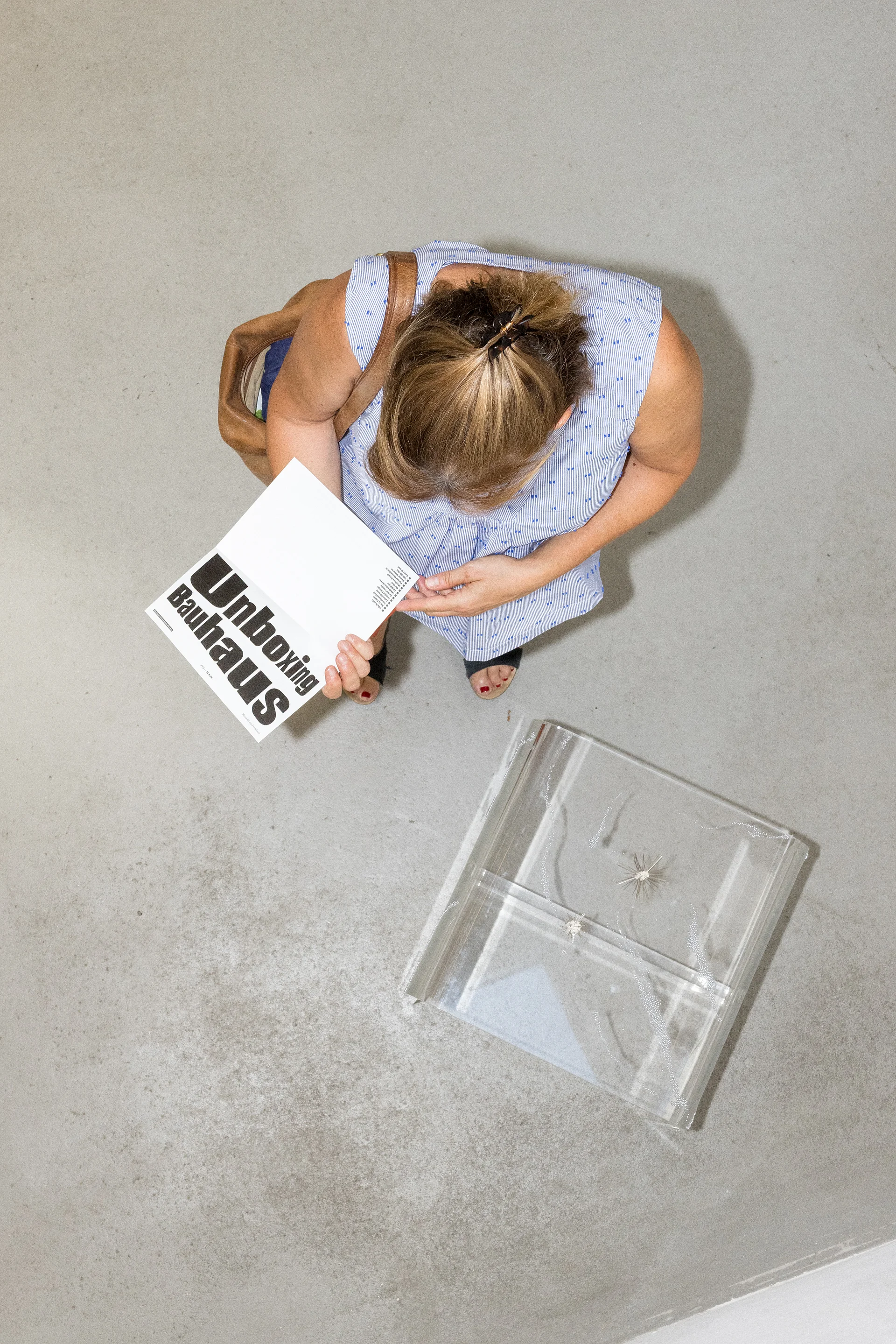
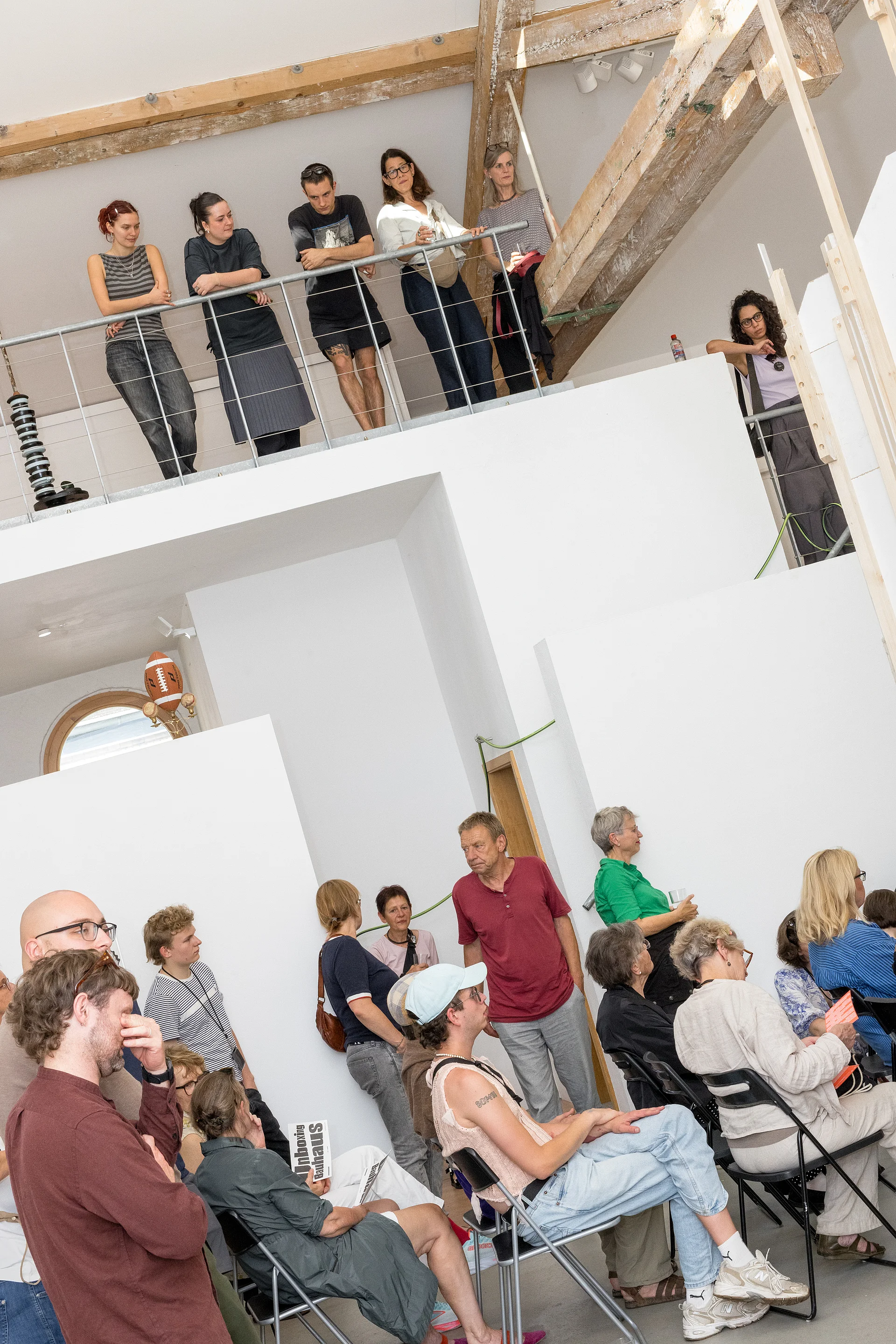
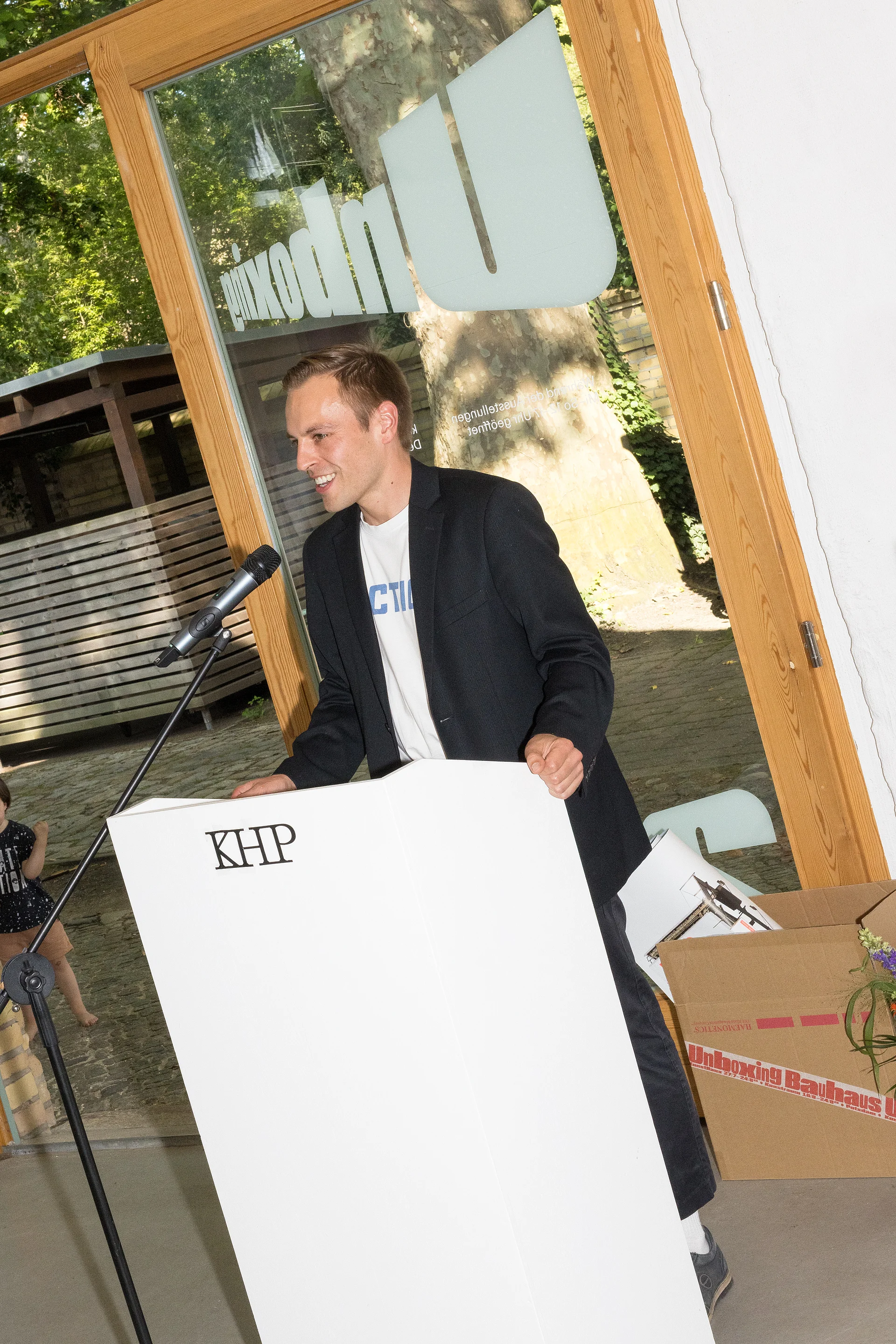
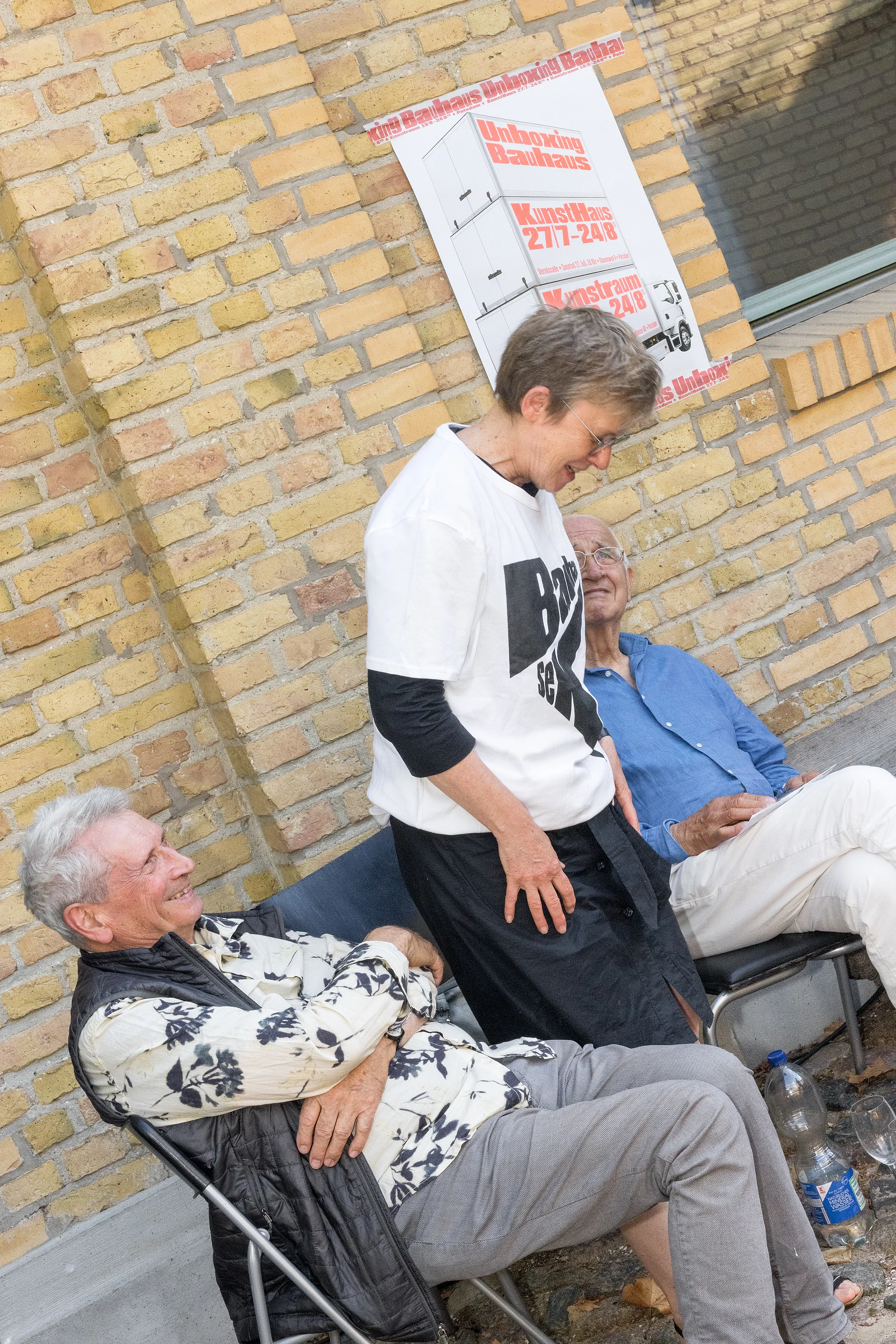
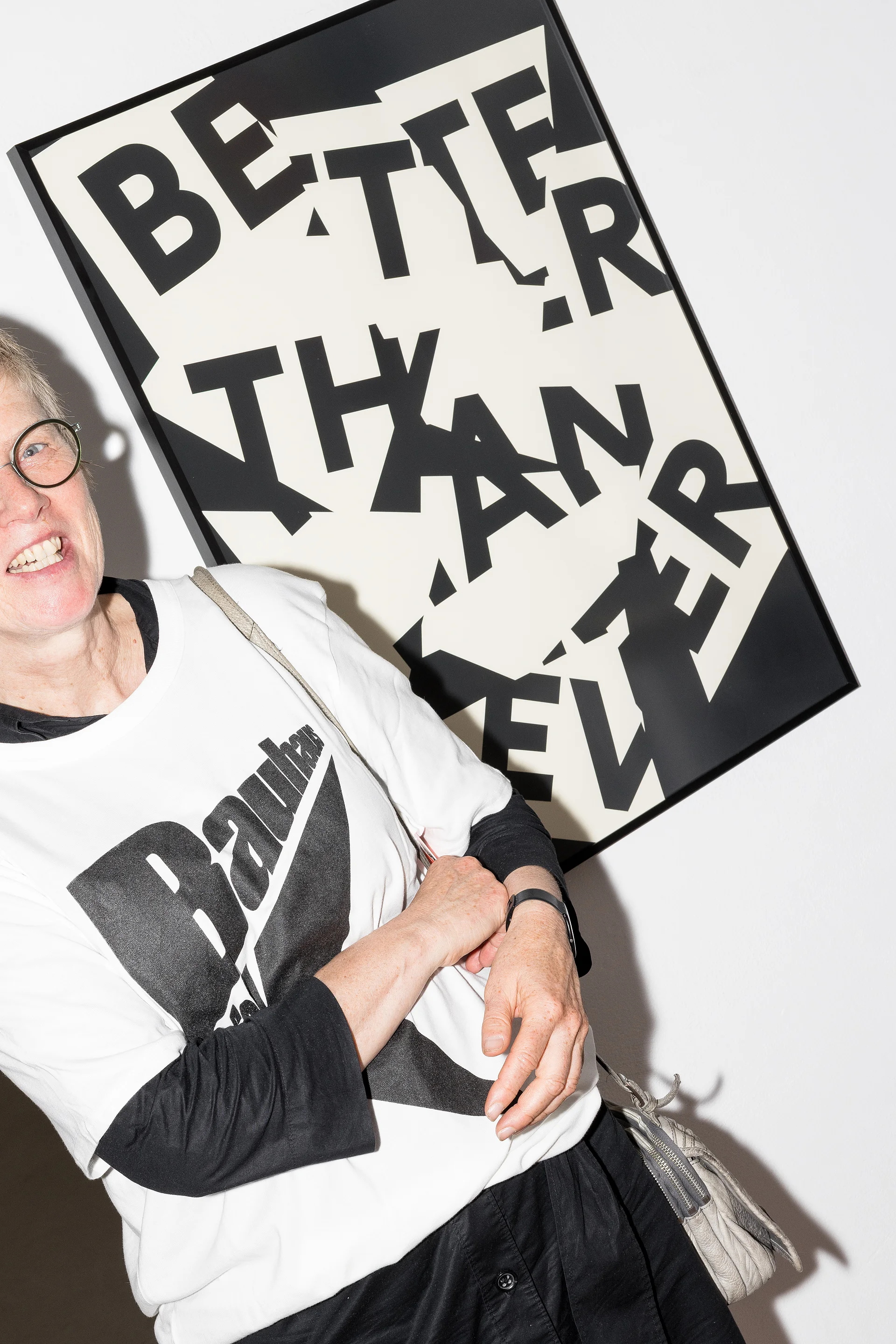
The response proves them right: both vernissages were extremely well attended and the feedback from guests was consistently positive. The curators reported that an exceptionally large number of visitors wanted to see »UNBOXING BAUHAUS«, also during the exhibition’s normal opening times. Local media praised the visit from Weimar in two articles and the Märkische Allgemeine Zeitung even ran a full-page report.
»For us, the four-week guest appearance in Potsdam was great for the visibility of the art and design teaching at the Bauhaus-Universität Weimar. We were successfully able to address a new audience and expand our network,« Hesselbarth and Rasuli summed up. Rasuli affirms: »I will never tire of telling students that they must also leave the Weimar bubble from time to time! Because leaving this bubble means denying yourself comfort and exposing yourself to criticism and reactions from others. It also means thinking about how to communicate your own work, which includes unfamiliar target groups. It means communicating respectfully and showing empathy, but also upholding your own convictions. Students should already familiarise themselves with this balancing act during their studies, as they will have to master it time and again when dealing with the public. In our case, it meant taking advantage of great spaces and opportunities that we did not have in Weimar. At the same time, we questioned ourselves and our brand. In Weimar, we have a differentiated perception of what the Bauhaus is, including a distinction between the historical Bauhaus and the Bauhaus-Universität Weimar. Elsewhere, clichéd ideas about our orientation sometimes exist or the myth of the historical Bauhaus is simply more present. ›UNBOXING BAUHAUS‹ took a good approach, communicating that we are not ›Bauhäusler‹, but rather Bauhaus students.«
Teaching staff:
Florian Hesselbarth
Masihne Rasuli
Exhibitors:
Lilly Braatz, Denise Blickhan, Harry Copas, Ferdinand Golz, Luisa Hörning, Fridtjof Knospe, Eunsae Lee, Kyuhee Lee, Enrico Leppla, Jakob Elias Meyer, Jakob Nickels, Kaya Leonie Pilsner, Sina Robering, Till Röttjer, Hauke Scholz, Claudius Seiter, Rio Usui
Visual Identity:
Ames Grund, Ossian Osborne, Lilli Sörries
Exhibition stand:
Bruno Domingos, Johannes Fest, Pauline Kuritz, Bennet Nielke, Sina Robering, Hauke Scholz, Denise Sawade, betreut von Florian Hesselbarth