Exkursionen
Wood and Steel Construction Field Trip, May 2026
On 27 and 28 May 2026, the Chair of Steel and Hybrid Structures organised two interesting one-day field trips focusing on steel and timber construction as part of the Faculty of Civil and Environmental Engineering’s field trip week.
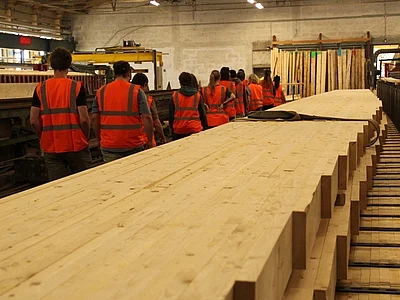
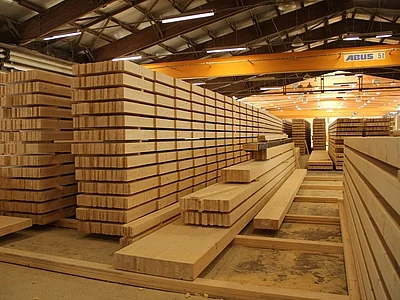
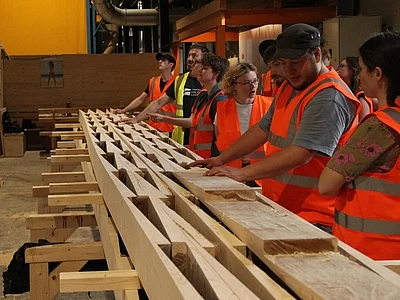
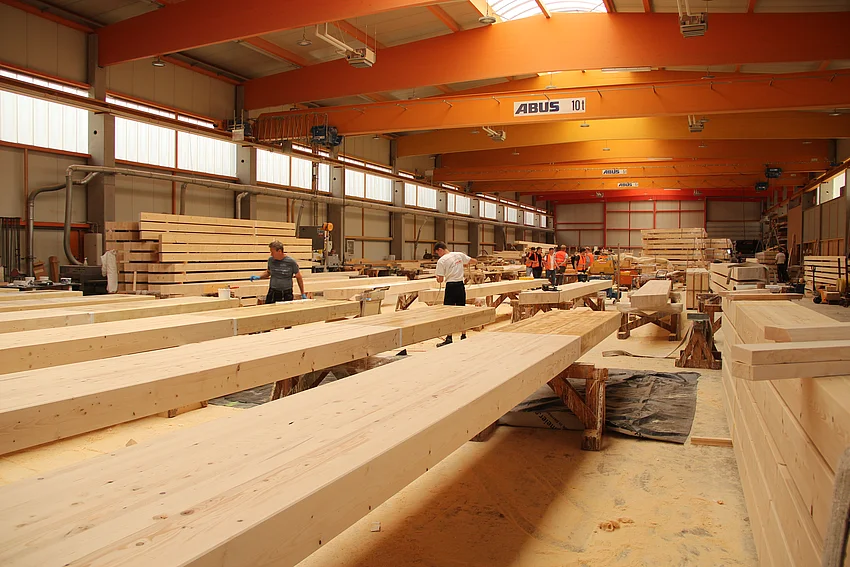
The excursion on 27 May was devoted to timber engineering and structural maintenance. Starting at Thüringer Holzwerke Hermsdorf GmbH, the students were given a comprehensive insight into the manufacture of bespoke glued-laminated timber beams. From the planing of the technically dried raw timber lamellae, through the finger-jointing of the lamellae and their bonding into curved or straight components, right through to the planing of the components and the subsequent CNC-controlled joinery, all production steps were explained and demonstrated.
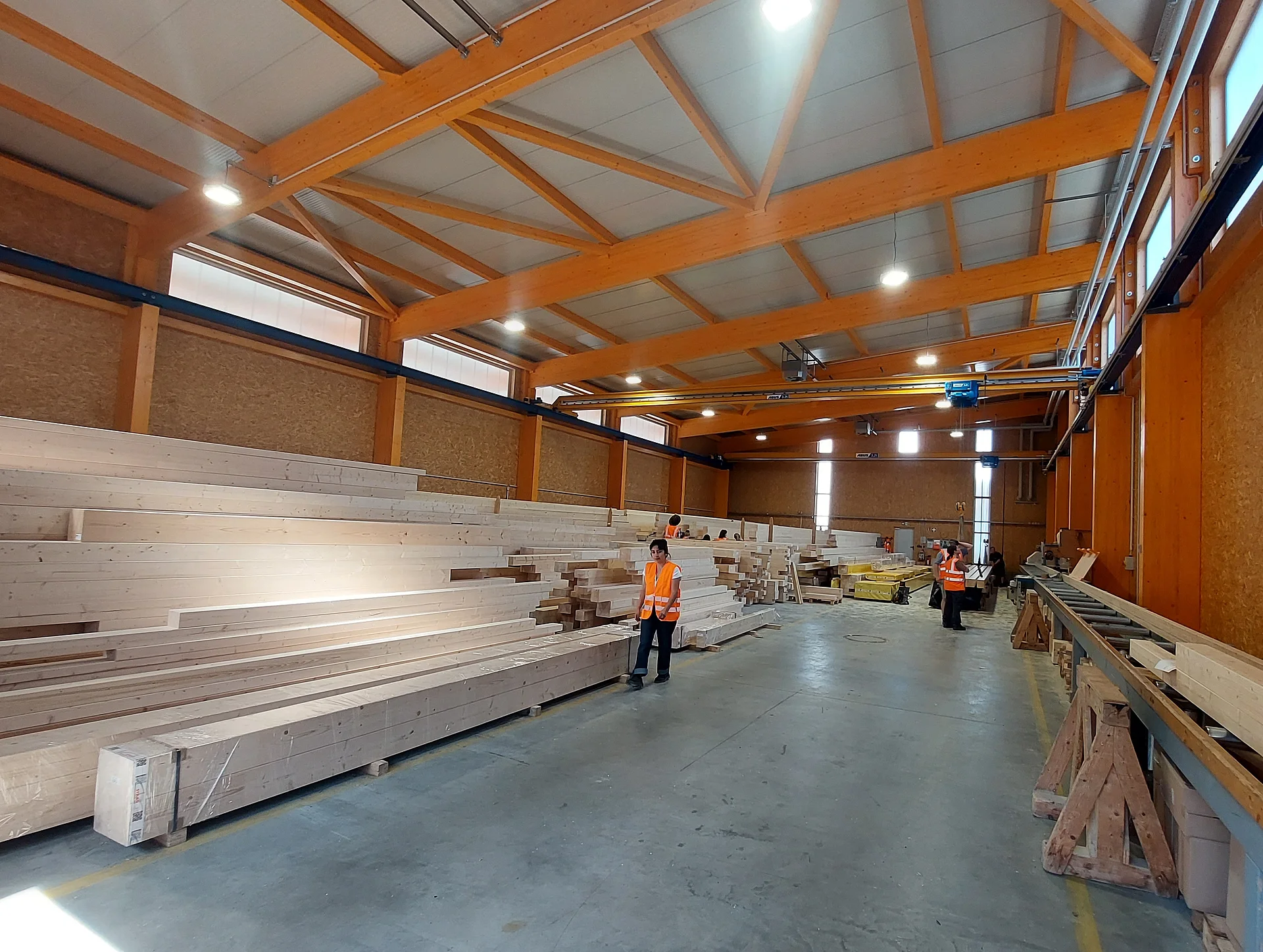
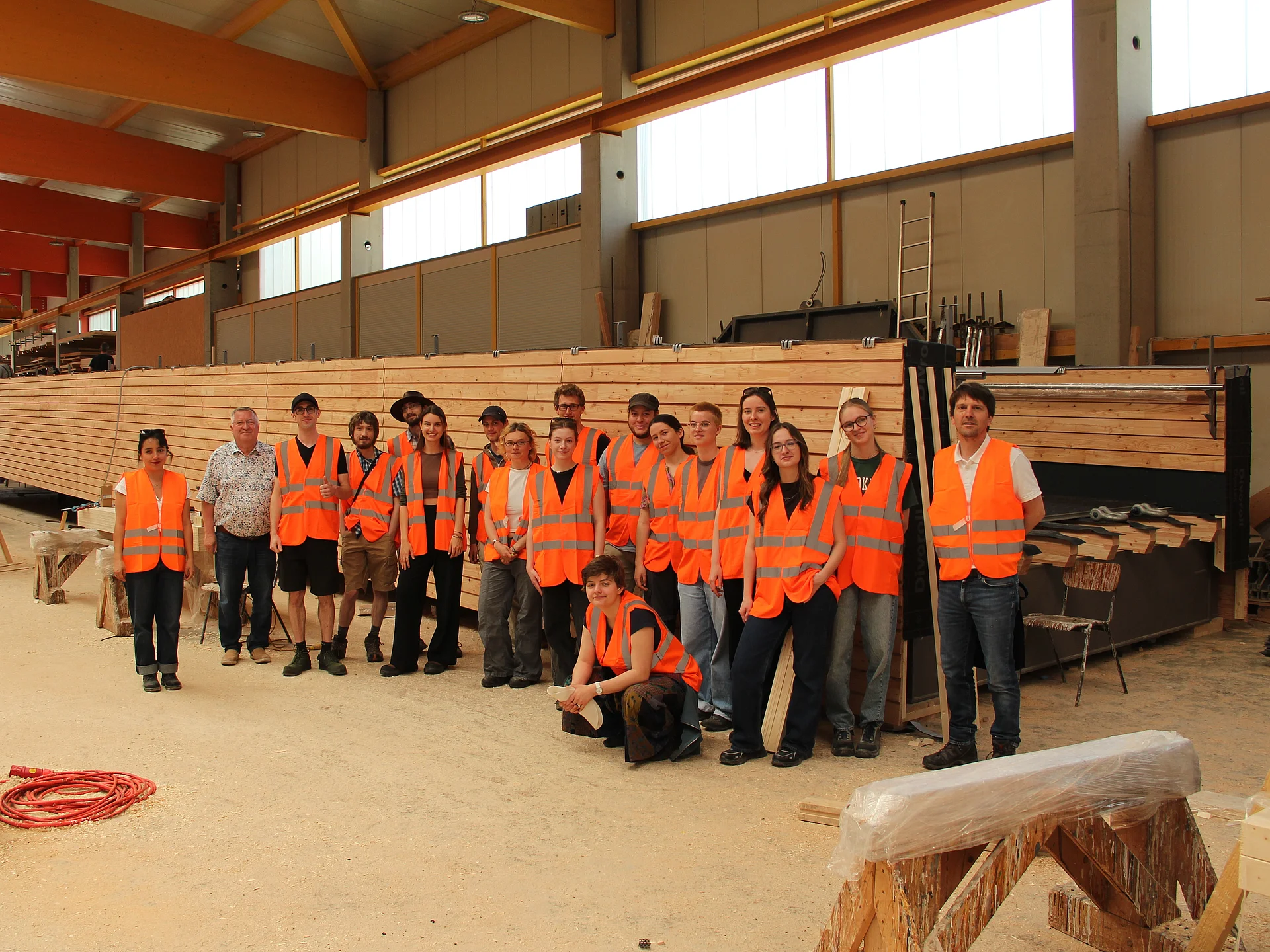
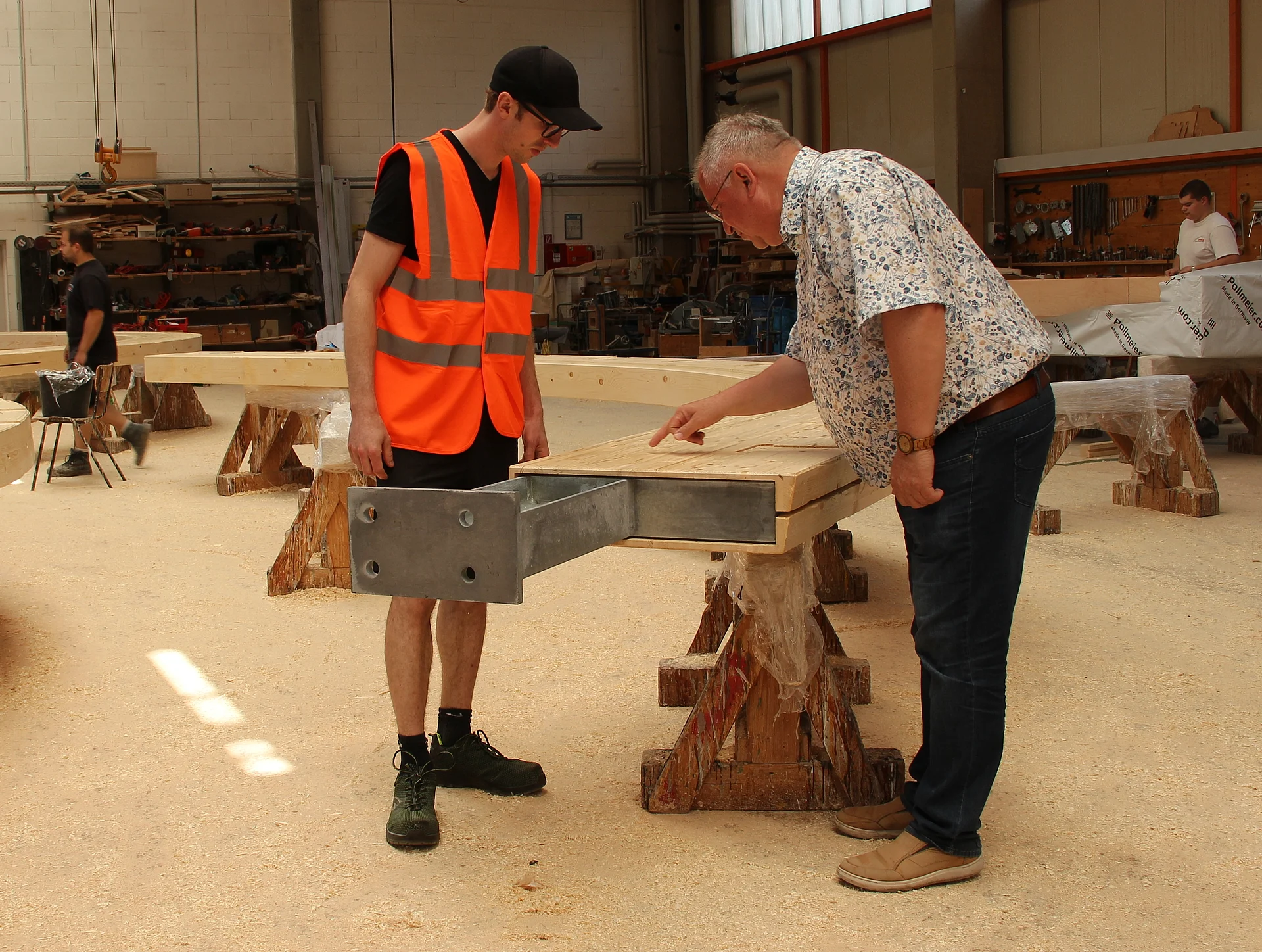
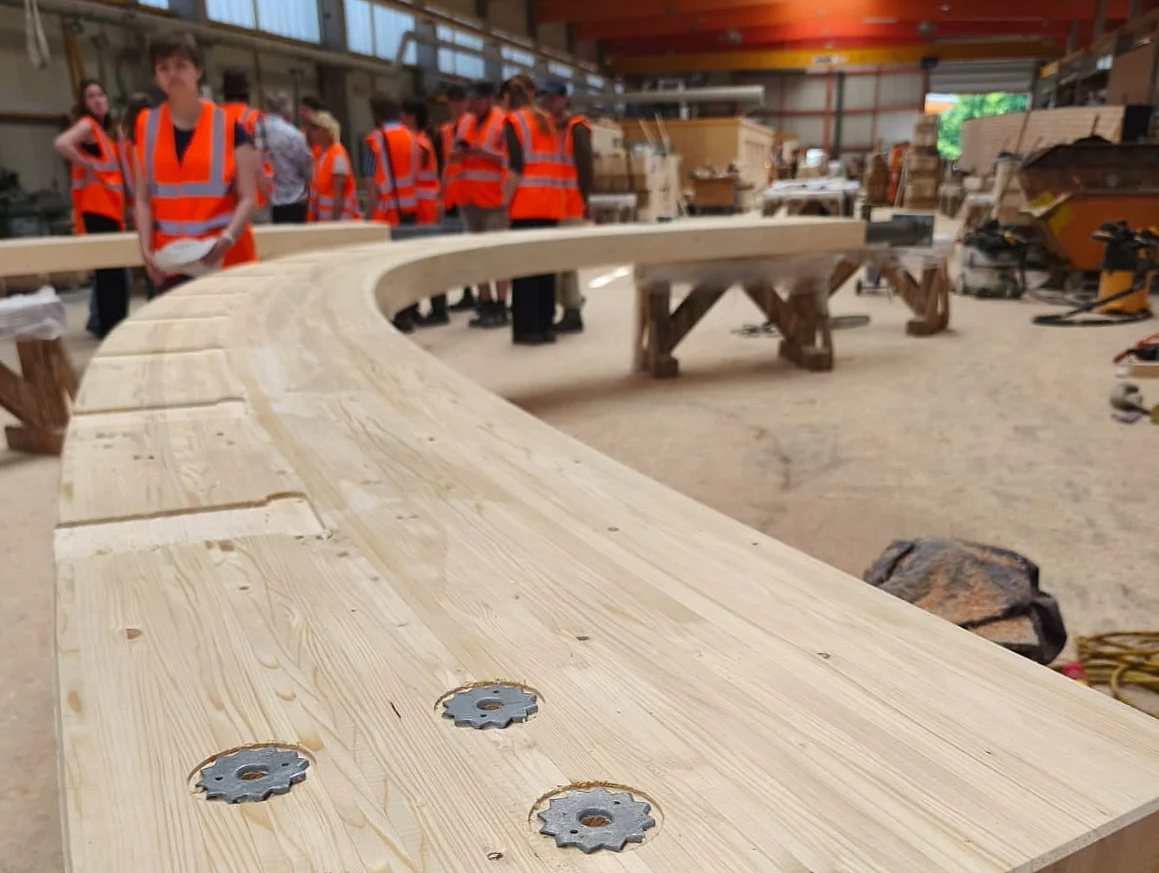
Factory tour of Thüringer Holzwerke Hermsdorf GmbH
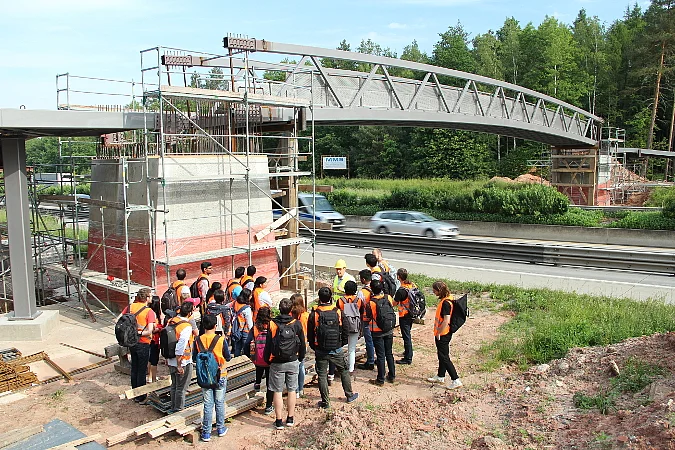
During the subsequent visit to STRAB Ingenieurholzbau Hermsdorf GmbH, the group was able to view the new timber-framed warehouse, due for completion in 2025, featuring glulam columns anchored in arrowhead foundations and a crane runway supported above them. In the company’s joinery hall, the students gained further insights into the production of modern timber engineering structures. During the visit, they were able to marvel at, amongst other things, the complete prefabrication of a 34-metre-long and approximately 4.4-metre-wide footpath and perimeter bridge in a structurally protected trough design for Weikersheim railway station (Baden-Württemberg), which was to be transported to its destination by heavy-lift transport just a few days later and hoisted into place in one piece.d at the IGS Ingenieure office.

Factory tour of STRAB Ingenieurholzbau Hermsdorf GmbH
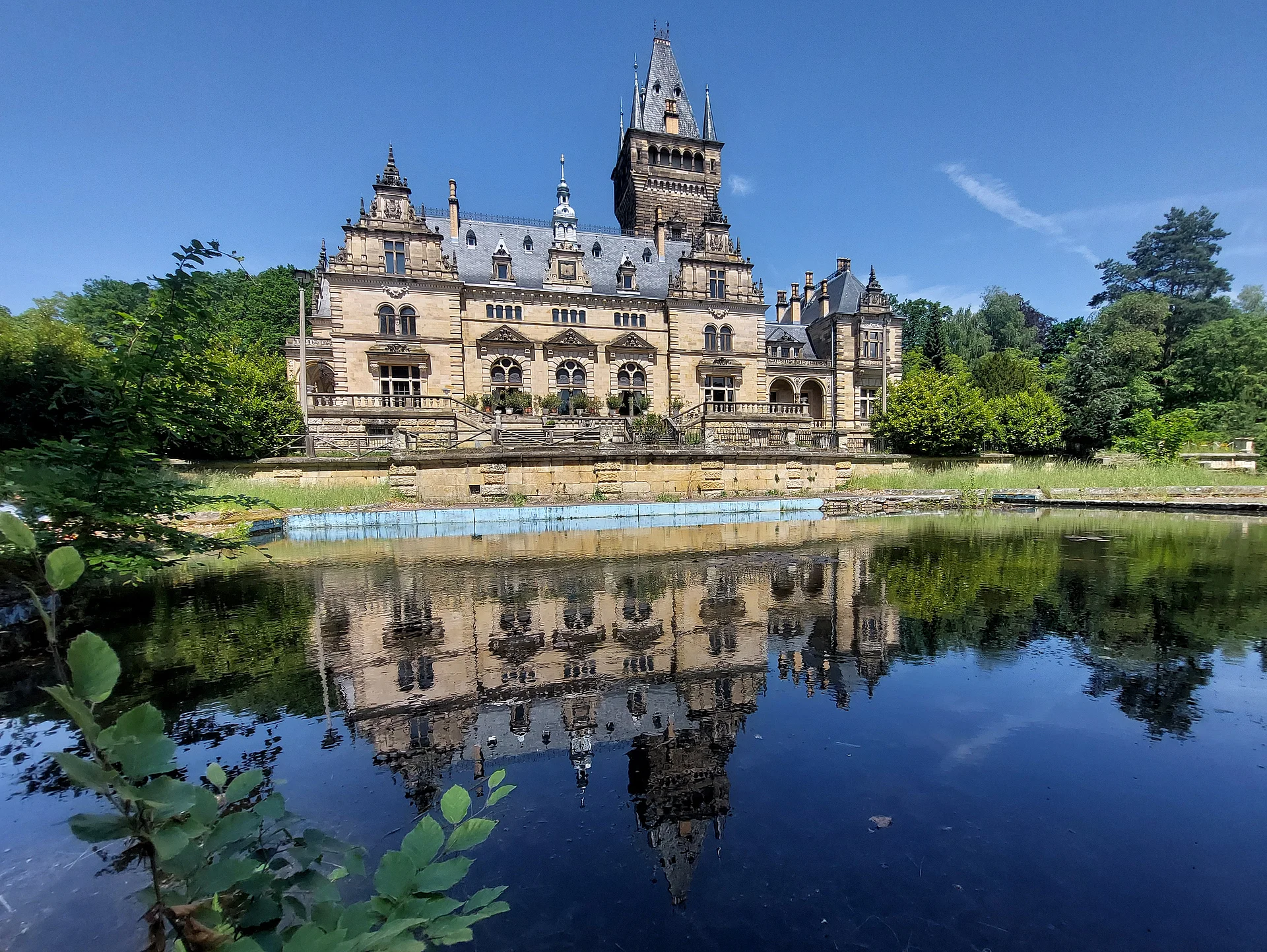
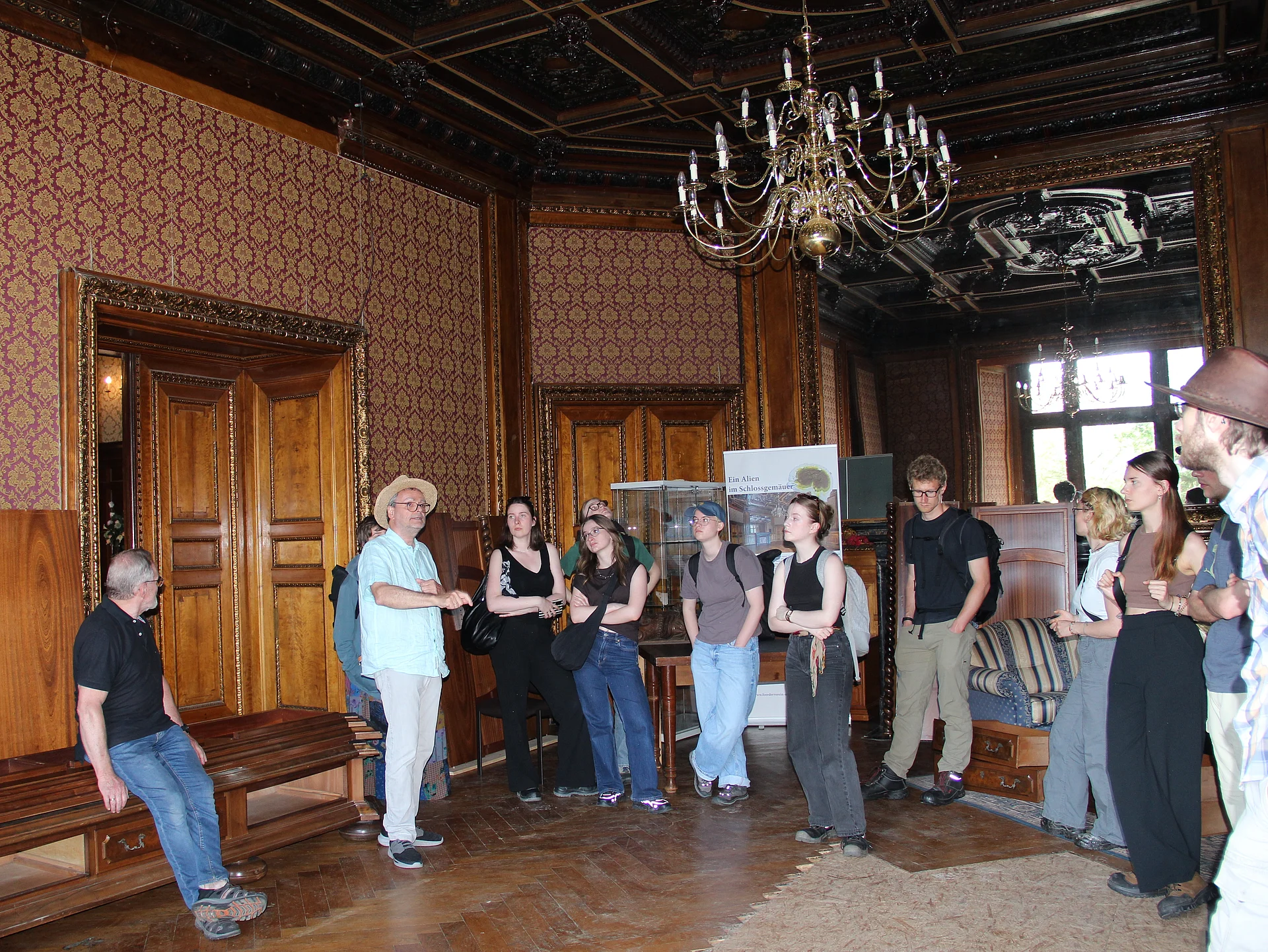
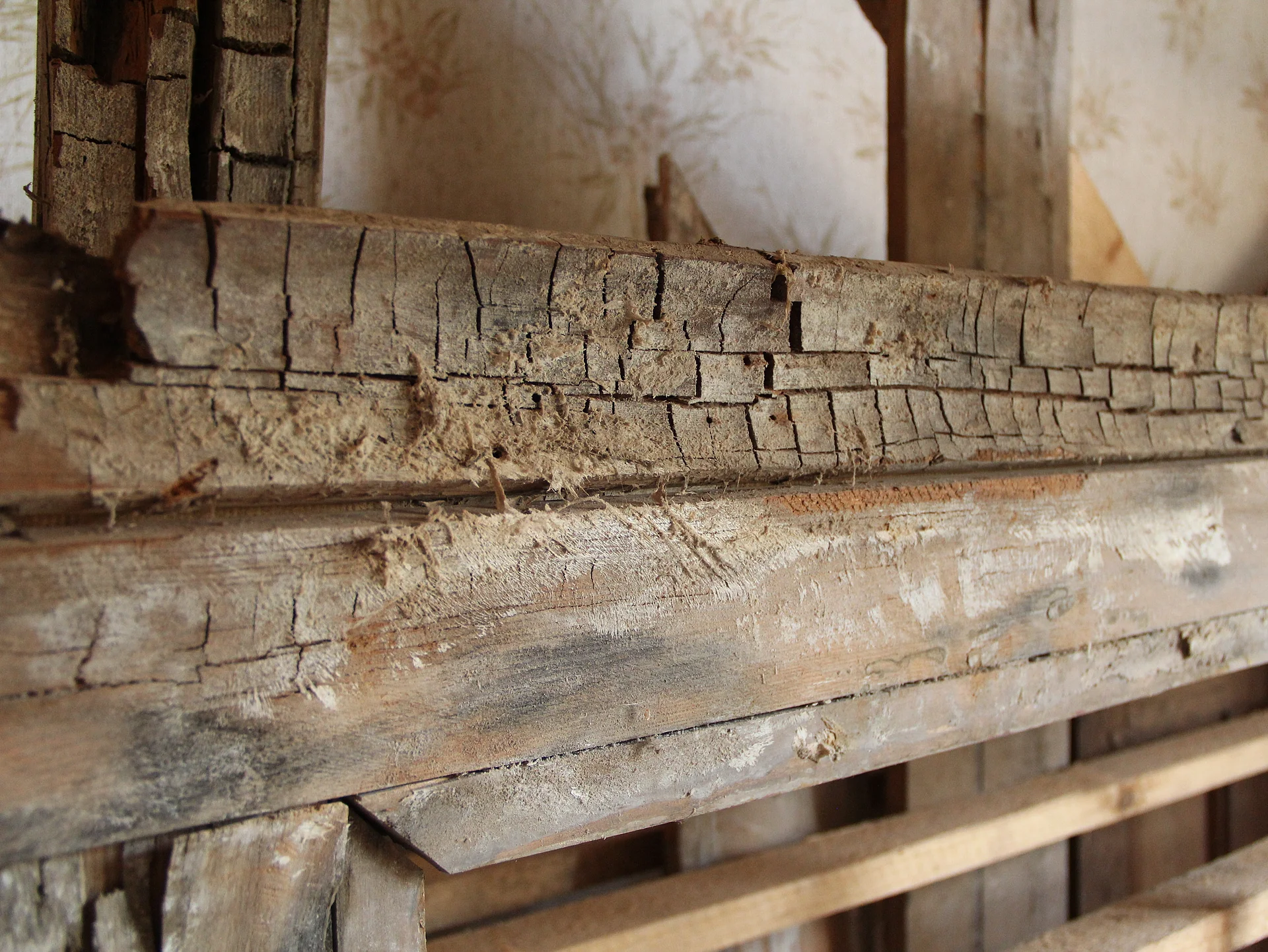
Following the tour of the New Hunting Lodge in Hummelshain, the afternoon was devoted to the topic of building conservation and restoration in accordance with heritage protection requirements. Mr Hohberg from the Förderverein Schloss Hummelshain e.V. provided interesting insights into the building’s history and past uses, as well as the structural stabilisation and restoration work carried out over the past 10 years; which has been working since 1998 to preserve the hunting lodge and residence of the last Dukes of Saxony-Altenburg – built between 1880 and 1885 – from falling into disrepair. Using specific areas of damage as examples, Mr Schmidt-Schuchardt explained the measures carried out on the property by Bennert GmbH to drain the building and combat dry rot, as well as the subsequent restoration of the building fabric, which had been severely damaged from the attic, through the stucco-decorated timber-beamed floors right down to the cellar area.

Tour of the New Hummelshain Hunting Lodge
The field trip on 28 May focused on steel construction and gave the students a comprehensive insight into the Thuringian steel industry.
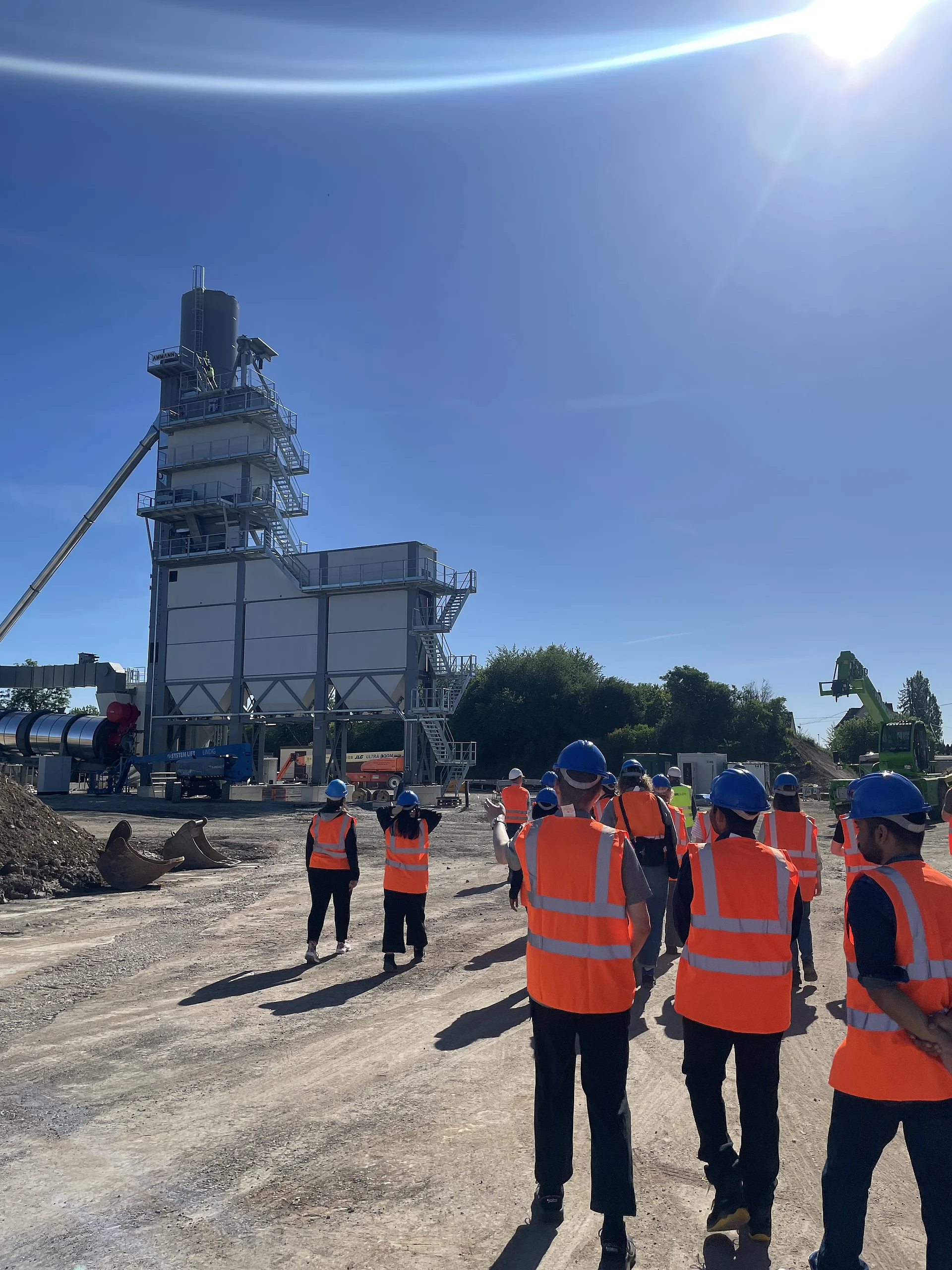
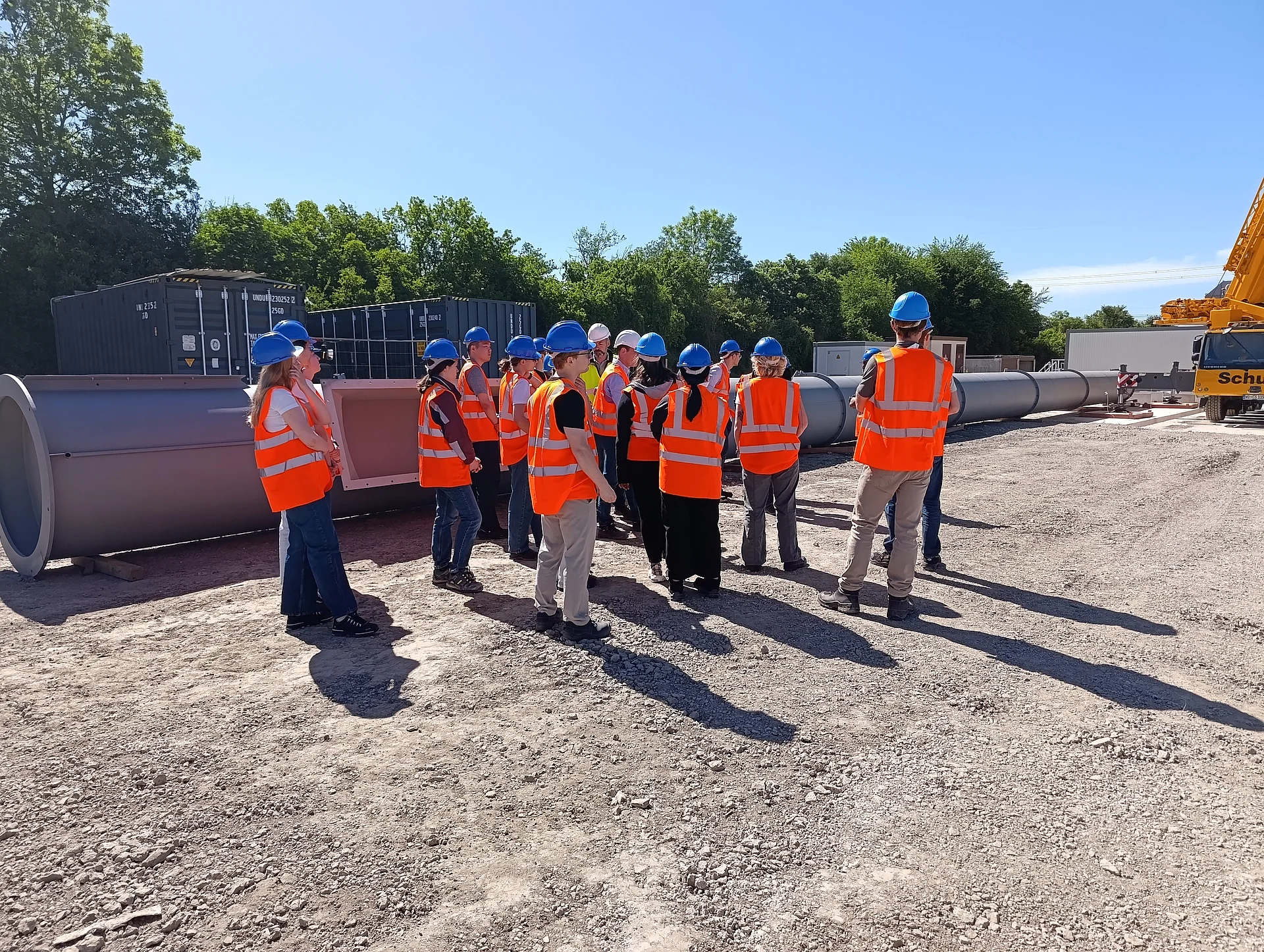
The excursion began with a visit to a construction site where an asphalt mixing plant is being built by Mitteldeutsche Hartensein-Industrie AG – MHI Group. The MHI Group, a company founded in 1906 and based in Hanau, is one of the most successful producers of building materials and transport infrastructure contractors in central Germany, covering a broad spectrum across the entire value chain in infrastructure construction. In the field of asphalt, the MHI Group is one of the leading producers in the region. It produces various types of asphalt for a wide range of applications, including asphalt concrete for roads and traffic areas. Asphalt mixing plants represent some of the most sophisticated engineering structures in the field of steel construction: they combine load-bearing structures, conveyor systems, silo and container structures, as well as platforms and working platforms that must withstand dynamic loads.
The construction site gave the students a realistic insight into the planning and logistical challenges that must be overcome when erecting steel structures. Assembly procedures, safety protocols on site and the handling of heavy-load assembly work were explained by the accompanying experts. A particular highlight of the first stop was the opportunity to climb the structure. This gave the students a panoramic view of the construction site and the surrounding area.
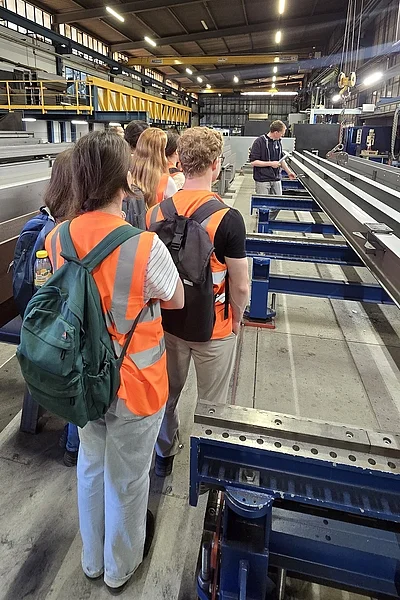

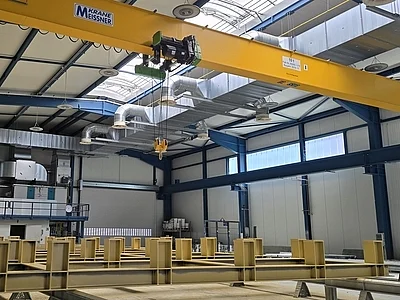
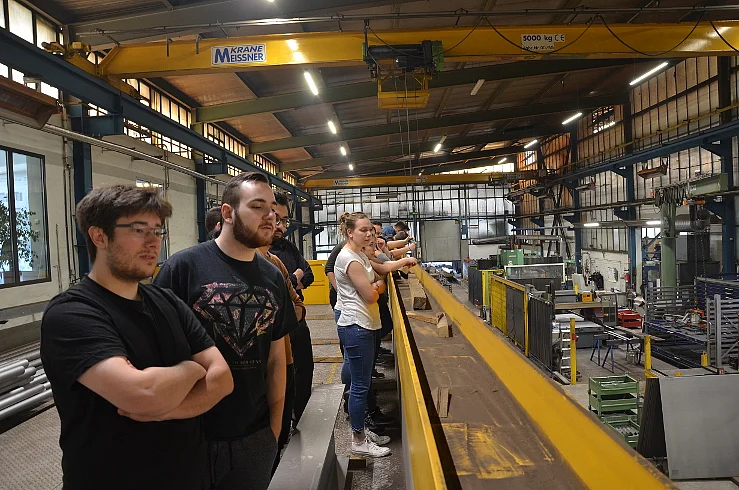
The group’s second stop was RSB Rudolstädter Systembau GmbH in Rudolstadt – a medium-sized, family-run company with over a century of tradition in steel and metal construction. The company has developed into a sophisticated systems manufacturer and offers the entire range of services, from engineering, steel construction, metal fabrication and façade construction through to assembly, project management and technical building planning.
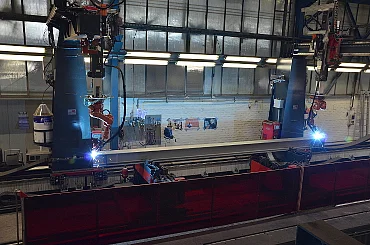
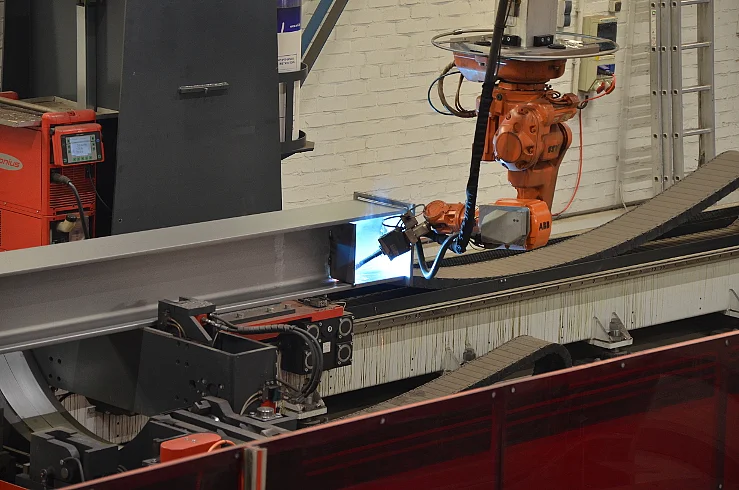
The students had the opportunity to gain an insight into all areas of the company’s production: a wide variety of steel sections – including various beam profiles and sheets of different thicknesses – are kept in stock in the warehouses. The proper storage, labelling and sorting of the material highlighted the logistical requirements of modern steel construction businesses. In the production halls, the students were able to follow the entire manufacturing process: from cutting the blanks using saws and flame-cutting equipment, through drilling and milling connection points, to welding the components. Finally, the surface treatment – in particular corrosion protection through blasting and coating – was explained.
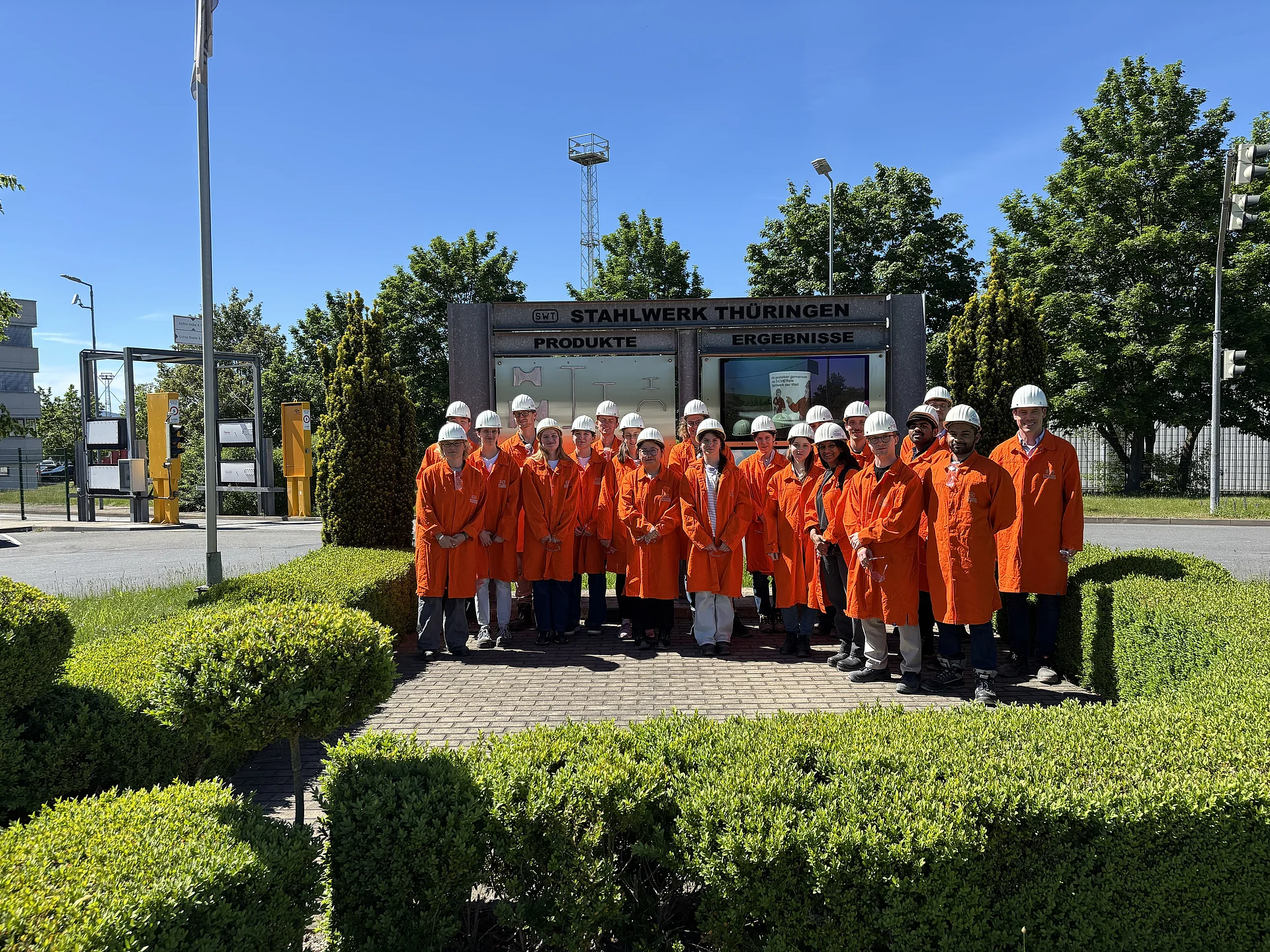
The excursion concluded – and reached its climax – with a visit to the Thüringen Steelworks in Unterwellenborn – the only steelworks in Thuringia. The site’s history dates back to 1872, when the Maximilianshütte Ironworks Company from Sulzbach-Rosenberg in Bavaria was granted permission to build a steelworks. Steel has been produced at the site continuously since 1878. The Thüringen Steelworks is an electric steelworks specialising in section steel. Its raw material consists entirely of recycled steel scrap, which is melted down in an electric arc furnace and processed into liquid steel. After casting in the continuous casting line, the material is rolled into finished beam sections in the modern section rolling mill and then cut to manageable lengths. The product range comprises more than 250 different sections.
Two dedicated members of staff from the steelworks took the students on a detailed tour of the entire production line. Starting at the scrap yard, where delivered scrap metal is sorted and prepared for the melting process, through the impressive electric arc furnace, right up to the continuous casting and rolling mill, the students were able to experience every stage of production at first hand. The accompanying experts not only explained the technical processes but also discussed quality assurance, energy management and the plant’s sustainability strategy.
Field trips on timber and steel construction, June 2025
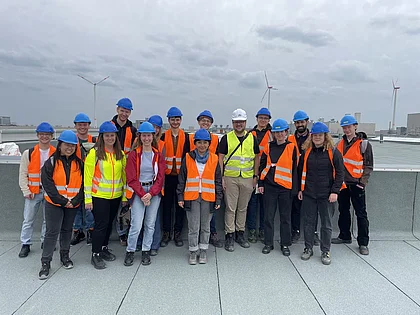
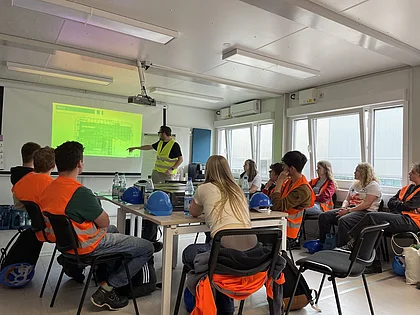
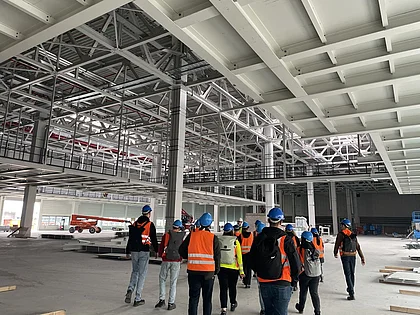
Field trips on timber and steel construction, June 2025
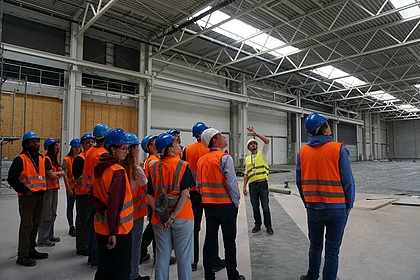
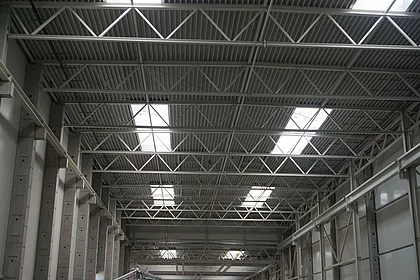
On 10 June 2025, the students taking part in the steel construction field trip were given a glimpse behind the scenes of modern civil engineering and industrial production. They visited the BMW plant in Leipzig. Several production halls are currently under construction there, under the management and planning of the Leipzig-based engineering firm Hubert Beyer. The halls are being built using a steel-concrete composite construction method and are intended to provide space for the manufacture of new electric cars, whilst ensuring they are optimally adapted to the planned production processes at the plant. In addition to changing requirements, fire safety – particularly in the storage areas for high-voltage batteries – also poses a major challenge for the planners. Tom Beyer led the tour of the construction site, providing participants with insights into the planning, implementation and structural challenges. Following the site tour, the students gained a first-hand insight into ongoing vehicle production at BMW during a factory tour. Here, they were able to experience the complex manufacturing processes and the high level of automation.
On 12 June, the first stop on the excursion was a visit to the Pollmeier laminated veneer lumber plant. On site, the participants were able to follow the entire production process of BauBuche – an innovative laminated veneer timber product made from beech wood – at first hand: from the delivery of the round timber to the manufacture of ready-to-assemble building components. In addition to technical aspects, the focus was also on the diverse properties and potential applications of BauBuche. A group lunch rounded off the visit and provided an opportunity for discussion.
Another highlight was the tour of Rhenus’s newly built logistics centre in Gotha. Here, the group was greeted by an impressive steel-framed structure, constructed using composite and frame construction methods. The supporting structure is designed to accommodate an automated storage system (Autostore) and imposes specific requirements in terms of fire safety and access. In addition to the main structure, the group gained an impressive insight into the complex multi-level systems for technical and service areas.
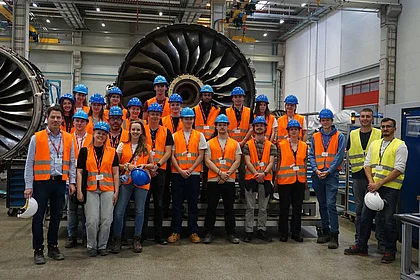
The excursion concluded with a site visit to Goldbeck in Arnstadt. The group viewed two sub-projects currently under construction as part of the extension of an industrial hall for the maintenance of aircraft engines. The ‘Cleaningline’ sub-project comprises a new hall with a basement, topped by a technical building and a crane system. Among other things, steel frame systems with truss girders, reinforced concrete columns and crane runway girders are being used here. The ‘Shop Extension’ sub-project involves the construction of a new two-storey hall, partly with a basement, built using a combination of solid masonry and steel construction.
We would like to thank all the companies involved for their kind support and the detailed insights they have provided!
Steel Construction Field Trip, May 2024
As part of this year’s field trip, the Chair of Steel and Hybrid Structures organised a field trip in Saxony on 22 May 2024. The excursion was aimed at all civil engineering students, both at Master’s and Bachelor’s level, and was designed to provide an insight into and an outlook on the construction of large bridges using steel or composite steel structures.
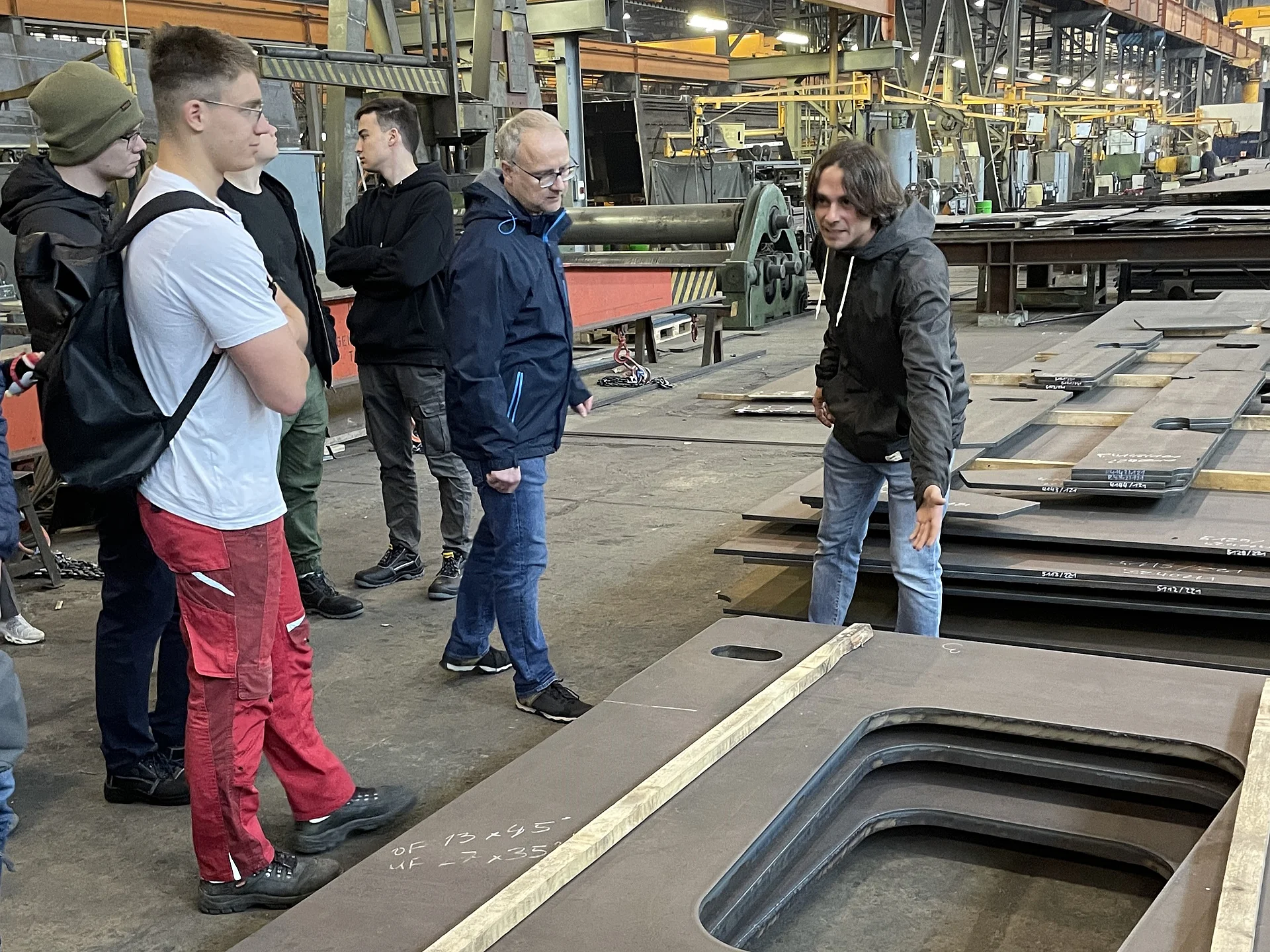
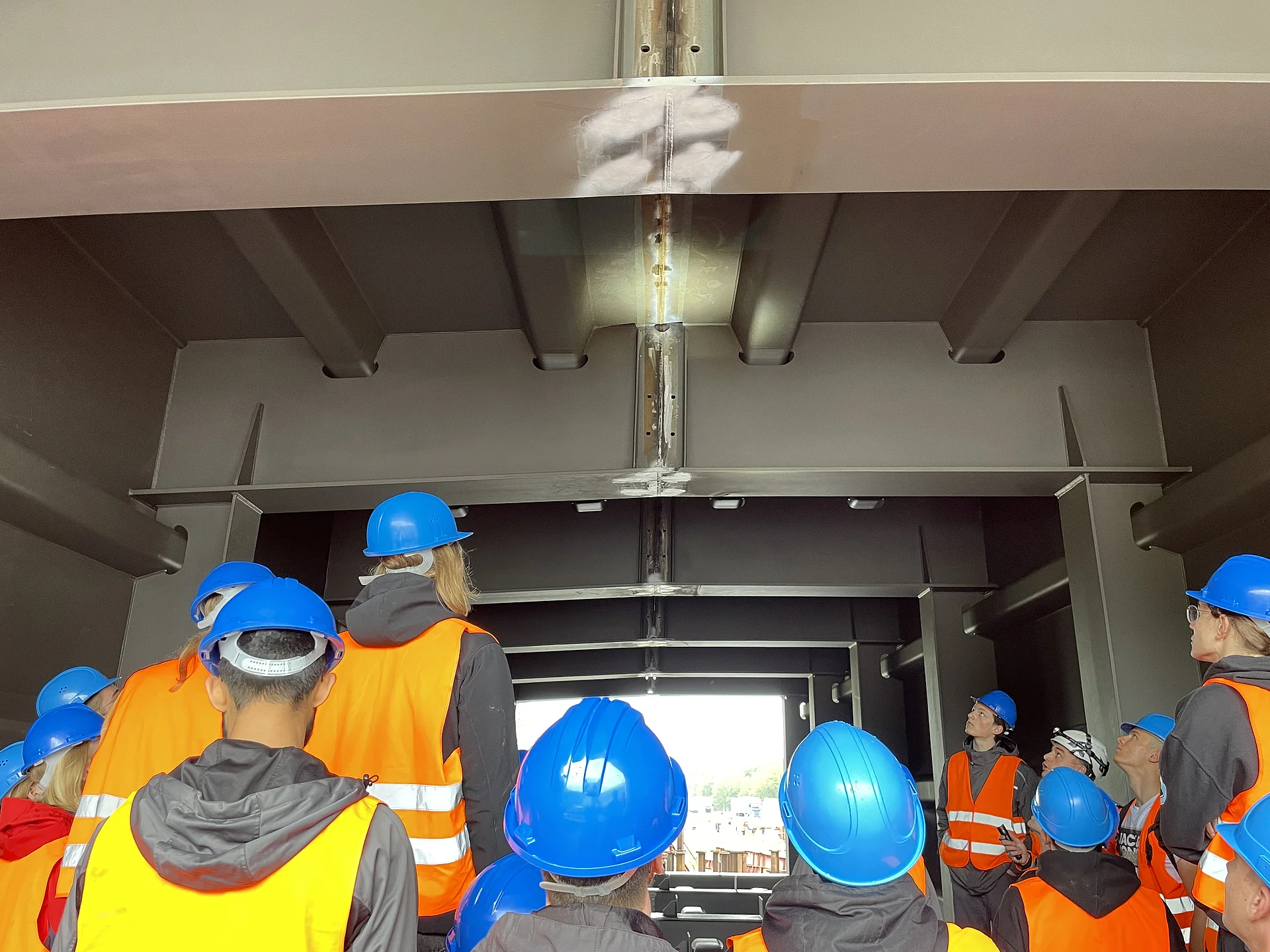
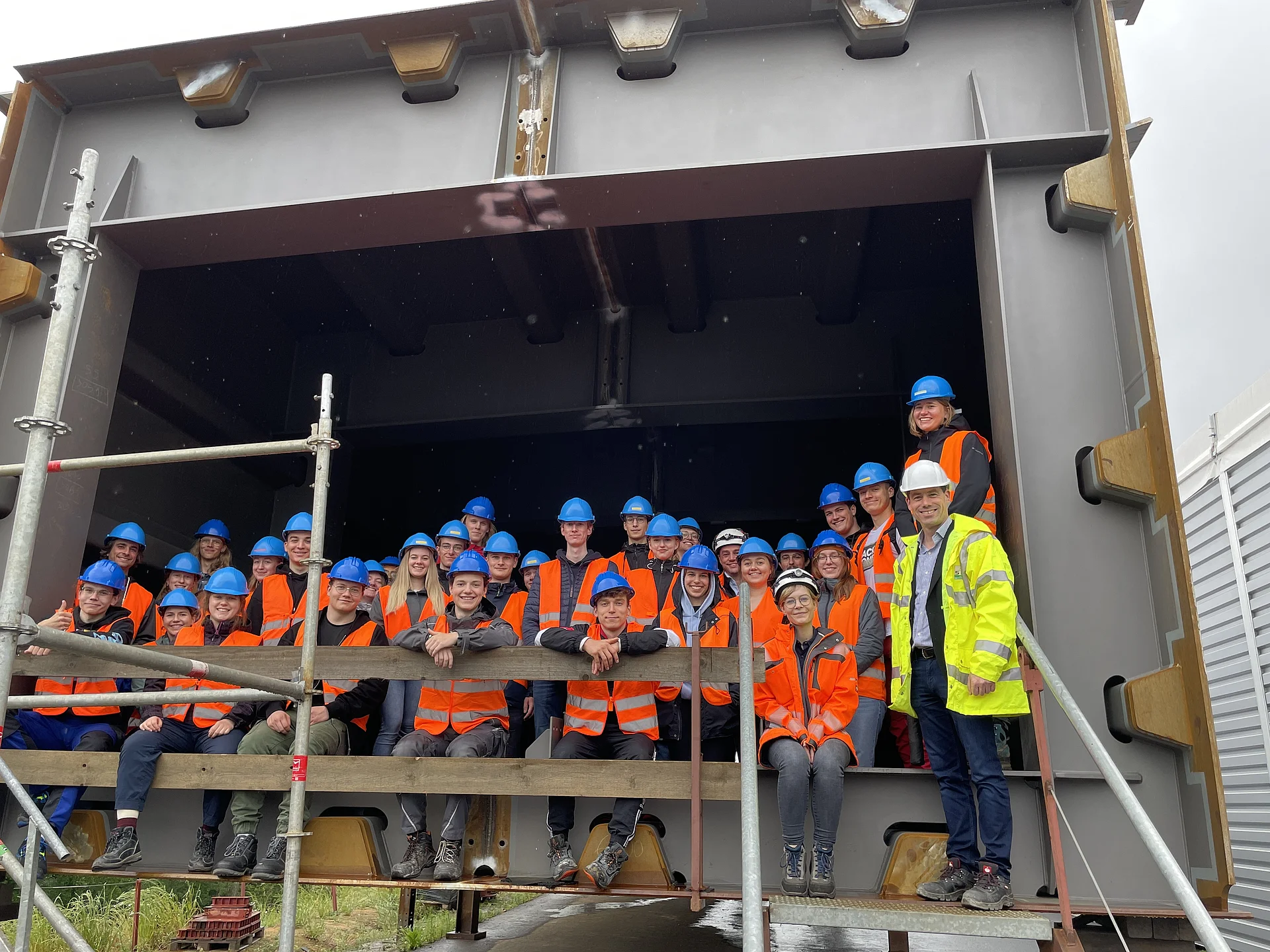
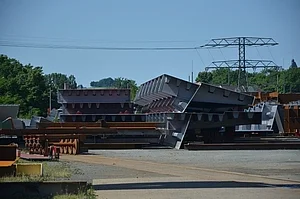
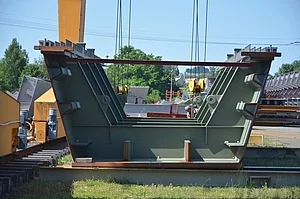
The group visited the ZSB (Zwickauer Sonderstahlbau) factory in Zwickau. Here, the students were able to gain an impression of the manufacturing and design processes, as well as the complexity of large bridge box-girder segments and temporary structures.




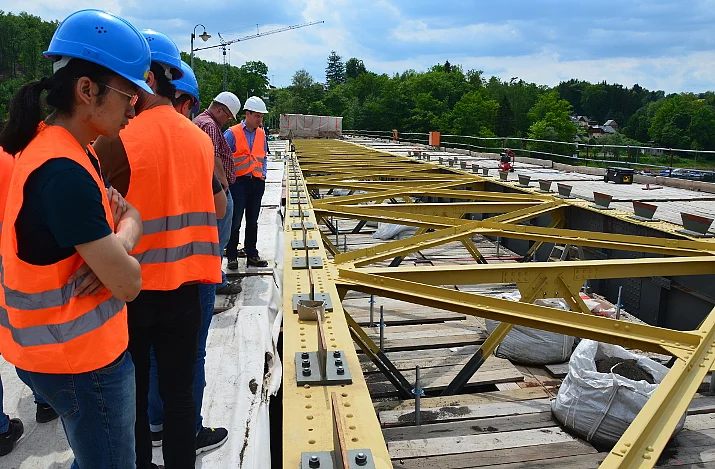
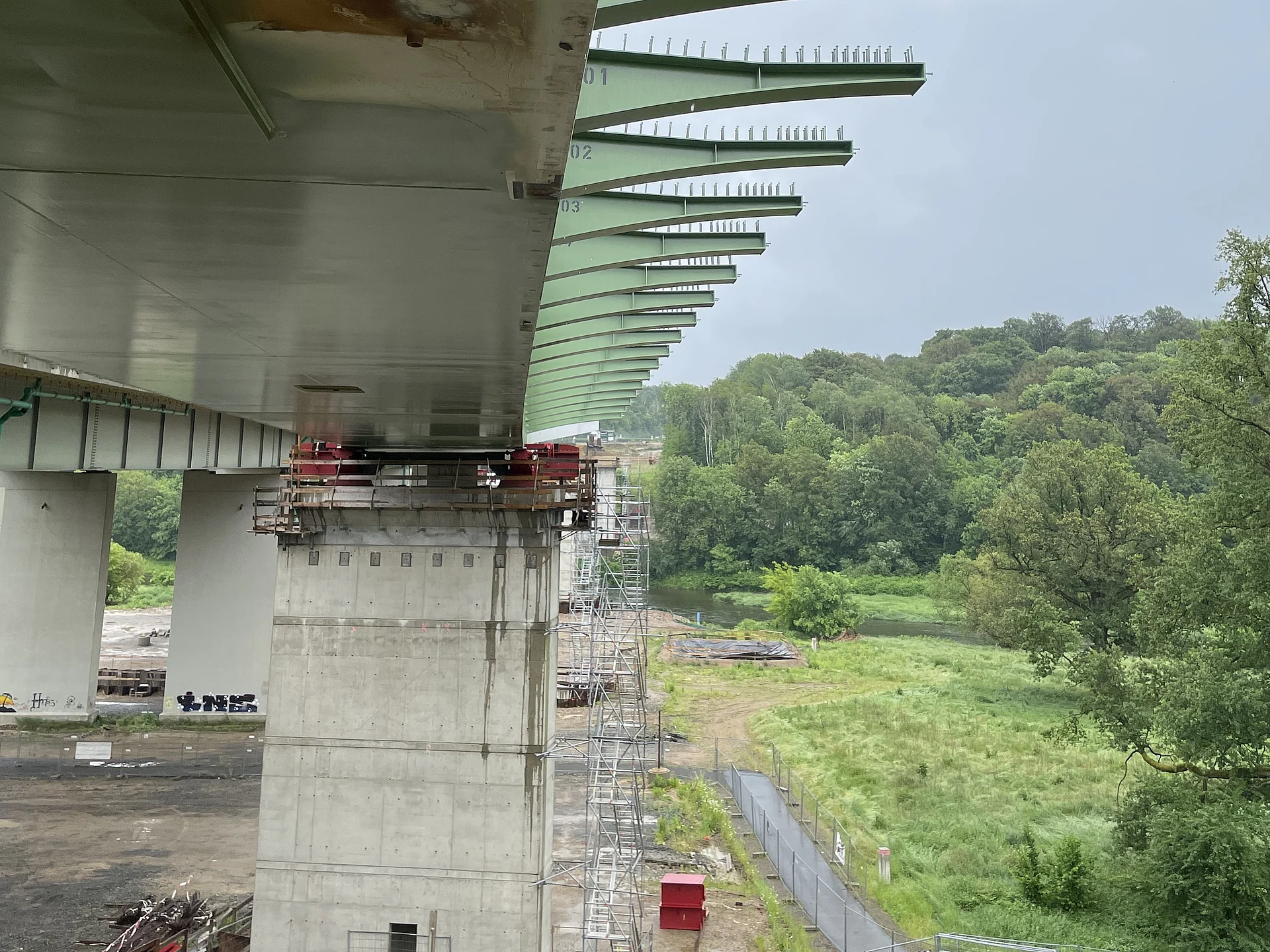
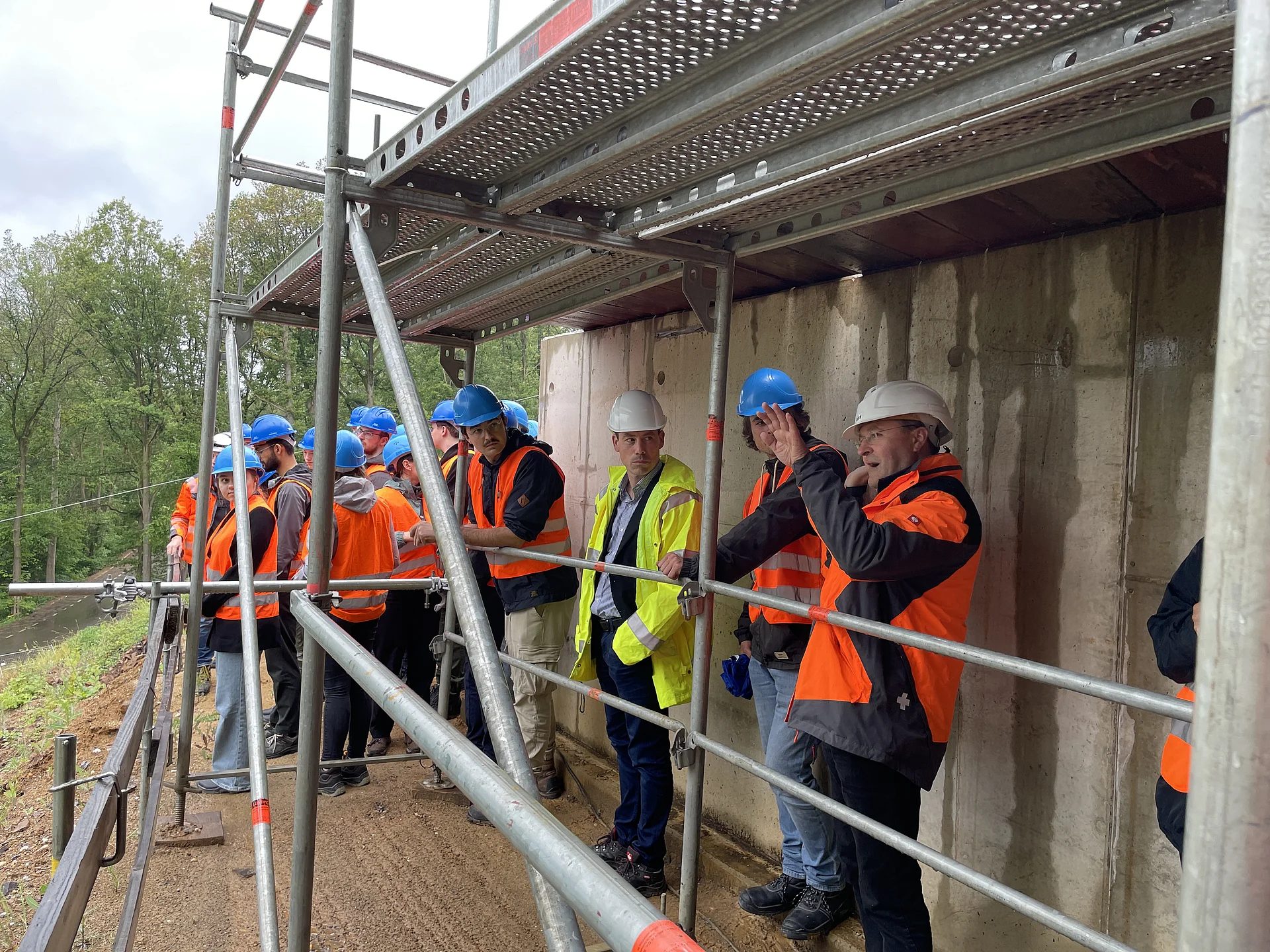
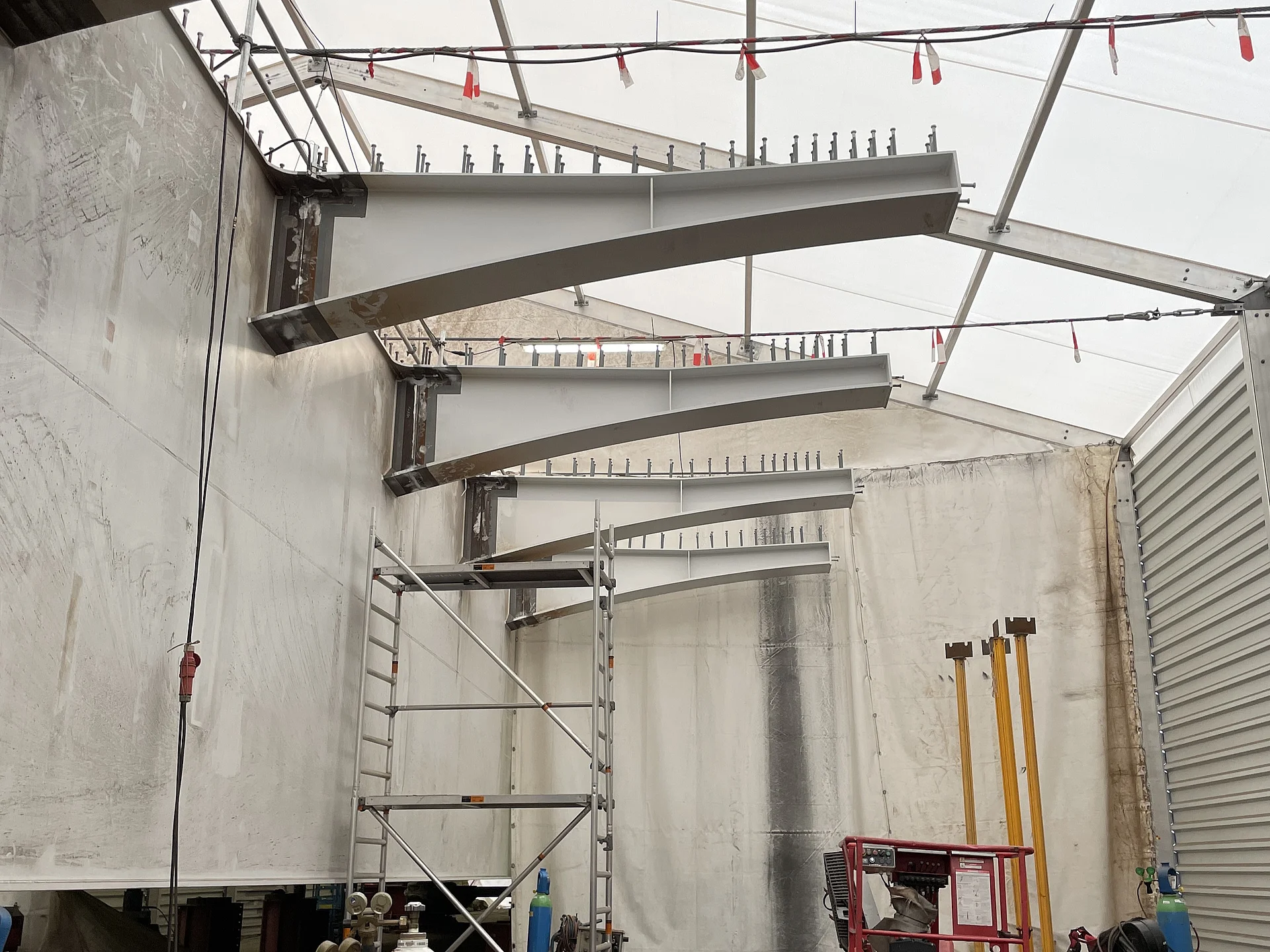
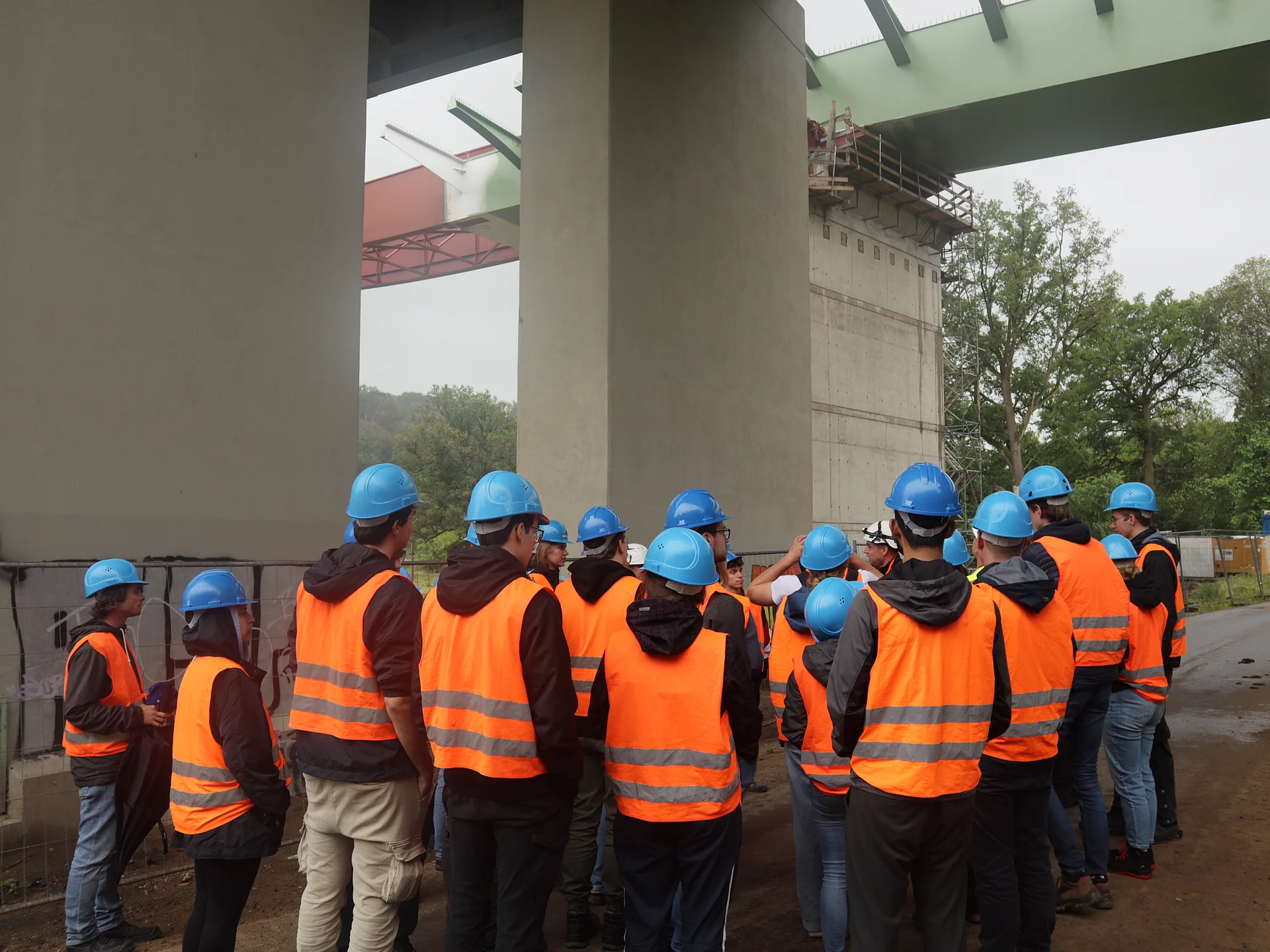
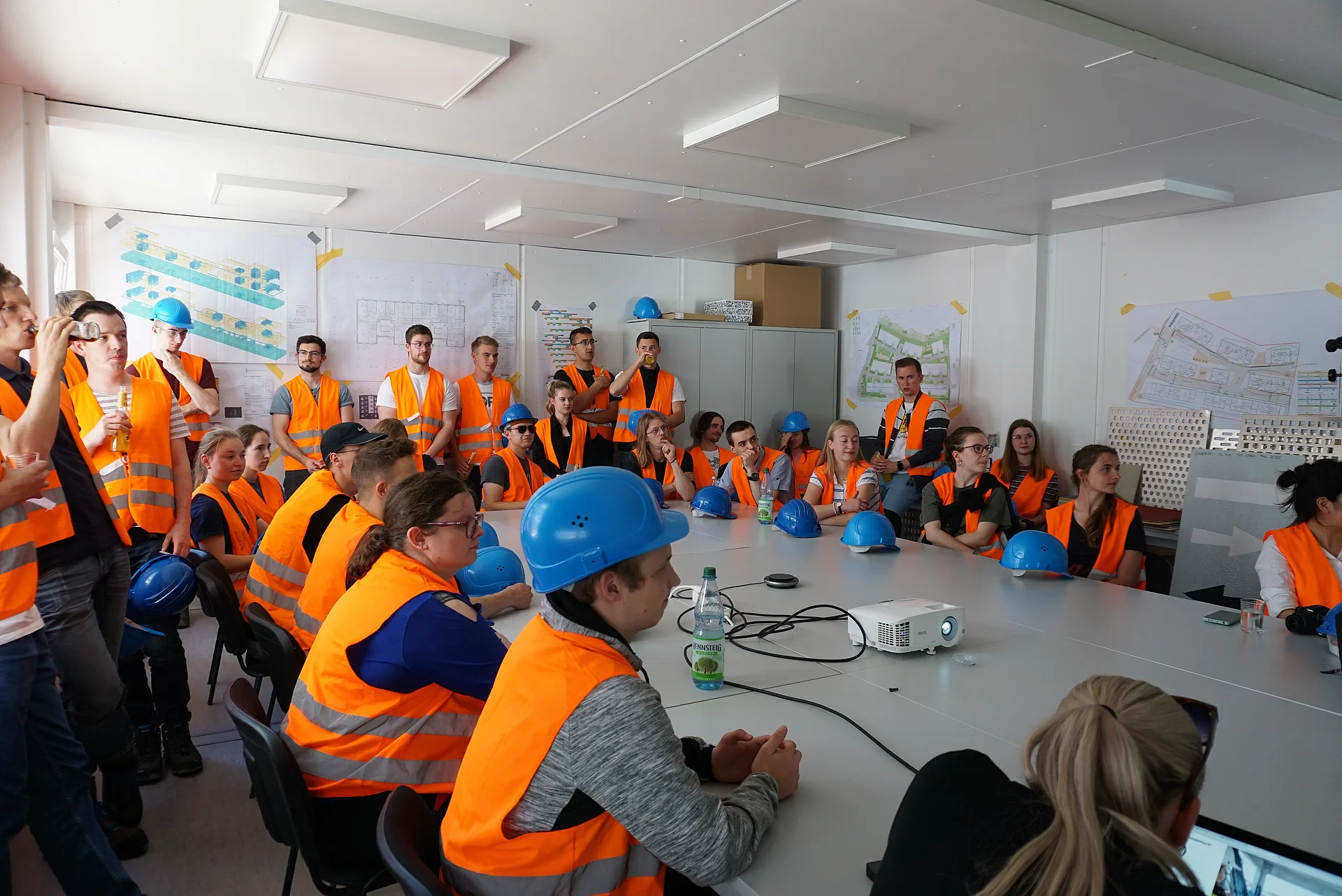
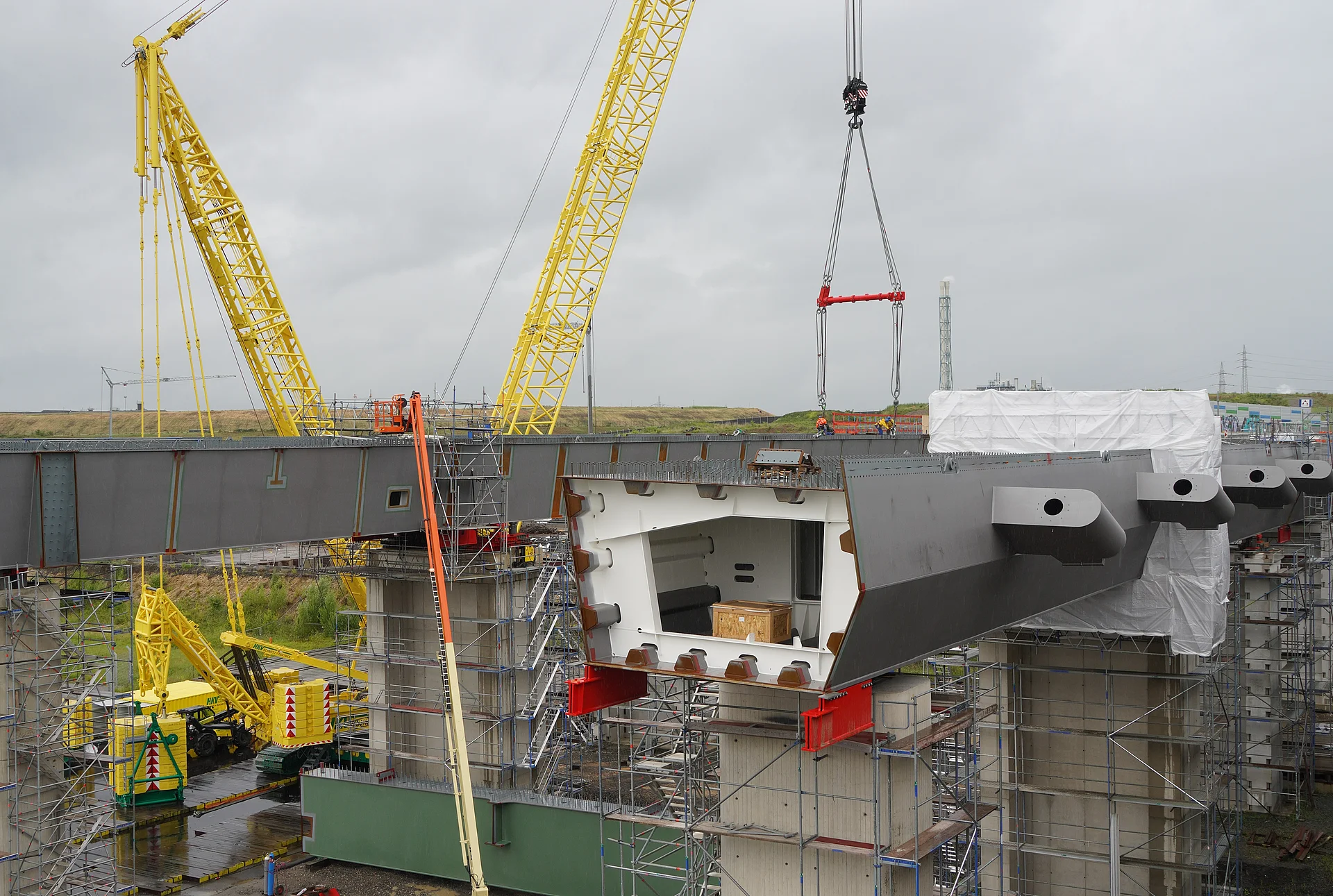
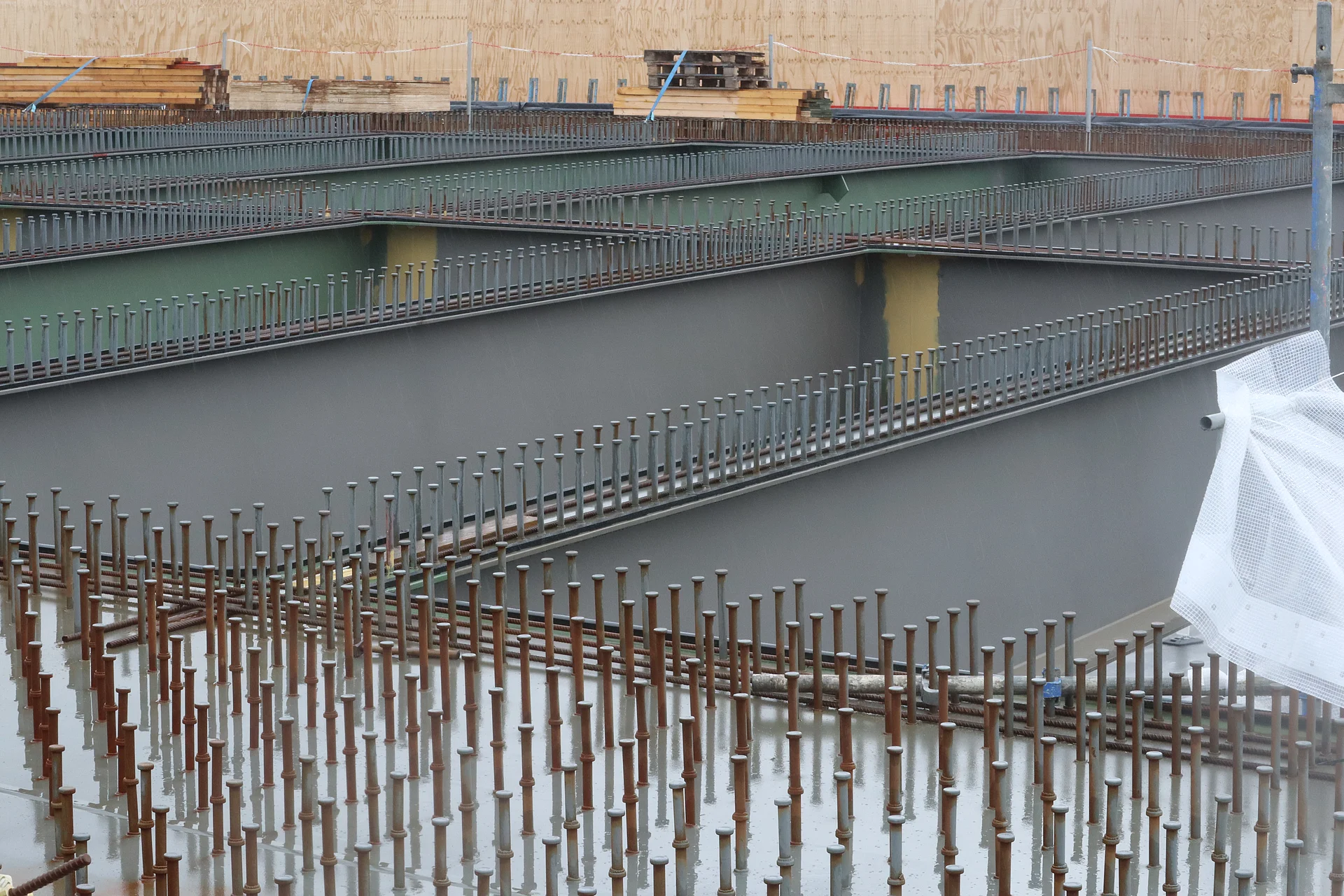
The group then visited the construction site of the replacement bridge on the A14 near Grimma, spanning the River Mulde. Following a brief introduction by IGS Ingenieure GmbH & CO. KG in the site office, providing background information on the planned structure and the incremental launching method, the group toured the construction site, including the incremental launching chamber. Here, the segments manufactured by ZSB are joined, the cantilever beams are fitted, the anti-corrosion coating is applied and, finally, the superstructure is slid into place over the piers in stages. After returning to Weimar, there was a convivial barbecue evening at the IGS Ingenieure office.
Field trip: Timber Construction/Timber Bridges, May 2024
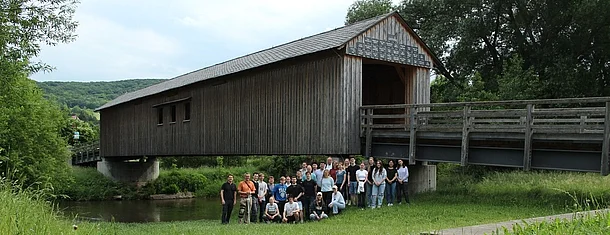
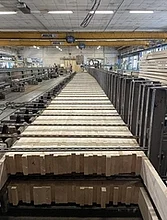
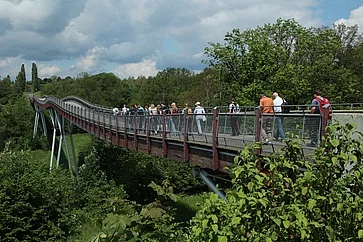
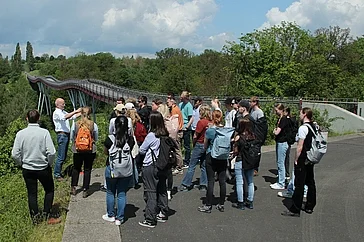
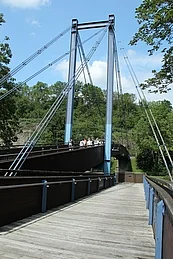
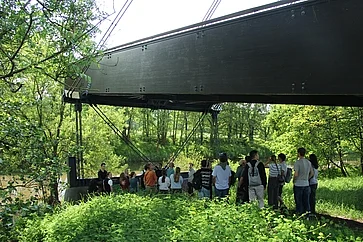
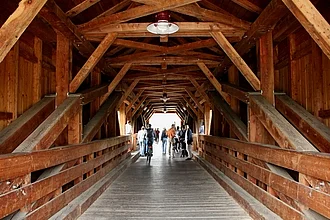
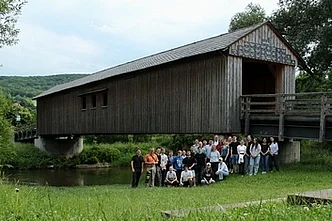
On 23 May 2024, the students taking part in this year’s timber construction field trip gained an insight into the production of glued laminated timber components for timber engineering structures at STRAB Ingenieurholzbau Hermsdorf GmbH and Ziegler Holztechnik GmbH. Accompanied by Dr Gerhard Setzpfandt (SETZPFANDT Beratende Ingenieure GmbH & Co. KG) and Dr Thomas Baron (Chair of Construction Materials), the group then visited three impressive wooden foot and cycle bridges, each with very different load-bearing structures: the ‘Drachenschwanz’ adventure bridge, erected in 2006 for the BuGa2007 in Ronneburg, eastern Thuringia (a tension-cable bridge consisting of a wooden tension cable made of block-glued laminated timber with a total length of 225 m), a cable-stayed bridge with a trough-shaped cross-section made of glued-laminated timber, originally built in 1993 to span Stadtrodaer Straße in Jena-Wöllnitz (constructed as an unprotected timber bridge, with a total length of approx. 70 m) and the Kunitzer Hausbrücke over the River Saale north of Jena, which was rebuilt in 2012 (a timber bridge modelled on the historical original, constructed as an enclosed suspension structure with a span of approx. 35 m).
Timber Construction Excursions: May/June 2023
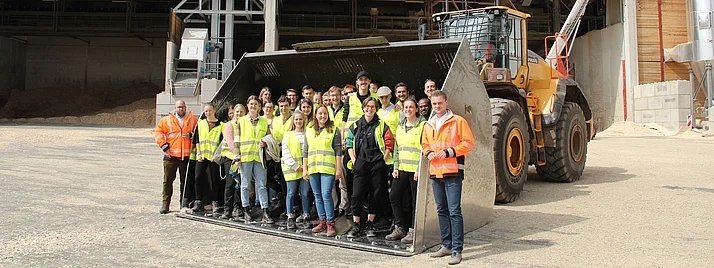
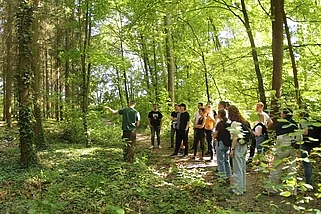
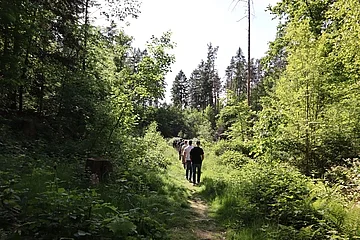
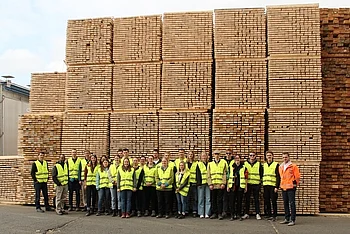
During two day-long excursions on 31 May and 2 June 2023, the participating students gained interesting insights into the production processes at three timber-processing companies in Thuringia and Saxony-Anhalt. Another destination was the Jena-Holzland Forestry Office in Stadtroda. Some photos from the excursions can be found below.
We would like to thank the companies and the Forestry Office for the practical insights and presentations!
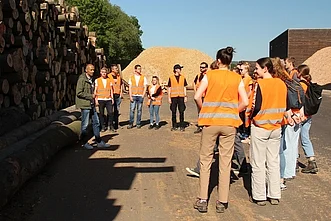
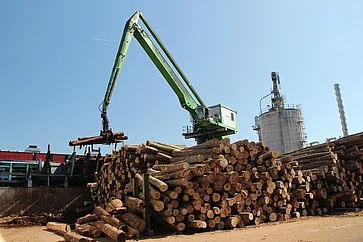
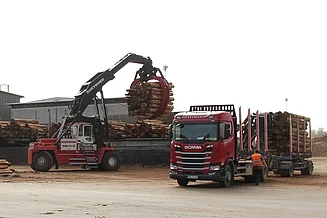
Factory tour of Pollmeier Massivholz GmbH & Co. KG in Creuzburg (31 May 2023)
- Tour of the laminated timber plant: from the delivery of the logs to the cutting and preparation of ready-to-assemble building components made from BauBuche (laminated beech timber)
- Information on the properties and potential applications of hardwood and BauBuche
- Information on the Forestry Office in Stadtroda
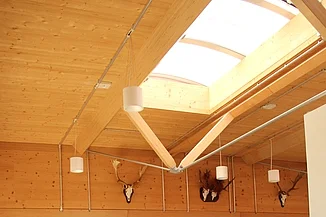
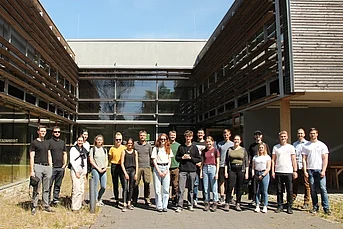
Steel Construction Field Trip, May 2023
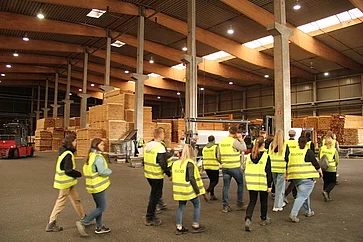
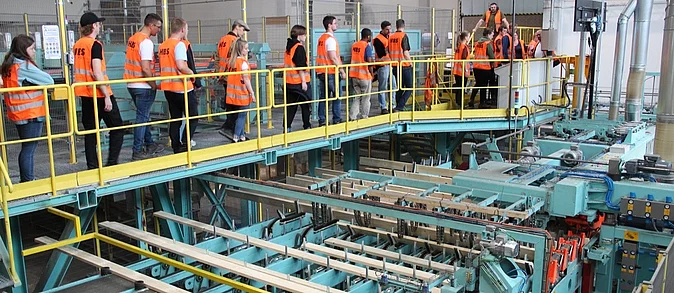
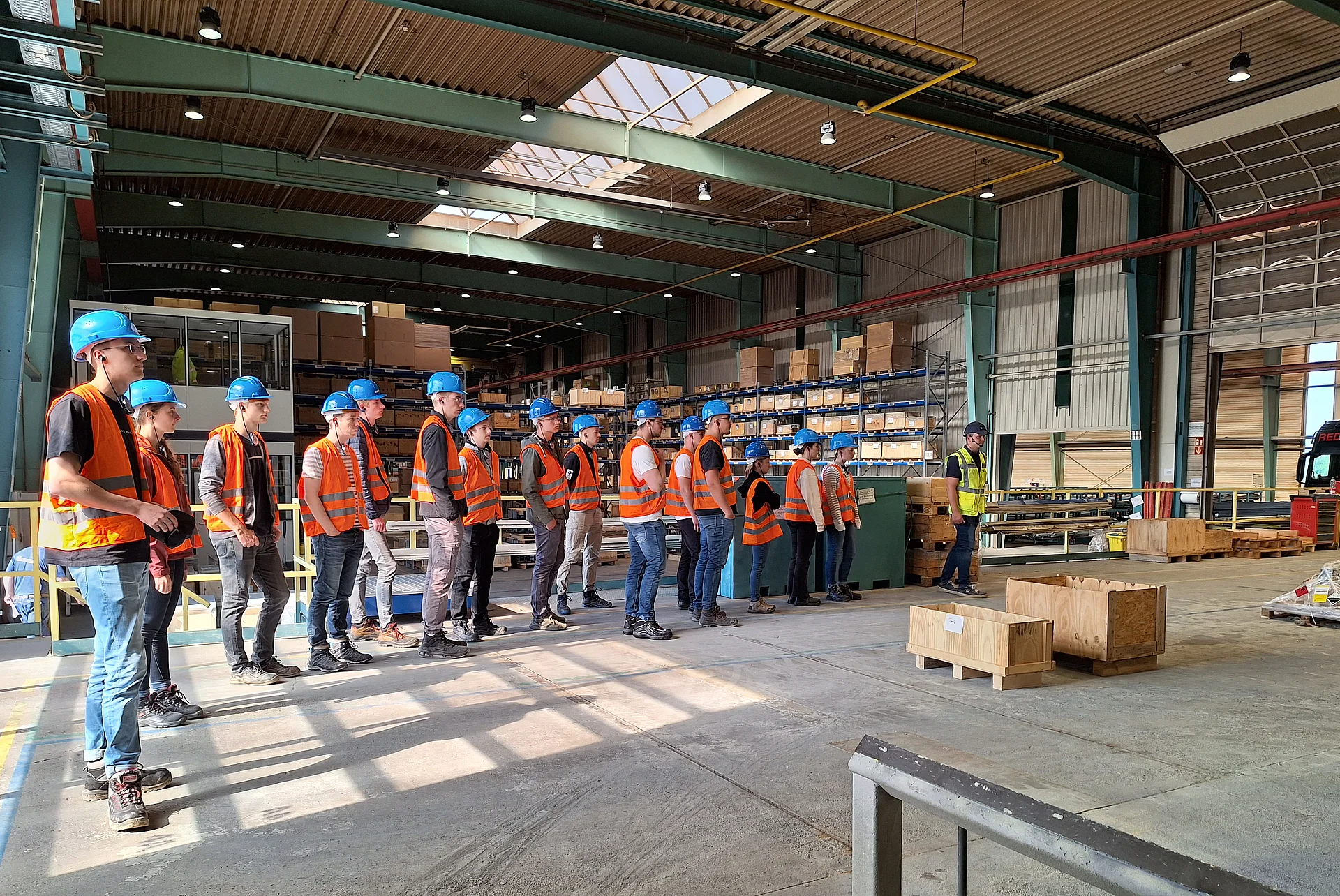
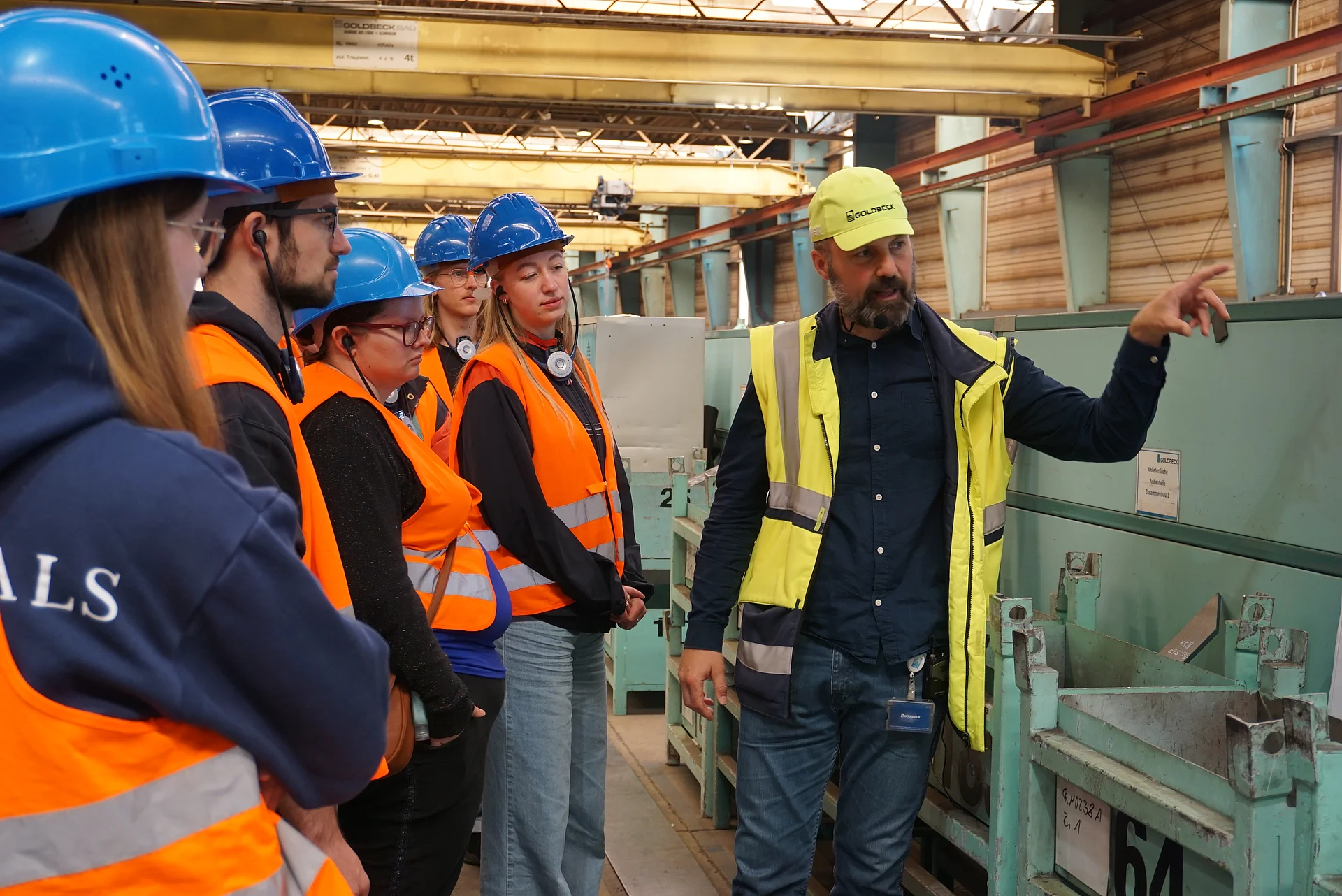
As part of the Faculty of Civil Engineering’s field trip week, the Chair of Steel and Hybrid Structures organised a one-day field trip to Eastern Thuringia and Saxony on 30 May.
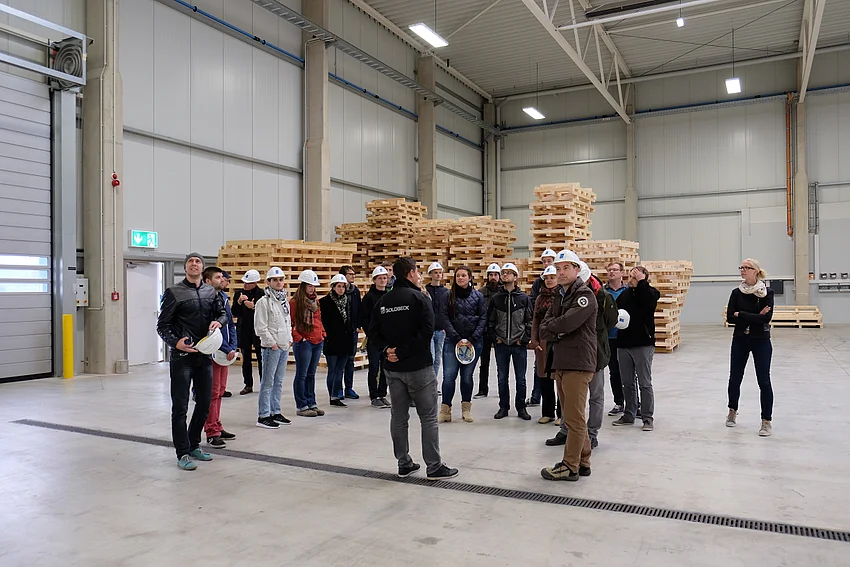
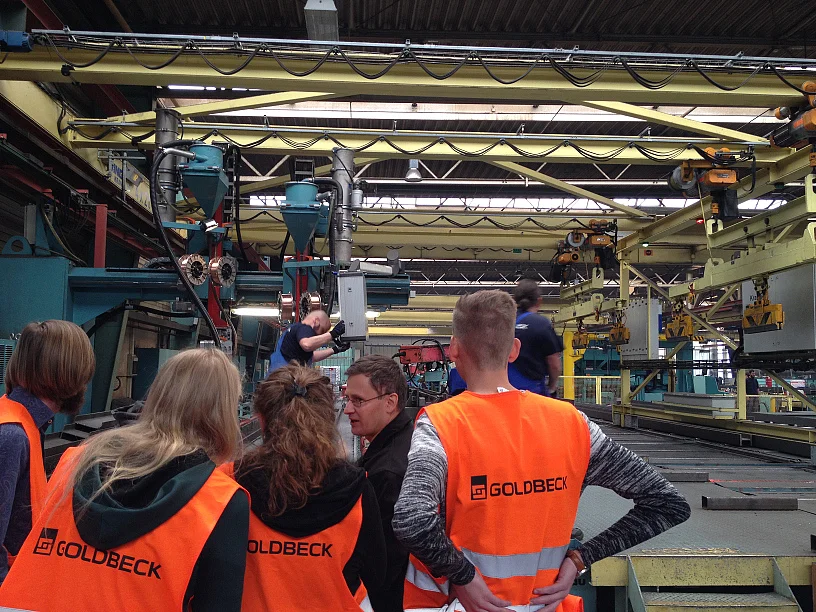
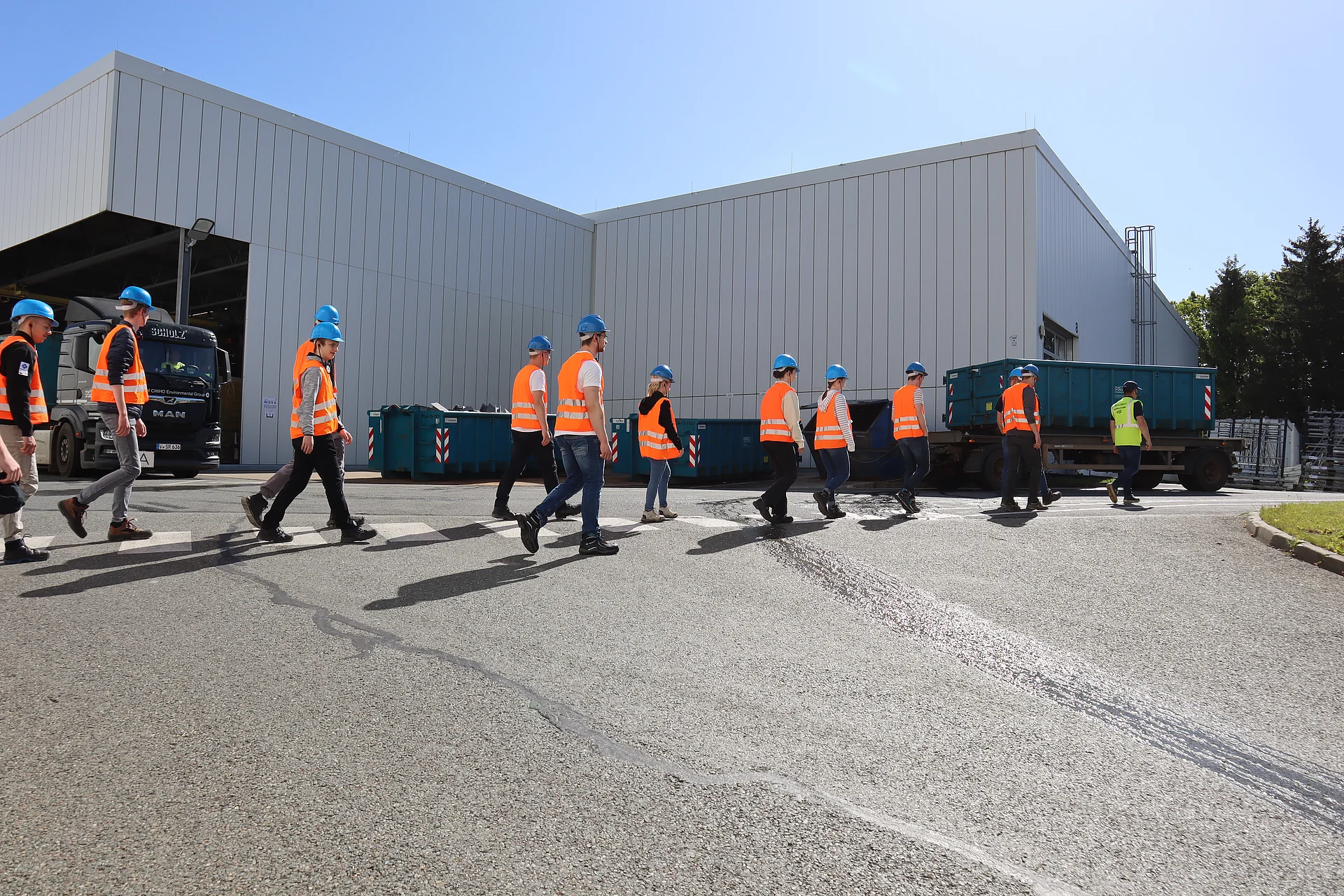
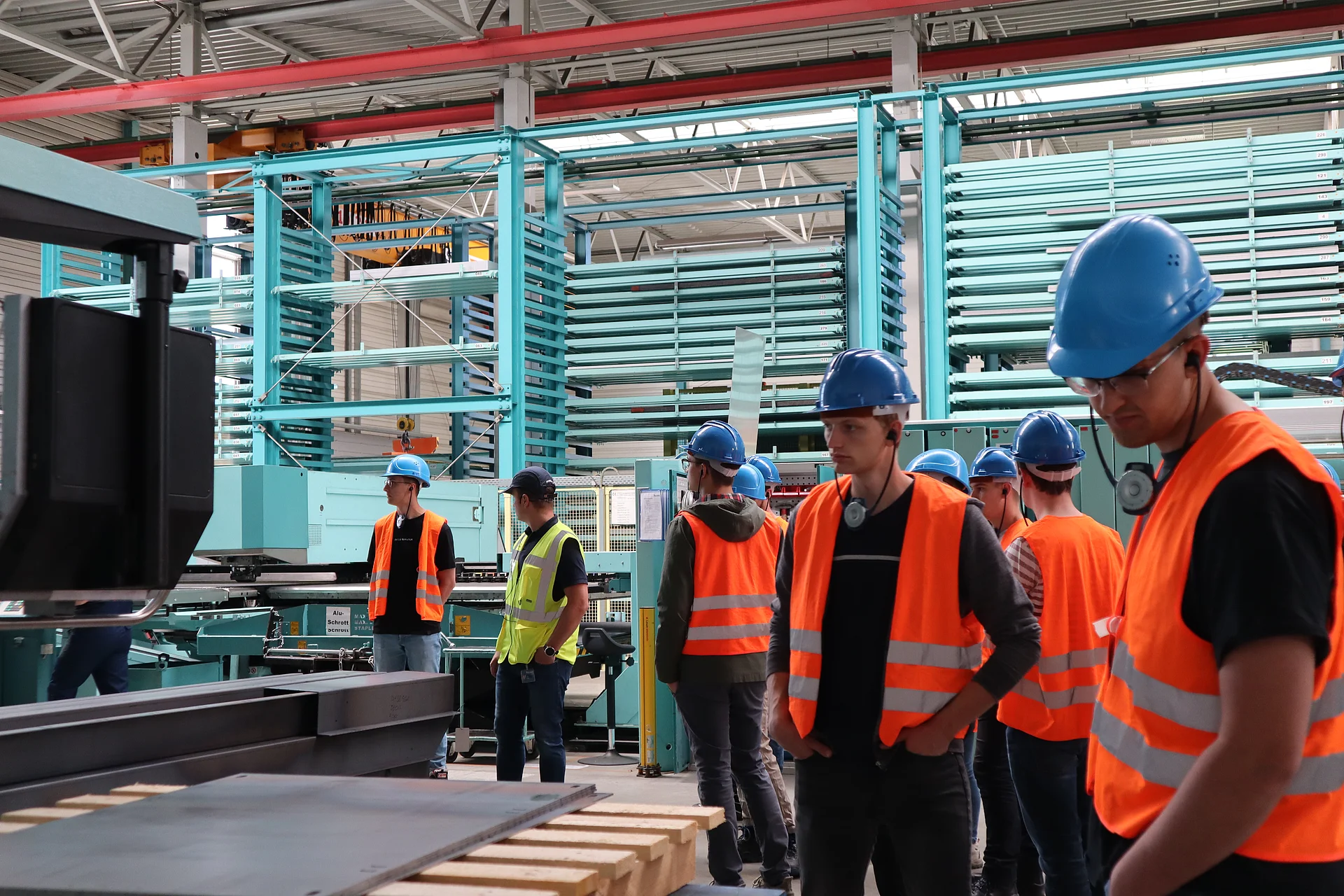
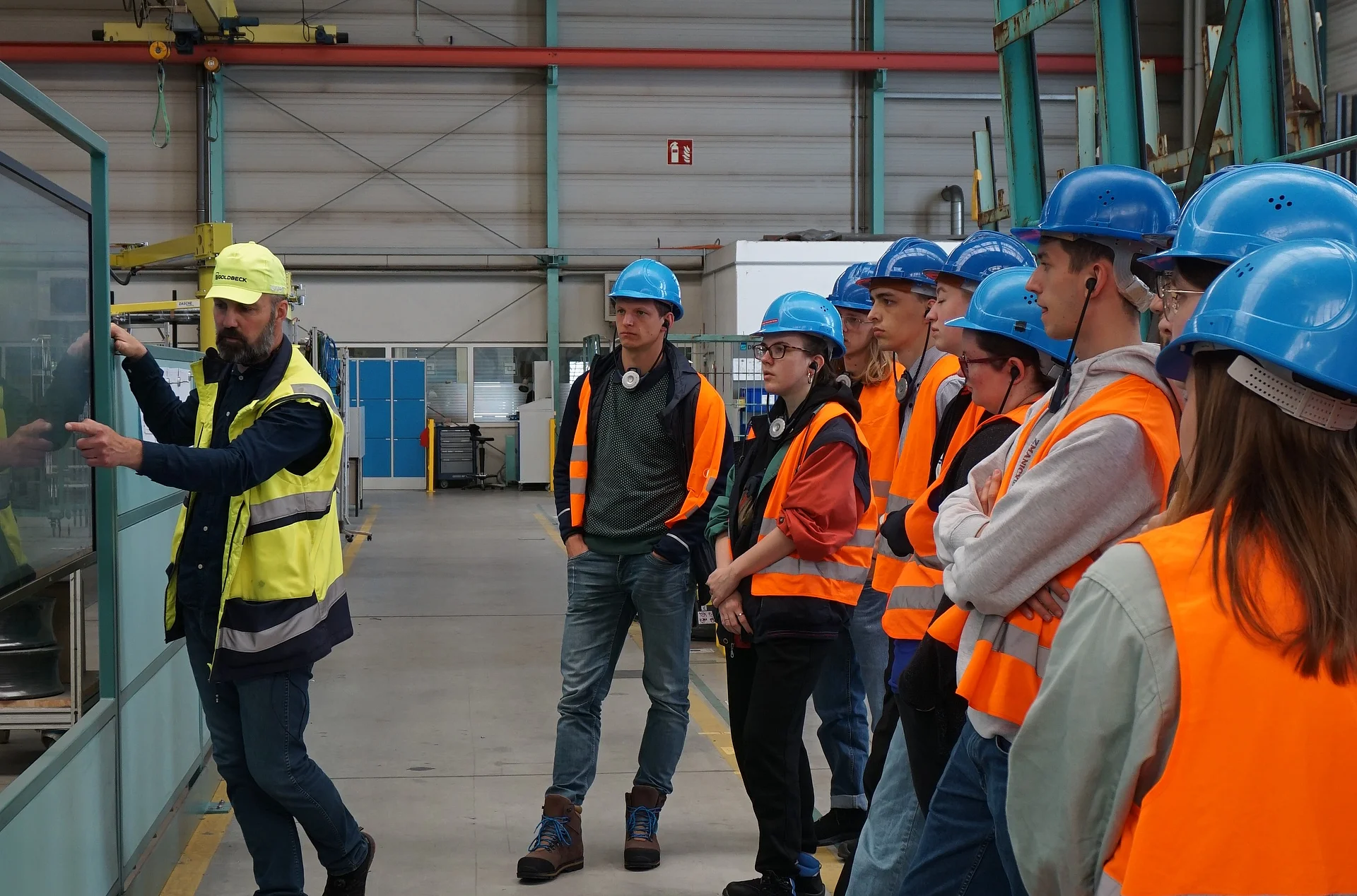
The programme began with a factory tour of GOLDBECK GmbH in Treuen. During the first part of the visit, the students were given an insight into the company’s planning and construction processes, with a focus on digital planning tools. They then took a guided tour, which provided a fascinating insight into steel and sheet metal production processes. The visit concluded with lunch in the GOLDBECK canteen.
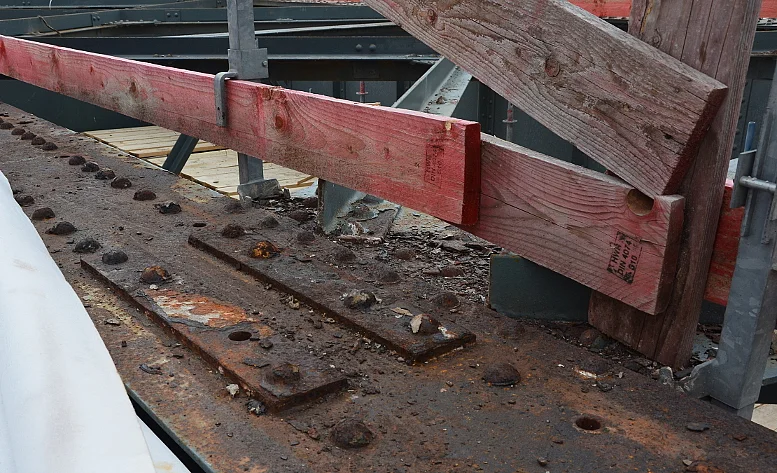
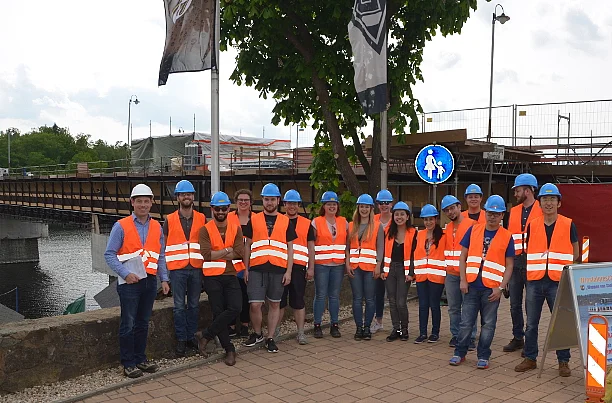
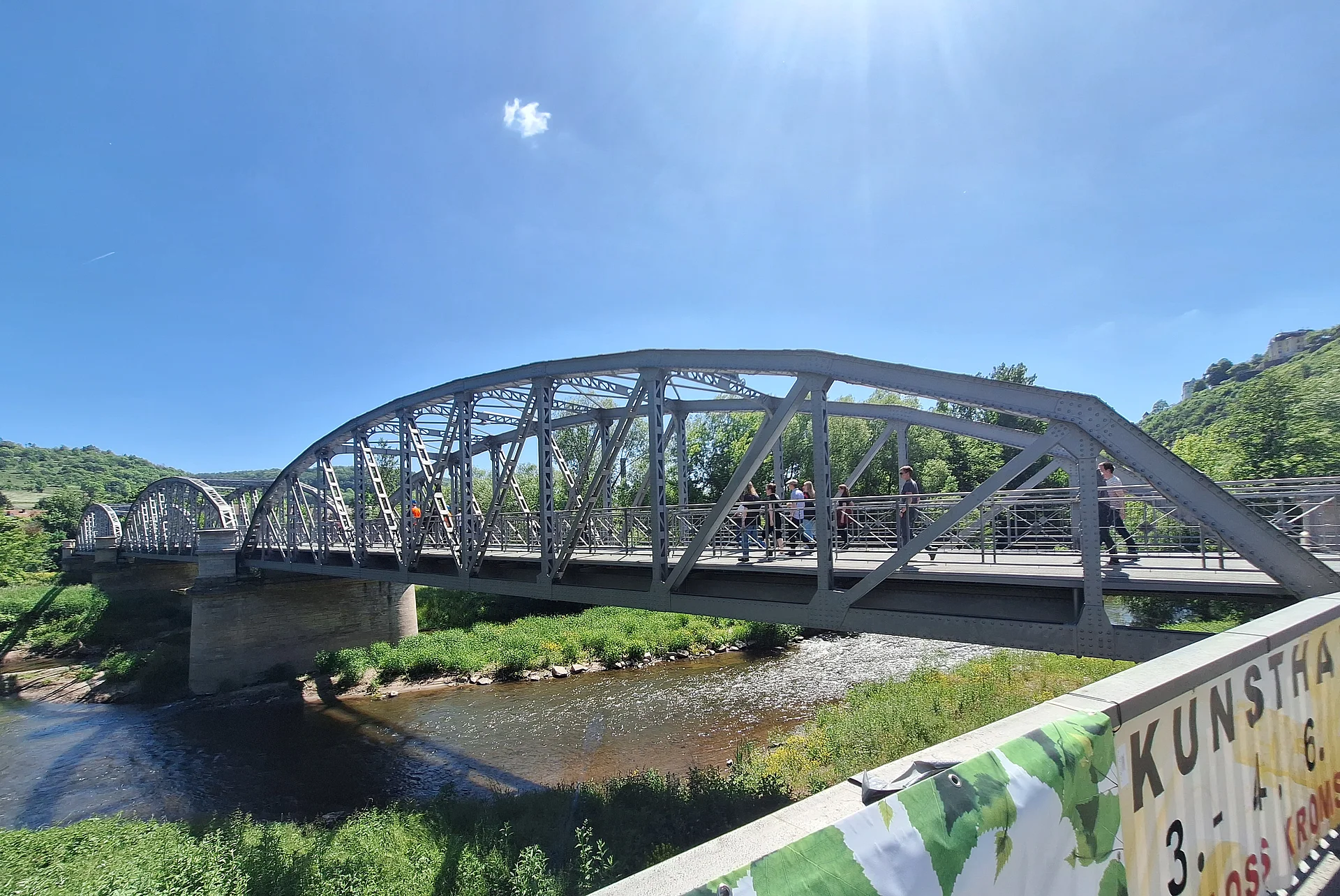
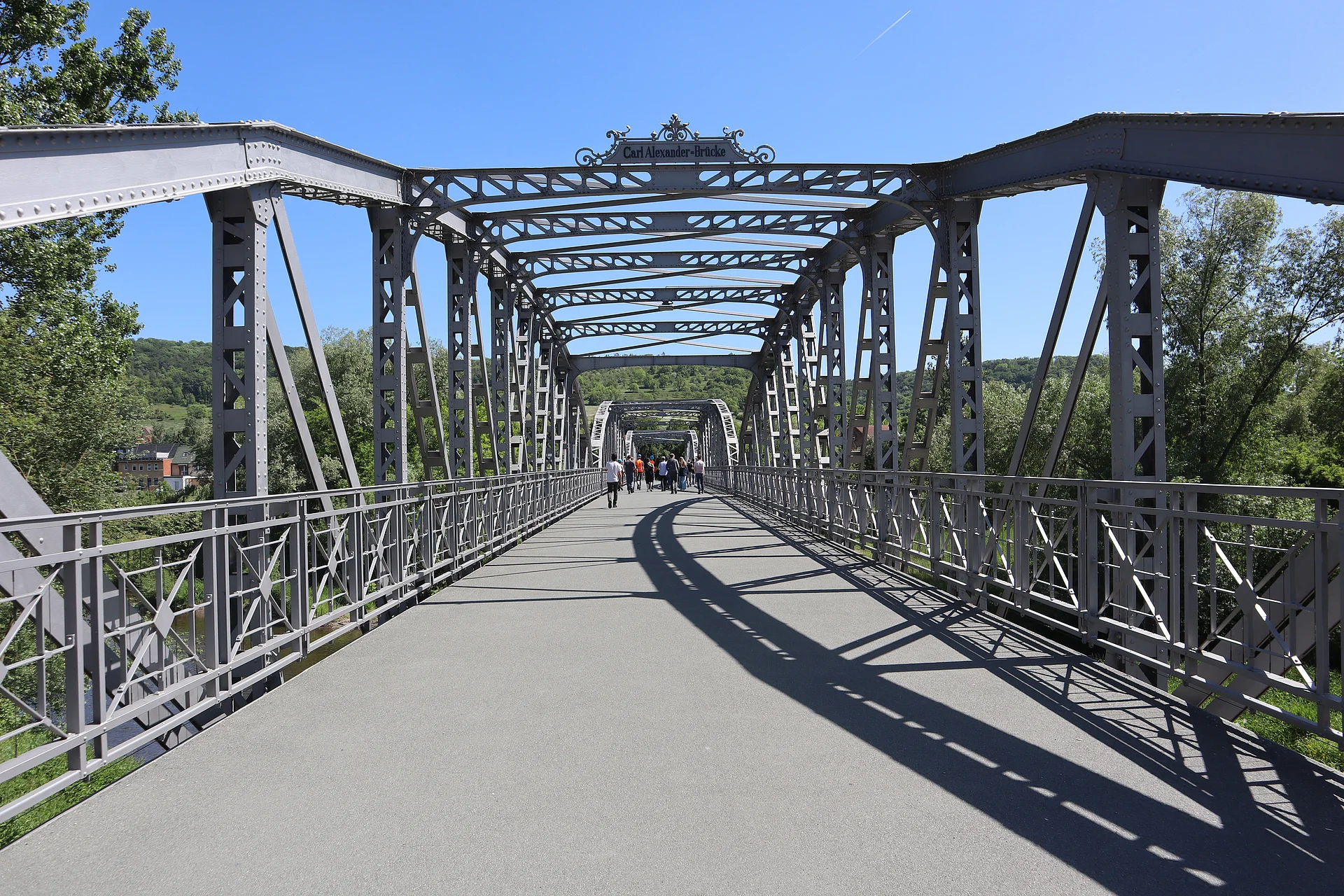
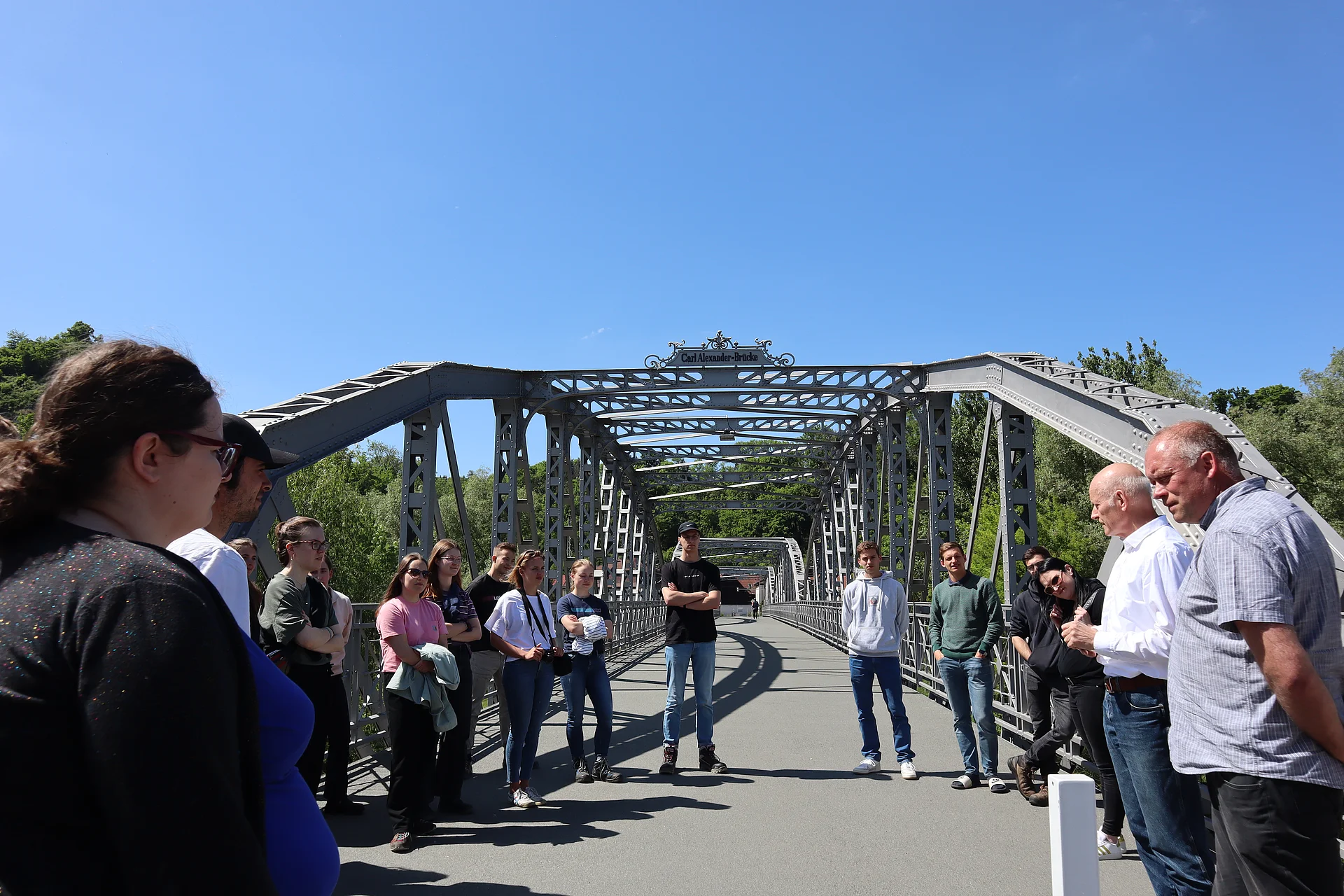
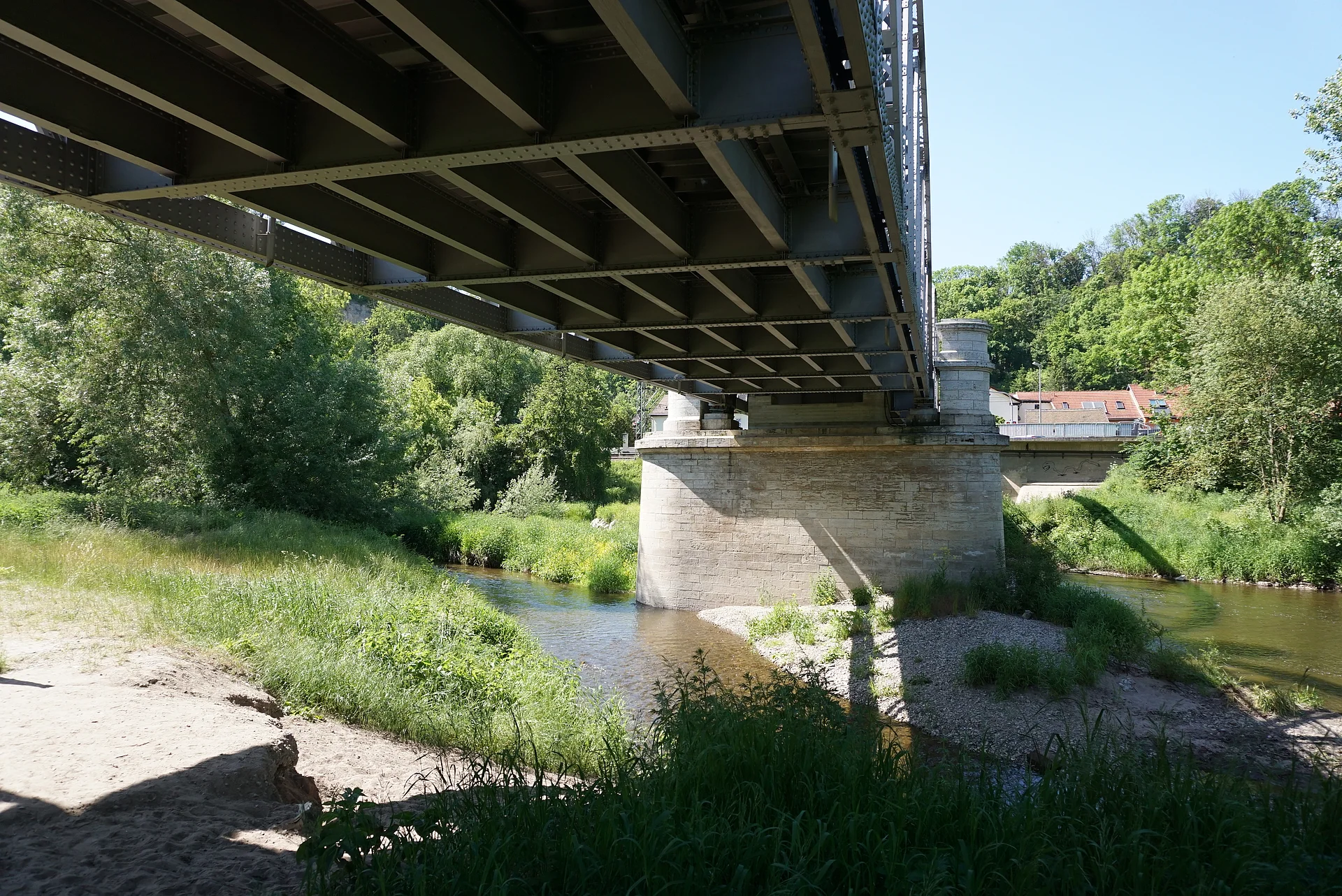
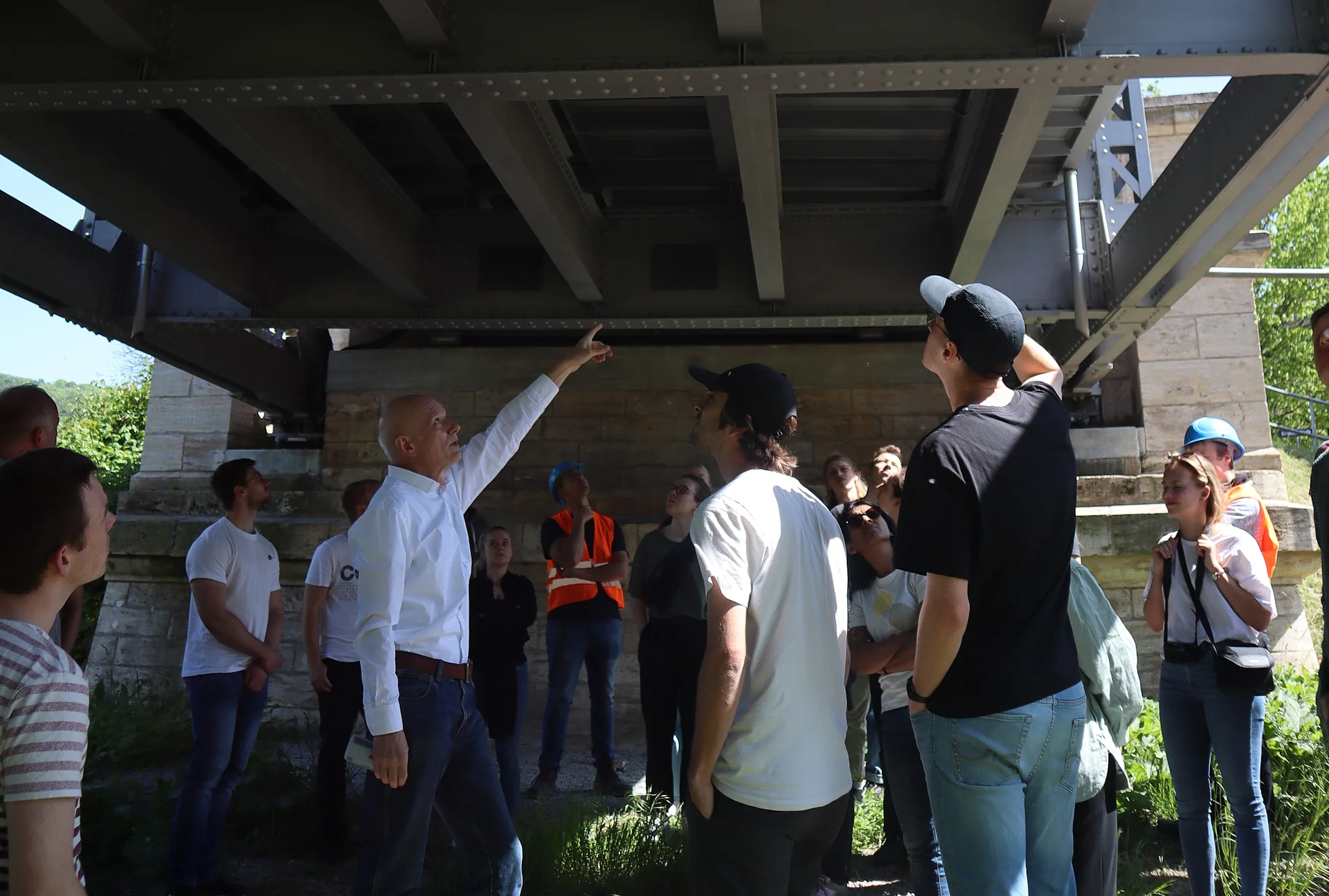
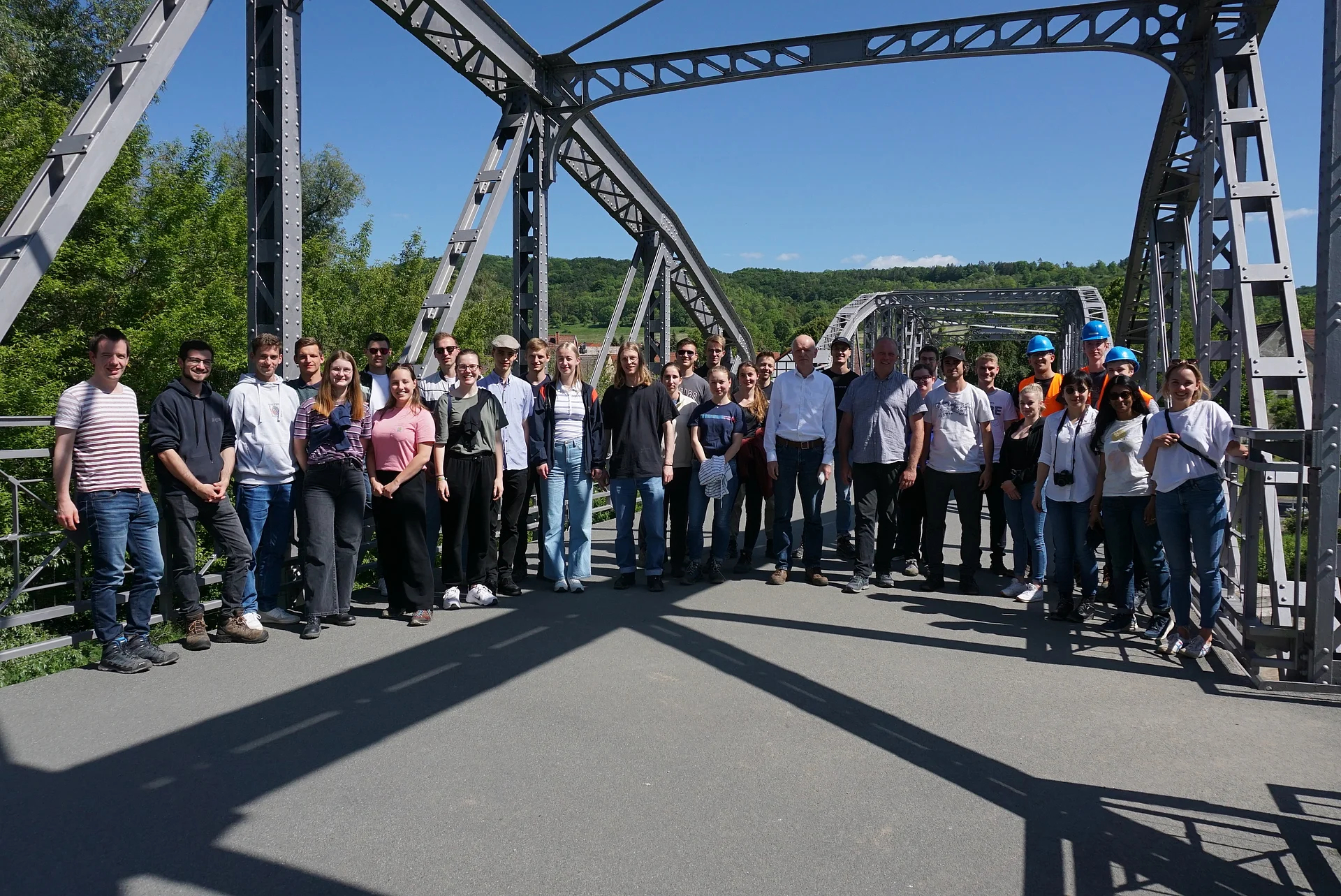
The group then travelled to the Carl-Alexander Bridge near Jena. The steel truss structure, which has been nominated for the 2023 German Bridge Construction Award, underwent extensive renovation between 2018 and 2020 and was restored in accordance with heritage conservation standards. On site, the students were given a guided tour by Dr Setzpfandt (Setzpfandt Engineering) and FUCHS Bau GmbH, who provided interesting information about the restoration process and the structural characteristics of the bridge.
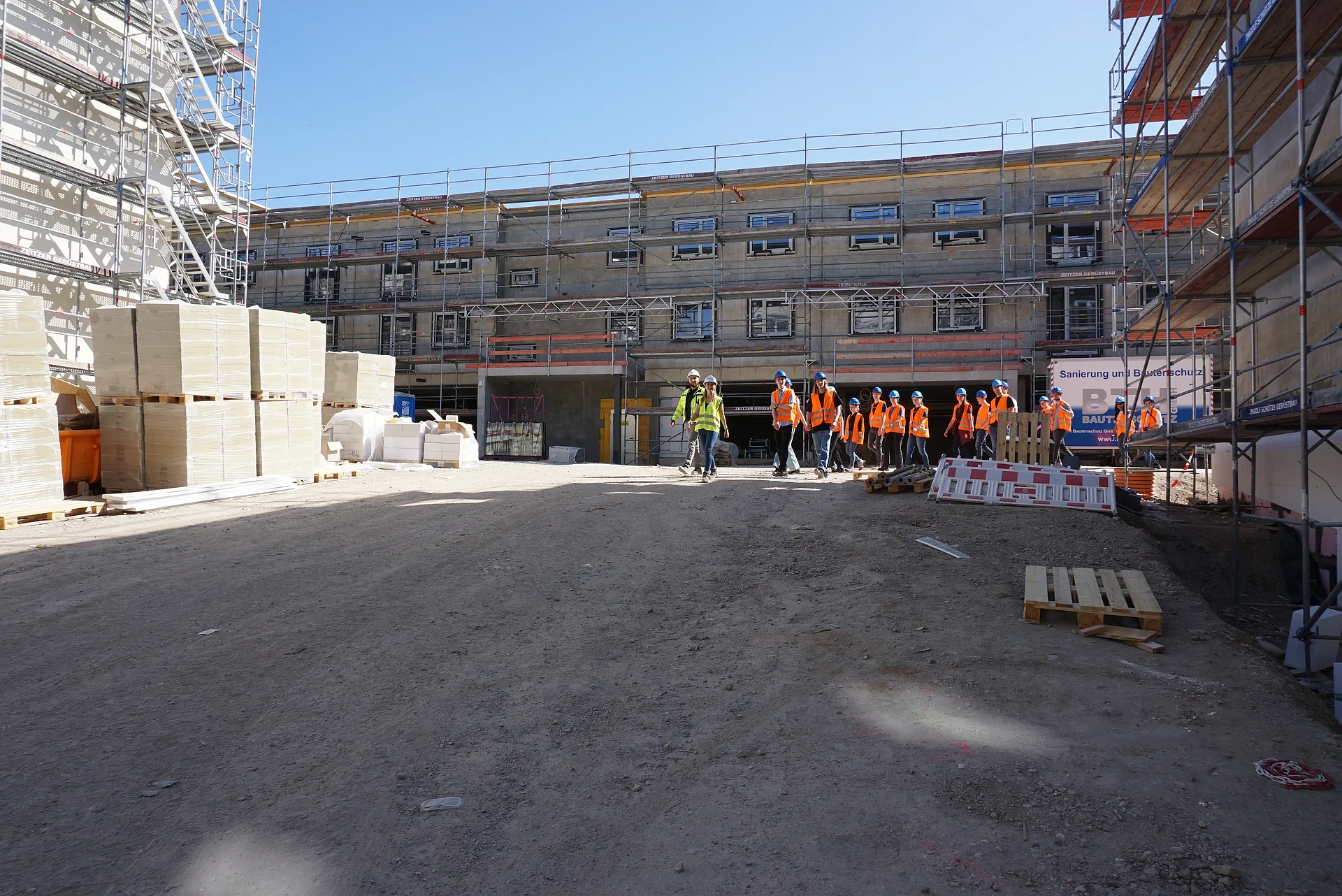
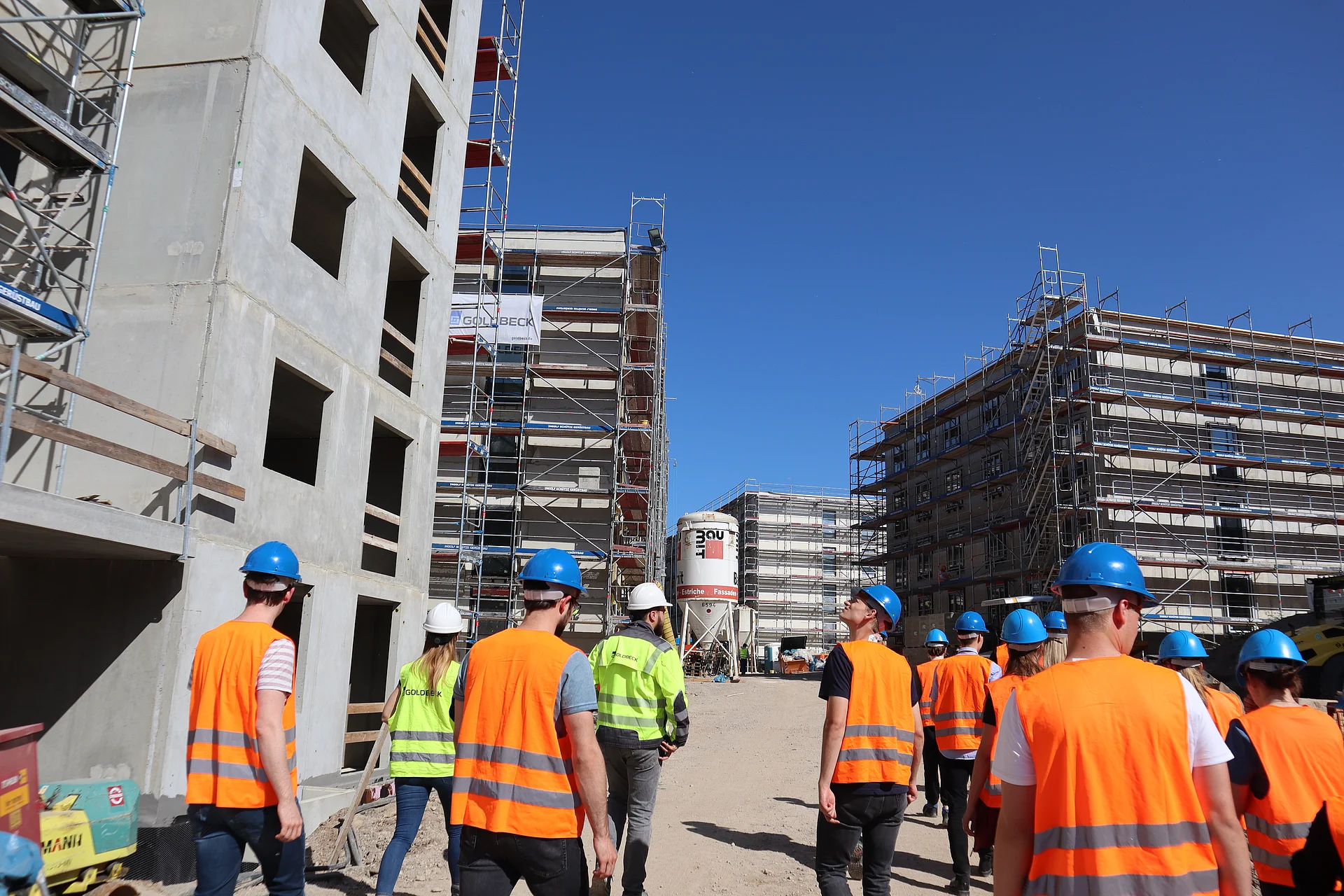
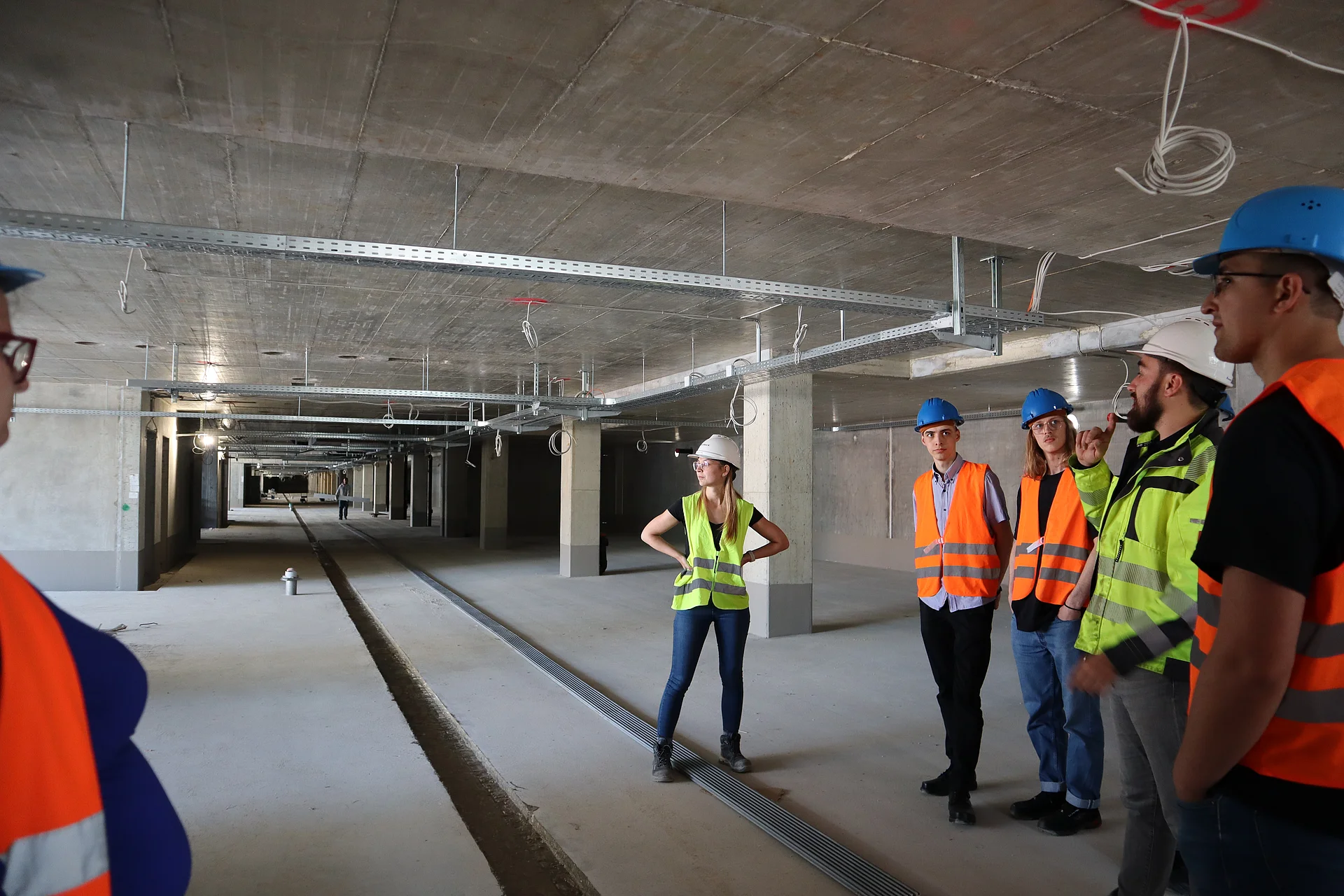
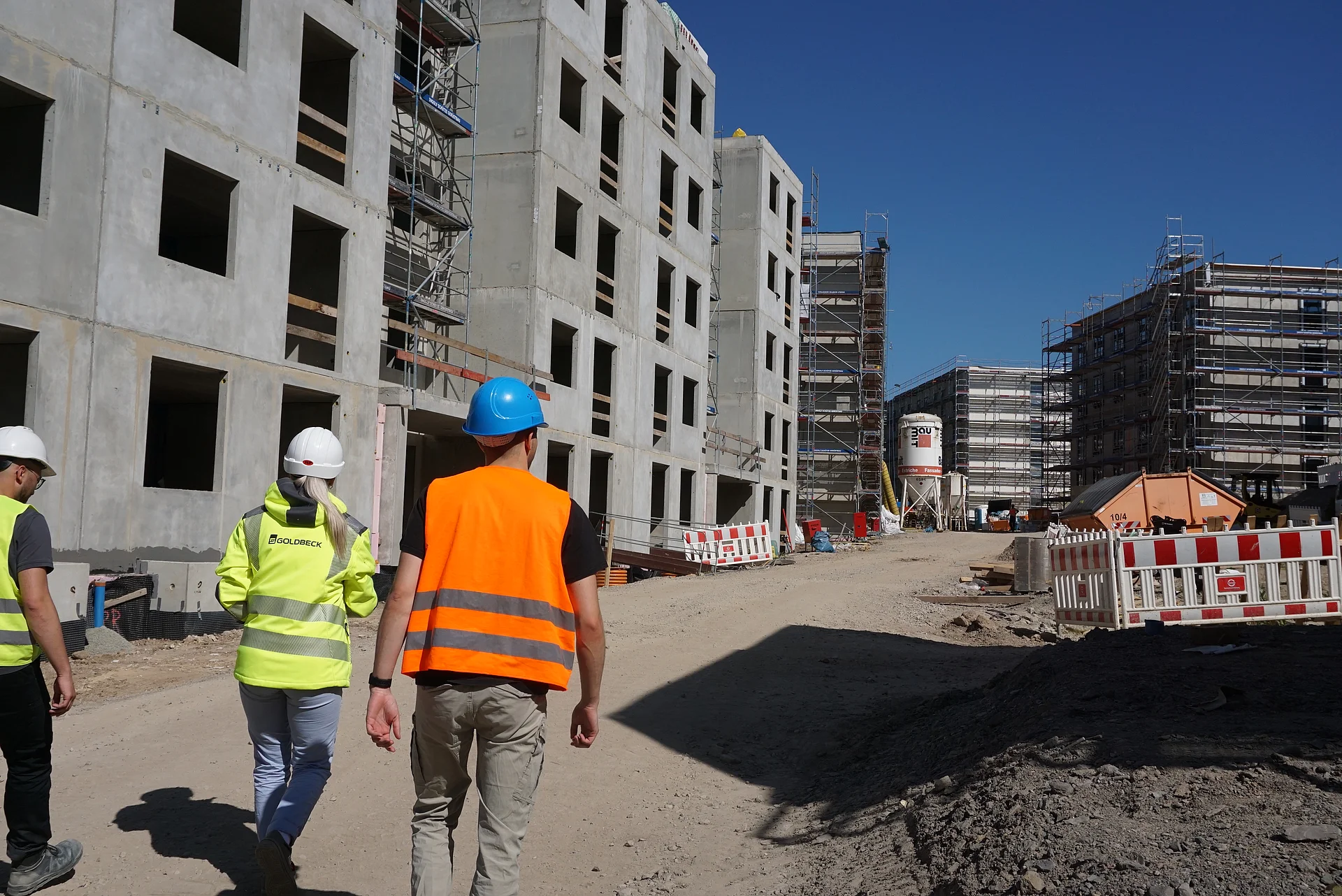
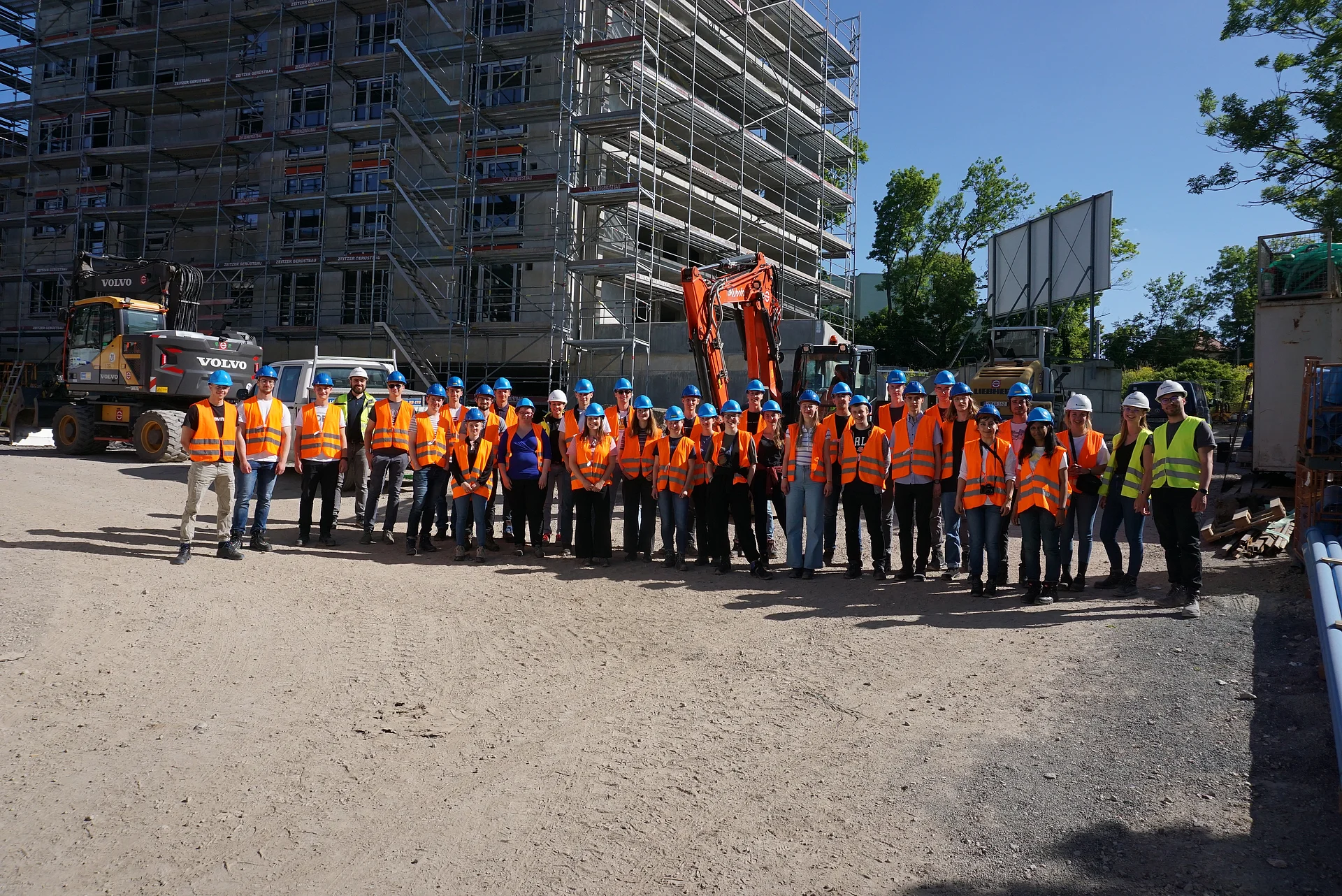
To round off the day, the programme included a site visit to the Erlenhöfe housing development by GOLDBECK near Jena. There, the students were able to gain an insight into the construction project, the building processes and the company’s prefabricated construction methods.
We would like to express our sincere thanks once again to the representatives of the companies and look forward to next year’s excursion!

Field Trip: Major Structural Engineering Projects in North Rhine-Westphalia 2022
As part of the field trip week at the Bauhaus-Universität Weimar, the Institute of Structural Engineering organised a field trip to major projects in North Rhine-Westphalia (NRW) from 8 to 10 June 2022.
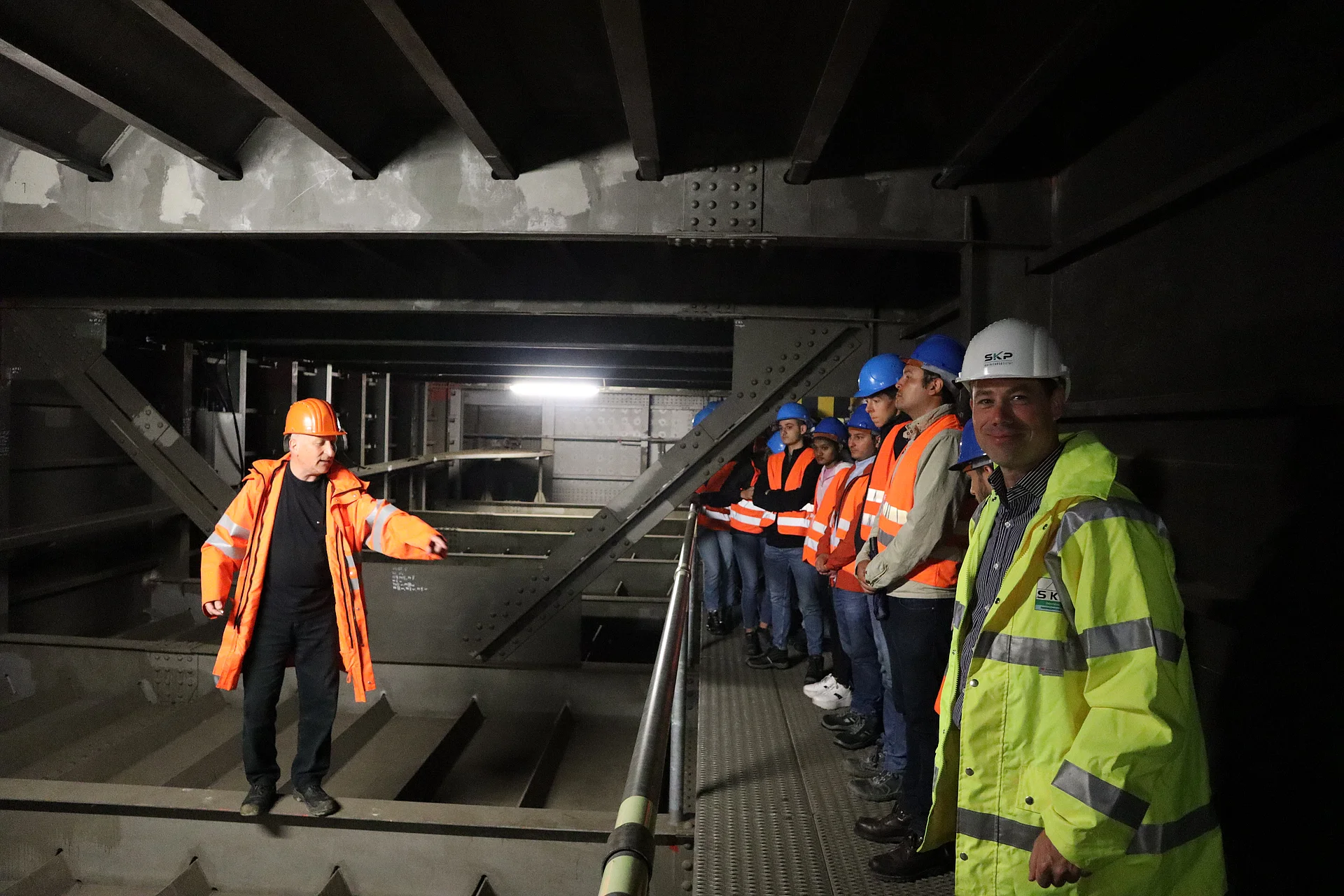
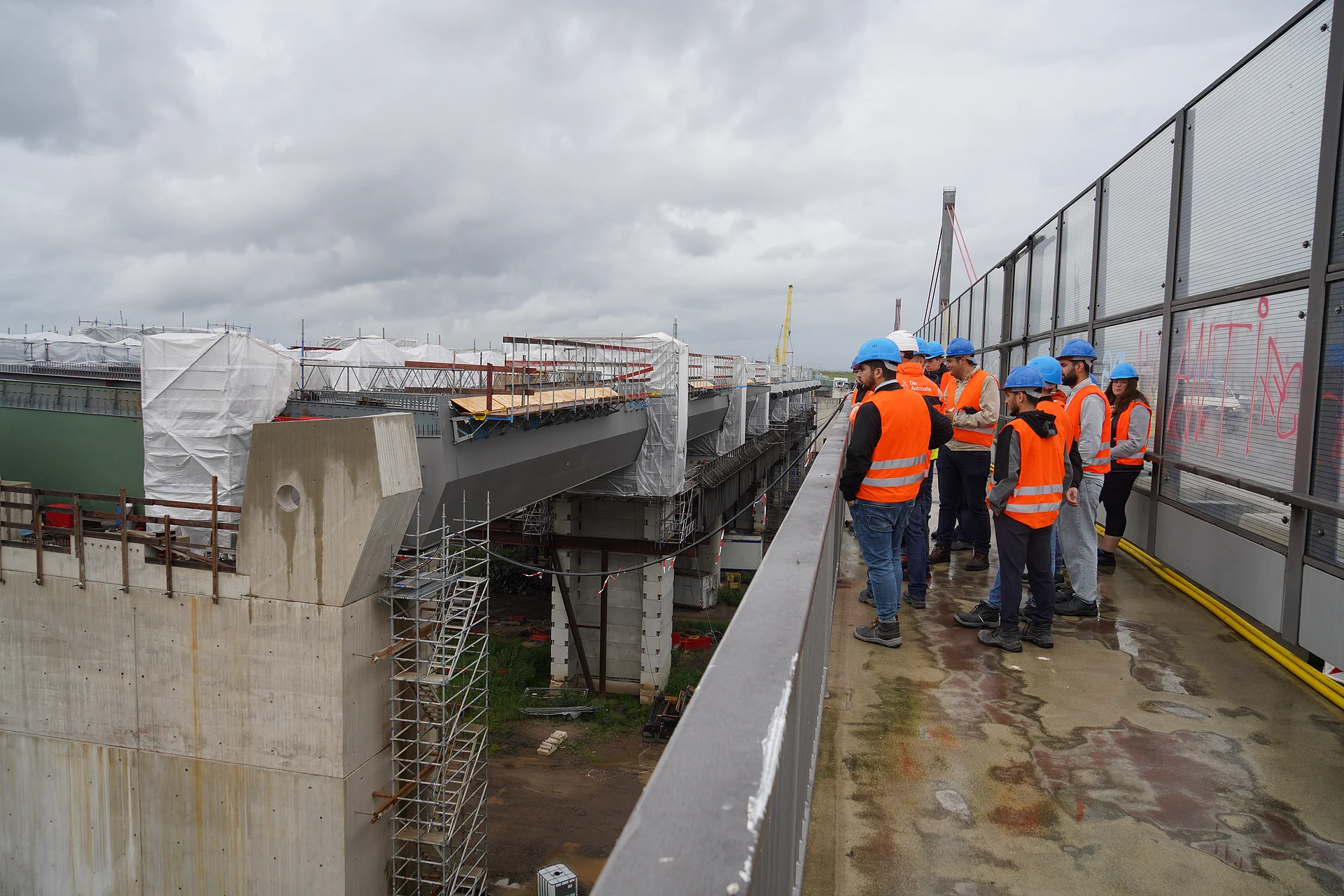
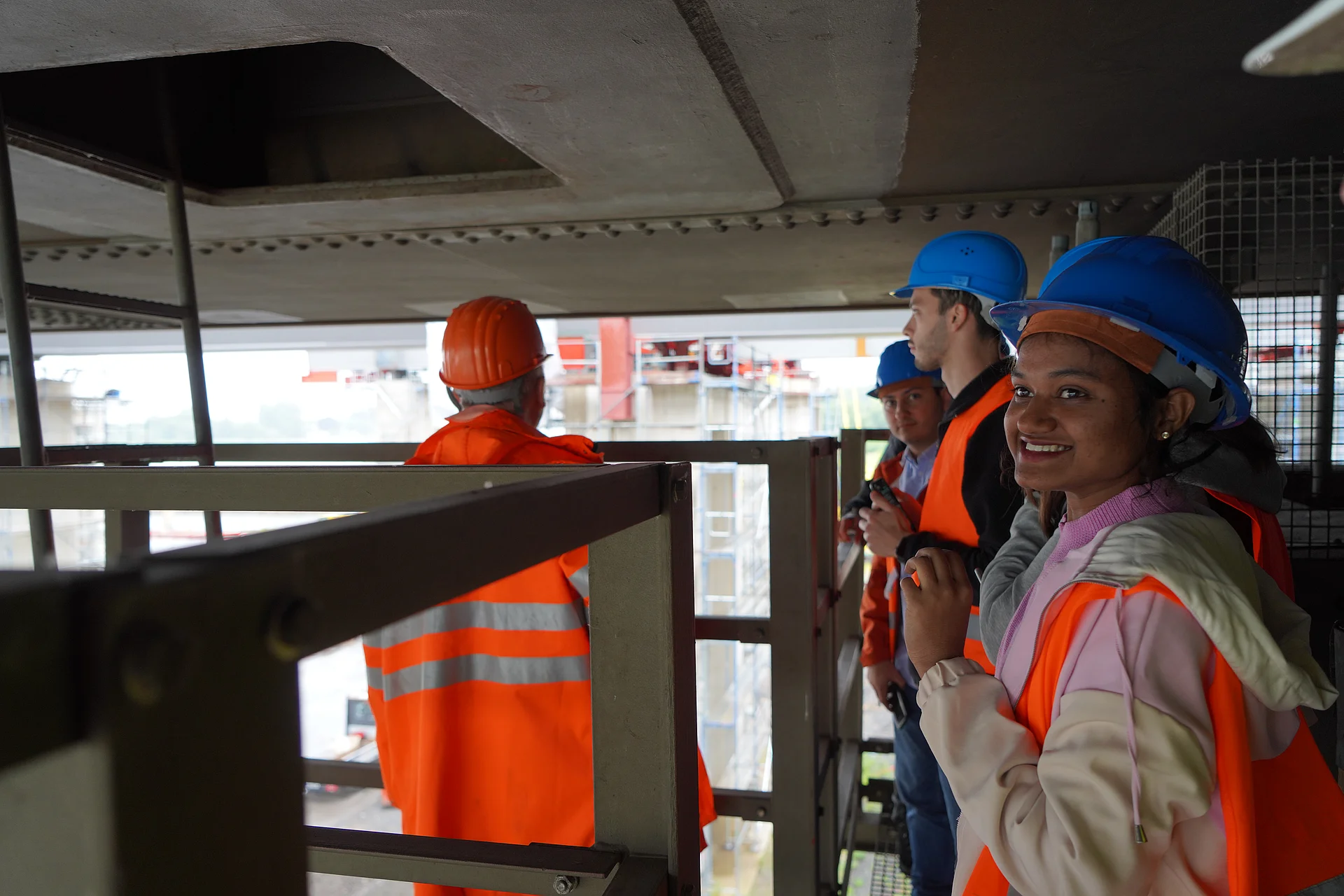
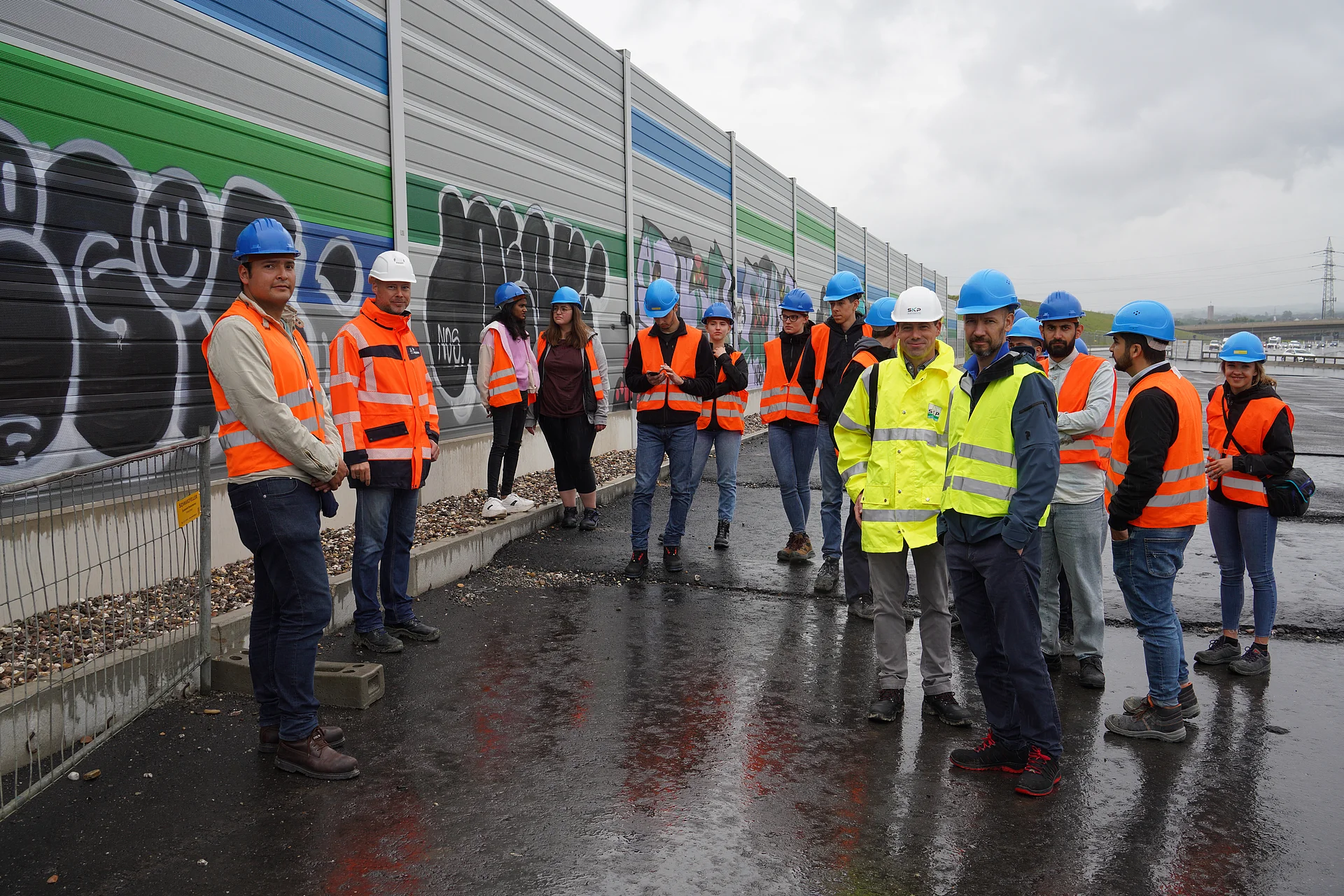
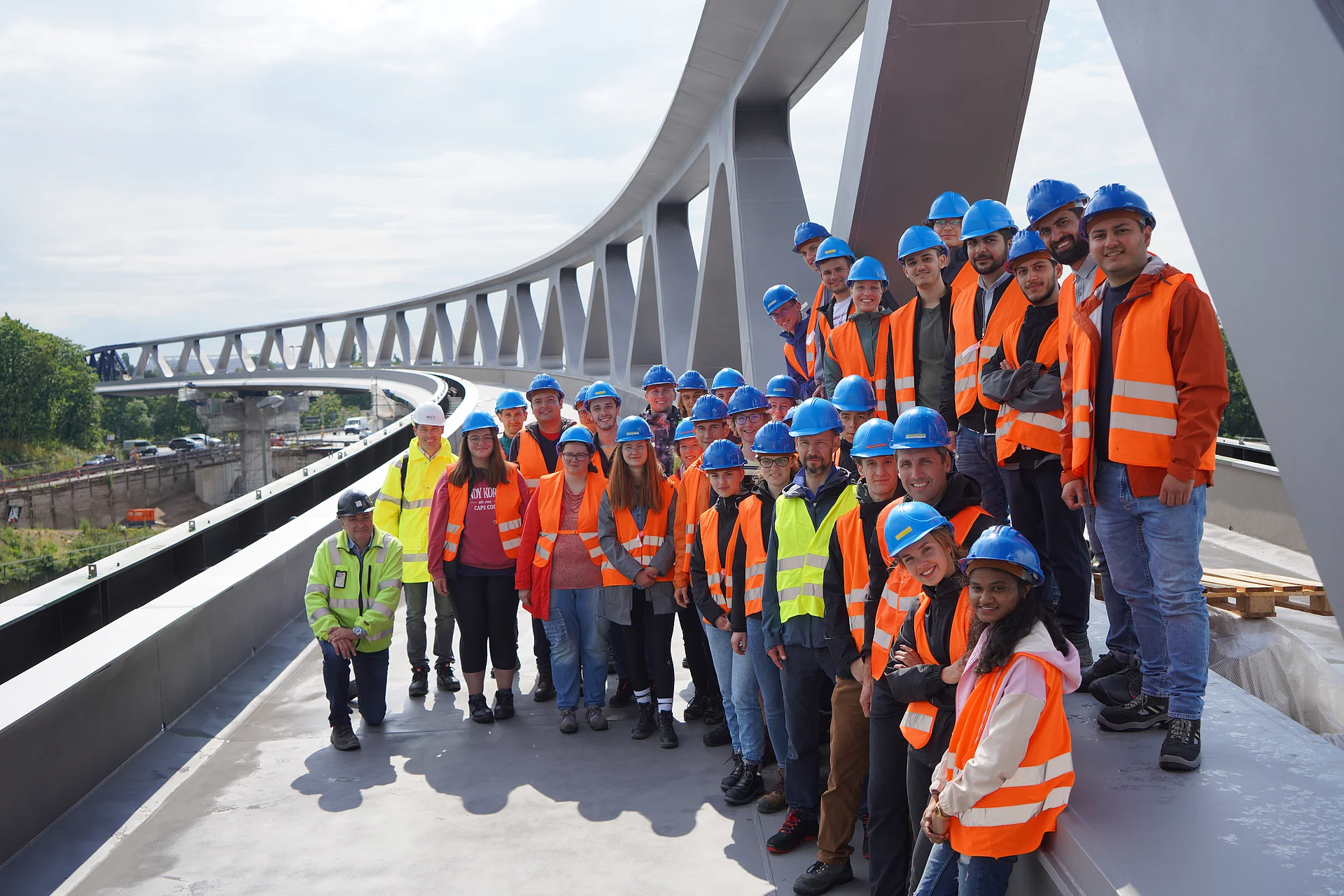
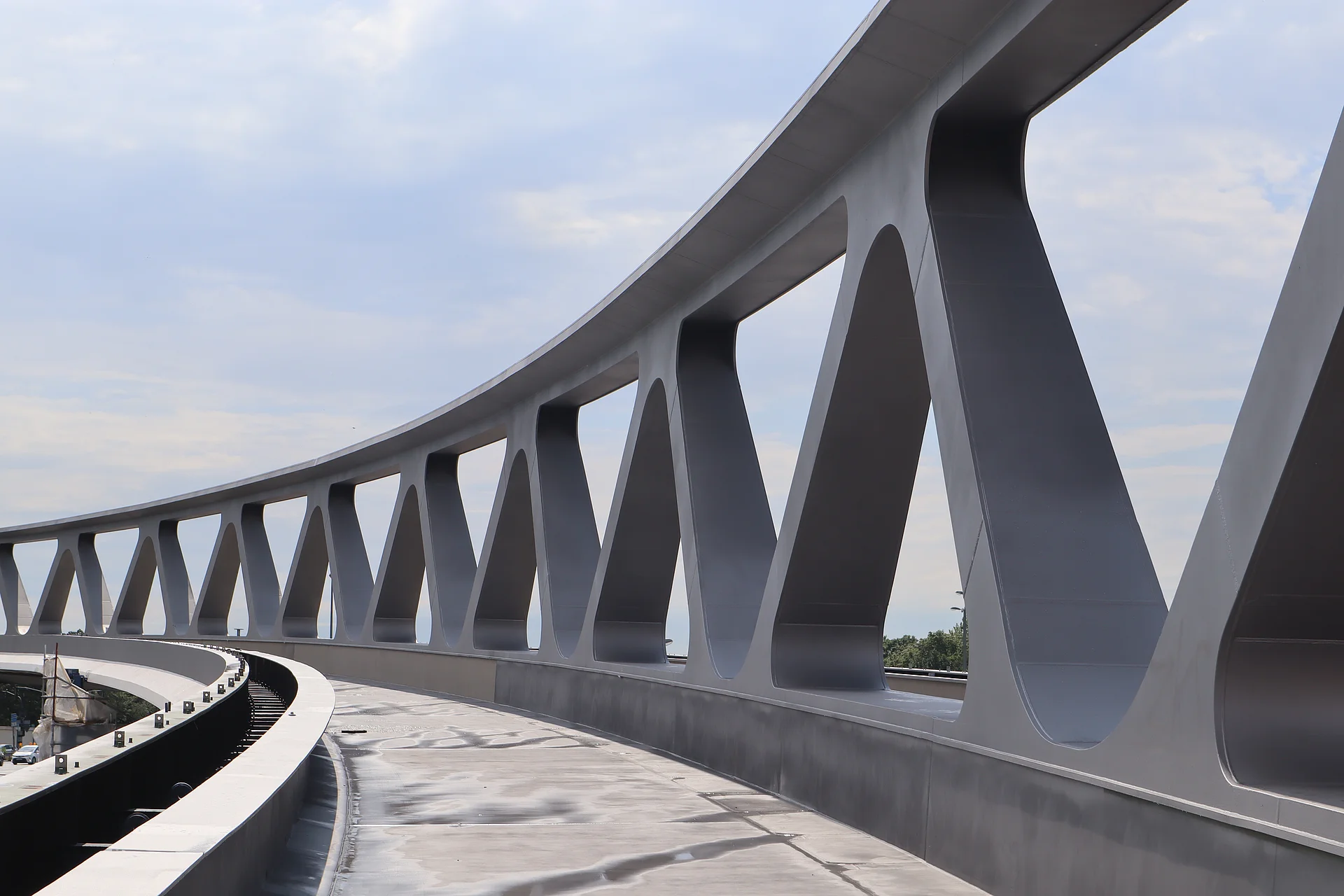
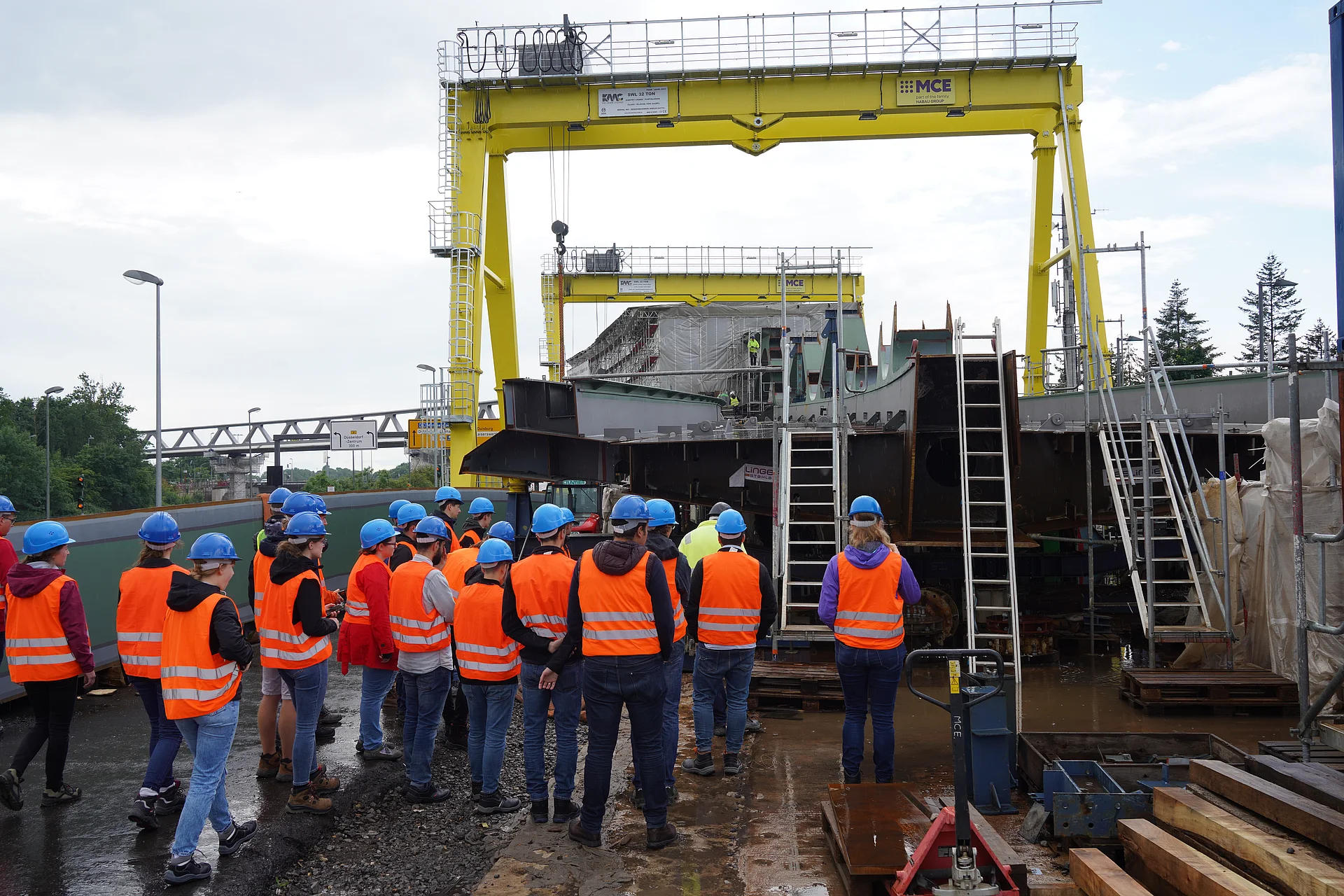
The starting point for both lecturers and students was the university, from where they set off directly for Cologne to visit the Leverkusen Rhine Bridge, the first and only destination on day 1. The Leverkusen Rhine Bridge carries the A1 motorway and is the northernmost of Cologne’s eight Rhine bridges. The guided tour consisted of a walk-through of the new section of the bridge as well as the existing structure.
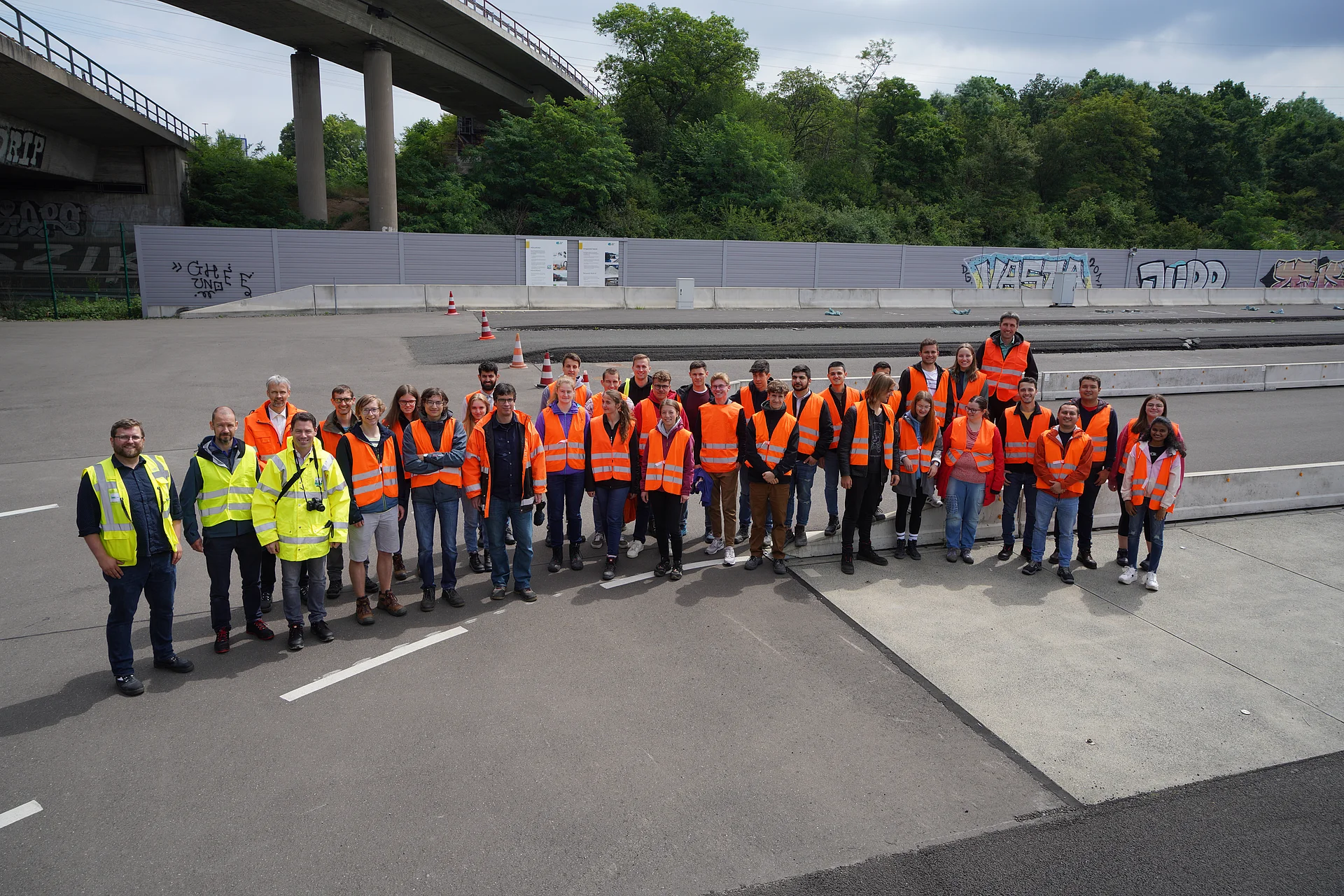
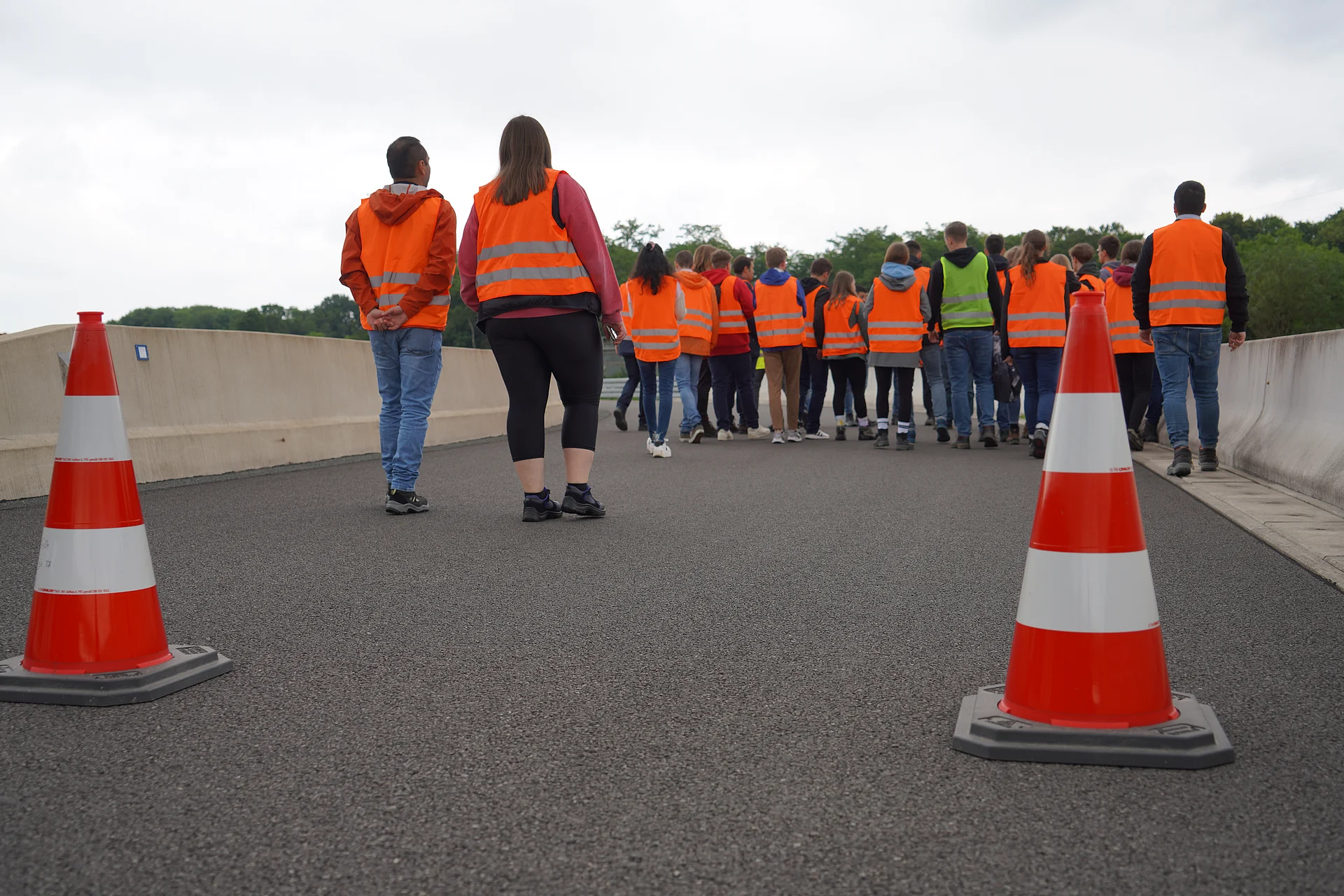
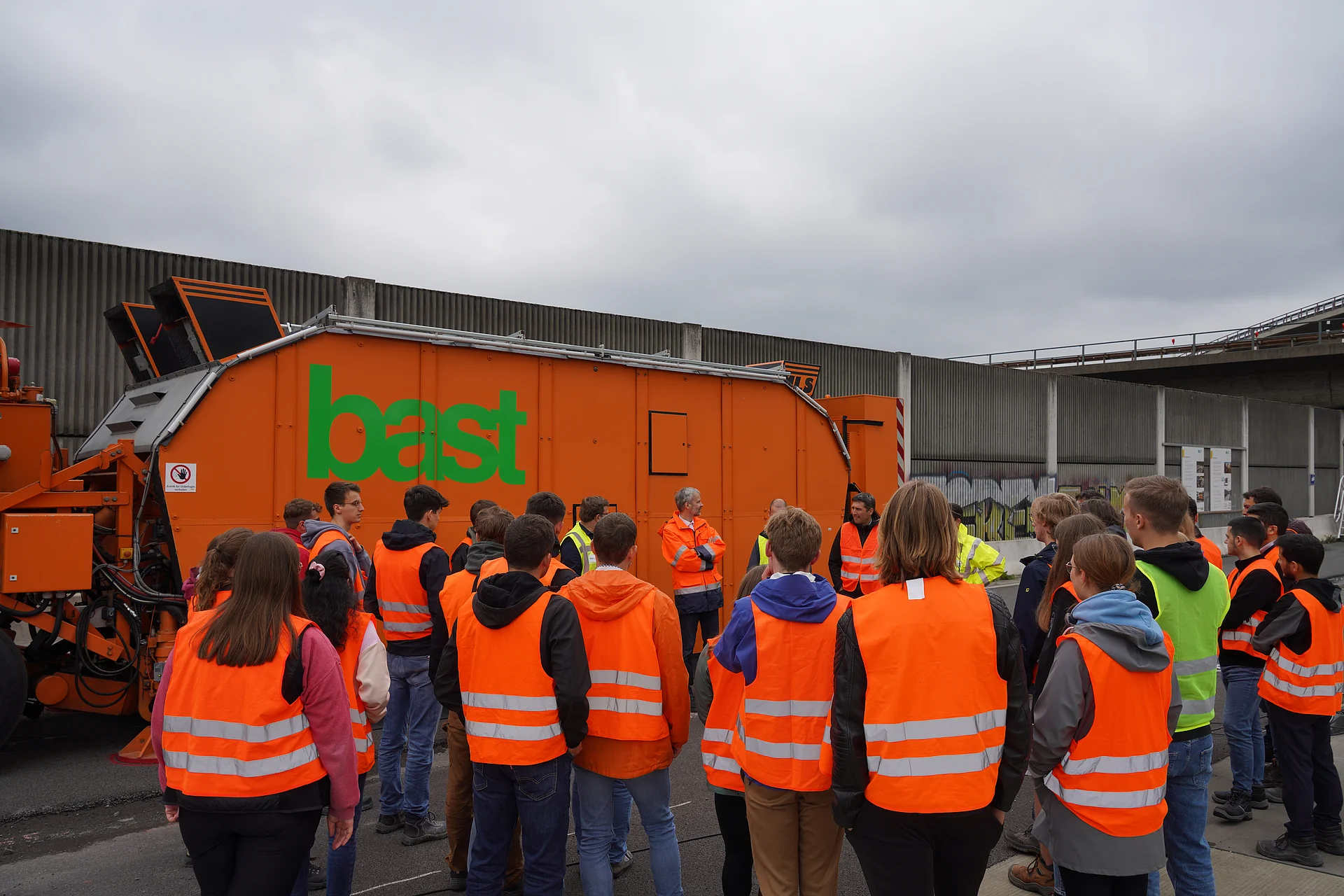
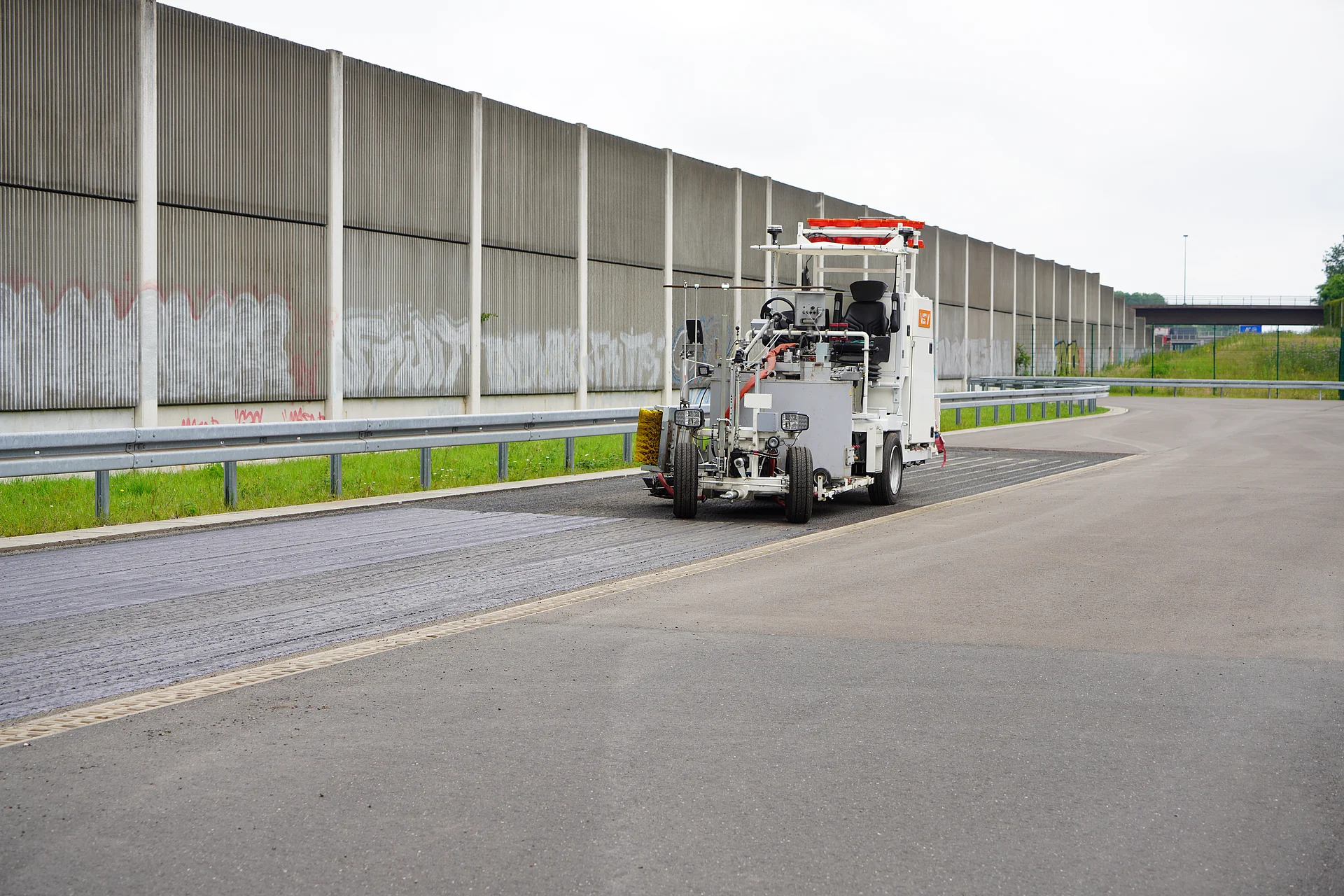
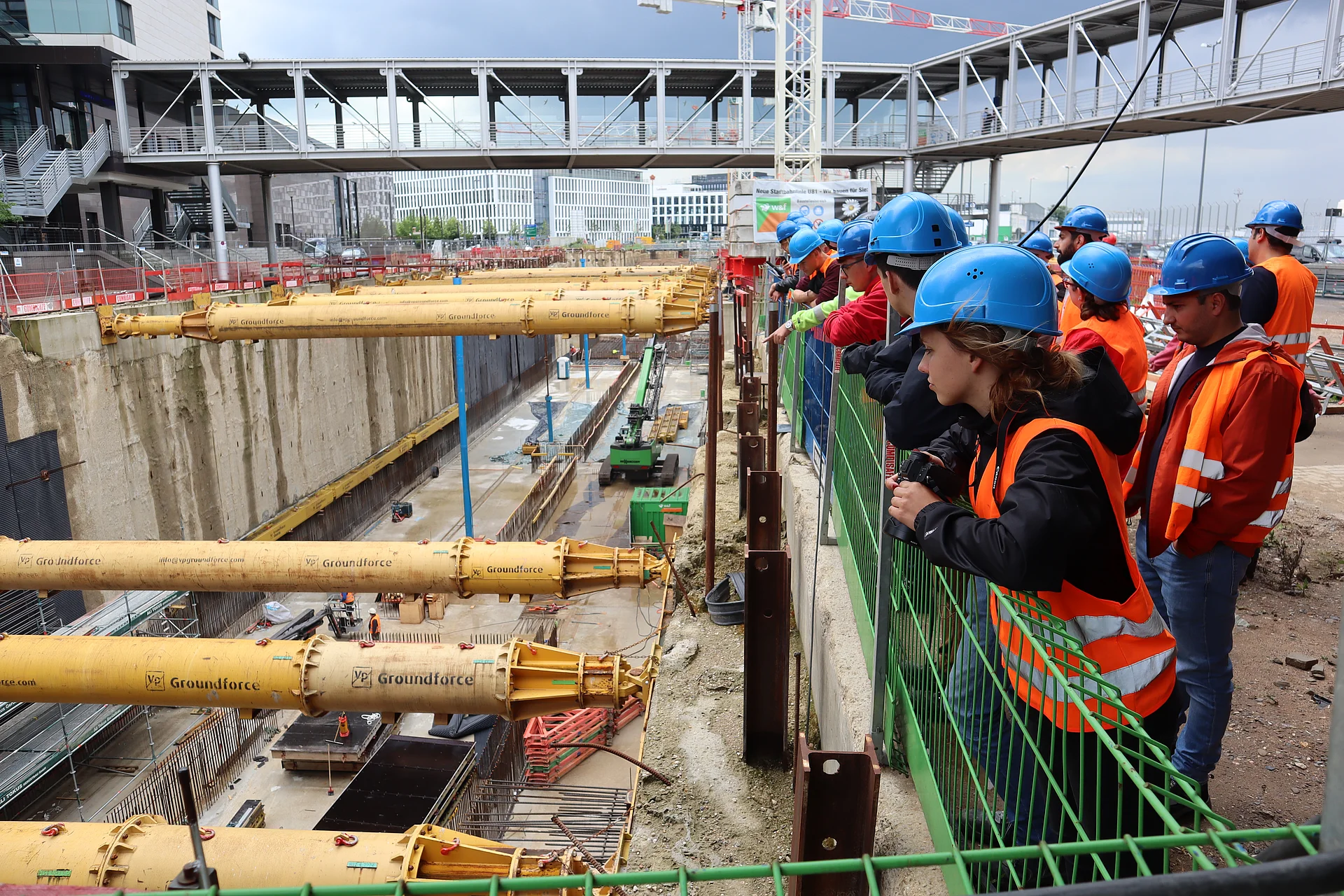
Day 2 began with an engaging presentation at the BASt, which provided an insight into the organisation. This was followed by a tour of the test track, which offers not only the BASt but also universities and manufacturers the opportunity to test new products and ideas for their practical suitability. Another item on the afternoon’s programme was a visit to one of the most important current transport infrastructure projects in the state capital, Düsseldorf: the expansion of the light rail network. Once the first construction phase is complete, the new U81 line is set to connect Düsseldorf Airport to the existing rail network.
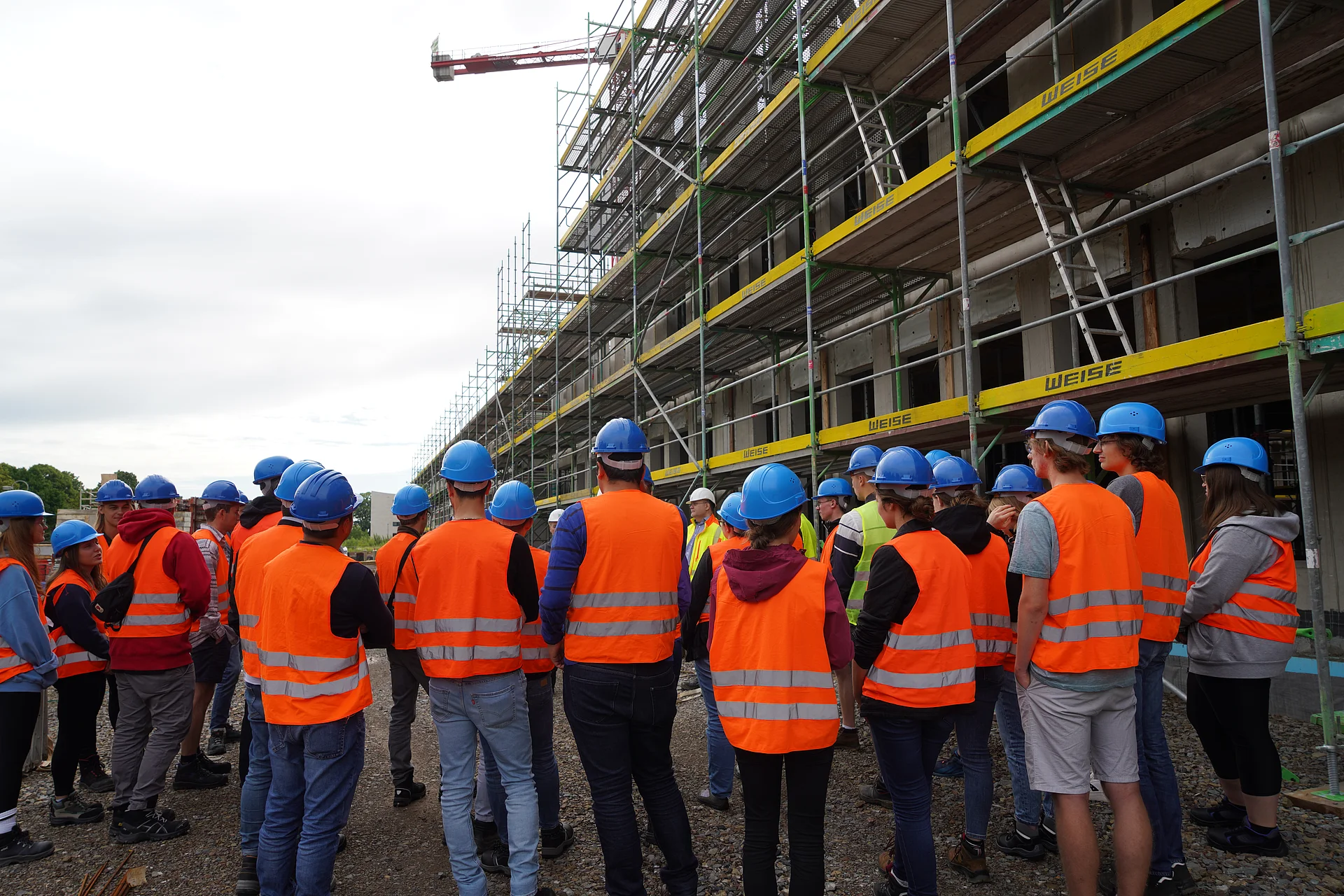
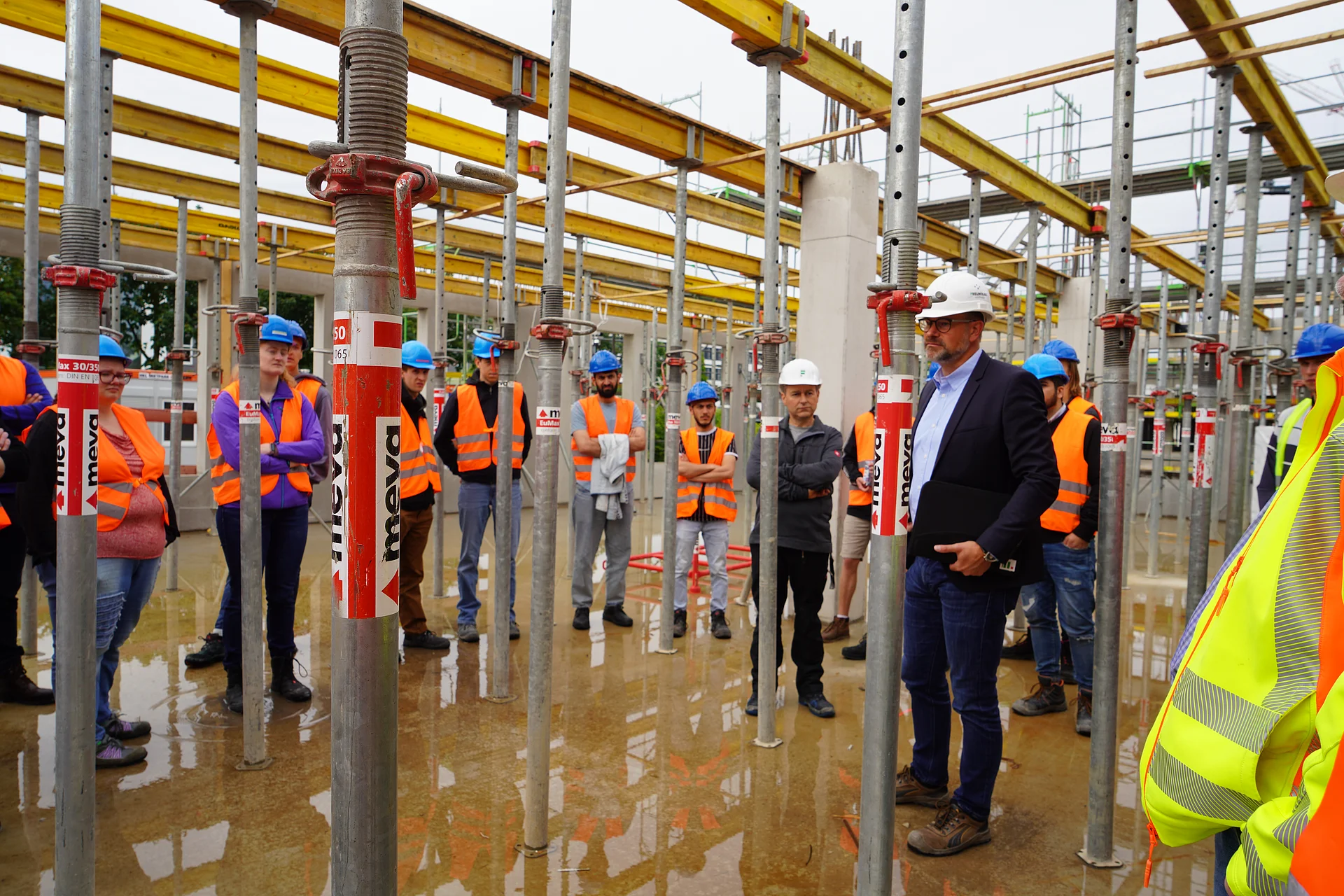
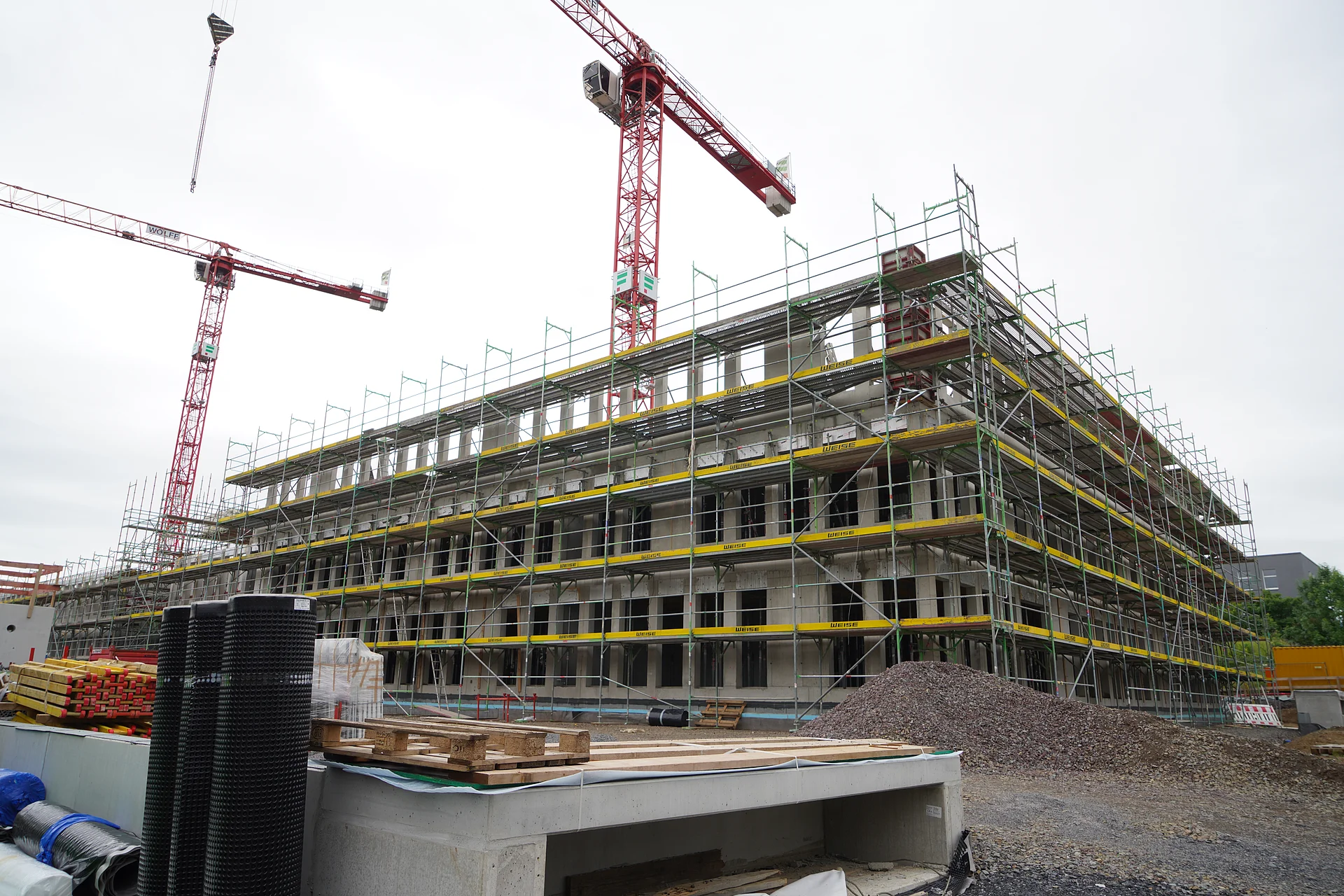
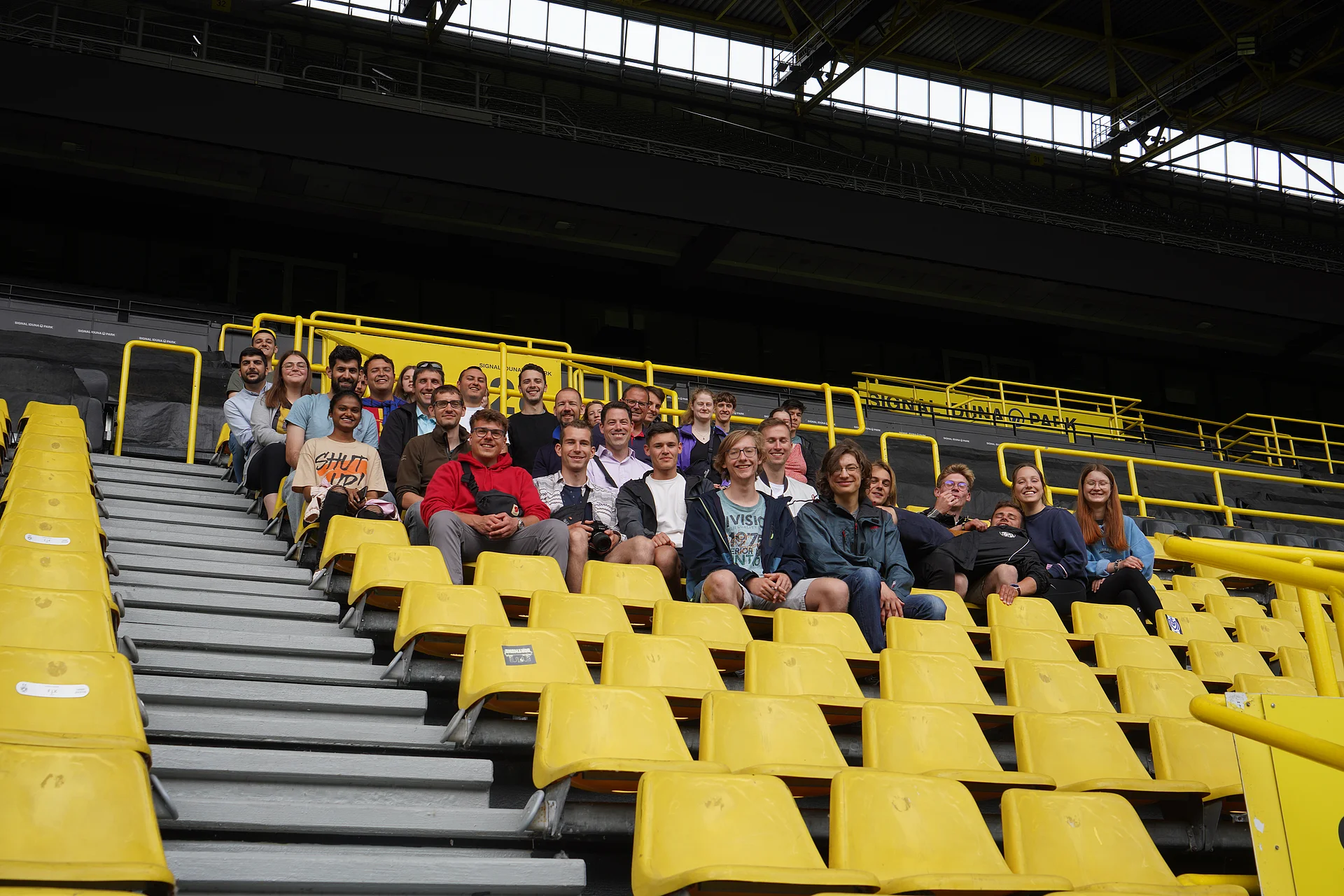
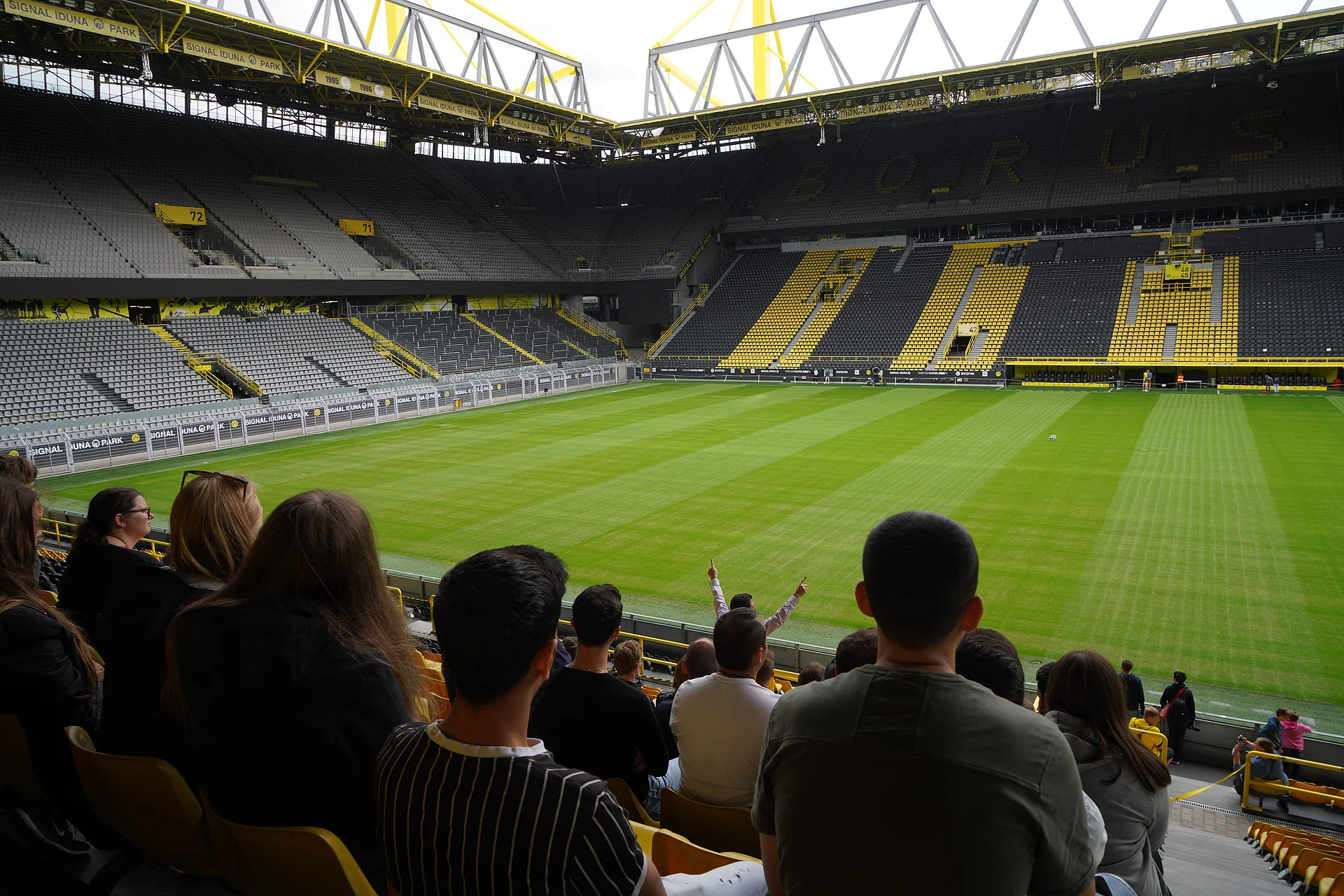
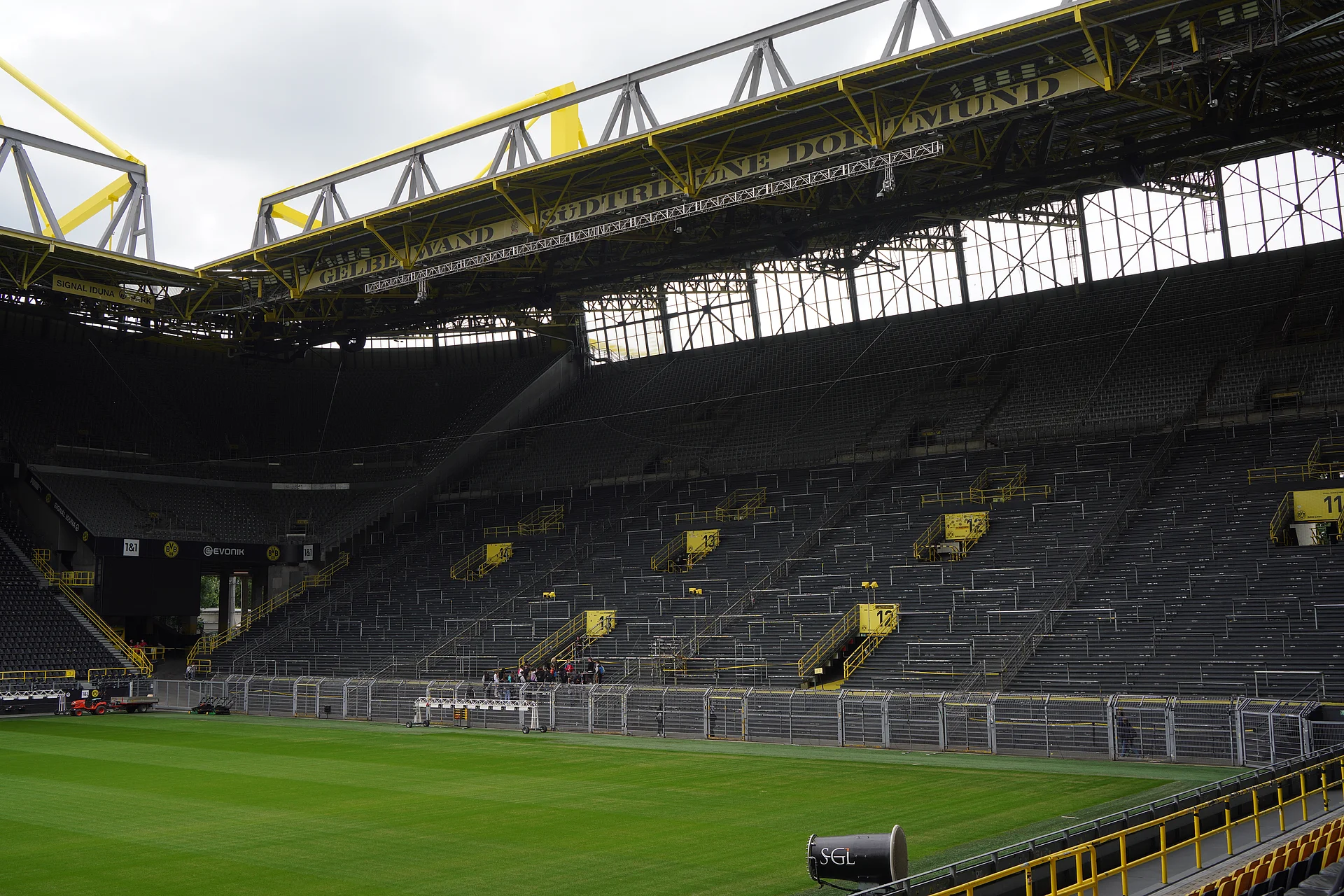
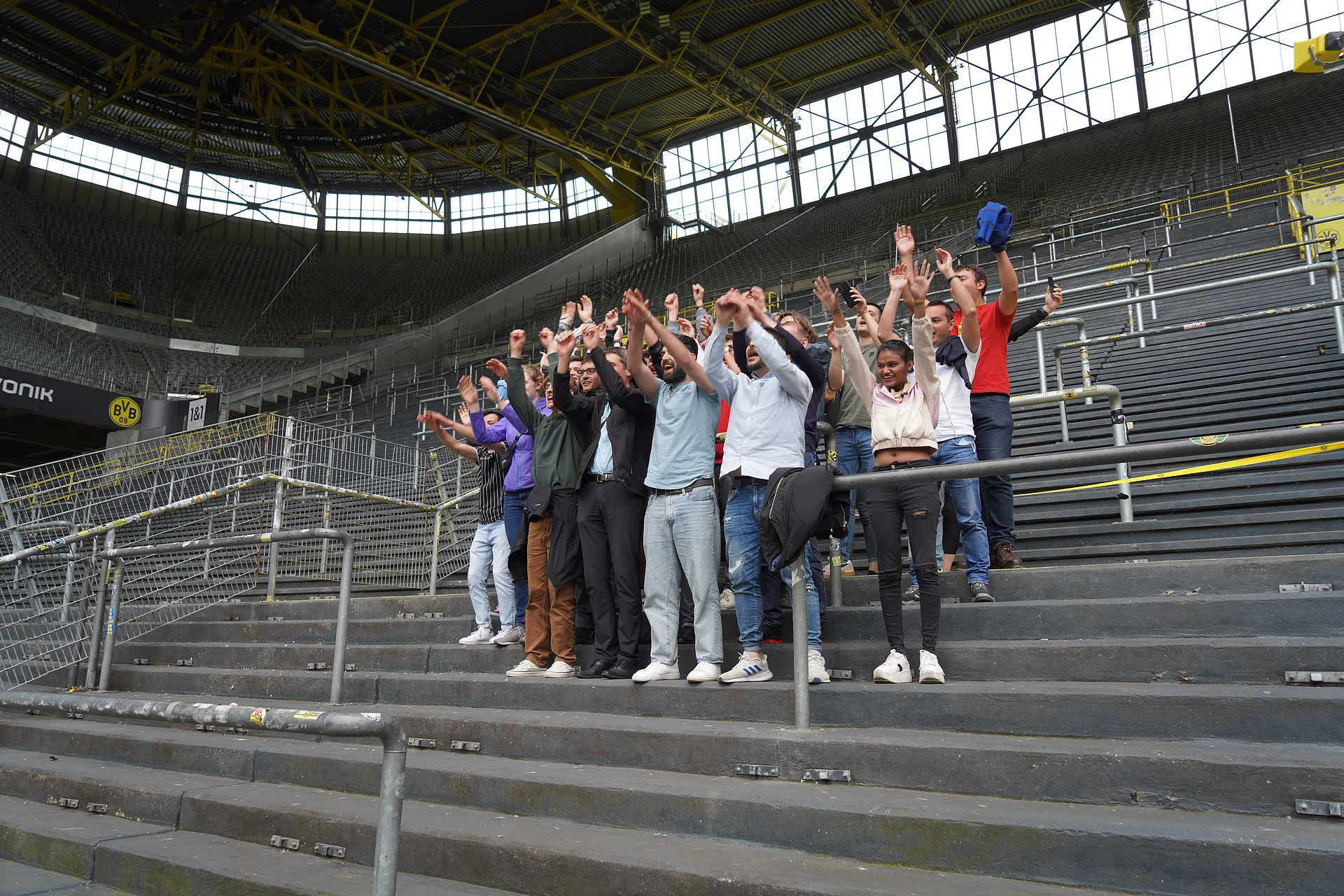
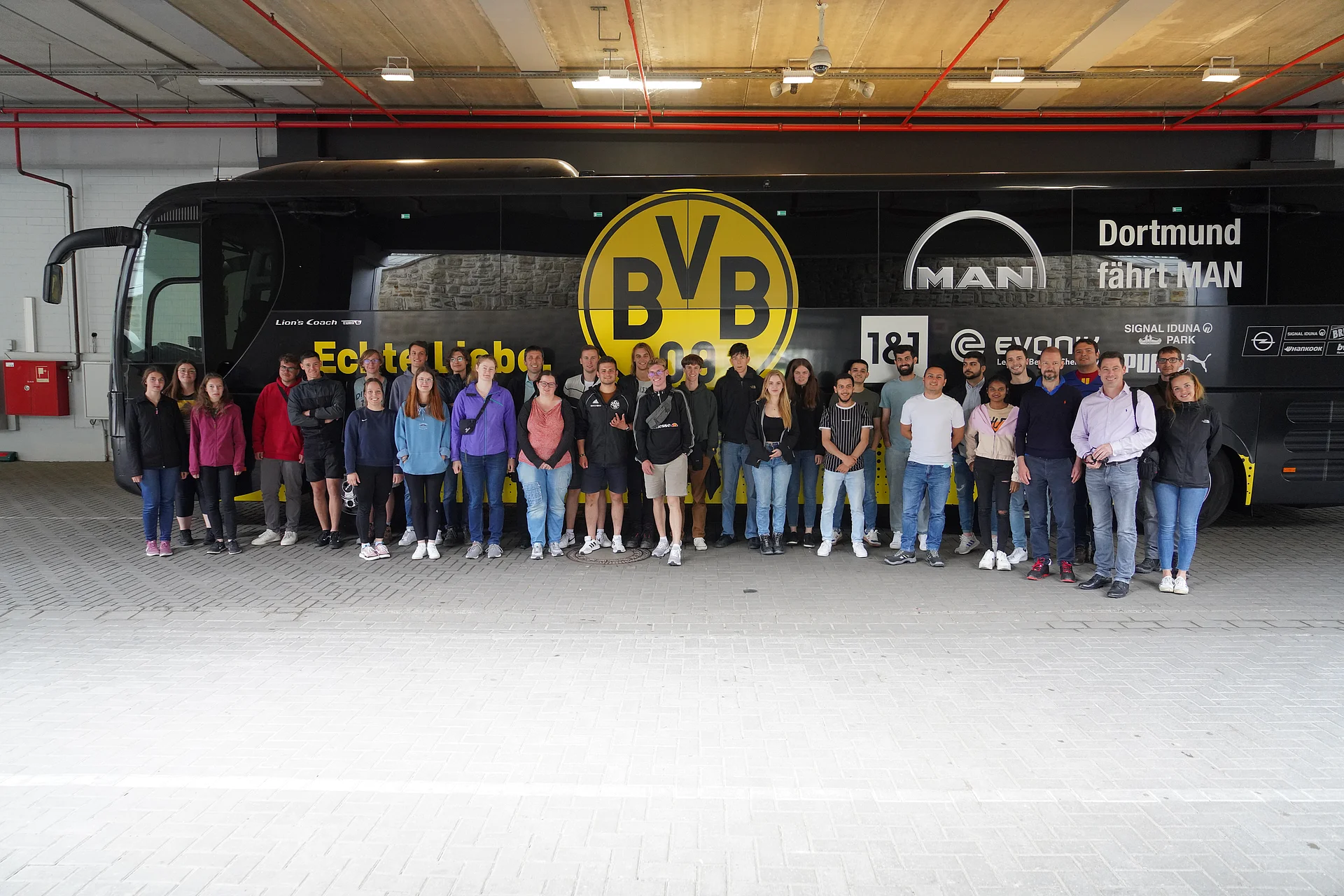
Day 3 began with a site visit to a five-storey office building constructed using solid masonry, where the walls were delivered to the site as precast elements. The final destination was Signal Iduna Park. The tour took us through the stadium and its various areas, whilst also offering fascinating insights into the structure and the striking yellow external steel pylons, which were added during a refurbishment phase to close off the previously open corners of the stadium.


2022 Field Trip on Timber and Masonry Construction
As part of the one-day excursion on timber and masonry construction on 7 June 2022, the group visited four sites in the Central and Eastern Thuringia region.
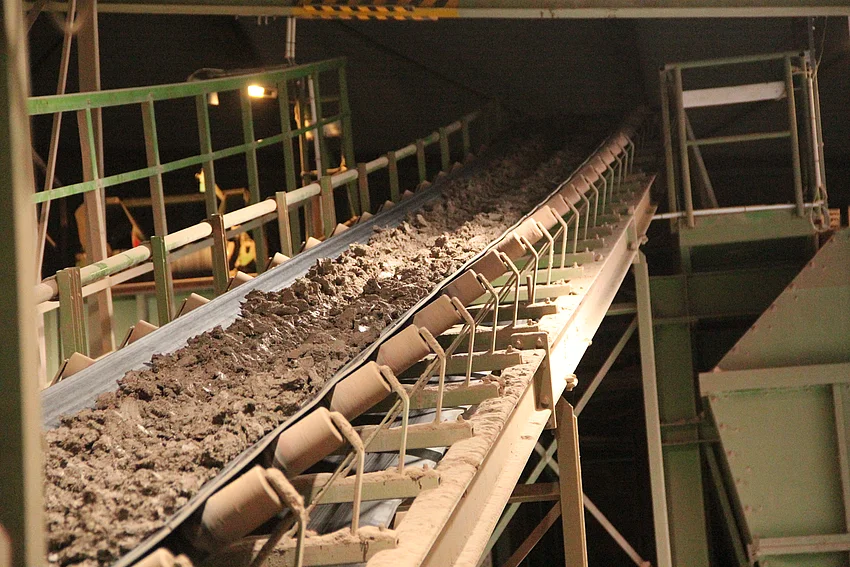
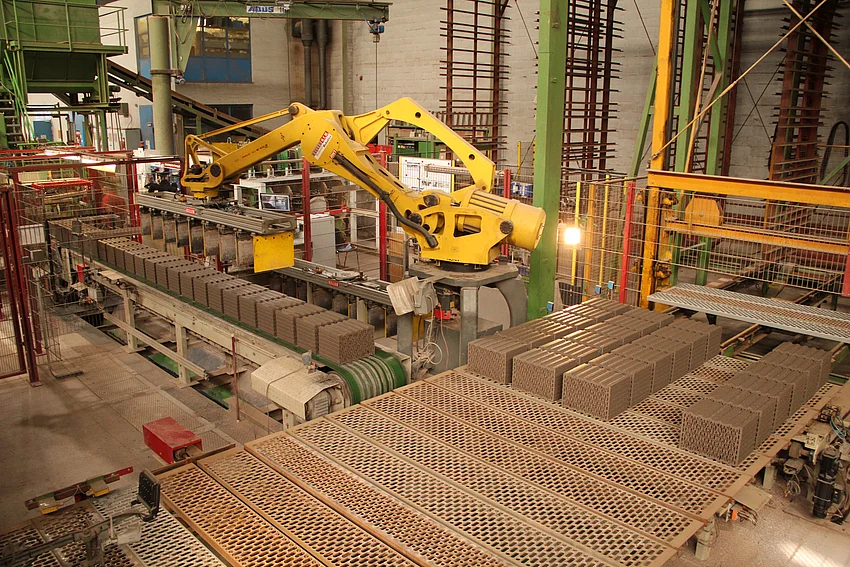
At Wienerberg GmbH’s Eisenberg site, participants were given a comprehensive insight into the manufacturing processes involved in producing modern thermal insulation bricks – from the extraction and delivery of raw materials, through raw material processing, shaping on the brick moulding line and the firing process in the tunnel kiln, right through to the thermal insulation filling with perlite.
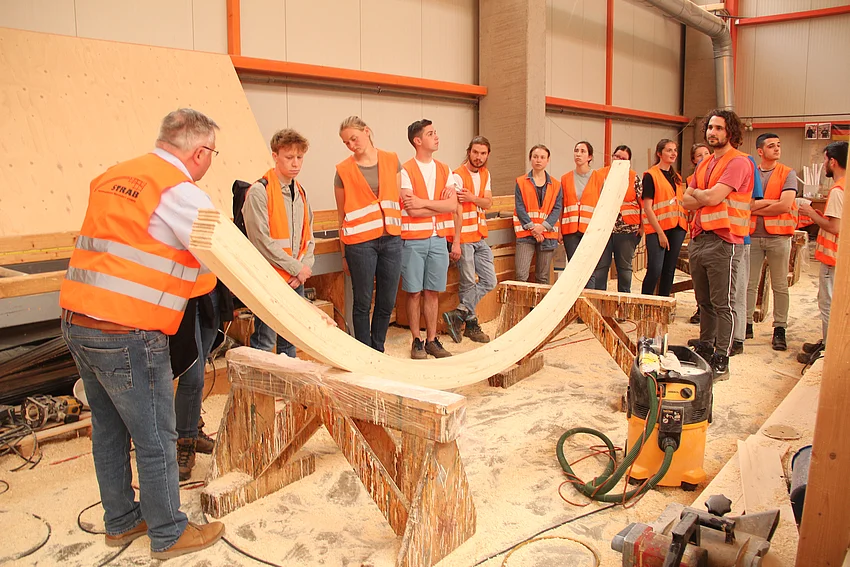
The production of glulam trusses was observed and understood at STRAB Ingenieurholzbau Hermsdorf GmbH. In the joinery hall, the students also gained insights into some rather unusual specialised processes in timber engineering, such as the manufacture of GRP-reinforced column base coatings for embedding in concrete sleeve foundations, the creation of rigid frame corners using universal finger-joint connections, or the block gluing of BauBuche components to form high-load-bearing solid timber columns for hall construction.
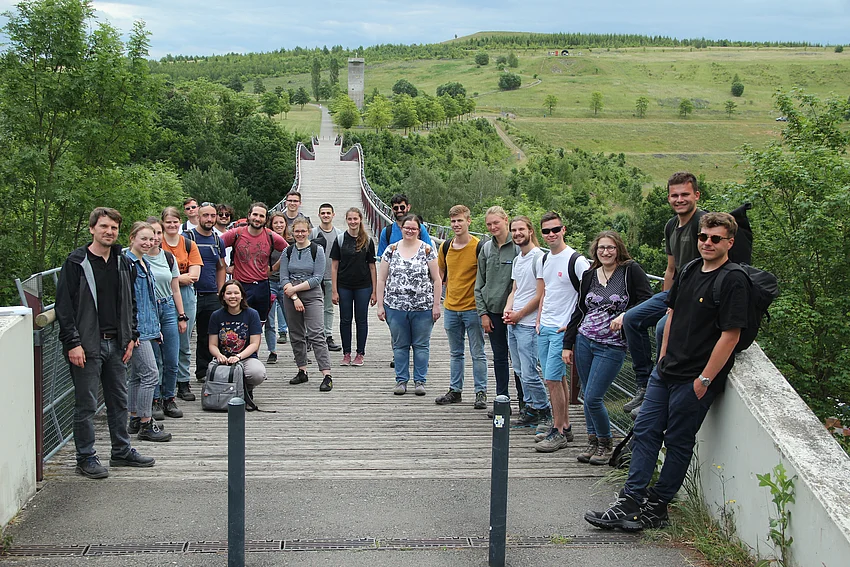
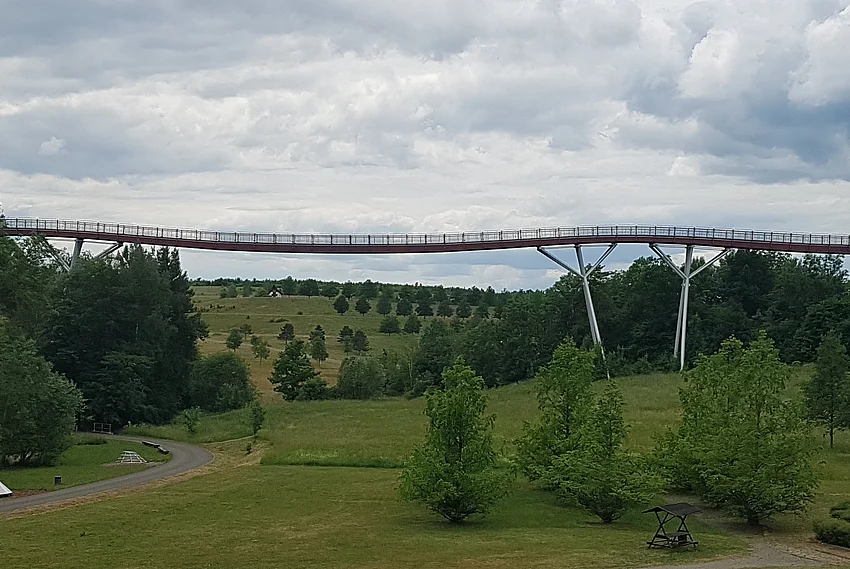
The tour of the ‘Drachenschwanzbrücke’ (Dragon’s Tail Bridge) in Ronneburg was the third stop on the day’s excursion. With a total length of approximately 225 metres, this unique timber cable-stayed bridge is one of the longest timber bridges in Europe. The bridge is also a successful example of the consistent implementation of structural timber preservation measures. Set into a gentle sway by the students, the ‘adventure bridge’ from the 2007 Federal Horticultural Show still lived up to its nickname in 2022.
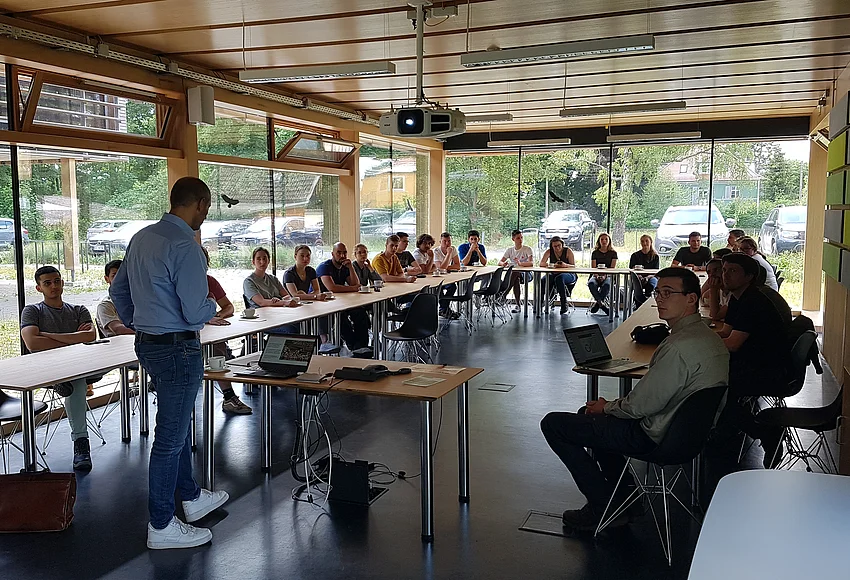
The visit to the Jena-Holzland Forestry Office in Stadtroda proved to be a fitting conclusion. Firstly, visitors were able to view a state-of-the-art, which won the German Timber Construction Award in 2019, whilst the students received further information during a talk by Mr Jan Hassan (Pollmeier Massivholz GmbH und Co. KG) on the special features of the building’s construction and on BauBuche, the main building material used. Furthermore, the visit was rounded off by the great dedication of the Forestry Office staff. A presentation first provided an overview of the duties of a forestry office. A walk in the nearby town forest gave the participants a first-hand insight into some current forestry issues and challenges relating to climate change. Forest Office Manager Bernhard Zeiss and District Manager Philipp Vogel emphasised not only the importance of the forest, but also the significance of using timber from sustainably managed forests in construction for climate protection.
Impressions of the excursion can be found below. We would like to thank the companies and the Forestry Office for the interesting, practical insights and presentations!
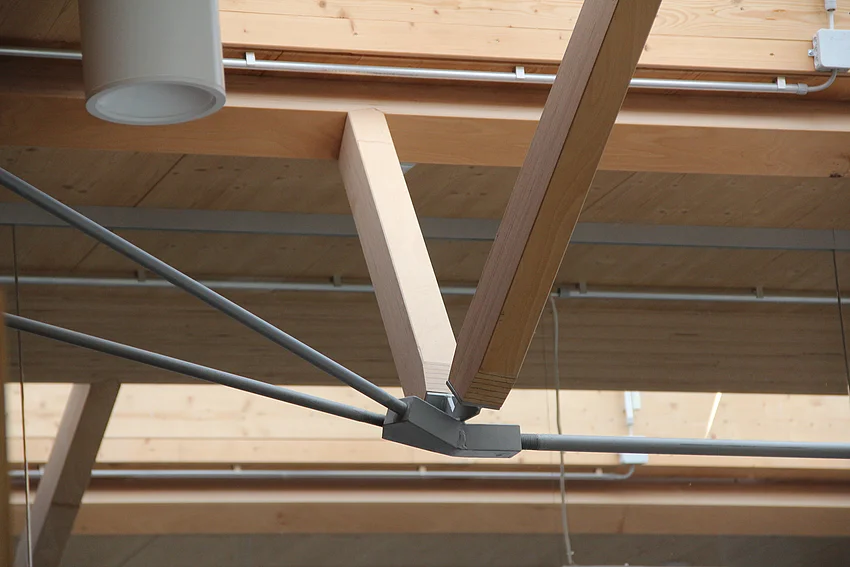
STRAB & Rettenmeier Field Trip, January 2020
The module ‘Advanced Construction Methods: Timber Engineering’ within the Master’s programme in Civil Engineering provides in-depth knowledge of the structural behaviour, design and structural detailing of timber engineering structures made from glued laminated timber. During the field trip on 29 January 2020, the students gained further insights into the production processes at two timber-processing companies.
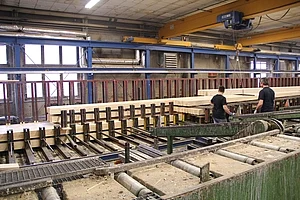
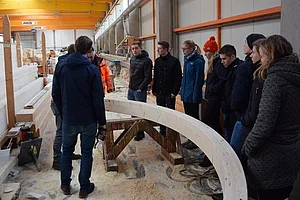
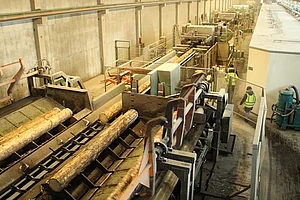
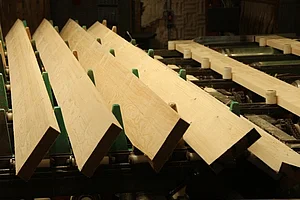
Every stage of the production process for glulam structures – from the delivery of the timber lamellae, through finger-jointing and the manufacture of curved trusses in the press bed, right through to the production of transverse reinforcement, could be observed first-hand at STRAB Ingenieurholzbau Hermsdorf GmbH.
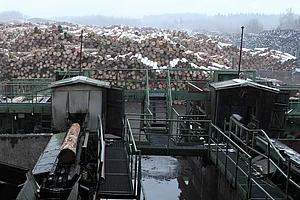
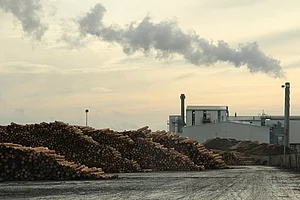
At Rettenmeier GmbH’s Hirschberg site, the production of solid structural timber could be observed in its entirety, from the delivery of the logs, through the sawmill, sorting, drying, finger-jointing, right through to the gluing of glued laminated timber sections.
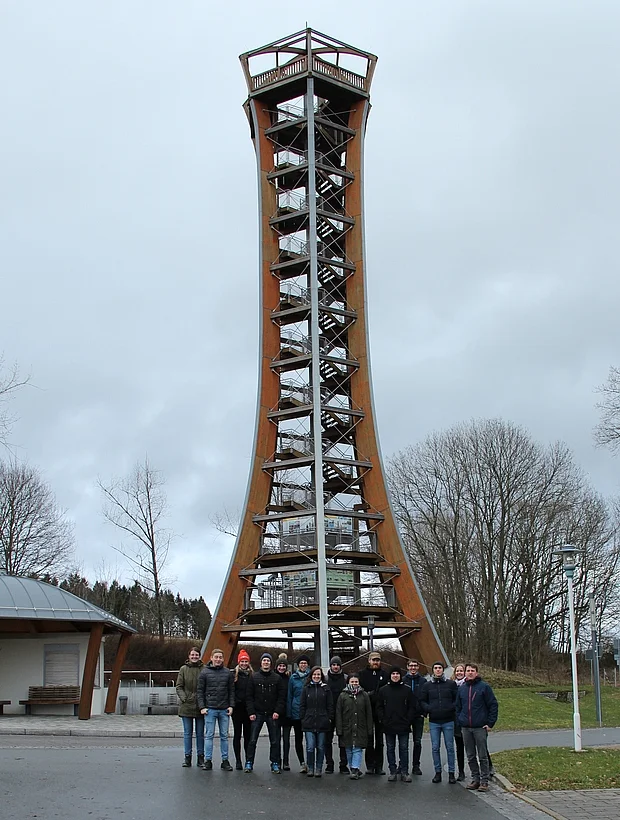
Visits to the shell of the Zweifelder sports hall on Meyerstraße in Weimar and to the Saaleturm in Burgk rounded off the day’s excursion.
Field Trips: Steel and Timber Construction – June 2019
The two day trips organised by the Chair of Steel and Hybrid Structures as part of this year’s field trip week organised by the Faculty of Civil Engineering were primarily aimed at students on the Bachelor’s and Master’s degree programmes specialising in Structural Engineering.
With a factory tour of Pollmeier Massivholz GmbH & Co. KG in Creuzburg, followed by visits to the Erfurt Ice Sports Centre and the ‘Jägerstieg’ timber arch bridge over the BAB 4 motorway, the excursion on 12 June entirely to timber engineering.
The following day focused on steel and bridge construction. In the morning, the group visited the Plauen Stahl Technologie GmbH works. Afterwards, they travelled to the construction site of a cable-stayed bridge over the River Mulde near Schlunzig (Zwickau).
Timber Engineering Field Trip, 12 June 2019
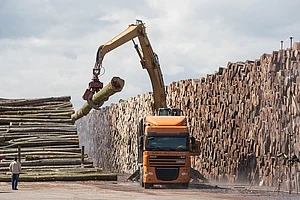
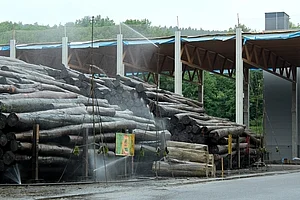
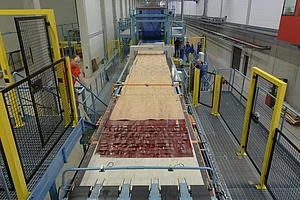
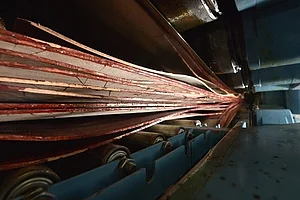
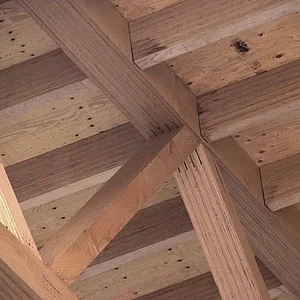
In Creuzburg, the students were able to experience first-hand the entire manufacturing process for laminated veneer timber, from the delivery of the logs right through to the joinery of ready-to-assemble BauBuche building components. In addition, they were provided with a wealth of information on the properties, potential applications and limitations of this innovative wood-based material, which, since its market launch in 2014, has been manufactured exclusively by Pollmeier at its Creuzburg site from locally sourced beech timber and marketed worldwide. A tour of a production hall still under construction, featuring truss beams made from BauBuche, gave an impression of the performance capabilities of this building product. The invitation to lunch was gladly accepted.
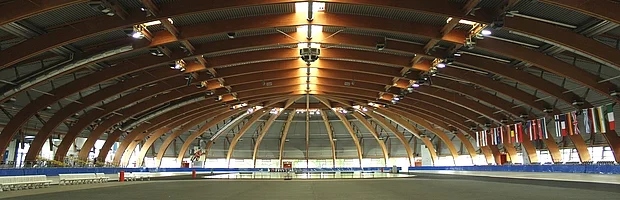
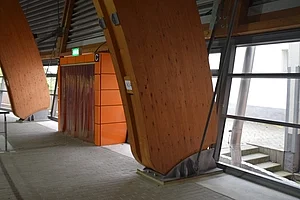
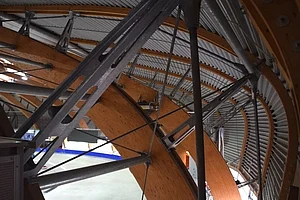
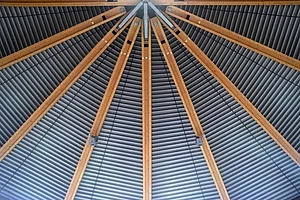
The ice sports centre in Erfurt impressed the budding civil engineers with the imposing structural framework of the Gunda-Niemann-Stirnemann Hall, which spans a 90 x 190 m floor plan in an arched shape using glued laminated timber. The guided tour of the technical facilities within the building complex – comprising the speed skating hall, the ice hockey hall, and the functional and ice-technology buildings – was also of great interest.
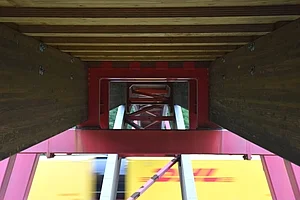
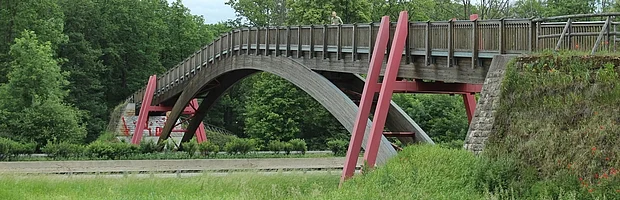
The ‘Jägerstieg’ footpath and cycle bridge at the Willrode forester’s lodge near Erfurt was inspected on the return journey to Weimar. With a total length of 77.7 m, this civil engineering structure, erected in 2003, spans the 6-lane A4 motorway as a pair of three-hinged arches made of larch glulam, with cantilevered girders on both sides and a mastic asphalt surface. The Jägerstieg Bridge is currently the only timber bridge on the federal trunk road network within the Free State of Thuringia.
Field trip: Steel and Hybrid Construction, 13 June 2019
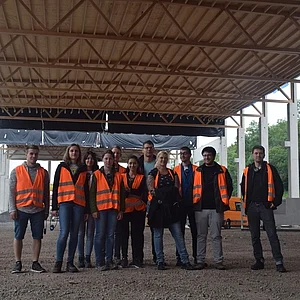
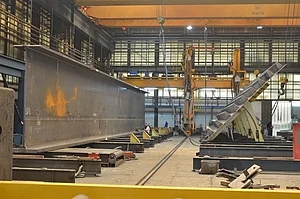
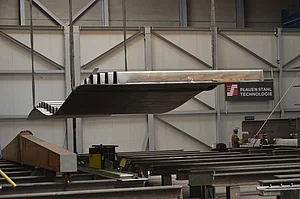
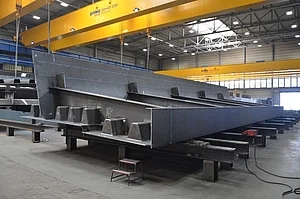
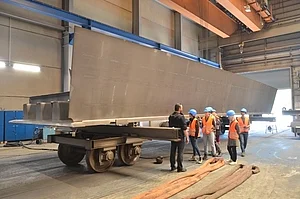
At the Plauen Stahl Technologie GmbH plant, the students were given a tour of the production halls. During this highly interesting tour, they were able to gain an insight into the manufacture of large steel components and the challenges involved. Plauen Stahl Technologie GmbH, which operates internationally, specialises in plant engineering, structural engineering, bridge engineering and hydraulic steelworks, enabling the students to view up close structural components such as lock gates, crane runway girders, bridge box girders and other types of bespoke fabrications. A presentation on the company’s structure and an overview of some completed projects gave the students an insight into the organisational structure, areas of responsibility and the variety of projects undertaken by practising engineers. This was further reinforced during a lunch with staff from Plauen Stahlbau Technologie GmbH.
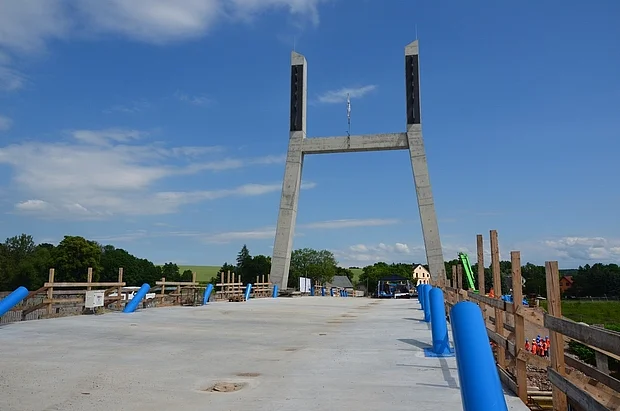
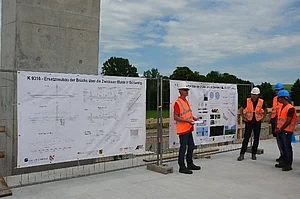
Near the village of Schlunzig, close to Zwickau, a new bridge is being built to replace the existing one over the Zwickauer Mulde. The two-span structure is being built as a cable-stayed bridge with a slack-reinforced in-situ concrete deck and fully enclosed bridge cables featuring innovative and novel corrosion protection. The extruded anti-corrosion coating is being used for the first time in Germany on this construction project. Staff from the engineering firm schulze+rank Ingenieurgesellschaft, the construction company Arlt Bauunternehmen GmbH and the Zwickau district – Road Construction Department – provided the students with information on the environmental constraints of the structure, structural considerations during the design phase, logistical challenges during construction, and numerous other interesting details.

Goldbeck Excursion & KIB Buildings, May 2018
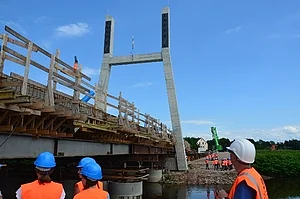
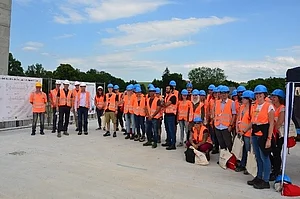
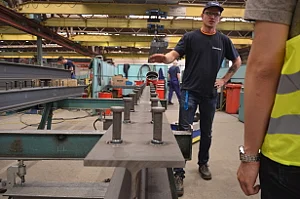
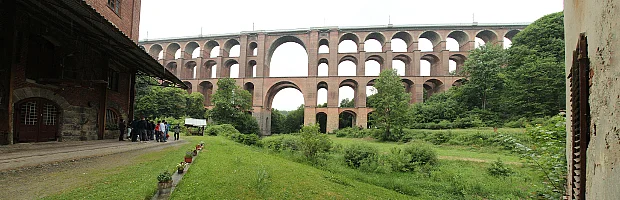
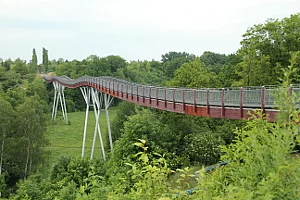
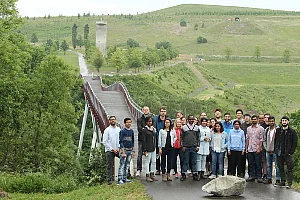
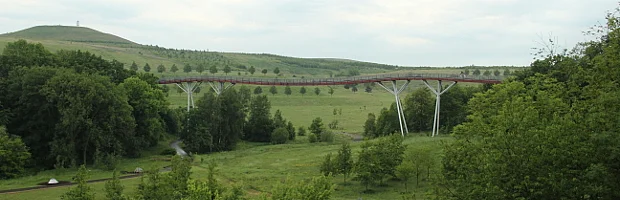
As part of the Faculty of Civil Engineering’s field trip week, the Chair of Steel and Hybrid Structures organised a one-day field trip on 23 May 2018 with students from the Bachelor’s and Master’s degree programmes in Civil Engineering and Natural Hazards and Risks in Engineering (NHRE). In the morning, the programme included a site visit to a steel pedestrian bridge spanning the A4 motorway near Stadtroda. We were given a detailed guided tour by the design engineers from DÄHN – Ingenieure and the client’s representative from the Thuringian State Office for Construction and Transport. The tour then moved on to the production halls at Goldbeck GmbH’s Treuen site, where we learnt about the manufacture of steel structures for building construction and metal fabrication. On the return journey from Treuen, we first stopped off at the Glötzschtal Bridge. This remains the world’s largest brick bridge to this day and, as a technical monument, is an impressive example of early engineering achievements. To round off the day, we visited the Drachenschwanz Bridge near Ronneburg. Europe’s longest wooden bridge offers interesting insights into the structural design of a timber cable-stayed bridge as well as into timber preservation techniques.

STRAB & Rettenmeier Field Trip, November 2017
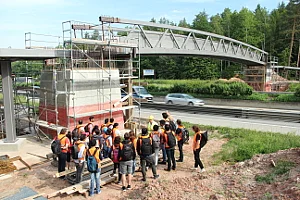
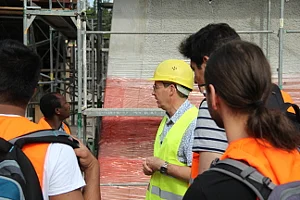
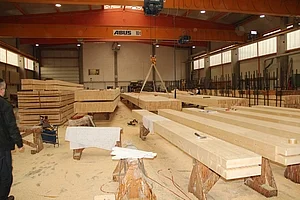
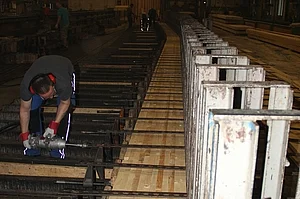
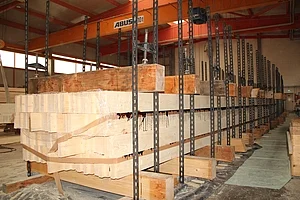
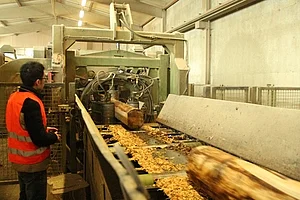
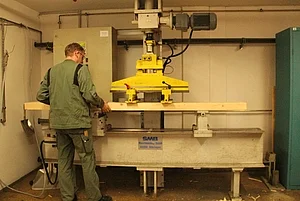
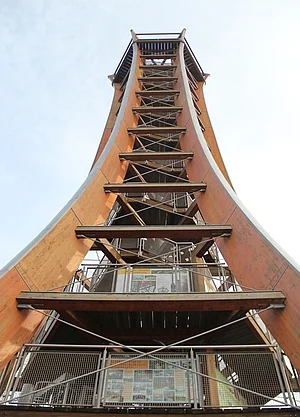
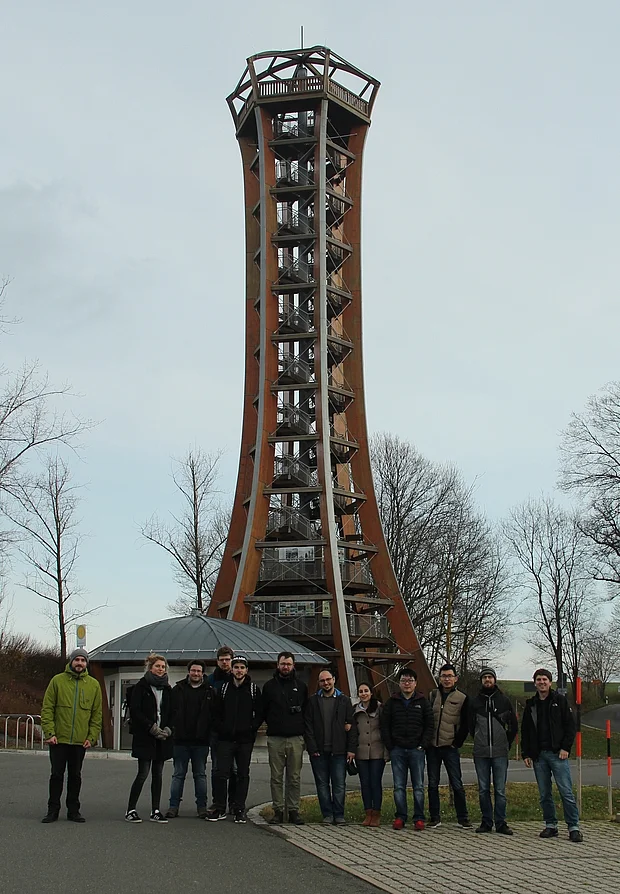
On 22 November 2017, we organised a one-day field trip with students on the Master’s programme in Civil Engineering as part of the courses in the Timber Construction specialism, which have been run by the Chair of Steel and Hybrid Structures since the 2017 summer term. The tour of the production halls at STRAB Ingenieurholzbau Hermsdorf GmbH focused on the manufacture of engineered timber structures using glued laminated timber. One truly ‘groundbreaking’ timber engineering structure, realised with the involvement of STRAB, is the 43-metre-high Saaleturm in Burgk, which we climbed on our onward journey southwards and examined in particular with regard to the implementation of structural timber preservation requirements. At Rettenmeier’s Hirschberg site, the group was able to observe every stage of the production process for solid structural timber, from the delivery of the logs, through sawing, sorting, drying and finger-jointing, right through to the gluing of the timber into laminated timber sections.

RSB & Saalburg Excursion, May 2017
On 23 May 2017, we organised a day trip to the Rudolstädter Systembau GmbH (RSB) works. Following a detailed tour of the factory, the afternoon was devoted to a site visit to a bridge refurbishment project being carried out by Schachtbau Nordhausen Bau GmbH. During this visit, the listed bridge over the Bleilochtalsperre near Saalburg was examined in detail.