
Let yourself bloom
Introduction
Let Yourself Bloom is a participatory video installation exploring human growth through the metaphor of blooming in nature.
The work draws a parallel between natural processes — where growth depends on light, time, and environment — and the often invisible conditions that shape personal development.
Alongside a projected video, the installation includes a physical space for audience participation. Viewers are invited to express what makes them bloom through words, drawings, or other traces.
Together, these contributions form a growing collective “garden” of human experience.
Initial Concept
At the very beginning, the concept for my project was completely different — I wanted to create a sculpture of a human figure with flowers growing from it.
The work explored the relationship between humans and nature, focusing on themes of separation, transformation, and regeneration. The figure represented a connection to natural cycles, while the growing flowers suggested renewal and change.
The installation was planned as a participatory experience, where viewers could physically enter the space and reflect on their own relationship with nature.

(first reference of the mood of my concept)
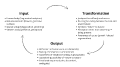
(Input - Transformation - Output Cycle for the first concept)


In fact, I had three possible concepts from the very beginning for my project. I wanted to explore themes related to the interaction between humans and nature, as well as the relationship between nature and patterns. File:Patterns (1-6).pdf
Of the three, I liked the sculpture concept the most, so for the second lecture, I prepared a detailed plan for it. File:Patterns (7-11).pdf
Contextual Research and Artistic References
When I started developing the contextual research for the project, I followed the advice of one of my tutors and explored the practices of several contemporary artists whose works focus on participation, perception, space, and human experience. File:Patterns (12-21).pdf
One of the first artists I explored was Rirkrit Tiravanija and his relational approach to art, particularly the work Cooking Up an Art Experience. His practice challenged my understanding of an artwork as something fixed and completed. Instead, the artwork can become a situation — a shared experience that is created through interaction between people.
I also researched Olafur Eliasson’s approach to creating immersive environments, where the viewer’s perception and presence become an essential part of the work. His installations demonstrate how simple elements such as light, space, and natural phenomena can create moments of awareness and reflection.
The exploration of James Turrell’s works, including Roden Crater and his Quaker Meeting House project, influenced my understanding of creating spaces that encourage slowing down and experiencing the present moment. His use of light and atmosphere shows how minimal visual elements can create powerful emotional responses.
Maya Lin’s Wave Field also became an important reference because of the way it transforms a simple natural phenomenon into a spatial experience. The work creates a connection between landscape, movement, and personal perception.
Through these references, I became interested not only in creating an object for the audience to observe, but in creating an environment where the audience could become part of the artwork. This research helped me move away from the initial idea of a sculpture and rethink the project as a participatory installation focused on personal reflection, connection, and shared experience. File:Patterns (22-24).pdf
Deeper Research Into "Blooming" Topic
To understand the idea behind Let Yourself Bloom, I started researching both the biological process of blooming in nature and the psychological concept of human flourishing.
The metaphor of blooming became interesting to me because flowers require very specific conditions to grow: light, water, time, and the right environment. This led me to question what similar conditions allow people to grow and feel fulfilled.
Through this exploration, I became interested in the idea that people bloom when they experience a combination of psychological safety, self-compassion, meaningful challenges, connection, and a sense of purpose. Unlike flowers, however, human growth is often invisible and does not follow a predictable timeline.
The concept of blooming also made me reflect on the importance of slowing down and creating space for self-awareness. In a fast-paced and highly digital environment, moments of quiet reflection and connection with ourselves can easily be overlooked.
Alongside psychological research, I collected visual references related to nature, slow movement, and calm environments. I was drawn to imagery of flowers opening, natural landscapes, sunlight, water, and organic textures. These references influenced the visual direction of the project and helped me create a connection between external natural processes and internal human experiences.
During this stage, I also explored different possible forms of audience interaction. I considered creating an outdoor garden-like experience where people could relax, participate in small reflective activities, and share personal responses about what makes them feel alive and connected. Although the final format changed, this exploration helped me understand that participation and personal reflection should become an essential part of the final installation.
The main question that remained throughout the research process was:
What makes people bloom?
Blooming as a Temporary State
While researching the symbolism of flowers, I became interested in the fact that blooming is often understood as the highest point of growth. In reality, however, it is only a brief stage within a much longer life cycle. A flower blooms for a short period before giving way to pollination, fruiting, and eventually withering.
This shifted my understanding of blooming from a symbol of achievement to a symbol of transition. The beauty of a flower does not exist despite its impermanence—it exists because of it.
While reading about the Japanese aesthetic concept mono no aware, I found a similar way of thinking. Rather than resisting impermanence, mono no aware invites us to appreciate things more deeply because they are temporary. Cherry blossoms, for example, are admired not only for their beauty but also because they bloom for such a short time. Their disappearance becomes part of their meaning.
This perspective made me rethink the metaphor of blooming. Instead of seeing it as a final state that people should strive to reach, I began to understand it as a fleeting moment within a much larger and constantly changing process. Perhaps blooming is meaningful precisely because it cannot last forever.
Cultural Symbolism of Flowers
As my research continued, I found myself thinking less about flowers as plants and more about the roles they play in everyday life. Flowers accompany many of the moments we consider important: they are given at birthdays, weddings, graduations, and celebrations, but they also appear at funerals, memorials, and graves. The same object becomes a symbol of both beginnings and endings.
What interested me most was that flowers often communicate emotions without the need for words. A bouquet can express gratitude, affection, apology, remembrance, or sympathy, depending on the situation. Their meaning is never fixed; it is shaped by context, memory, and personal associations.
This made me realise that blooming is not only a biological process but also a cultural language. Across different cultures and traditions, flowers have become a way of marking transitions, preserving memories, and acknowledging moments that are difficult to express directly. Their fragility may even be part of the reason they carry such emotional weight—they remind us that beautiful moments are temporary, and that this transience is what makes them valuable.
Thinking about flowers in this way also changed how I approached the installation. Rather than treating blooming as a metaphor for success or self-improvement, I became more interested in it as a shared human experience—something that can represent joy, loss, hope, memory, or change depending on the person.
Expanding the Concept
As my research developed, I realised that I was becoming less interested in flowers as decorative elements and more interested in what they represent. I began looking at artists and ideas that approach nature not simply as a landscape, but as a way of thinking about time, memory, and human experience.
The work of Andy Goldsworthy offered another perspective on impermanence. His sculptures made from leaves, stones, ice, and branches are often left to be transformed or disappear naturally. Rather than resisting change, his practice accepts weathering, decay, and time as collaborators in the creative process. This reminded me that nature is defined by constant transformation rather than fixed forms.
I also looked at Ana Mendieta's Silueta series, where the outline of the human body is created using earth, flowers, grass, or fire before gradually disappearing back into the landscape. Her work challenged the idea of separating the body from nature and instead presents them as part of the same cycle of appearance and disappearance.
Finally, Agnes Denes' Wheatfield – A Confrontation demonstrated how natural elements can carry meanings far beyond ecology itself. By planting a wheat field in the middle of Manhattan, Denes transformed a simple agricultural act into a reflection on value, labour, land, and the relationship between humans and their environment.
Although these references differ greatly in form, they share a common understanding of nature as something active rather than decorative. They encouraged me to think of blooming not simply as a pleasant image, but as a process shaped by time, change, memory, and the conditions that surround it.
Developing the Video
After defining the main concept of Let Yourself Bloom, I started developing the video as the visual and emotional introduction to the installation.
The first stage was creating a simple structure for the video. I wanted the narrative to move from the natural process of blooming towards the human experience of growth. The video begins with images of nature and gradual transformation, then shifts towards human emotions, reflection, and the question of what allows us to grow.
During the production process, I focused on collecting stock footage that supported the atmosphere of the project. I searched for slow and organic movements: flowers opening, sunlight, water, landscapes, and moments of stillness. The main challenge was finding images that did not simply illustrate the idea of blooming, but created a feeling of calmness and presence.
Originally, I considered using sound and music to support the emotional atmosphere. However, while testing the technical setup with the monitor and video player, I discovered that the installation space would not include audio. Instead of treating this as a limitation, I decided to develop the video without sound and focus more on visual rhythm, pacing, and silence. This decision helped strengthen the idea of slowing down and creating a moment of quiet reflection.
The editing process focused on creating a slow and minimal visual experience. I experimented with the timing of each scene, transitions, and the amount of text used on screen. Rather than explaining the concept directly, I aimed to leave enough space for the viewer’s own interpretation.
The final video became a visual invitation rather than an answer — a starting point that encourages viewers to reflect on their own understanding of blooming.
Installation Design and Exhibition Preparation
The final installation was designed as a combination of a projected video and a participatory physical space.
The projection acts as the first point of contact with the audience, creating an atmosphere and introducing the central question of the project: “What makes you bloom?”
Next to the video, I created a collection area with contribution sheets and drawing materials. Visitors are invited to respond in any form they choose — through writing, drawing, or other visual expressions. There is no fixed format or expected answer, allowing each person to create a personal interpretation of the theme.
As more visitors contribute, the individual responses slowly transform into a collective “garden” of thoughts and experiences. The installation changes over time, becoming a shared representation of different ideas of growth, comfort, connection, and personal blooming.
The spatial arrangement was designed to encourage visitors to slow down, observe, and participate rather than simply pass by the artwork.

As it turned out later, the spot I had chosen wasn't suitable (the windowsill was too unstable to support the monitor) and was already reserved by another student. So, I rearranged my installation and the objects within it. The result was a more minimalist setup; furthermore, since it was located right by the entrance, everyone who walked in noticed it immediately.
Final Installation
The final installation combined the projected video with a physical space for audience participation. The video created the initial atmosphere and introduced the theme of blooming, while the response area allowed visitors to become active participants in the work.
The final setup was intentionally minimal. Instead of creating a complex environment, I focused on creating a calm space where the audience could pause, watch, and contribute.


Audience Participation
Instead of giving viewers a fixed interpretation, I wanted to leave space for personal reflection and individual experiences.
The participatory part of the installation allows visitors to respond to the question “What makes you bloom?” in any form they choose — through writing, drawing, or other visual expressions. And I am very glad that, in the end, one can see both the text and the drawings from the participants.
I chose paper as a medium because it creates a more personal and physical interaction. Unlike a digital response, a handwritten or drawn contribution leaves a visible trace of the person who created it.
There is no single correct answer, as the idea of blooming is different for everyone. Each contribution represents an individual experience, memory, or feeling connected to personal growth and wellbeing.
During the exhibition, the installation gradually changed as visitors added their responses. The empty space around the video slowly became filled with personal reflections, turning the work into a collective and evolving “garden”.


Analysis of Participants' Responses
One of the most interesting parts of the project was observing how differently people interpreted the question “What makes you bloom?” Although every response was unique, several recurring themes became visible.
Many participants associated blooming with simple, everyday experiences rather than major achievements. Nature appeared frequently through references to sunlight, water, the ocean, fresh air, and green spaces. Others mentioned music, art, food, cats, or spending time with friends and family. These responses suggested that blooming was often connected to ordinary moments that create a sense of comfort, presence, or joy.
A particularly memorable response described blooming as “not having to question whether I belong where I am right now, feeling like being in the right place at the right time.” Unlike many of the other answers, it did not refer to a specific activity but to a feeling of belonging. This introduced another perspective on blooming—one connected to identity and emotional security rather than external circumstances.
I also noticed that very few participants associated blooming with success, productivity, or personal achievement. Instead, many focused on relationships, creativity, rest, and connection with nature. This was not something I had anticipated before the exhibition and became one of the most interesting outcomes of the project.
Not everyone chose to respond with words. Some visitors left small drawings, while others simply wrote their names or a short message. I decided to include these contributions alongside the more reflective responses, as they still represented a personal interaction with the installation. Together, they documented different ways of engaging with the same question.
Rather than producing one shared definition of blooming, the installation revealed how subjective the concept is. Every contribution reflected a different experience, memory, or association, turning the response wall into a collection of individual perspectives rather than a search for a single answer.
Reflection
Developing this project made me think about how rarely we stop to notice slow and almost invisible forms of change. We often recognise growth only in retrospect, while we are already looking back at it.
One of the most rewarding parts of the exhibition was seeing the response wall gradually fill with contributions. I was happy that the idea of a collective garden worked as intended, with participants leaving behind their own thoughts, memories, drawings, and associations.
Reading these responses, I realised that there was no shared definition of blooming. Some people connected it with nature, others with family, friendship, music, creativity, or moments of solitude. Several participants described very ordinary experiences that made them feel alive, while others reflected on significant life events. Interestingly, very few responses referred to success or achievement. Instead, most focused on feelings of comfort, belonging, presence, and connection.
This diversity became one of the most valuable outcomes of the project. Rather than confirming a single idea of what blooming means, the installation revealed how personal and subjective the metaphor is. The work became less about presenting my own answer and more about collecting many different ones.
Looking back, I think the idea could be explored further outside the gallery space, allowing people to engage with nature more directly and experience blooming not only as a metaphor but also as a physical process of observation. At the same time, I no longer think it is possible to create a universal environment where everyone can "bloom." What the participants shared made it clear that this experience is deeply individual and shaped by different memories, relationships, and places.
What stayed with me most after the exhibition was not the video itself, but the collection of small, honest responses left by the visitors. Together, they formed something I could never have created on my own.