Medien
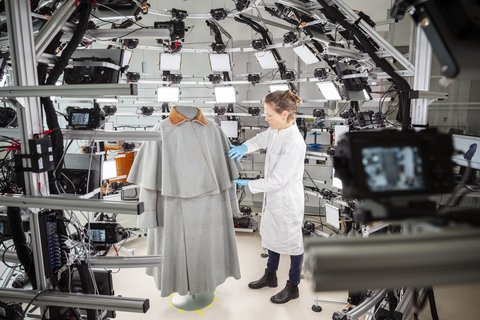
Mit dem »3D-RealityCapture-ScanLab« zum 3D-Modell
Kooperationsprojekt hilft Goethes Kleidung zu digitalisieren
Kooperationsprojekt hilft Goethes Kleidung zu digitalisieren
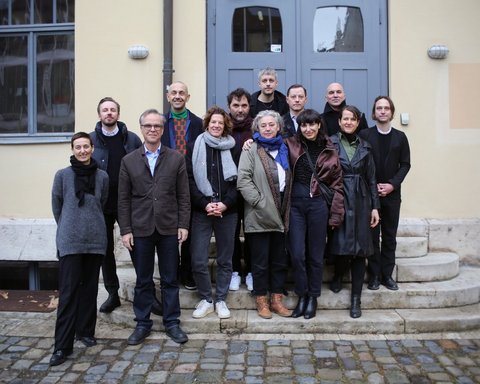
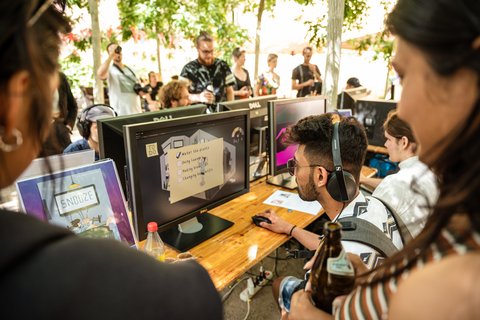
DIE BAUHAUS-UNIVERSITÄT WEIMAR AUF DER LEIPZIGER BUCHMESSE 2024
Wie entwickelt man in der Bauhaus Gamesfabrik ein Computerspiel in nur einem Semester?
Wie entwickelt man in der Bauhaus Gamesfabrik ein Computerspiel in nur einem Semester?
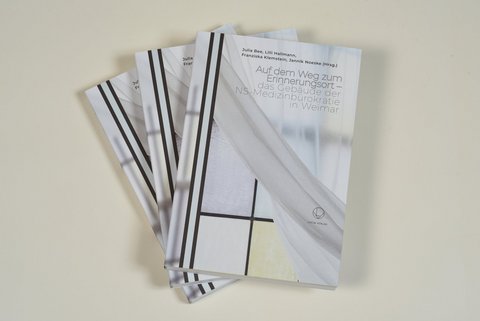
»Auf dem Weg zum Erinnerungsort«:
Publikation zur NS-Geschichte der Bauhausstraße 11 erschienen
Publikation zur NS-Geschichte der Bauhausstraße 11 erschienen

Machen Sie mit und treten Sie für ein weltoffenes Thüringen ein!
Bauhaus-Universität Weimar ist Teil der Initiative WELTOFFENES THÜRINGEN
Bauhaus-Universität Weimar ist Teil der Initiative WELTOFFENES THÜRINGEN

Bachelor & Master an der Fakultät Medien:
Lernen Sie unser Studienangebot kennen!

Der Fachbereich Medieninformatik bietet den Bachelor-Studiengang Informatik (B.Sc.) und die englischsprachigen Master-Studiengänge Computer Science for Digital Media (M.Sc.) und Human-Computer Interaction (M.Sc.) an sowie gemeinsam mit der Fakultät Bau- und Umweltingenieurwissenschaften den Studiengang Digital Engineering (M.Sc.).

Der Fachbereich Medienwissenschaft bietet die Studiengänge Medienkultur (B.A.) und Medienwissenschaft (M.A.) sowie die Studienprogramme Europäische Medienkultur (B.A./L.I.C.) und Filmkulturen: Extended Cinema (M.A.) an.

Der Fachbereich Medienmanagement bietet den Master-Studiengang Medienmanagement (M.A.) an.